Est. 1880 · Kirkbride Asylum · Architectural Innovation · Medical History · Psychiatric Treatment
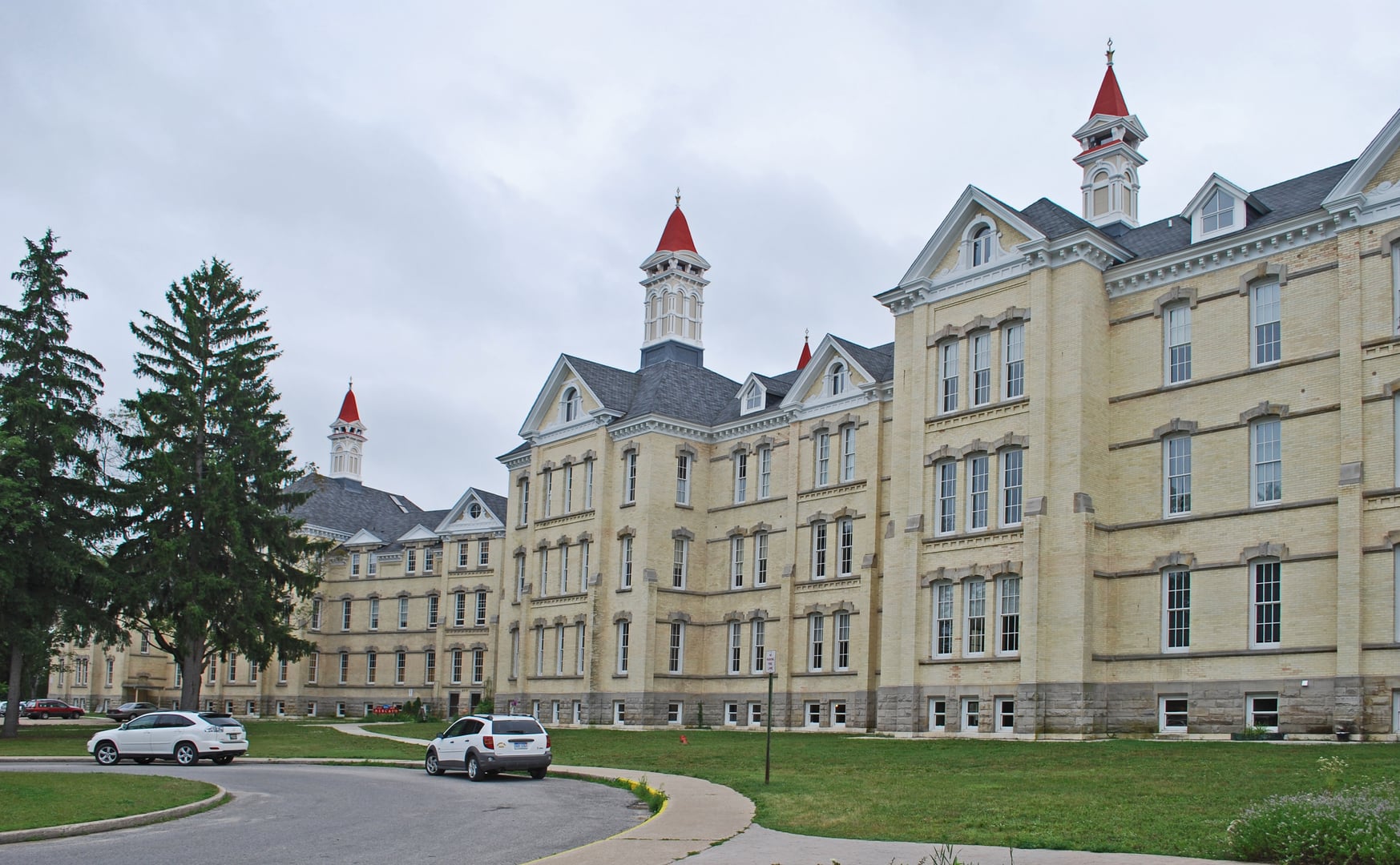
The Buffalo State Asylum for the Insane represents a significant moment in American medical architecture and psychiatric philosophy. In 1870, renowned architect H.H. Richardson was commissioned to design a new asylum complex in Buffalo, New York. Richardson's design was based on the Kirkbride Plan—a mid-19th-century psychiatric philosophy that emphasized 'moral management' and environmental design as therapeutic tools.
The Kirkbride Plan posited that peaceful, well-designed physical environments would contribute to the recovery and healing of patients with mental illness. Rather than harsh, prison-like confinement, the plan emphasized light-filled spaces, aesthetically pleasing surroundings, and respectful treatment. Richardson's architectural response was distinctive: a series of grand Romanesque buildings constructed from Medina red sandstone and brick, arranged symmetrically across 203 acres of landscape designed by Frederick Law Olmsted.
Construction began in 1871, with the cornerstone laid in 1872. The eastern wing was completed first, opening on November 15, 1880, with capacity for approximately 300 patients. The symmetrical design envisioned by Richardson was completed in phases: the western wing construction began in 1889 and was finalized in the early 1890s.
During its operational years from 1880 through the early 1970s, the asylum witnessed the full arc of psychiatric treatment history: from moral management principles, through the development of pharmaceutical treatments, to increasingly controversial electroconvulsive therapy and insulin shock treatments. Patient mortality occurred from various causes: suicide, disease progression, complications of forced treatments, and natural causes.
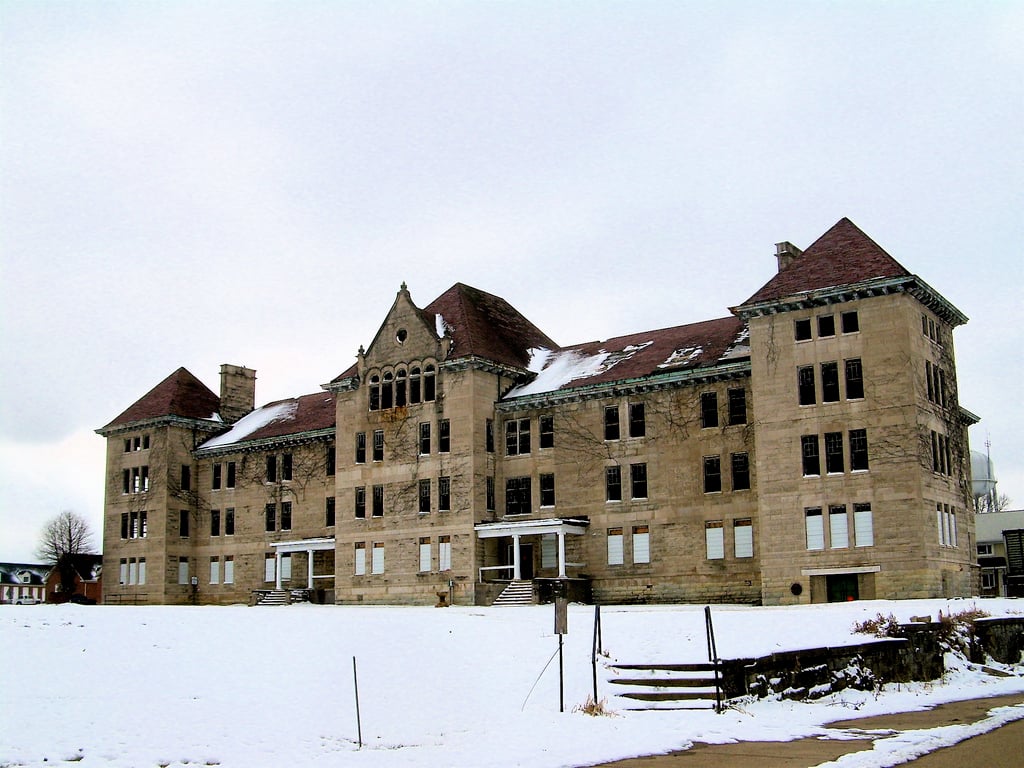
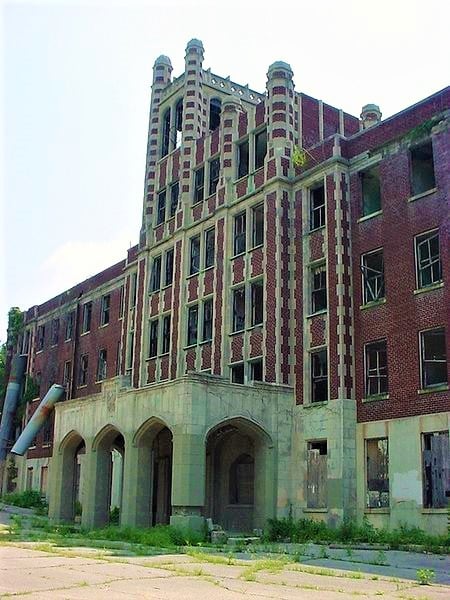
In 1974, patients were transferred to newer facilities, and the massive complex was largely abandoned. For decades, ten of the original buildings remained vacant and deteriorating. Urban explorers and paranormal investigators documented the spaces as they decayed: patient records left in scattered files, medical equipment in abandoned wards, personal belongings left behind.
Beginning in the early 2010s, preservation and restoration efforts commenced. Hotel Henry Urban Resort Conference Center opened in May 2017, restoring significant buildings to luxury hotel and conference use. However, several of the original structures remain abandoned and partially accessible to organized tour groups and paranormal investigators.