Est. 1861 · American Civil War · Confederate Prison · Boston Harbor Defense · National Historic Landmark
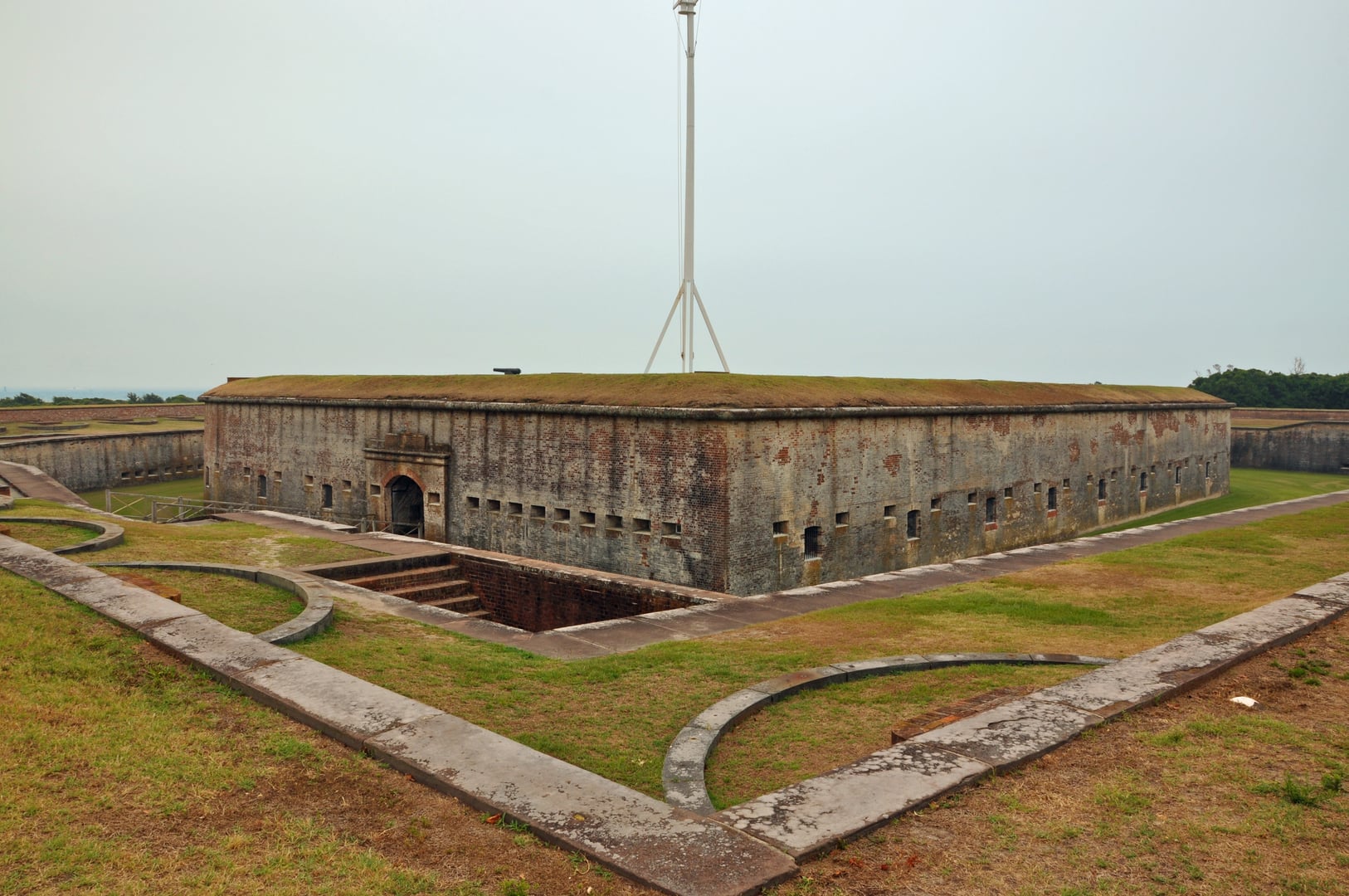
Construction of Fort Warren began in 1833 to a design by Sylvanus Thayer, the longtime superintendent of West Point. The work continued for nearly three decades, and the pentagonal granite fort was completed in 1861, just before the outbreak of the American Civil War.
During the war, Fort Warren served two functions. It trained Massachusetts volunteer regiments and held Confederate prisoners, including Confederate Vice President Alexander Stephens, Confederate Postmaster General John H. Reagan, and a number of Confederate naval officers and civilian officials. The post developed a reputation, well documented in contemporary correspondence, for relatively humane treatment of its prisoners, attributed to Colonel Justin Dimick.
The fort remained an active Army post through World War II, mounting coastal artillery during both world wars before being decommissioned in 1947. Georges Island and the surrounding Boston Harbor Islands eventually came under joint state and federal protection, and today the site is administered as part of Boston Harbor Islands National and State Park, with the National Park Service and Massachusetts Department of Conservation and Recreation managing access.
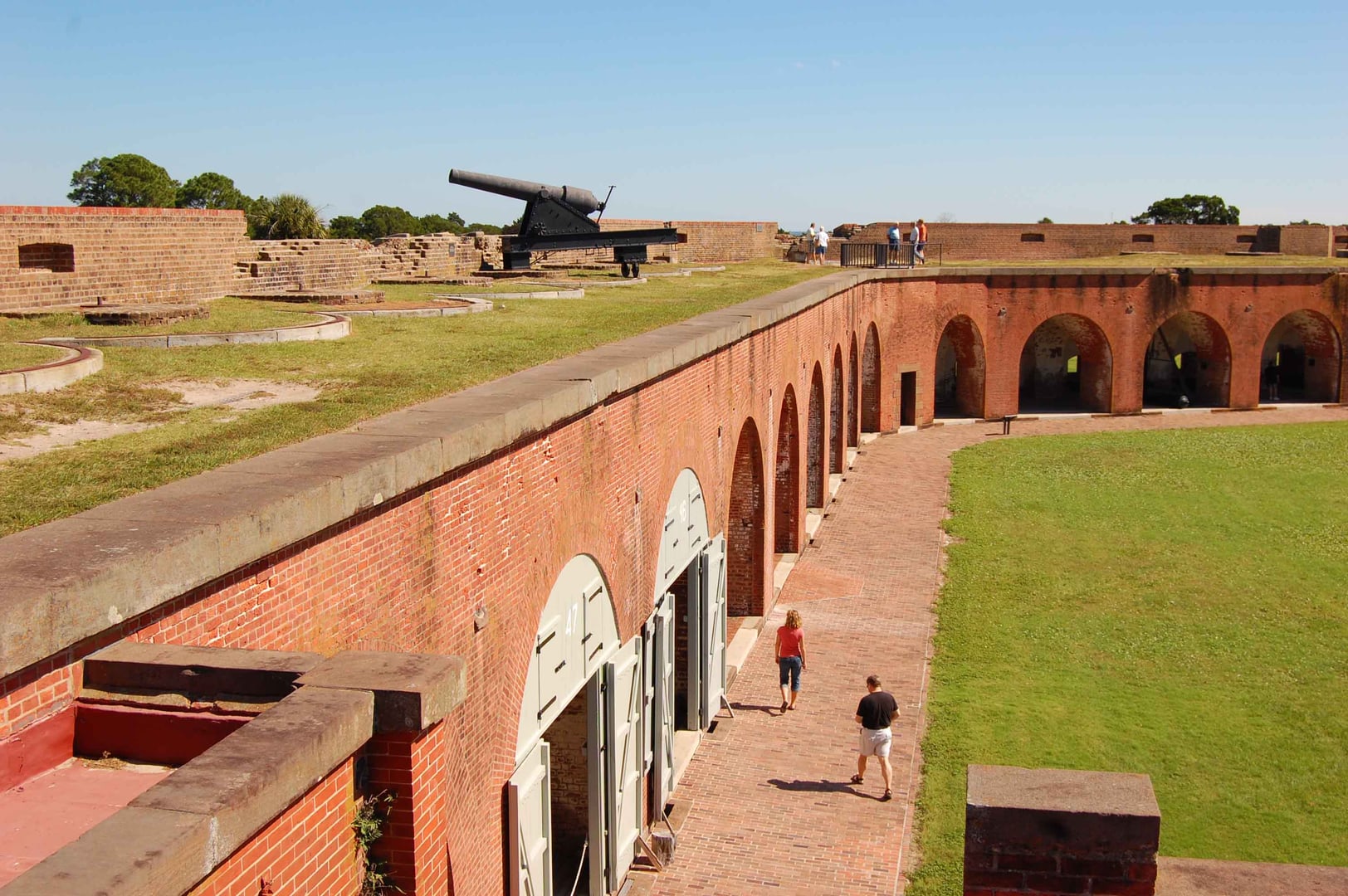
Ferries depart from Long Wharf North in downtown Boston between May and Indigenous Peoples Day Weekend in October. Park rangers offer free guided tours of the fort, supplementing the self-guided routes through the casemates and grounds.
Sources
- https://en.wikipedia.org/wiki/Georges_Island_(Massachusetts)
- https://www.bostonharborislands.org/
- https://www.nps.gov/boha/planyourvisit/index.htm
- https://historicaldigression.com/2012/10/17/fort-warrens-lady-in-black-debunked/
ApparitionsPhantom footstepsPhantom sounds
The Lady in Black is among Boston's most retold ghost stories. The popular version describes a woman who traveled north from the Confederacy to free her imprisoned husband at Fort Warren during the Civil War. She allegedly disguised herself in men's clothing, slipped onto the island on a moonless night, and reached her husband's cell. When the escape attempt was discovered, the story goes, she fired a pistol that misfired and killed her husband instead. Sentenced to be hanged, she requested to be executed in women's clothing; with no women's garments on the post, soldiers improvised a black dress used in a recent theatrical production. She has been seen, according to the legend, walking the parade ground in that same black dress.
Researchers who have traced the published history of the legend, notably the work compiled at the historicaldigression.com archive, have concluded that the story does not appear in Civil War-era records. Its first widely-circulated version was published in 1944 by Boston author Edward Rowe Snow in 'The Islands of Boston Harbor,' and Snow himself acknowledged crafting it as a piece of evocative regional storytelling intended to draw attention to the fort's preservation needs. Snow's advocacy through the Friends of Fort Warren did contribute meaningfully to the eventual protection of Georges Island as state park and federal land.
Visitors today encounter the Lady in Black through ranger interpretation and through tour-operator narratives in the city. Reports of footsteps in the fort's casemates, gunshots heard at distance, and figures glimpsed near the powder magazines circulate freely; none have been documented through formal investigation. The honest framing is that the story is folklore, well-loved and well-told, with a known author and a clear cultural function.
Notable Entities
The Lady in BlackMelanie Lanier (legendary)
Media Appearances
- Edward Rowe Snow, 'The Islands of Boston Harbor' (1944)