Est. 1940 · World War II Memorial · Naval History · North Carolina Heritage · 15 Battle Stars
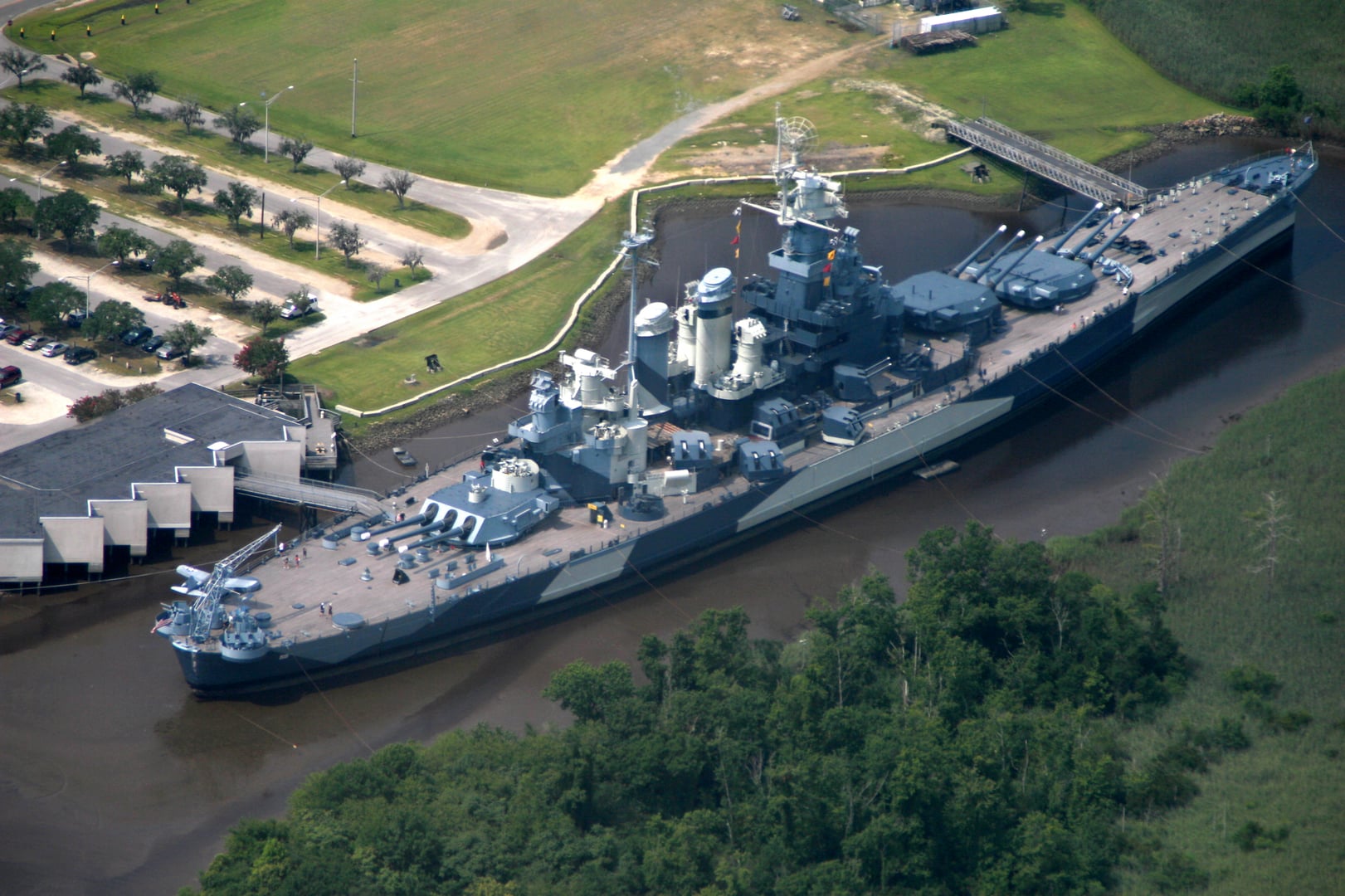
The USS North Carolina's keel was laid at the New York Navy Yard on October 27, 1937. She was launched June 13, 1940, and commissioned April 9, 1941, four months ahead of schedule, the first American fast battleship built in sixteen years. Lead ship of her class, she measured 729 feet, displaced about 44,800 tons at full load, and carried nine 16-inch guns in three triple turrets.
She reached Pearl Harbor on July 11, 1942, and her Pacific campaign began at Guadalcanal that August, where she provided antiaircraft cover during the landings. On September 15, 1942, a torpedo from the Japanese submarine I-19, fired in a spread aimed at the carrier Wasp, tore a 32-by-18-foot hole in her port side below the waterline. Five sailors were killed and 23 wounded. Repairs at Pearl Harbor returned her to service, and she went on to take part in nearly every major Pacific campaign: the Gilberts, Marshalls, Marianas, Philippines, Iwo Jima, Okinawa, and the final strikes on the Japanese home islands. Ten crewmen died and 67 were wounded over her wartime service.
She earned 15 battle stars, the most of any American battleship. Decommissioned June 27, 1947, she sat in reserve until she was struck from the Naval Vessel Register on June 1, 1960 and slated for scrapping.
A statewide Save Our Ship campaign followed, with schoolchildren contributing coins and communities holding events to buy the ship from the Navy. Title passed to the state on September 6, 1961. The ship arrived off Wilmington on October 1, 1961, was towed upriver to her Cape Fear berth the next day, and was dedicated on April 29, 1962 as the state's memorial to the more than 11,000 North Carolinians who died in World War II. She was named a National Historic Landmark on January 14, 1986.
Sources
- https://www.battleshipnc.com/
- https://www.hauntedrooms.com/north-carolina/ghost-hunts/battleship-north-carolina-wilmington
- https://amyscrypt.com/haunted-uss-north-carolina-battleship/
- https://en.wikipedia.org/wiki/USS_North_Carolina_(BB-55)
- https://www.battleshipnc.com/ship-history/
- https://www.wral.com/archive/12196612/
- https://www.wect.com/story/9263259/paranormal-team-investigates-battleship-north-carolina-for-ghosts/
- https://www.wral.com/story/go-ghost-hunting-aboard-the-battleship-north-carolina/20274682/
- https://archive.org/details/ghostsonbattlesh0000brad
- https://thetvdb.com/series/ghost-hunters/episodes/297139
ApparitionsPhantom soundsPhantom footstepsPhantom voicesCold spotsDoors unlockingKnocking and tapping
The September 15, 1942 torpedo strike is the anchor of the ship's haunting tradition. The five men who died in the forward compartments that day are the historical reference point for most of the reports that follow.
The tradition's principal witness is Danny Bradshaw, who took the job of night watchman in 1976 and spent more than two decades alone aboard after closing. In 2002 he self-published Ghosts on the Battleship North Carolina, a 73-page account of his experiences. Speaking to WRAL's Tar Heel Traveler in 2013, Bradshaw described a figure he walked toward one night whose head appeared to be lit with white flame, and said his flashlight beam passed through it. He also reported doors found unlocked after he had secured them and tapping from empty compartments. A colleague with thirty years aboard told the same program she had seen the figure. Independent visitors and investigators have described a young man with blond hair in a WWII-era uniform glimpsed in peripheral vision near the torpedo damage and the adjacent berthing spaces, gone when looked at directly. The rebuilt washroom near the blast site and the sick bay are the most frequently cited locations.
Television crews followed. The TAPS team filmed the ship for Ghost Hunters in a Season 2 episode aired August 17, 2005. In 2008 WECT reported a local group's review of audio a visitor recorded during a ghost tour, which the group attributed to the tour soundtrack rather than anything unexplained. The Ghost Guild has run paid public investigation nights aboard; a WRAL reporter who joined one in 2022 described sick bay bed springs banging with no one near them, a recurrence of an incident the group first logged in 2018.
Apart from any of this, nine decks of narrow steel passages and the smell of old metal make the ship an affecting place for anyone thinking about the men who served on her.
Notable Entities
Young Blond Sailor
Media Appearances
- Ghost Hunters
- Ghost Hunters Academy
- Fact or Faked
- Ghosts on the Battleship North Carolina by Danny Bradshaw (2002)
- Sinisterhood: Our Paranormal Investigation Aboard the Battleship North Carolina (Episode 263) (2023)
- Tar Heel Traveler: Watchman sees ghost aboard NC Battleship (WRAL-TV, 2013)
- Go ghost hunting aboard the Battleship North Carolina (WRAL, 2022)