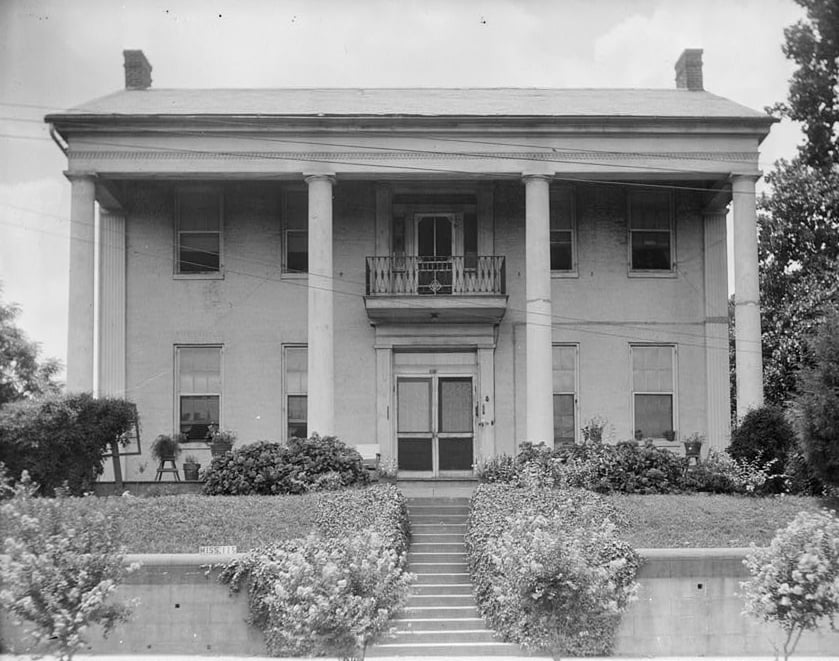
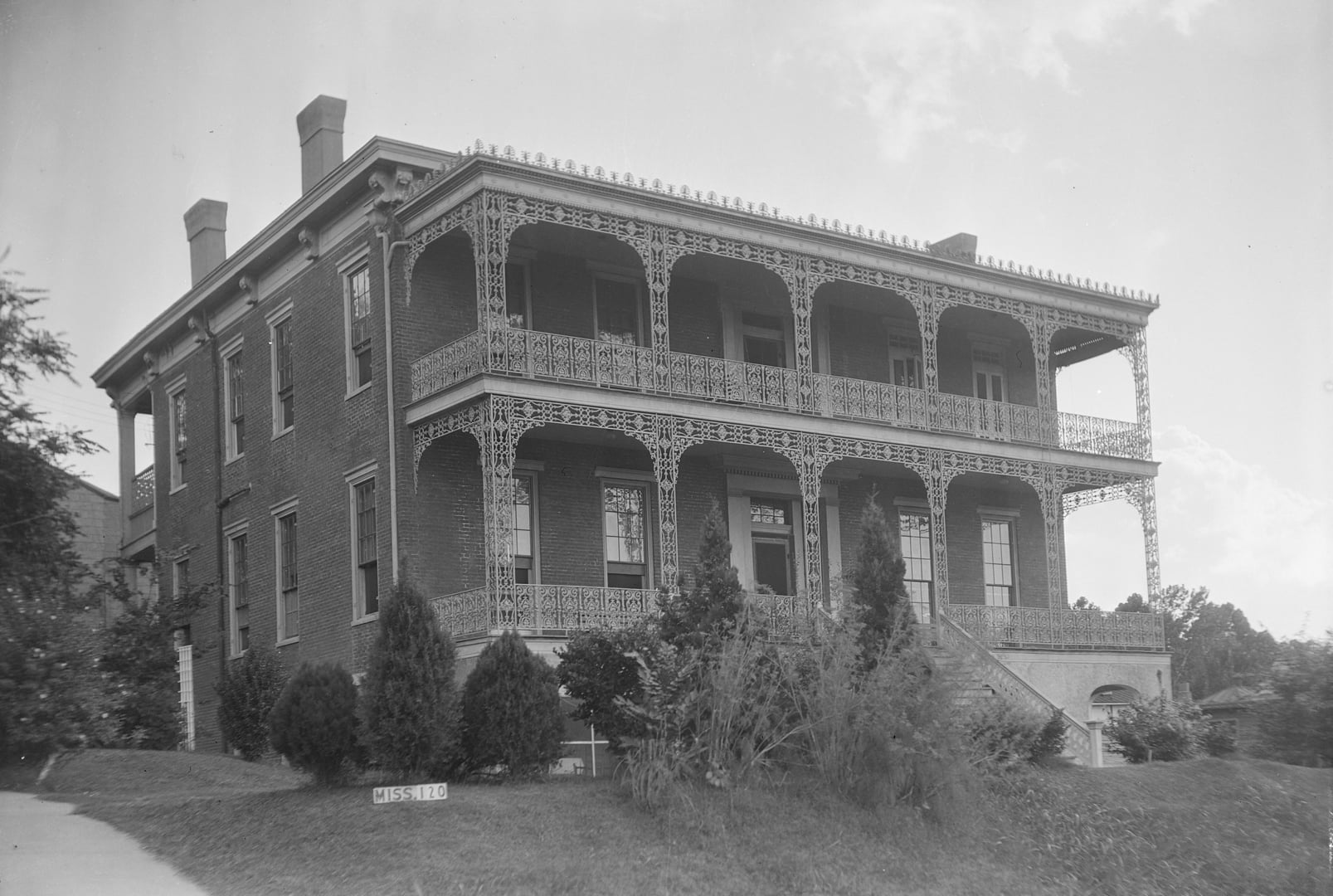
Est. 1840 · Antebellum Greek Revival Mansion · Union Cannonball Impact Site · Klein Family Cotton-Era Estate · Connected To Both Sherman And Grant Accounts
John Alexander Klein, a Vicksburg jeweler and banker, began construction of Cedar Grove in 1840 as a wedding home for his bride, Elizabeth Bartley Day. The central portion of the Greek Revival mansion was completed in 1842, with later additions expanding the house and outbuildings on the four-acre Oak Street property in what is now Vicksburg's Garden District.
Like most large antebellum Mississippi households built on cotton-economy wealth, Cedar Grove was constructed and maintained with the labor of enslaved people; the property's antebellum prosperity is inseparable from that system. Klein's businesses connected the household to the broader cotton, banking, and slaveholding economy of the Mississippi River Valley.
During the Union siege of Vicksburg in the summer of 1863, the mansion was struck by approximately forty-one rounds of artillery. A Parrott shell punched through an exterior wall and lodged in the wall of the gentlemen's parlor, where it remains visible today. Elizabeth Klein was related to Union General William Tecumseh Sherman, who reportedly arranged her safe passage out of Vicksburg before the siege intensified; she named one son Willie Sherman Klein in his honor.
In the late 19th and early 20th centuries the property passed through several owners, including the Podesta family, whose daughter is the subject of a long-standing local story that she died by suicide on the grounds — a tradition repeated by tourism, regional press, and ghost-tour sources.
Cedar Grove was purchased in April 2022 by Harley Caldwell and Steven and Kendra Reed, who reopened it as a fifteen-room inn and restaurant. It remains open to overnight guests and to the public for tours and dining.
Sources
- https://www.cedargrovemansion.com/history-of-the-mansion.htm
- https://visitmississippi.org/things-to-do/bnb/cedar-grove-mansion-inn/
- https://www.visitvicksburg.com/directory/cedar-grove-mansion-inn/
- https://www.vicksburgpost.com/2023/05/02/sneak-peek-cedar-grove-mansion-open-to-the-public/
Phantom pipe-tobacco scentApparition on staircaseChild voices and footstepsBallroom auditory phenomena (music, screams, gunshots)Unexplained breaking-glass sounds
Cedar Grove is consistently named in regional ghost-tourism content as one of the most reportedly haunted addresses in Vicksburg. The most frequently cited phenomenon is the smell of pipe tobacco in the gentlemen's parlor, associated with John Alexander Klein, who is said to have smoked there.
Elizabeth Klein is reported descending the main staircase in long-dress silhouette, and child-spirit activity in the upstairs rooms is tied to the Klein children. According to OnlyInYourState's regional haunted-places coverage and HauntedHouses.com, the ballroom is the focus of a separate set of accounts: late-night screams, gunshots, breaking glass, and music tied to a later owner's daughter (commonly identified as a member of the Podesta family) said to have died by suicide on the property.
Southern Lagniappe's two-part 'Haunted Houses of Vicksburg' series documents the same body of stories and notes that the cannonball-strike room is also flagged in some accounts as paranormally active, tying the lore directly to the documented 1863 artillery impact.
Cedar Grove appears on regional Civil War paranormal listings and is included on Visit Vicksburg's promoted haunted-stay itineraries; the property's own marketing leans more on history and hospitality than on ghost claims.
Notable Entities
John Alexander KleinElizabeth KleinKlein childrenPodesta daughter (later resident, died by suicide per regional accounts)