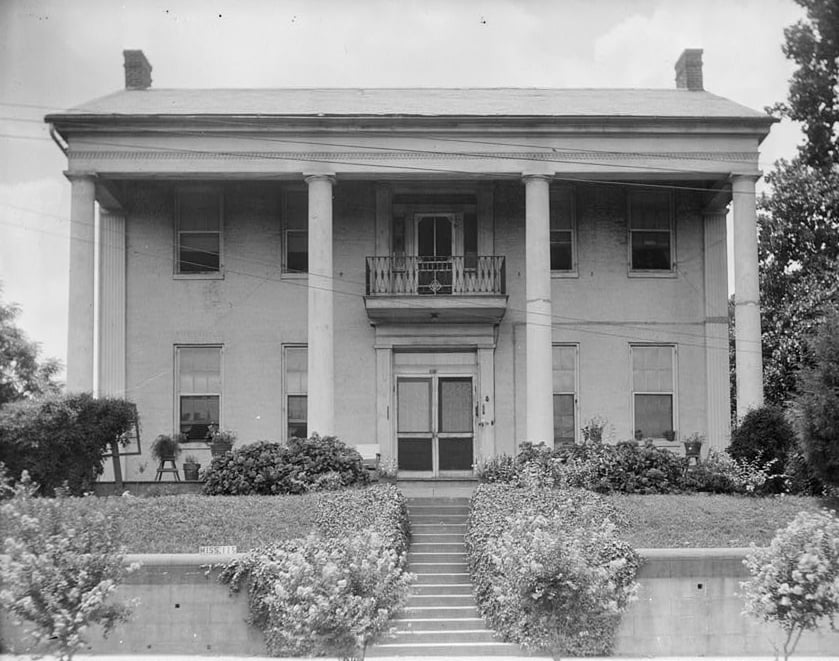
Est. 1856 · Confederate And Union Field Hospital · Antebellum Palladian-Greek Revival Architecture · Mary Green's Yellow-Flag Decision · 20th-Century Orphanage And Salvation Army Use
Duff Green was a Vicksburg cotton broker whose household wealth, like that of his merchant peers, was built on the cotton-and-slavery economy of the Lower Mississippi Valley. In 1856 he built the Palladian/Greek Revival mansion at 1114 First East Street as a wedding home for his bride, Mary Lake Green. The Greens entertained extensively in the years immediately before the Civil War.
When Union forces invested Vicksburg in 1863, the mansion was struck by artillery five times. After the strikes, Mary Lake Green raised a yellow flag from the roof to signal that the house was being used as a hospital — and from that point both Confederate and Union wounded were treated within its walls. According to long-standing local accounts and current owner narration, the former kitchen on the lower level was converted to an operating room where amputations were performed; this room is now known as the Dixie Room.
The Green family lost the house in the years after the war. The mansion later served as a boys' orphanage and, in the early-to-mid 20th century, as a Salvation Army office. It was extensively restored as a private home and inn in the late 20th century.
Duff Green Mansion is included on Visit Vicksburg's promoted historic-stay itinerary and is documented by Visit Mississippi and by the property's own current operators.
Sources
- https://duffgreenmansion.com/
- https://visitmississippi.org/things-to-do/bnb/duff-green-mansion/
- https://www.visitvicksburg.com/directory/duff-green-mansion-attractions/
- https://ourmshome.com/the-duff-green-mansion-one-of-mississippis-most-storied-homes/
Apparition of one-legged Confederate soldierChild apparition on staircase (Little Annie Green)Apparition some interpret as Ulysses S. GrantSelf-shaking empty chairBall rolling unaided down staircaseCold spots in the Dixie Room
The most-cited Duff Green report is the apparition of a one-legged Confederate soldier seated by a fireplace — read against the documented amputation history of the field hospital. The MississippiHauntedHouses listing and Paranormal Traveler describe the apparition as appearing near a parlor or sitting-room hearth.
Little Annie Green is described as a young girl, traditionally said to have died at age six while the Green family lived in the home; her presence is reported on the staircase and upper landing. Some accounts also describe an apparition near a fireplace that visitors and guides interpret as Ulysses S. Grant, on the grounds that Grant briefly occupied parts of Vicksburg after the siege.
MississippiHauntedHouses, Paranormal Traveler, Get Lost in the USA, and the Ghosts & Getaways Vicksburg roundup all describe object-manipulation phenomena including a chair reported to shake while empty and a ball reported to roll unaided down a staircase. The 'Dixie Room' — the lower-level former kitchen later used as an operating room — is the most consistently flagged interior space.
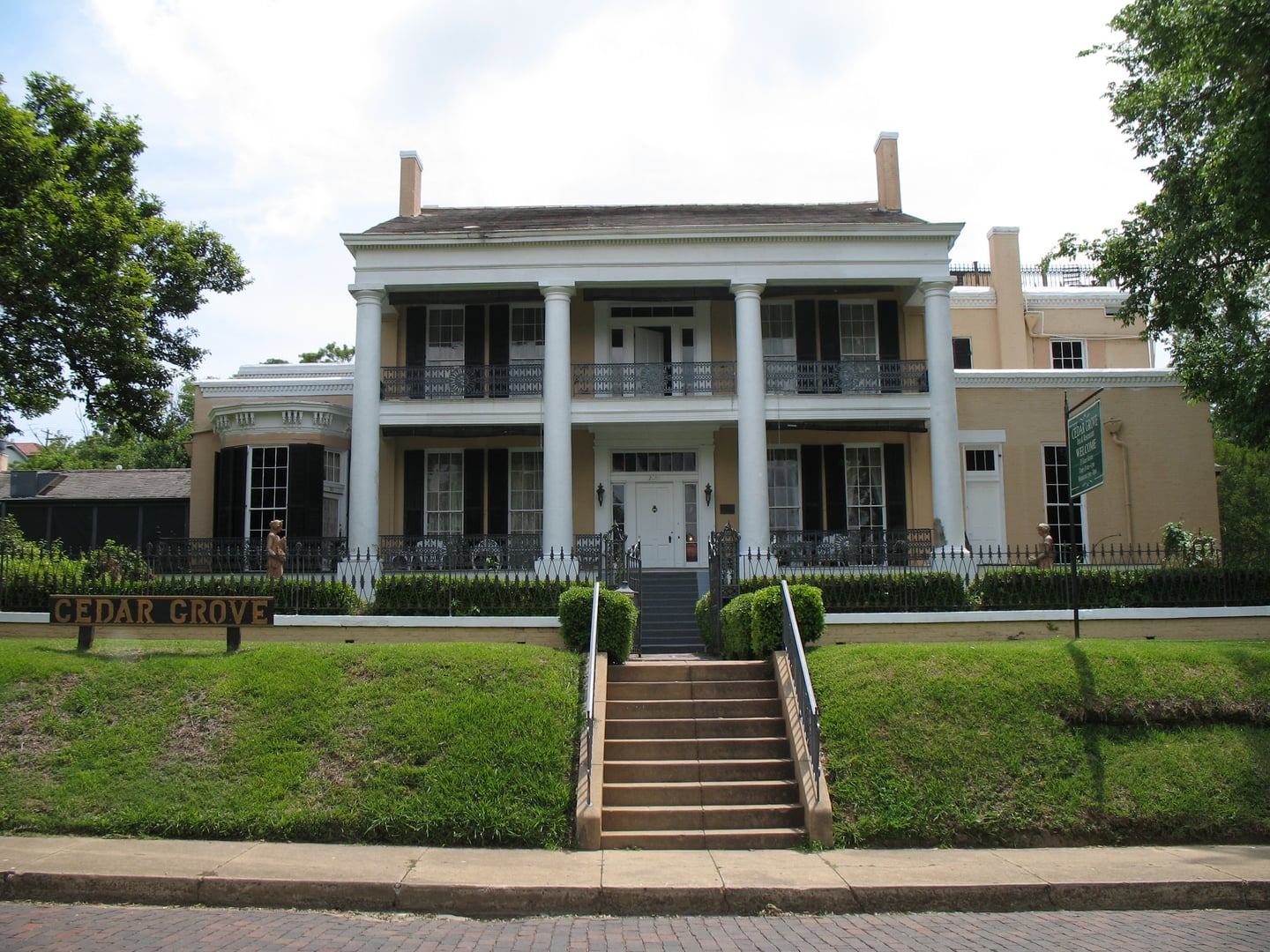
The property appears on Visit Vicksburg's haunted-stay coverage and is named alongside Cedar Grove and Anchuca in regional ghost-tour content.
Notable Entities
One-legged Confederate soldierLittle Annie GreenUlysses S. Grant (per visitor interpretation)