Est. 1764 · National Register of Historic Places · Revolutionary War Tarleton Raid · Walker and Rives Family Estate
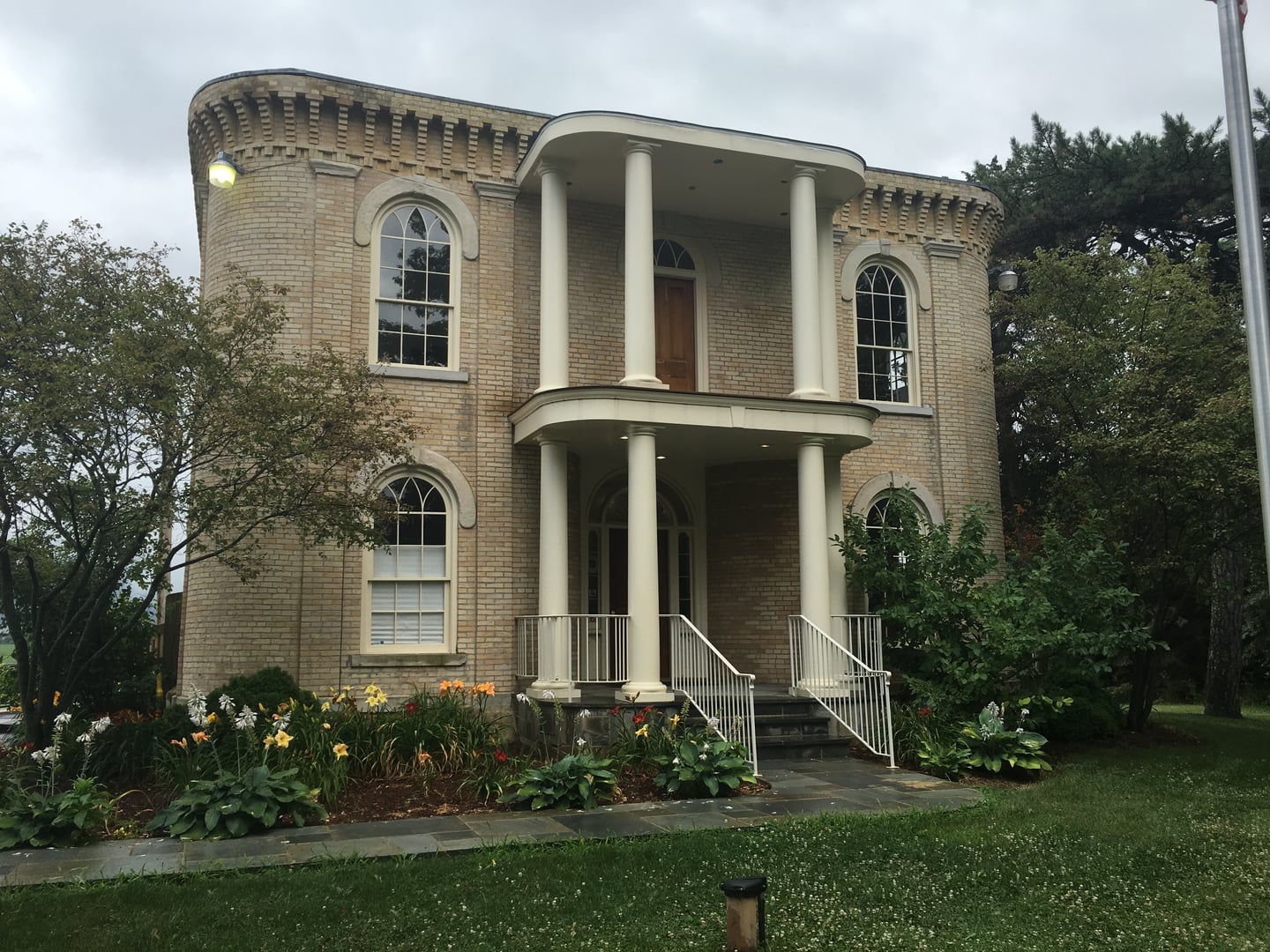
Castle Hill is a Virginia plantation house in Albemarle County, near Cismont, east of Charlottesville. The original wooden frame structure was built around 1764 by Dr. Thomas Walker, a physician, surveyor, and explorer who served as guardian to a young Thomas Jefferson. A later brick addition was completed in the early nineteenth century by Walker's descendants, giving the present house its mixed Federal and Greek Revival character.
The property's most cited historical episode occurred on June 4, 1781, during the British cavalry raid that targeted Thomas Jefferson and the Virginia legislature in Charlottesville. According to accepted accounts, Banastre Tarleton's troops paused at Castle Hill, where Walker's wife served the British officers a leisurely breakfast. The delay is traditionally credited with giving the Virginia rider Jack Jouett time to ride ahead and warn Jefferson at Monticello.
In the nineteenth century the house passed through the Rives family, including U.S. diplomat William Cabell Rives, whose tenure at the property included visits from prominent political figures of the antebellum era. The estate is documented in the records of the Virginia Department of Historic Resources and is listed on the National Register of Historic Places.
Castle Hill remains a privately owned residence. The property is not open to the public, and the surrounding land is largely under conservation easement through partnerships including The Nature Conservancy's Castle Hill Walnut Mountain project.
Sources
- https://en.wikipedia.org/wiki/Castle_Hill_(Virginia)
- https://www.dhr.virginia.gov/historic-registers/002-0012/
- https://www.hmdb.org/m.asp?m=22439
ApparitionsPhantom smellsPhantom footstepsPhantom soundsObject movement
Castle Hill's most cited paranormal report concerns the so-called Pink Bedroom, where guests over more than a century have described the scent of perfume in unoccupied air and brief sightings of a young woman in period dress. Psychic researcher Hans Holzer visited Castle Hill with the medium Virginia Cloud and concluded, in his published writing, that the Pink Bedroom contained two distinct presences. Holzer attributed the more active figure to the Revolutionary War era, hypothesizing that she may have been one of the women of the household who detained Tarleton's officers in 1781.
Folk accounts collected in regional travel coverage describe the apparition as 'playful' toward favored guests and dismissive toward those she finds unwelcome — a pattern in which some sleepers in the Pink Bedroom rest peacefully and others report being woken by movement, footsteps, or the sense of being observed.
A secondary set of reports concerns sounds elsewhere in the house: the scrape of chairs across wooden floors, glasses clinking, and footsteps crossing rooms. Local lore frames these as residual echoes of the antebellum-era parties hosted by the Rives family in the early-to-mid nineteenth century.
Castle Hill is privately owned and is not open to the public for tours, investigations, or overnight stays. The accounts that survive in print come from earlier eras when the property occasionally received researchers and journalists. Current owners do not host visitors, and contemporary paranormal-tourism writing on the house is largely a recapitulation of Holzer's twentieth-century reporting.
Notable Entities
The Lady of the Pink Bedroom
Media Appearances
- Hans Holzer paranormal research writings