Haunted Virginia

171 haunted destinations cataloged across Virginia, spanning 74 counties. The collection features museum, haunted house, and other dark tourism site — every listing verified with family ratings, accessibility info, and practical visit logistics.

171 locations 74 counties 12 classifications 99 wheelchair accessible

Featured in Virginia

Top 6
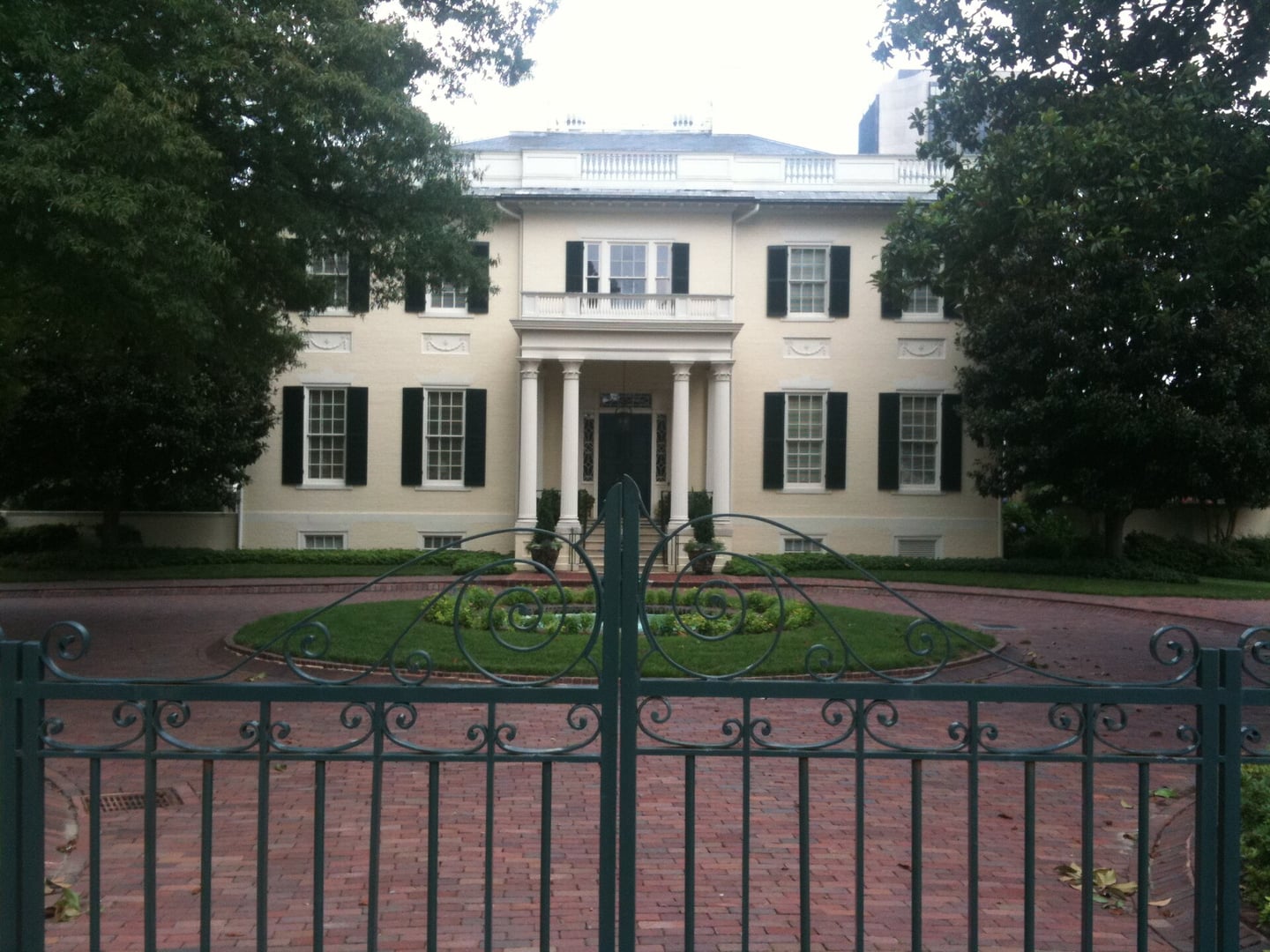
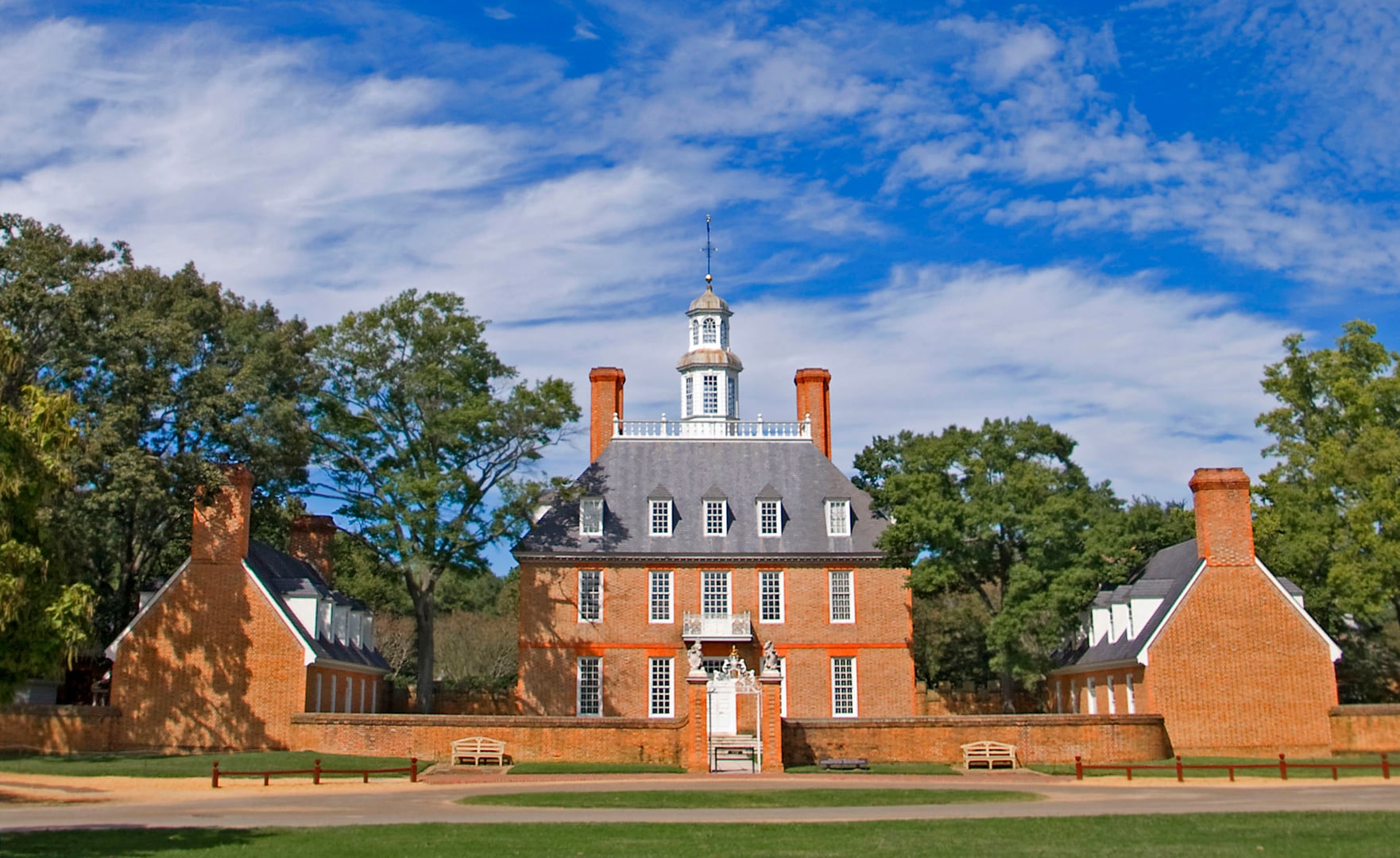
Exterior of the Virginia Executive Mansion at Capitol Square in Richmond, Virginia — the oldest continuously occupied U.S. governor's residence, built 1811–1813 in Federal style
Haunted House / Historic Home

Virginia Executive Mansion

Richmond, VA

The Virginia Executive Mansion was completed in 1813 on the northeast corner of Capitol Square in Richmond, designed by Alexander Parris in Federal style. Continuously occupied since opening, it is the oldest sitting governor's mansion in the United States and a National Historic Landmark. Every Virginia governor since James Barbour has lived in the building.

$ All Ages Family: Moderate
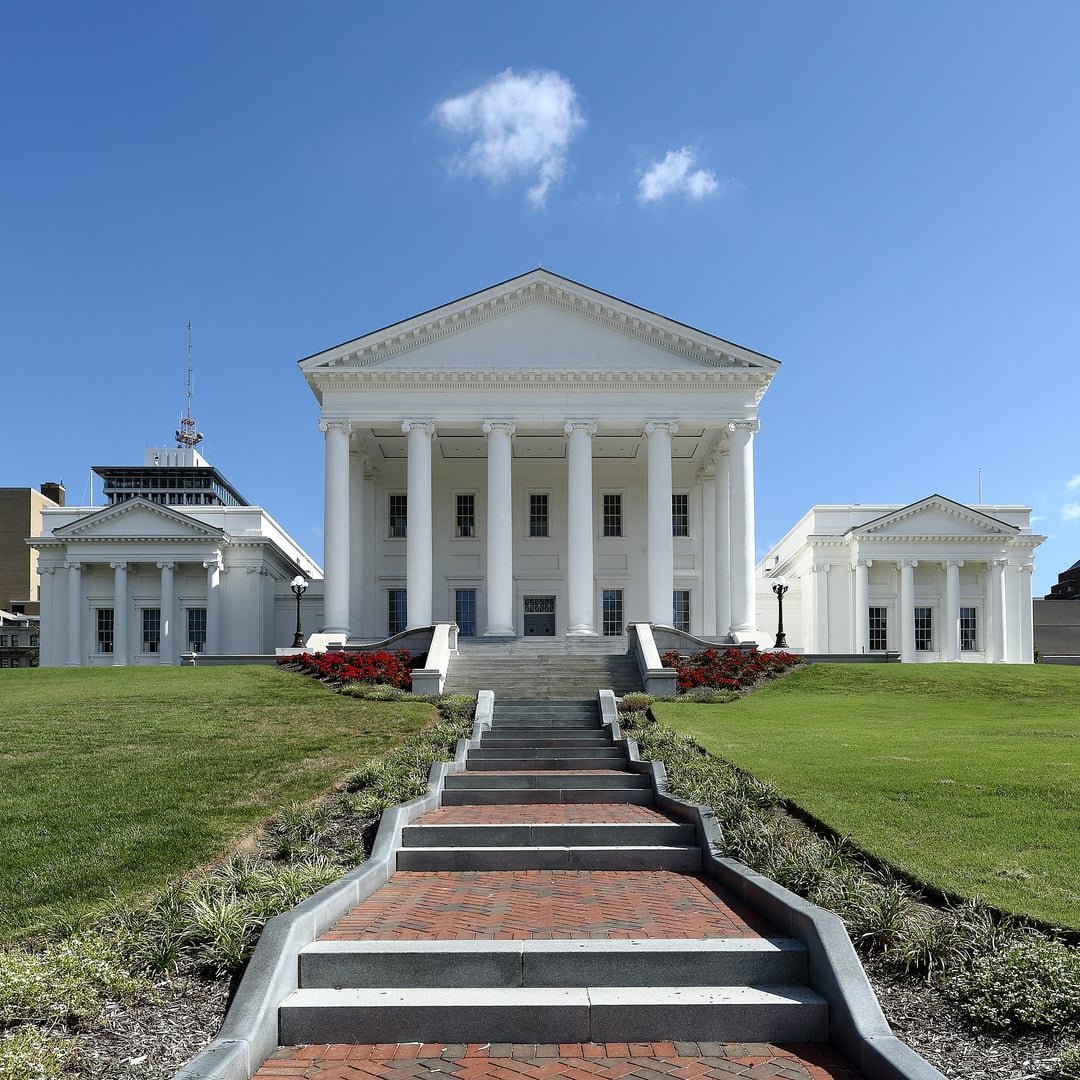
The Jefferson-designed neoclassical Virginia State Capitol on Capitol Square in Richmond, Virginia, photographed in late morning light
Museum / Historical Site

Virginia State Capitol

Richmond, VA

The Virginia State Capitol was designed by Thomas Jefferson with assistance from French architect Charles-Louis Clérisseau, completed in 1788. It is the second-oldest U.S. state capitol building still in use. On April 27, 1870, the floor of an upper-story courtroom collapsed during a crowded mayoral hearing, killing approximately 62 people and injuring 251 in what became known as the Capitol Disaster.

$ All Ages Family: High
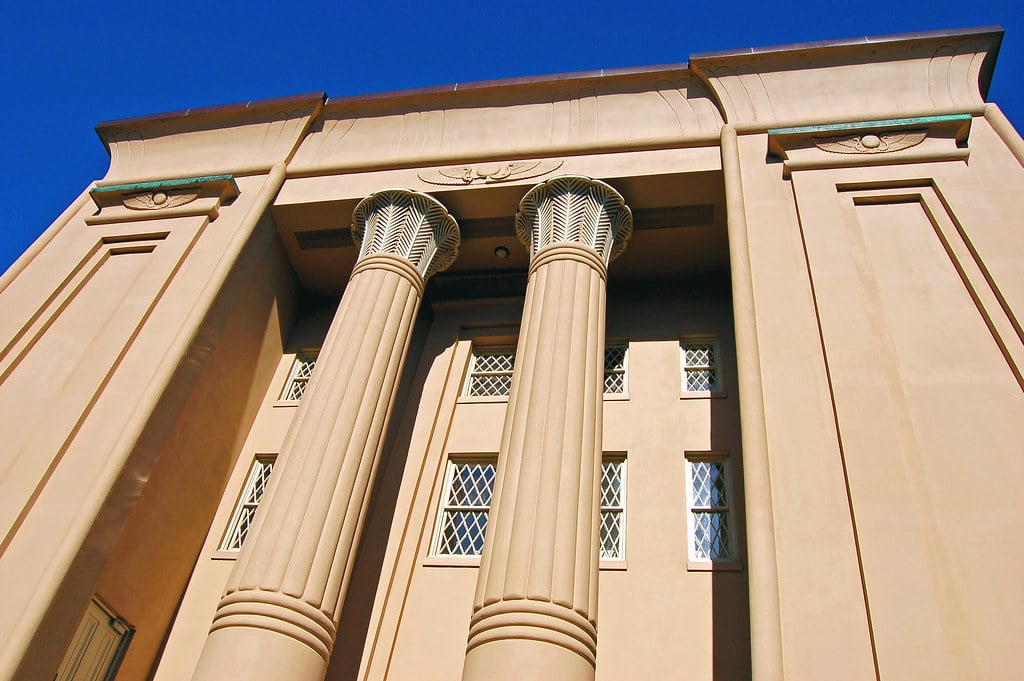
Exterior of the Egyptian Building (1845), an Egyptian Revival landmark on the VCU MCV campus in Richmond
Other Dark Tourism Site

Egyptian Building (Medical College of Virginia)

Richmond, VA

The Egyptian Building is a National Historic Landmark designed in 1845 by architect Thomas Somerville Stewart for the Medical Department of Hampden-Sydney College — the predecessor of the Medical College of Virginia (now VCU School of Medicine). It is the oldest medical college building in the American South and one of the nation's foremost surviving examples of Egyptian Revival architecture. Originally housing ventilated wards and dissection rooms on its upper floors, the building was the locus of 19th-century medical training that included unlawful procurement of cadavers, documented historically by the 1994 discovery of human remains in the East Marshall Street Well one block away.

$ All Ages Family: Moderate
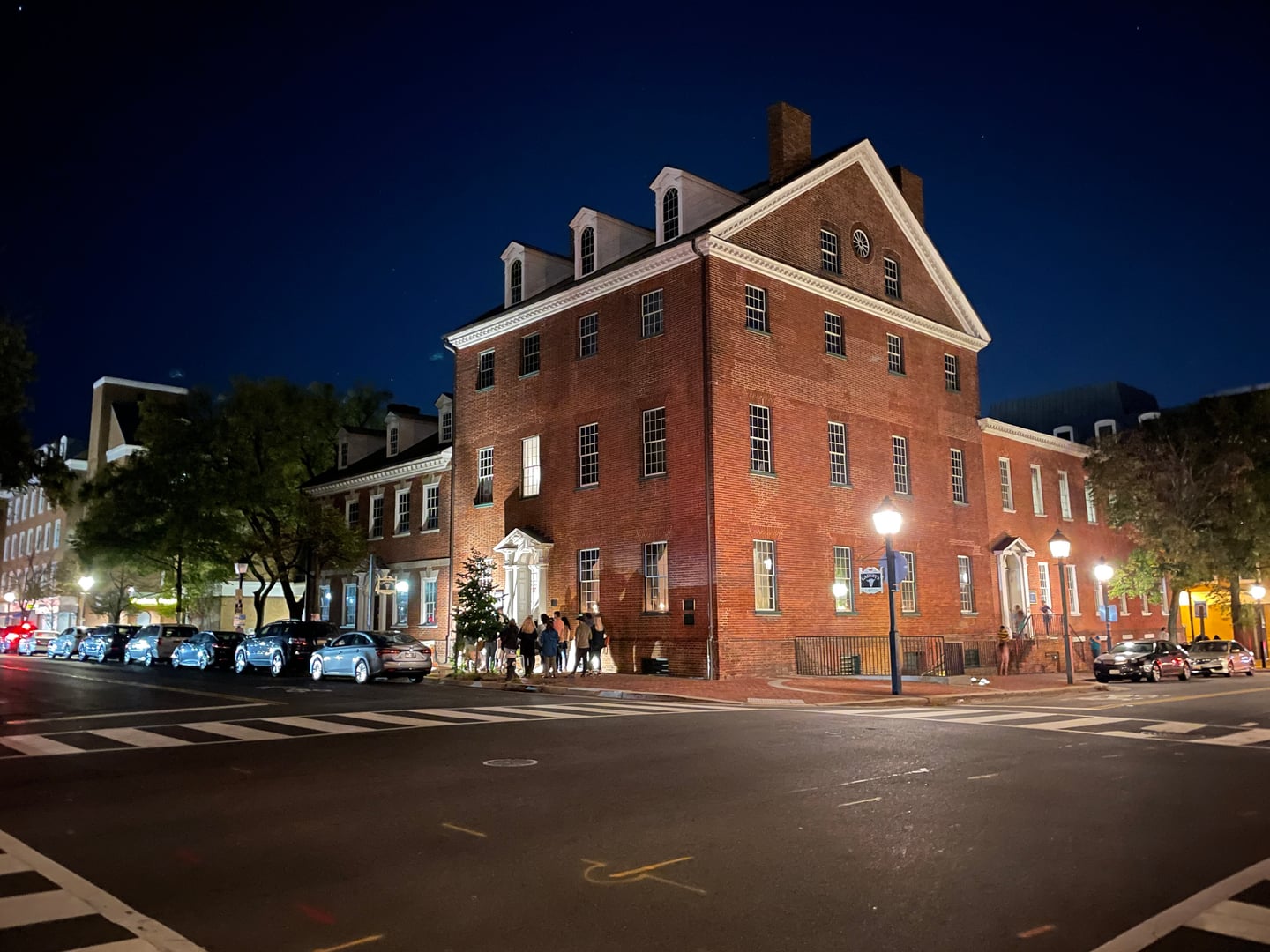
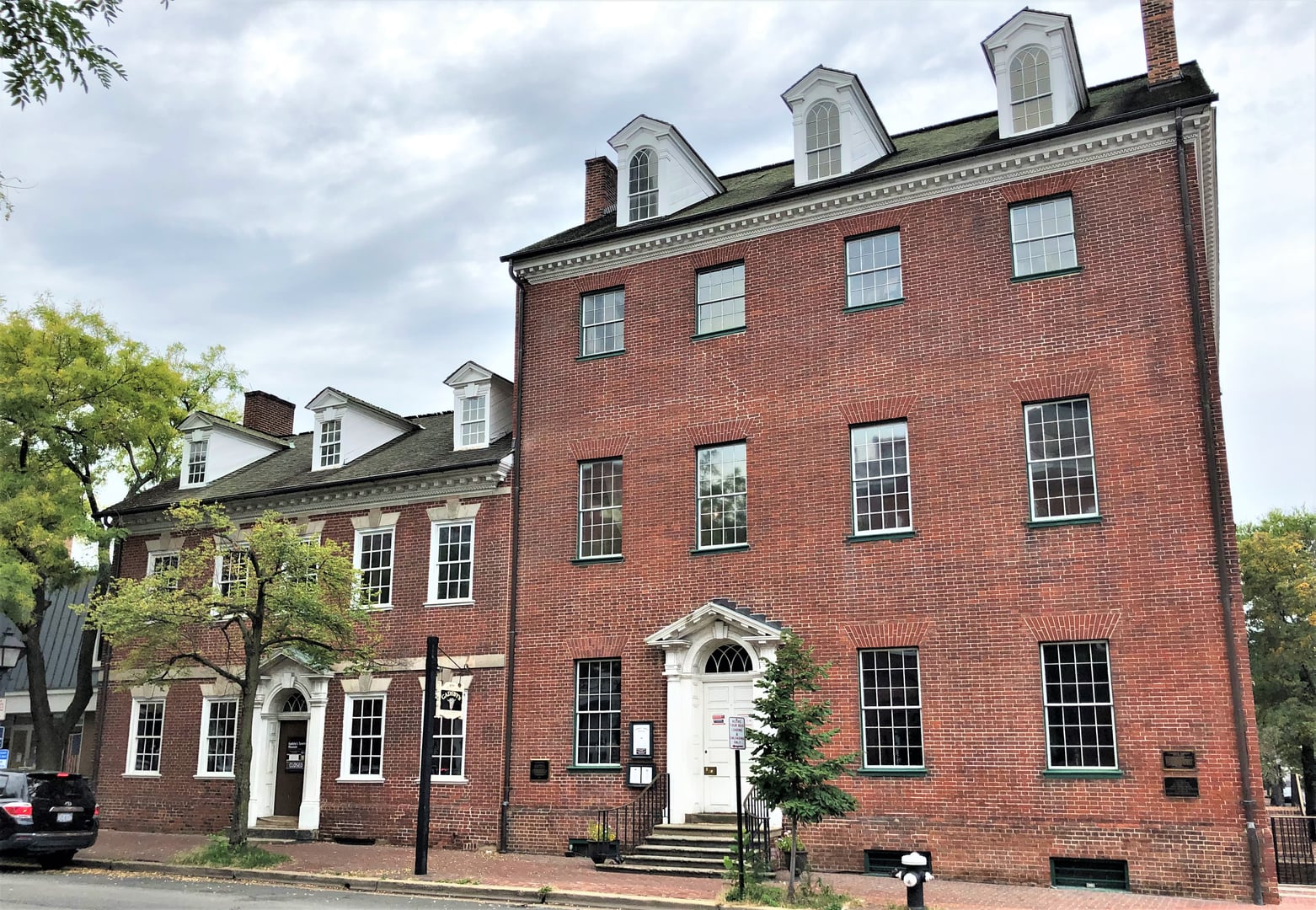
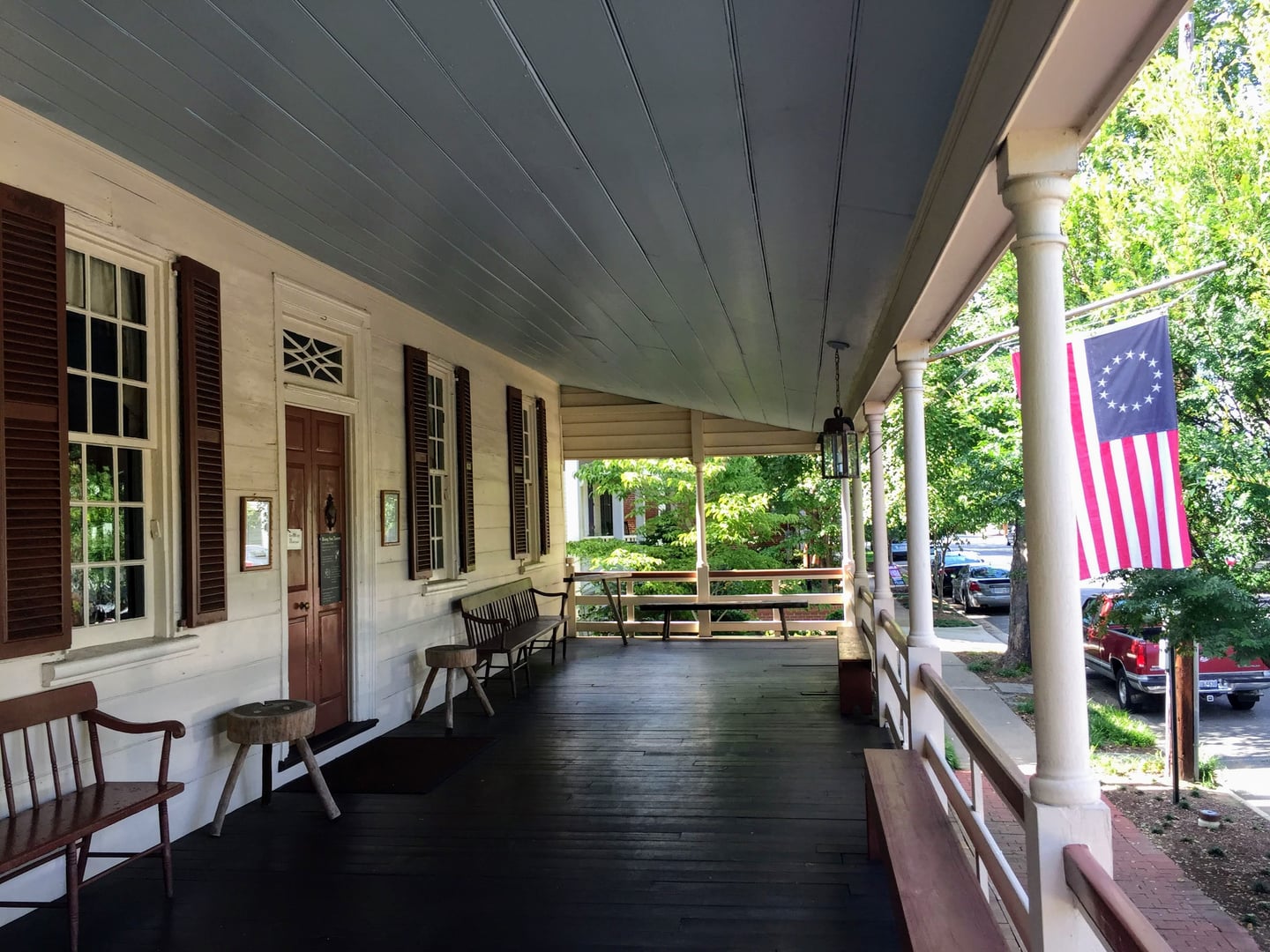
Brick exterior of Gadsby's Tavern on North Royal Street in Old Town Alexandria, Virginia
Haunted Dining / Bar

Gadsby's Tavern

Alexandria, VA

Gadsby's Tavern in Alexandria, Virginia consists of two 18th-century buildings: a circa-1785 tavern and the 1792 City Hotel. Named for Englishman John Gadsby, who operated both from 1796 to 1808, the complex hosted George Washington, Thomas Jefferson, and the Marquis de Lafayette. Washington's birthday celebrations were held here for years. The buildings are now a working restaurant and a city-operated museum.

$$$ All Ages Family: High
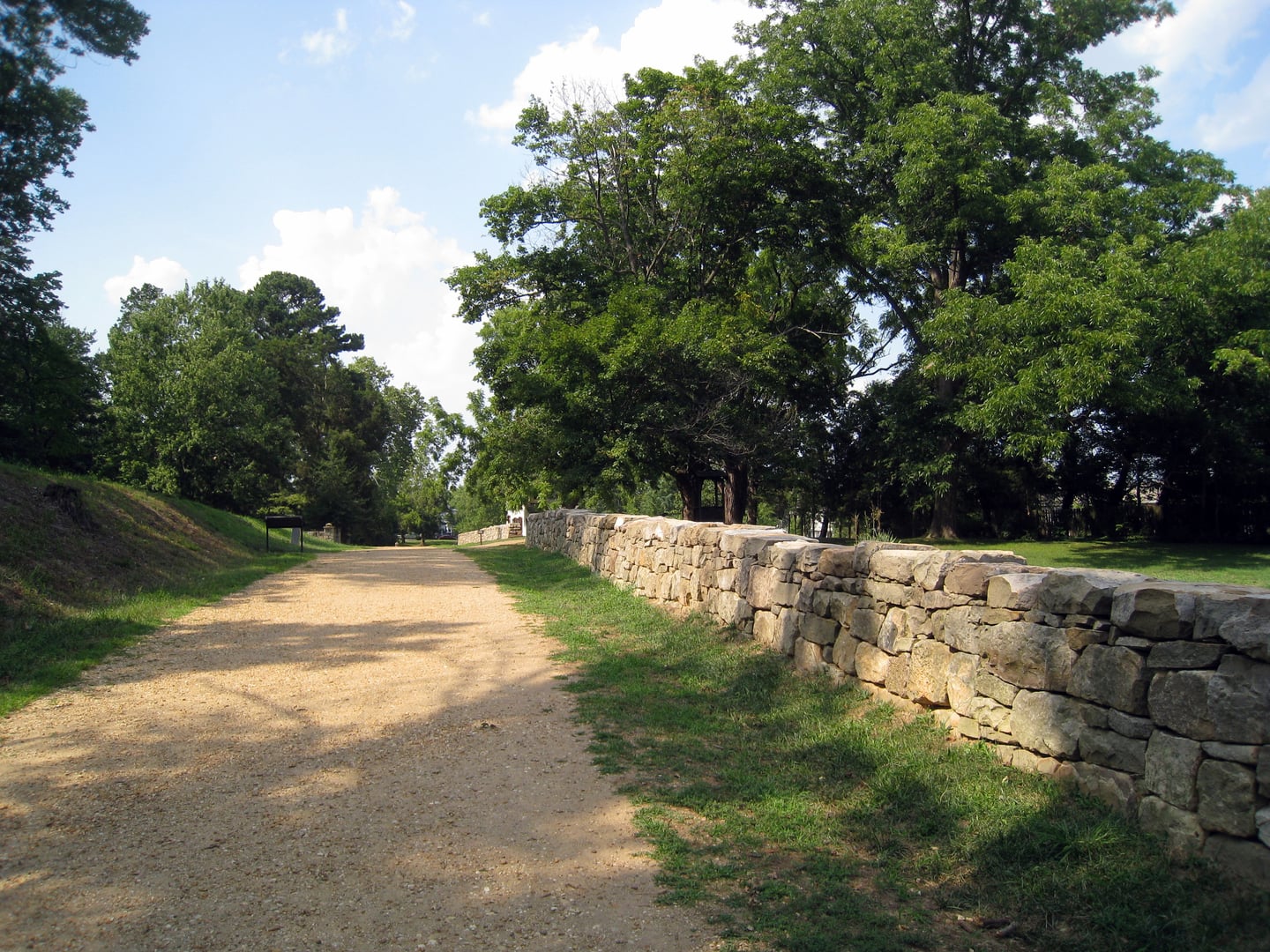
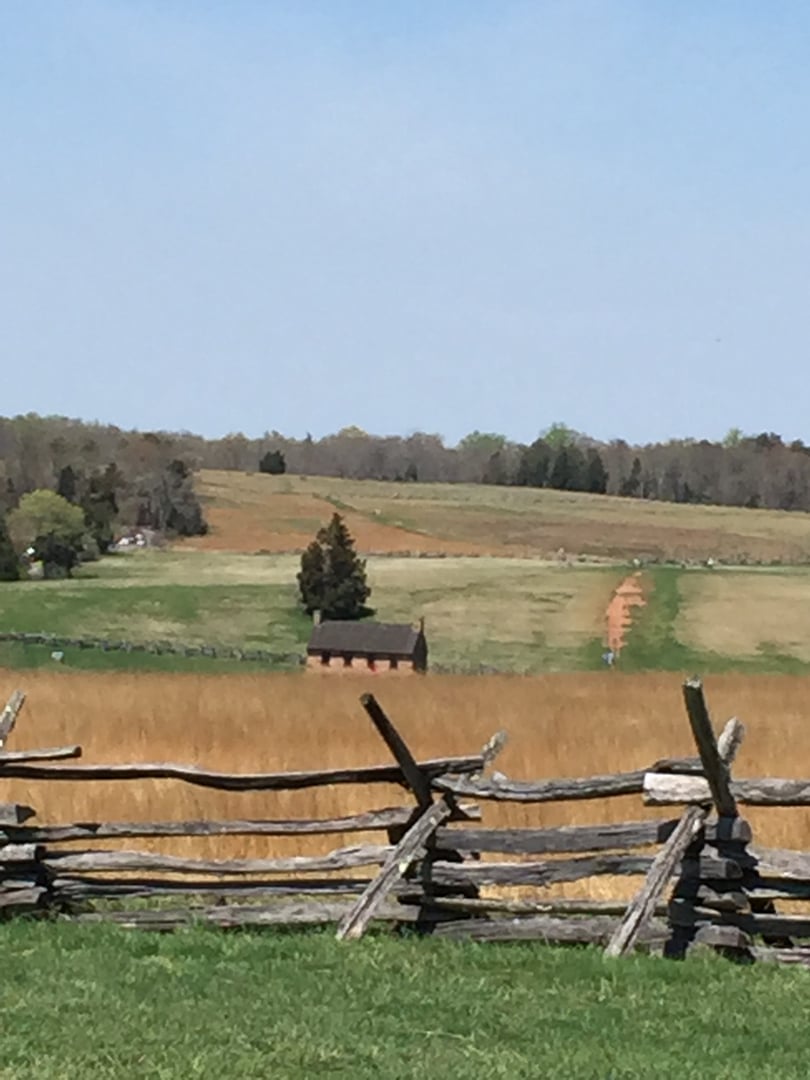
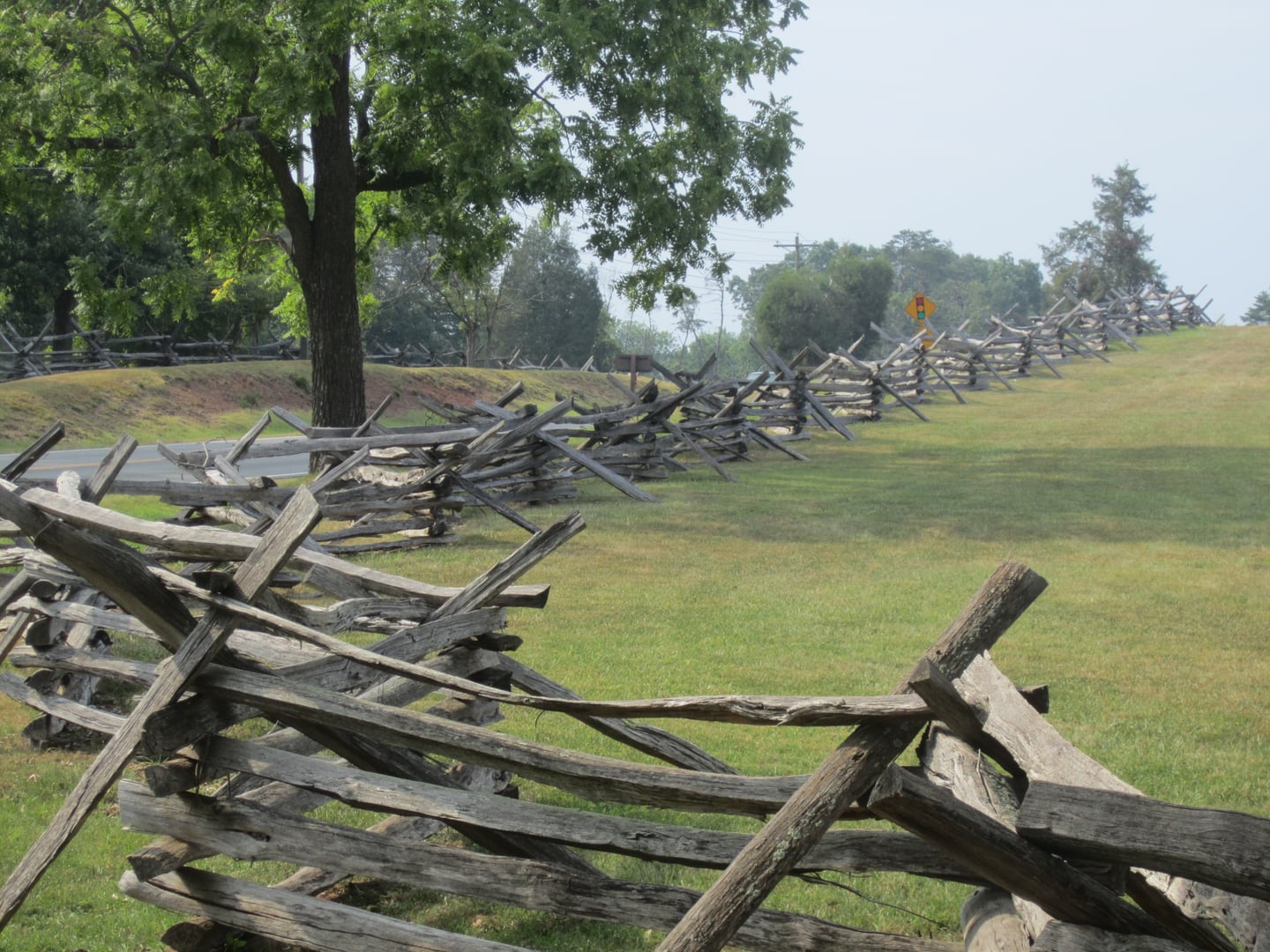
A period-style wooden fence runs across the preserved Civil War battlefield at Manassas National Battlefield Park in Virginia
Battlefield / Military Site

Manassas National Battlefield Park

Manassas, VA

Manassas National Battlefield Park preserves over 5,000 acres of the ground on which the First and Second Battles of Bull Run were fought in July 1861 and August 1862. The First Battle was the first major land engagement of the American Civil War. The park was established in 1936 and listed on the National Register of Historic Places in 1966.

$ All Ages Family: High
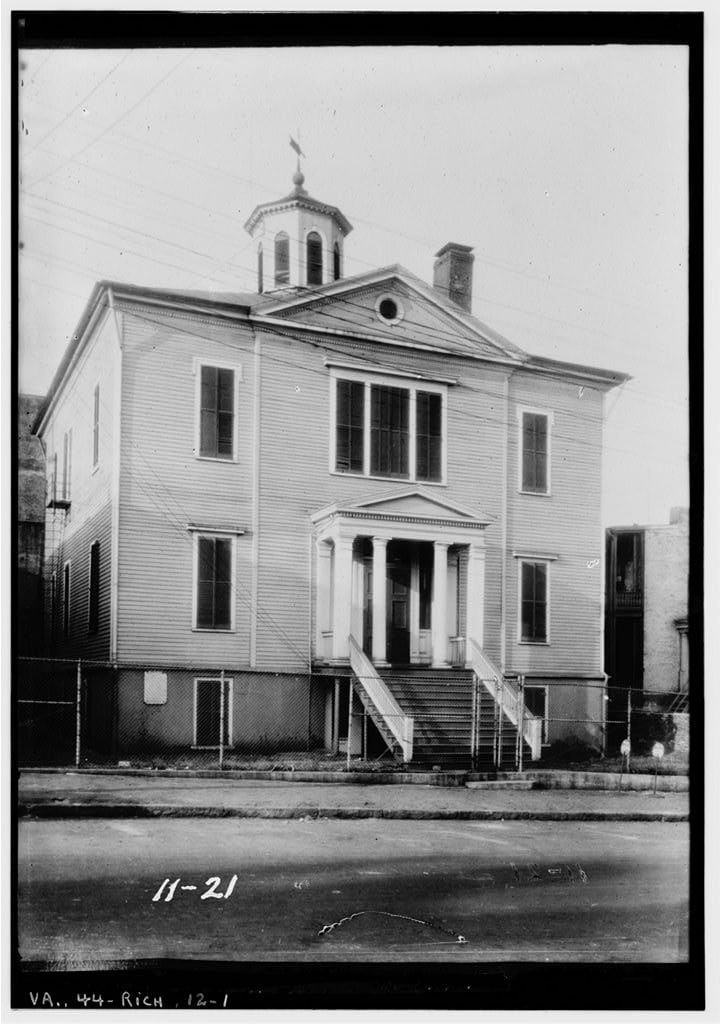
HABS VA-11-21 northeast front elevation of Mason's Hall at 1805 East Franklin Street, Richmond, Virginia, the oldest continuously used Masonic meeting hall in the United States.
Museum / Historical Site

Mason's Hall

Richmond, VA

Mason's Hall was begun in 1785 and completed by 1787 in Richmond's Shockoe Bottom. It is the oldest Masonic temple in continuous use in the United States. Edmund Randolph and John Marshall were members; the Marquis de Lafayette was made an honorary member here in 1824. The building served as a makeshift hospital during the War of 1812.

$ All Ages Family: High

More in Virginia

Richmond — 15

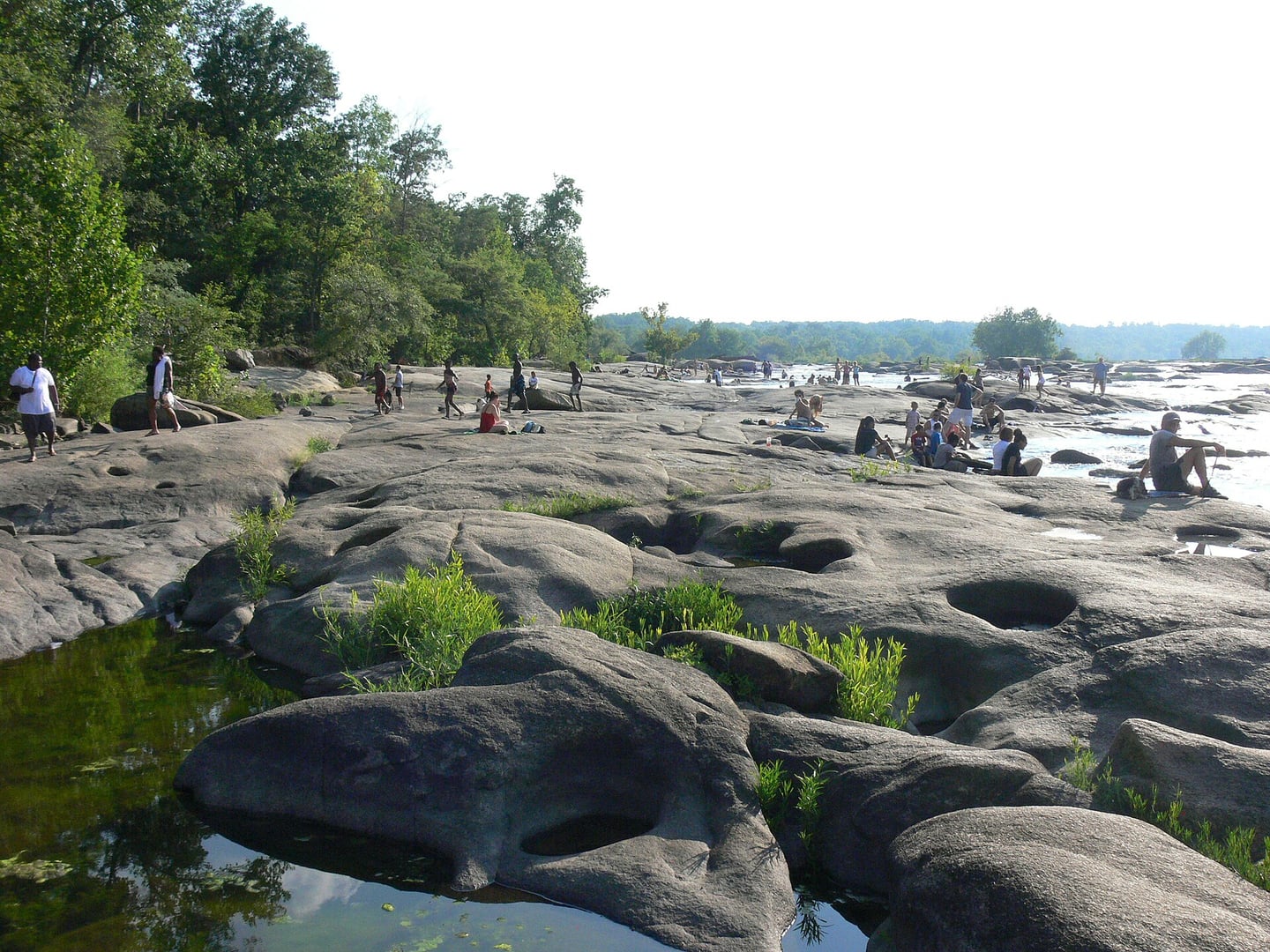
Visitors on the granite rocks along the James River shoreline of Belle Isle, Richmond, Virginia, with the city visible in the background
Prison / Reformatory

Belle Isle (Confederate Prison Site)

Richmond, VA

Belle Isle is a 54-acre island in the James River that operated as a Confederate prisoner-of-war camp from 1862 to early 1865, holding approximately 30,000 Union enlisted soldiers during its existence with peak overcrowding far beyond its intended capacity. Disease, exposure, and starvation killed as many as 1,000 prisoners according to most accepted estimates. After the war the island hosted ironworks and a hydroelectric power plant (1904-1963), and in 1973 it became part of the James River Park System.

$ All Ages Family: Moderate
Marquee and French Empire facade of the 1928 Byrd Theatre on West Cary Street in the Carytown neighborhood of Richmond, Virginia.
Theater / Performance Venue

The Byrd Theatre

Richmond, VA

The Byrd Theatre opened on December 24, 1928, on West Cary Street in Richmond's Carytown neighborhood. Designed by architect Fred Bishop in an opulent French Empire style, the 1,400-seat movie palace remains in continuous operation as a cinema and live-performance venue. Robert Coulter served as manager from opening night until his retirement in 1971.

$ All Ages Family: High
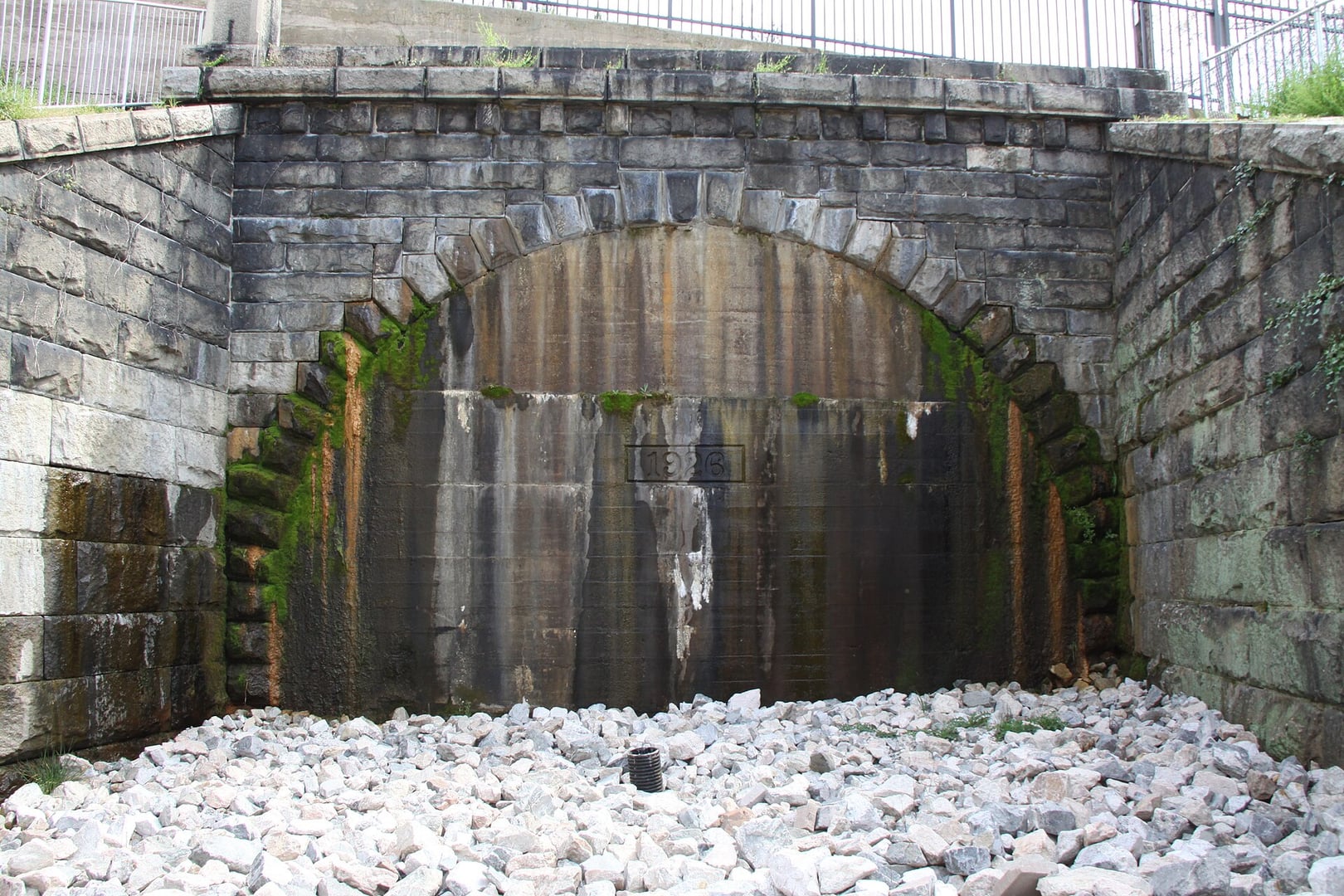
Sealed western portal of the Church Hill Tunnel beneath Jefferson Park, Richmond, Virginia
Other Dark Tourism Site

Church Hill Tunnel

Richmond, VA

The Church Hill Tunnel was built in 1873 by the Chesapeake & Ohio Railway to carry rail traffic approximately 4,000 feet under the Church Hill neighborhood of Richmond. The tunnel suffered chronic structural problems in its soft clay roof and was largely abandoned by the 1900s. On October 2, 1925, the western portion of the roof collapsed onto a work train, killing engineer Thomas Joseph Mason, severely injuring fireman Benjamin F. Mosby (who died of his burns at the hospital), and trapping at least two laborers—Richard Lewis and a worker identified only as 'H. Smith'—whose bodies were never recovered. The railroad sealed both portals with concrete after a nine-day rescue attempt failed.

$ All Ages Family: Moderate
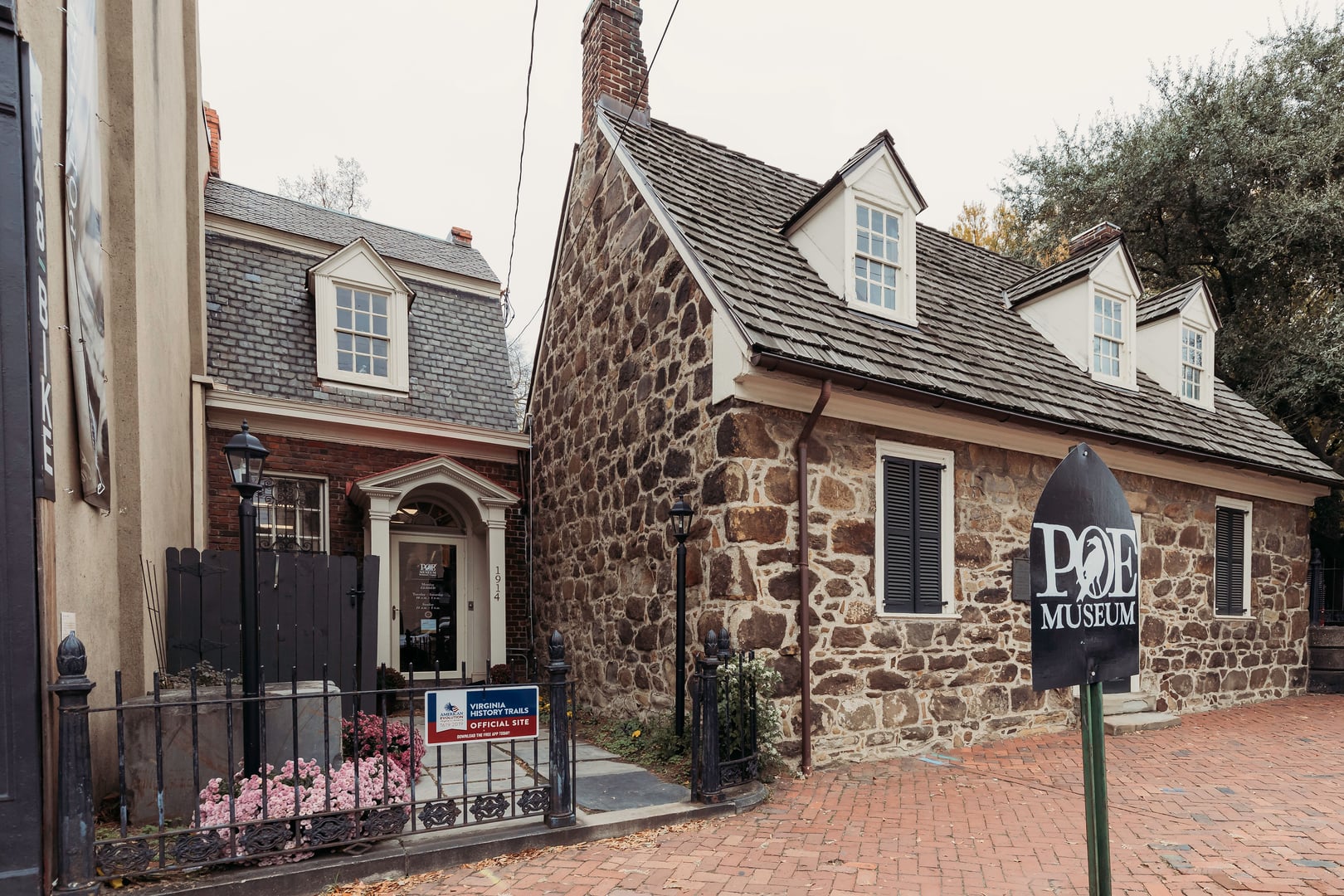
Entrance to the Edgar Allan Poe Museum centered on the c.1740 Old Stone House in Shockoe Bottom, Richmond, Virginia.
Museum / Historical Site

Edgar Allan Poe Museum (Old Stone House)

Richmond, VA

The Edgar Allan Poe Museum opened as the Poe Shrine in 1922 and is centered on the Old Stone House, built around 1740 by German immigrant Jacob Ege and widely cited as the oldest original residential building in Richmond. The complex occupies five buildings in Shockoe Bottom and holds one of the world's most comprehensive collections of Poe manuscripts, personal artifacts, and first editions.

$ All Ages Family: High
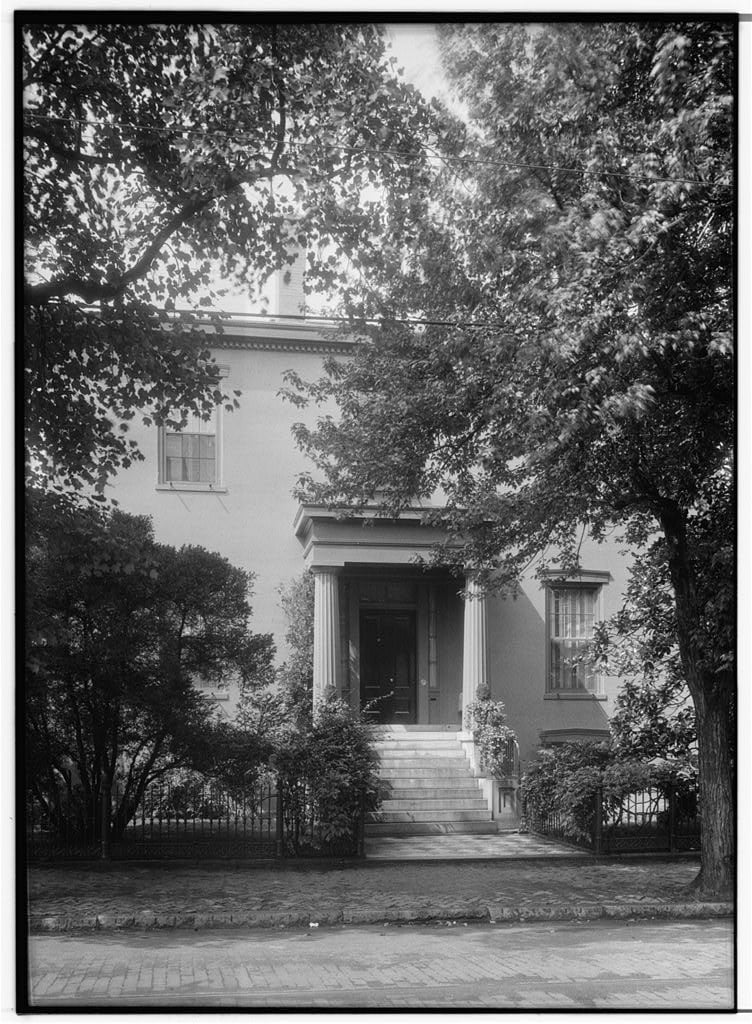
HABS exterior photograph of the Branch-Glasgow House (Ellen Glasgow House) at 1 West Main Street, Richmond, Virginia (HABS VA-857)
Haunted House / Historic Home

Ellen Glasgow House

Richmond, VA

The Ellen Glasgow House, also known as the Branch-Glasgow House, was built in 1841 as a Greek Revival townhouse at the southwest corner of West Main and Foushee Streets. Ellen Glasgow lived there from 1887 until her death in 1945 and produced most of her major novels in its second-floor study. It was designated a National Historic Landmark in 1971.

$ All Ages Family: High
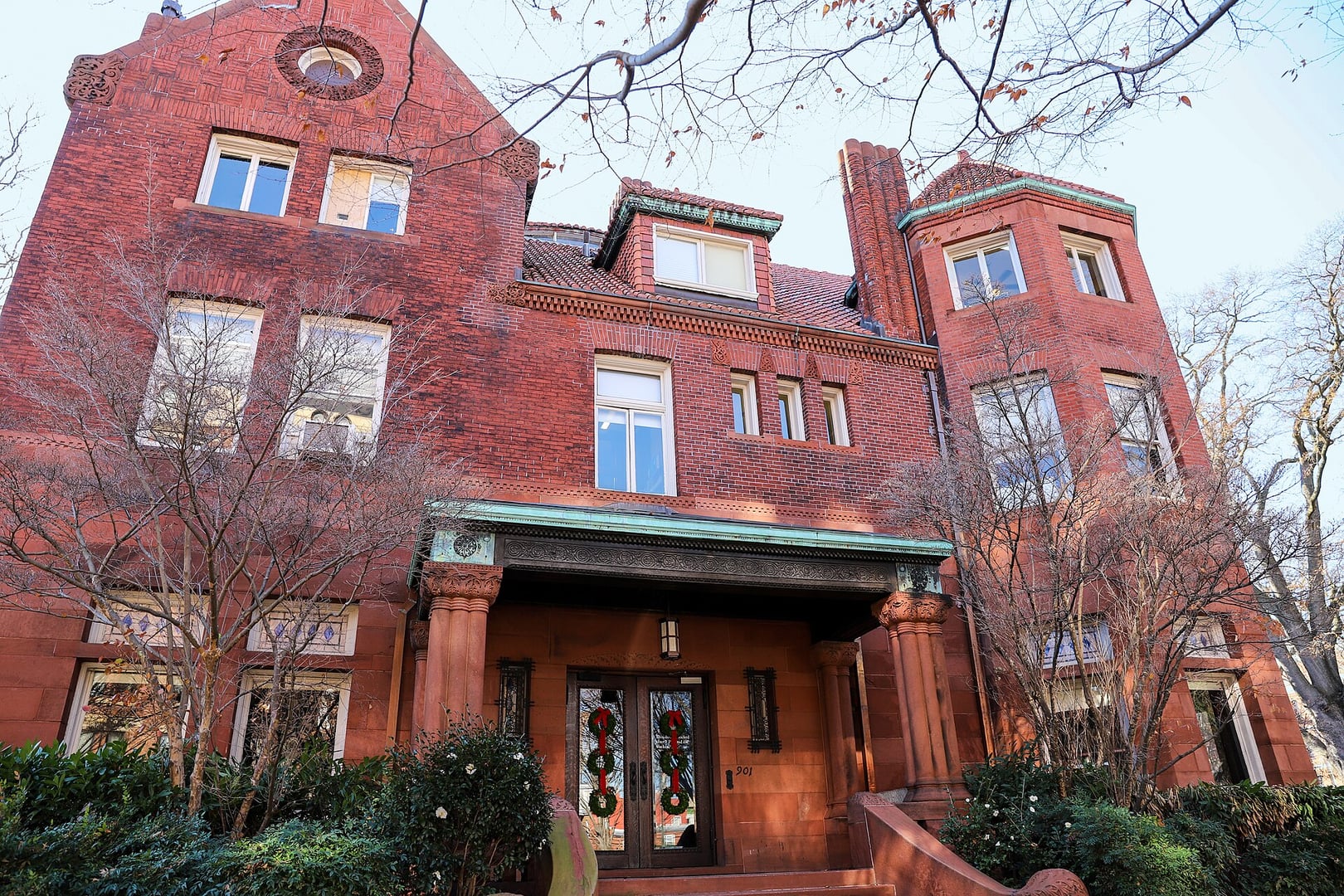
Ginter House exterior at 901 West Franklin Street, Richmond Virginia — a three-and-a-half-story Richardsonian Romanesque mansion with polygonal tower and patterned brick, built 1888-1892 for Lewis Ginter
Haunted House / Historic Home

Ginter House (VCU Office of the Provost)

Richmond, VA

The Ginter House is a three-and-a-half-story Richardsonian Romanesque mansion designed by Harvey L. Page and William Winthrop Kent and built 1888-1892 for cigarette magnate and philanthropist Lewis Ginter. After Ginter's death in 1897 it passed to his niece Grace Arents, then to the Richmond School of Social Work and Public Health in 1930, and eventually to Virginia Commonwealth University. The building now serves as VCU's Office of the Provost.

$ All Ages Family: High
View across the historic rolling grounds of Hollywood Cemetery overlooking the James River in Richmond, Virginia.
Cemetery / Burial Ground

Hollywood Cemetery

Richmond, VA

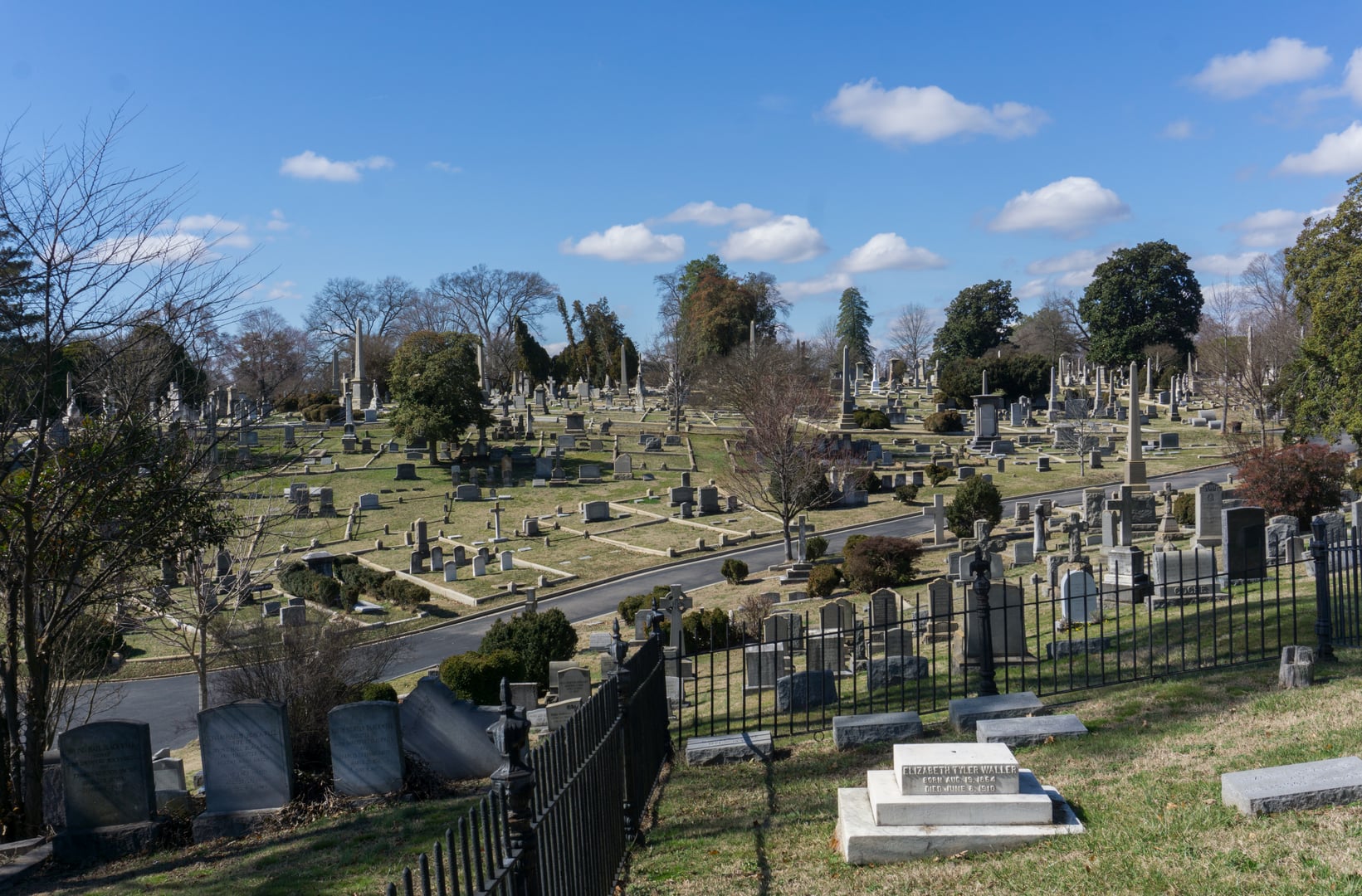
Hollywood Cemetery was founded in 1847 by William Haxall and Joshua Fry, modeled on Mount Auburn in Cambridge, Massachusetts. Architect John Notman designed the rolling 135-acre garden cemetery overlooking the James River. It became the burial place of Presidents James Monroe and John Tyler, Confederate President Jefferson Davis, and approximately 18,000 Confederate veterans, and was listed on the National Register of Historic Places in 1969.

$ All Ages Family: High
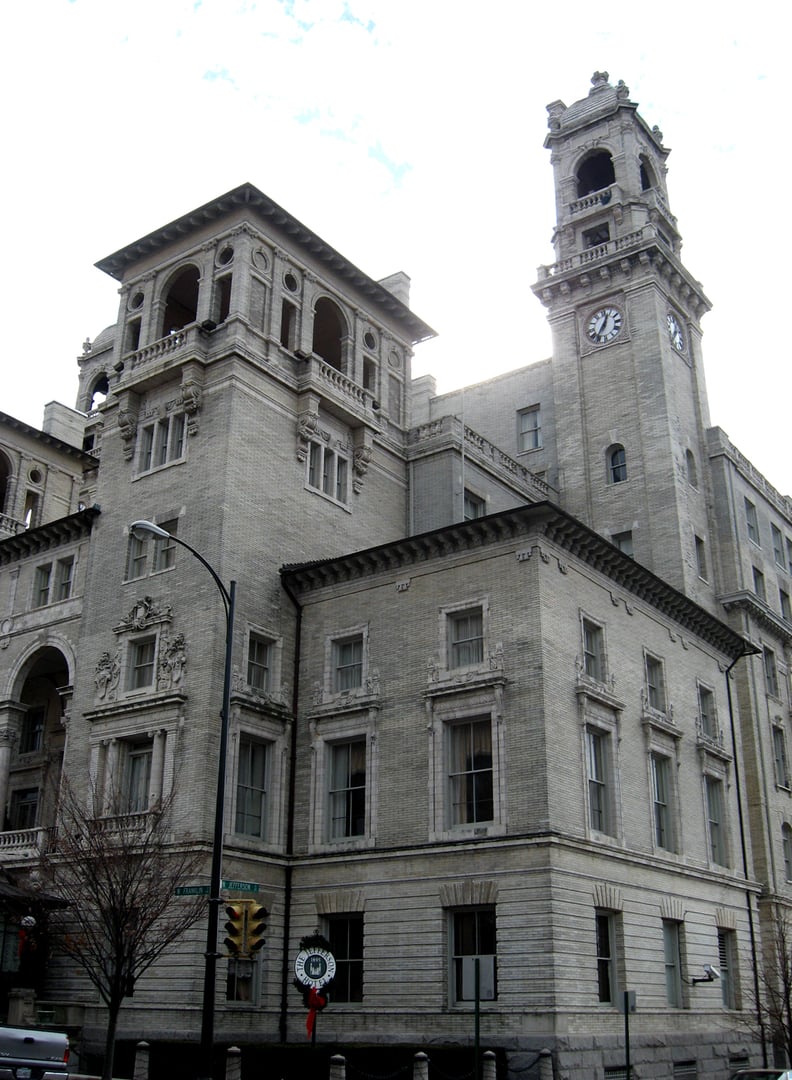
Beaux-Arts facade of The Jefferson Hotel on Franklin Street in downtown Richmond, Virginia, built 1895.
Haunted Hotel / Inn

The Jefferson Hotel

Richmond, VA

The Jefferson Hotel was built by Richmond tobacco magnate Lewis Ginter and opened October 31, 1895. Designed by Carrère and Hastings in the Beaux-Arts style, the hotel was conceived as the most luxurious in the American South. The property has been a National Historic Landmark since 1969 and remains a AAA Five Diamond hotel.

$$$$ All Ages Family: High
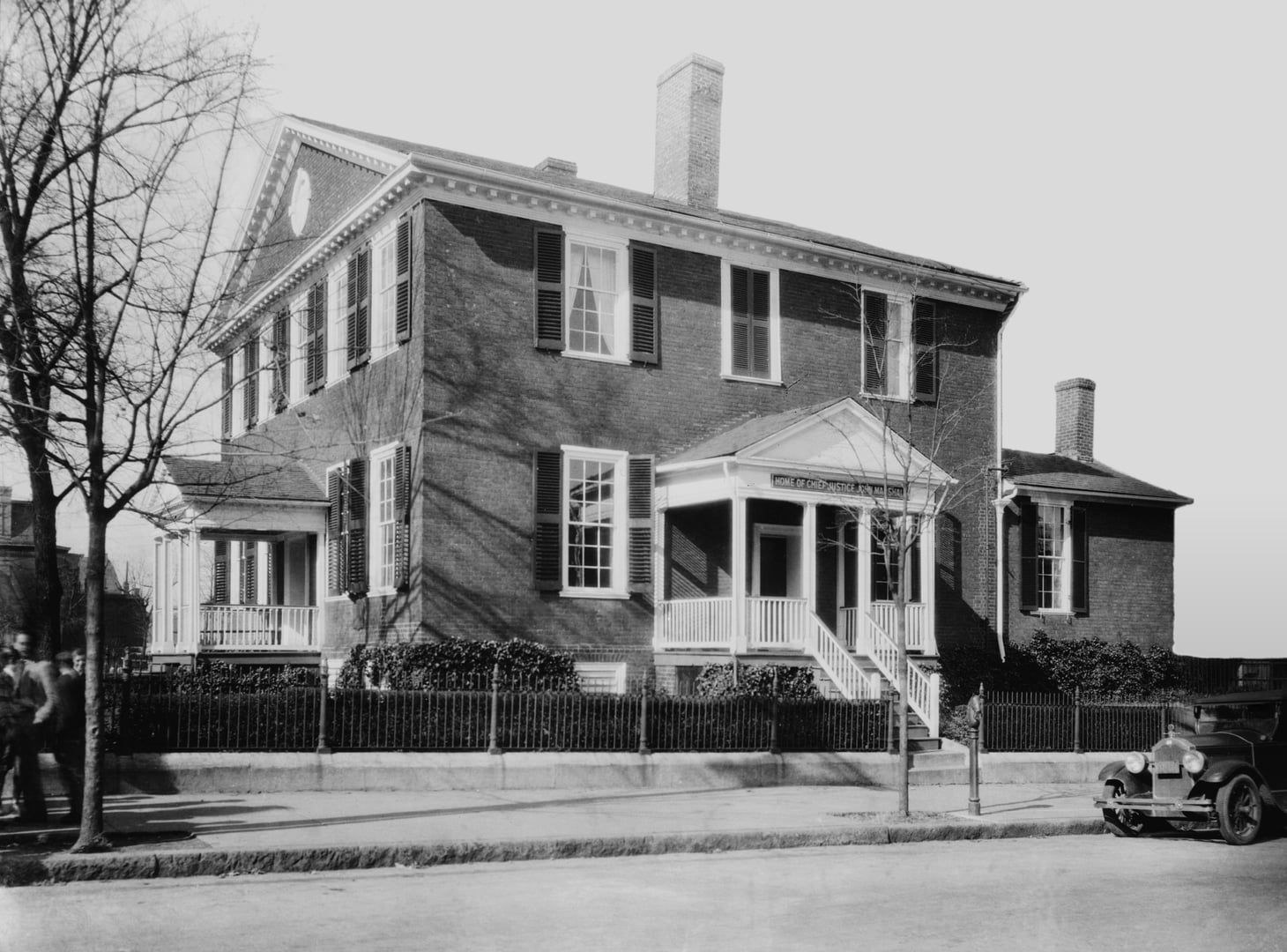
Federal-style brick exterior of the 1790 John Marshall House in the Court End neighborhood of Richmond, Virginia.
Haunted House / Historic Home

John Marshall House

Richmond, VA

The John Marshall House was built in 1790 by future Chief Justice John Marshall in Richmond's Court End neighborhood. Marshall lived there with his wife Mary Willis 'Polly' Ambler Marshall and their family for 45 years until his death in 1835. The Federal-style brick house is a National Historic Landmark and is operated as a museum by Preservation Virginia.

$ All Ages Family: Moderate
Photo of Lumpkin's Slave Jail (Devil's Half Acre)
True Crime Site

Lumpkin's Slave Jail (Devil's Half Acre)

Richmond, VA

Lumpkin's Jail, operating from roughly the 1830s through April 1865, was Richmond's largest slave-trading complex and one of the most significant in the South. Robert Lumpkin acquired the property in 1844 and operated a compound that included a brick jail building, auction facilities, a tavern, and residential quarters. Enslaved people called it 'the Devil's Half Acre.' After emancipation, Mary Lumpkin — a formerly enslaved woman who had been with Robert Lumpkin — inherited the property and leased it to Baptist minister Nathaniel Colver, who founded a freedmen's seminary there in 1867.

$ All Ages Family: High
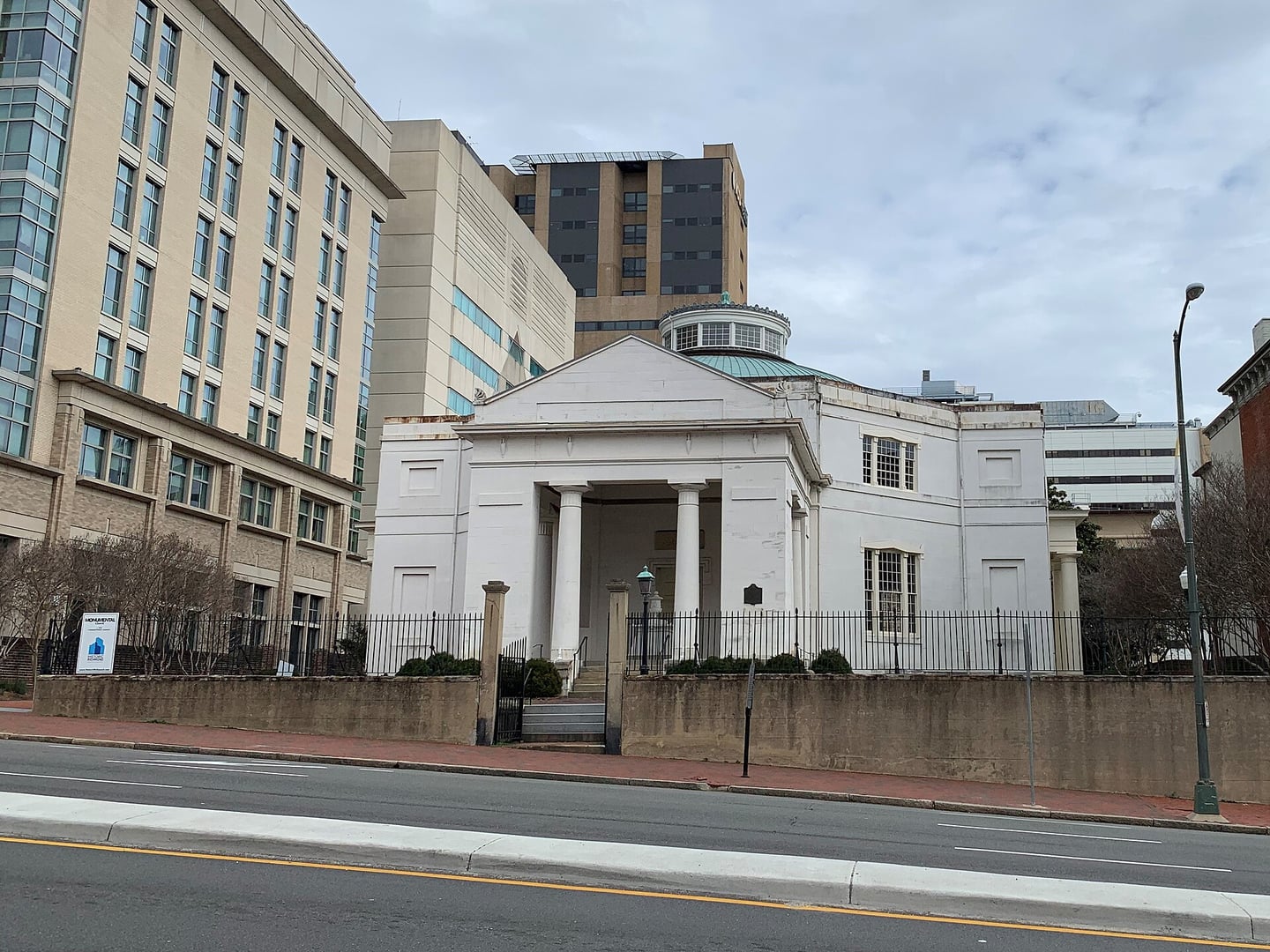
Greek Revival exterior of Monumental Church at 1224 East Broad Street, Richmond Virginia, with stone memorial portico and octagonal sanctuary dome
Other Dark Tourism Site

Monumental Church

Richmond, VA

Monumental Church stands at 1224 E Broad Street on the site of the Richmond Theatre fire of December 26, 1811, which killed 72 people including Virginia governor George William Smith and former U.S. senator Abraham B. Venable in what was the worst urban disaster in the early United States. The Greek Revival memorial church was commissioned by U.S. Chief Justice John Marshall, designed by Robert Mills (a pupil of Thomas Jefferson and architect of the Washington Monument), and built between 1812 and 1814. The remains of the fire victims are interred in a brick crypt beneath the sanctuary.

$ All Ages Family: Moderate
Photo of St. John's Church (Patrick Henry Site)
Museum / Historical Site

St. John's Church (Patrick Henry Site)

Richmond, VA

St. John's Episcopal Church was founded in 1741 on Church Hill in Richmond, on land donated by city founder William Byrd II, and is the city's oldest surviving church. On March 23, 1775, Patrick Henry delivered his famous call to arms — ending with 'Give me liberty, or give me death!' — at the Second Virginia Convention, which met at St. John's because no other building in Richmond was large enough to hold the delegates. The surrounding churchyard holds an estimated several thousand burials, including Declaration of Independence signer George Wythe.

$ All Ages Family: High
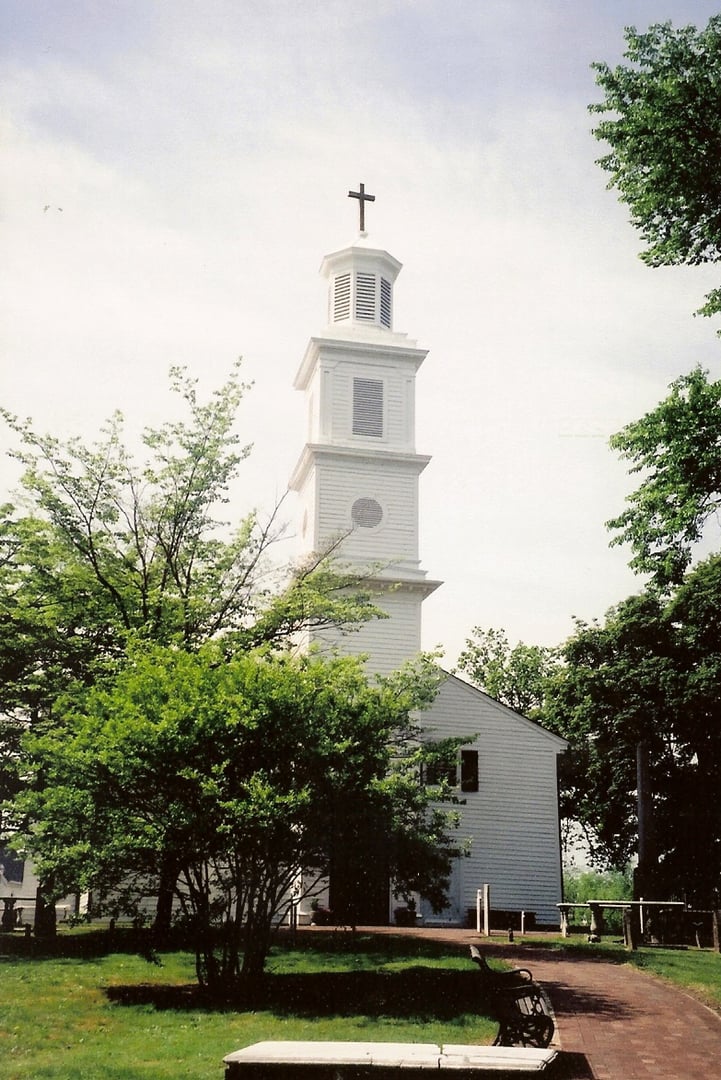
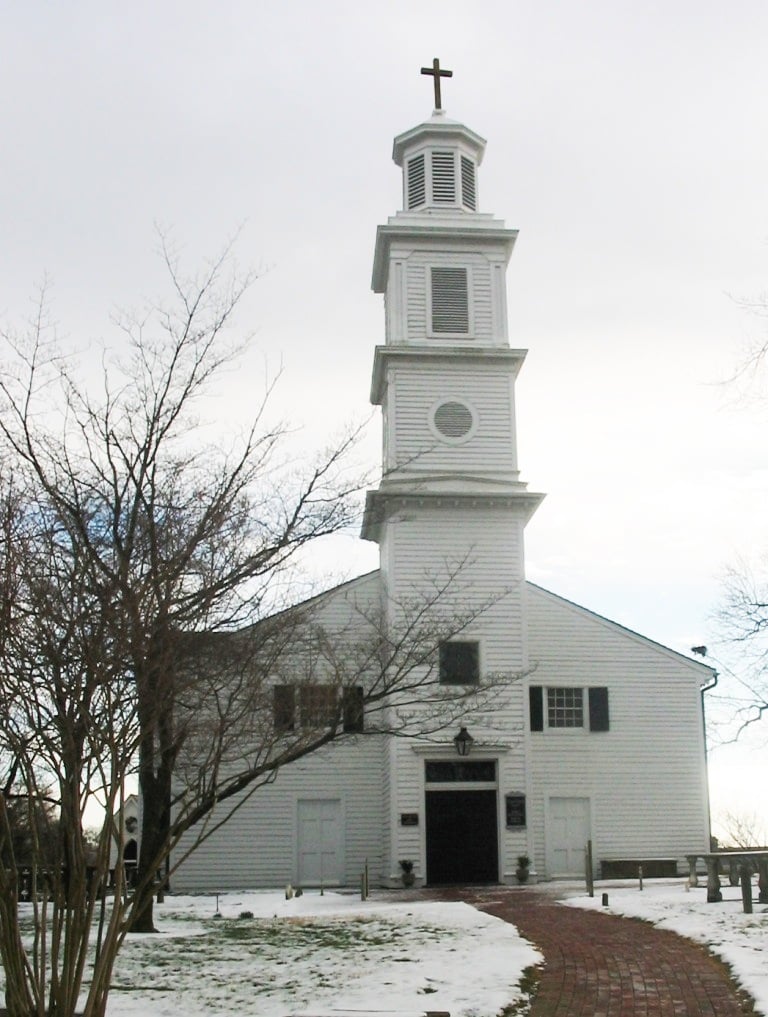
Exterior of St. John's Episcopal Church at 2401 E Broad Street in Richmond, Virginia — built 1741 on Church Hill, site of Patrick Henry's 1775 liberty speech
Other Dark Tourism Site

St. John's Episcopal Church

Richmond, VA

St. John's Episcopal Church is Richmond's oldest church, established in 1741 on land donated by city founder William Byrd II. It is most famous as the site where Patrick Henry delivered his 'Give me liberty, or give me death' speech at the Second Virginia Convention on March 23, 1775. The surrounding churchyard contains notable burials including U.S. Declaration of Independence signer George Wythe and Elizabeth Arnold Poe, mother of Edgar Allan Poe.

$ All Ages Family: High
Tuckahoe Plantation H-shaped colonial mansion, Thomas Jefferson childhood home near Richmond, Virginia
Haunted House / Historic Home

Tuckahoe Plantation

Richmond, VA

Tuckahoe Plantation, built circa 1733 along the James River west of Richmond, is one of Virginia's best-preserved early 18th-century plantation complexes. The property was developed by the Randolph family and is most famous as the boyhood home of Thomas Jefferson, who lived here from approximately 1745 to 1752 while his father Peter managed the estate during the wardship of Thomas Mann Randolph Jr. The plantation is listed on the National Register of Historic Places.

$ All Ages Family: High
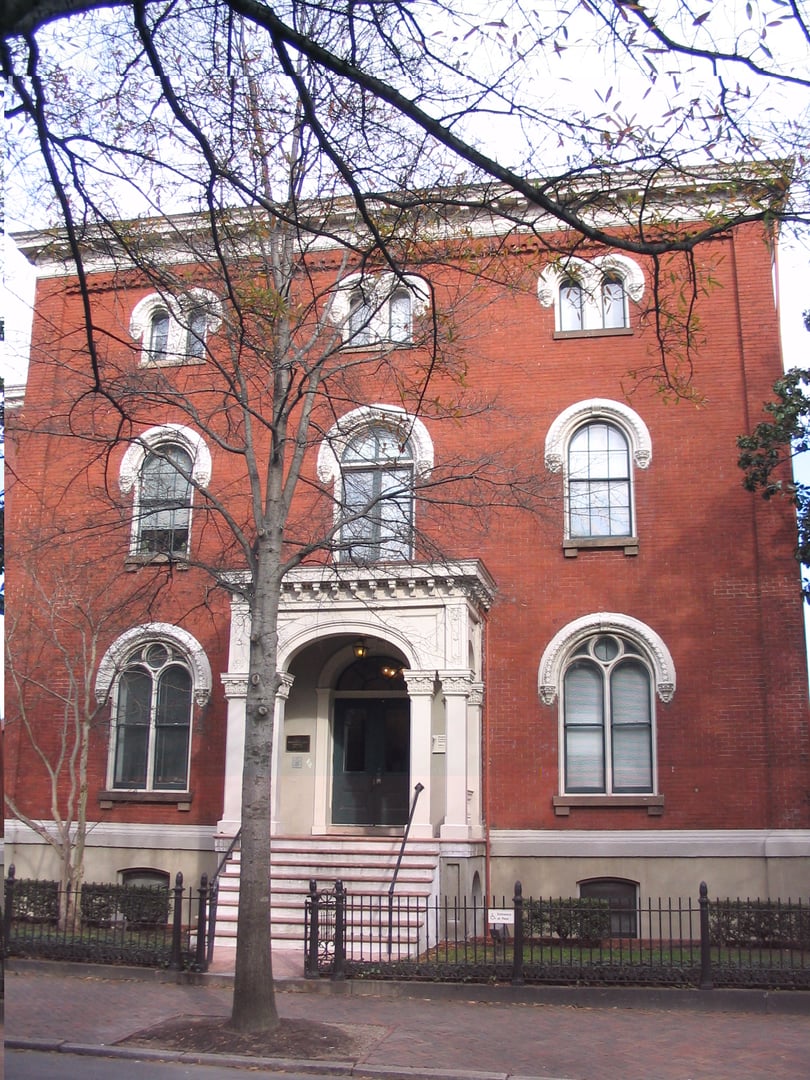
Exterior of the William H. Grant House at 1008 East Clay Street in Richmond, Virginia, an 1857 Italianate brick townhouse that served as Sheltering Arms Hospital from 1892 to 1965
Haunted House / Historic Home

William H. Grant House

Richmond, VA

The William H. Grant House is an Italianate three-story brick townhouse built in 1857 for Richmond tobacco merchant William H. Grant. From 1892 through 1965 the building housed the Sheltering Arms Hospital — Richmond's first free hospital — including a subbasement-level morgue and incinerator. It is now owned by Virginia Commonwealth University and houses the VCU Department of Dermatology and Risk Management. The property was added to the Virginia Landmarks Register in 1968 and the National Register of Historic Places in 1969.

$ All Ages Family: Moderate

Williamsburg — 11

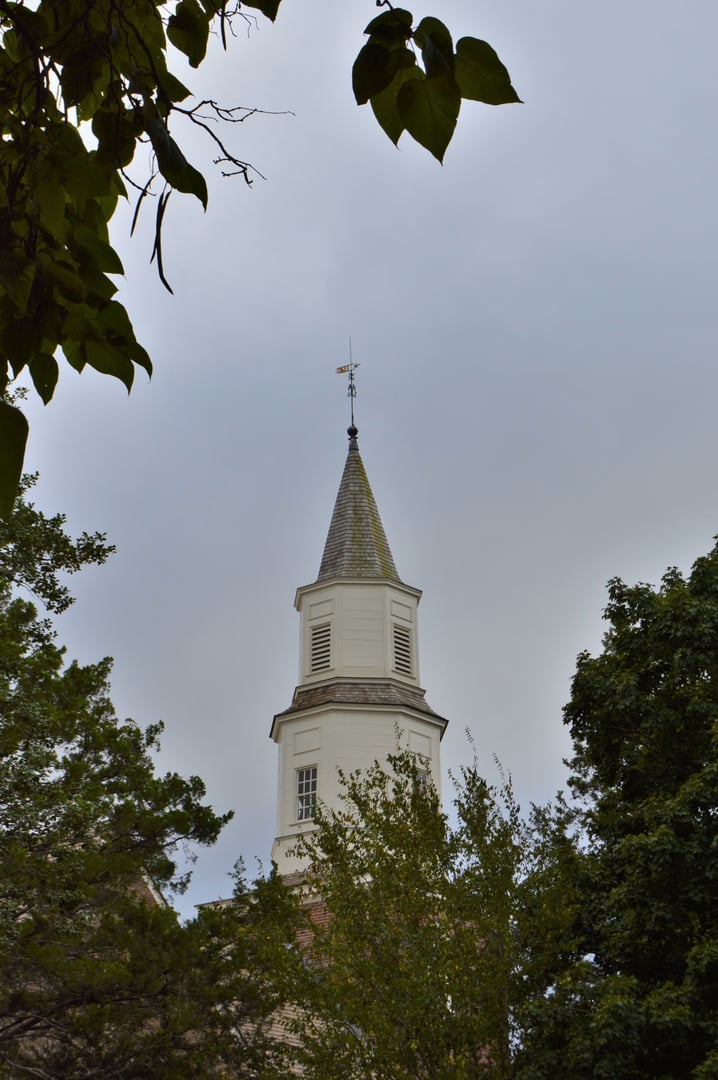
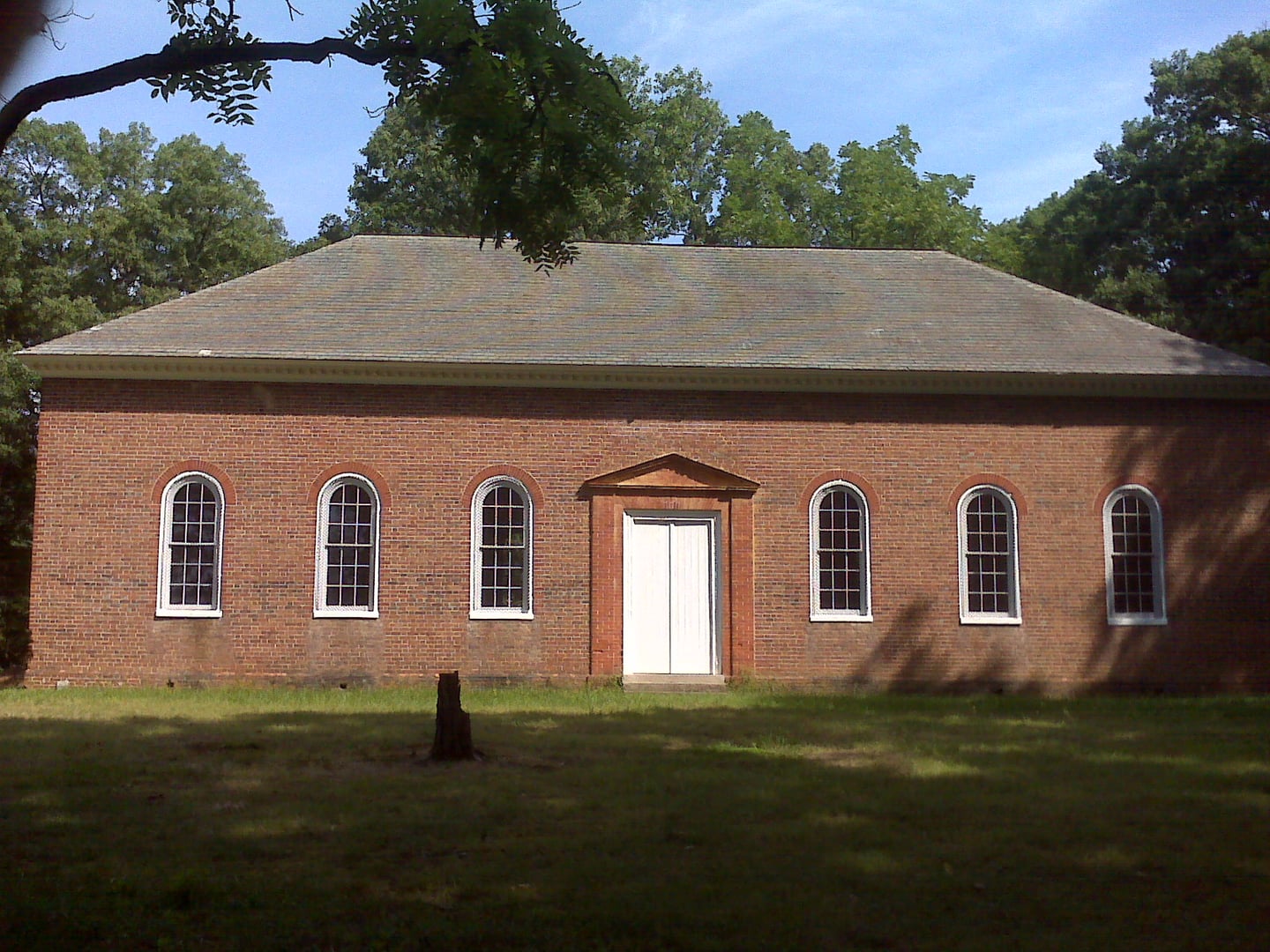
Exterior of Bruton Parish Church with white steeple, Colonial Williamsburg, Virginia
Cemetery / Burial Ground

Bruton Parish Church

Williamsburg, VA

Bruton Parish was established in 1674 by consolidating two earlier Virginia colonial parishes and is one of the oldest Episcopal congregations in continuous use in the United States. The current brick church was constructed 1711–1715, designated a National Historic Landmark in 1970, and served as a hospital for both Union and Confederate soldiers during the Battle of Williamsburg in May 1862.

$ All Ages Family: High
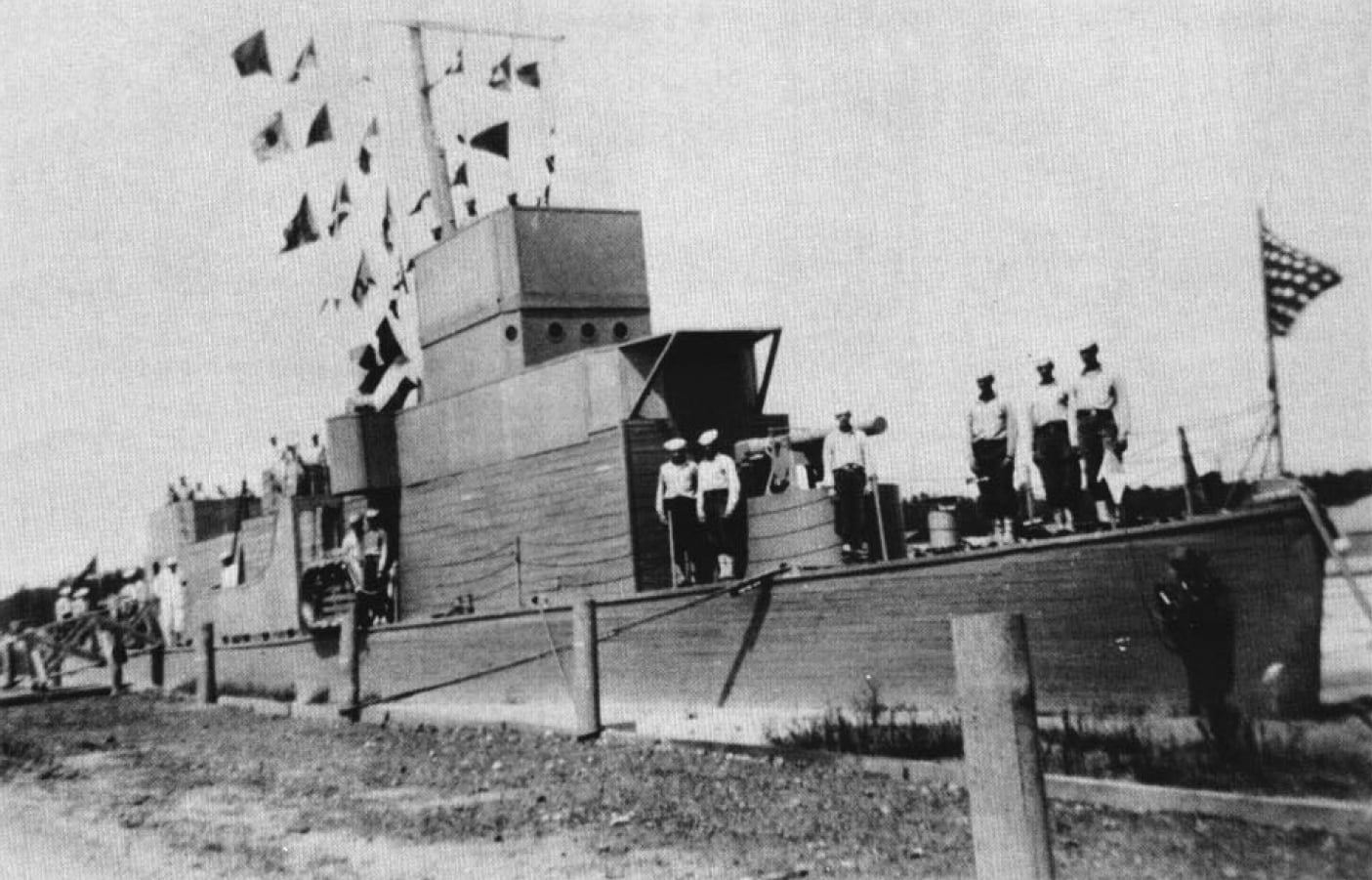
Historic c.1945 U.S. Navy training photograph of the 'Miss Never Sail' mock destroyer escort at Camp Peary, Virginia
Other Dark Tourism Site

Camp Peary

Williamsburg, VA

Camp Peary is a U.S. military intelligence training facility in Virginia with reported paranormal activity.

$ 18+ (Restricted military facility) Family: High
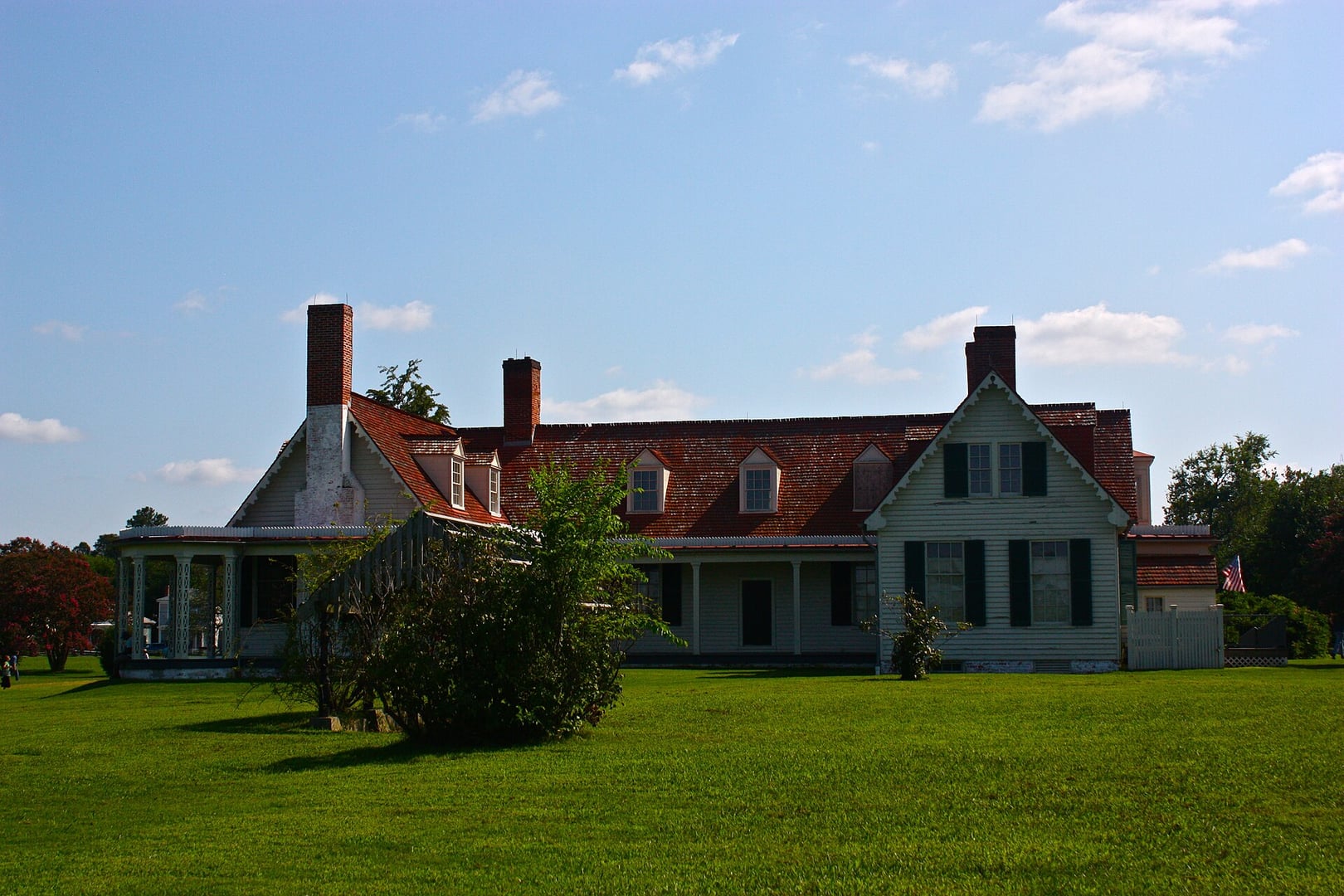
HABS exterior view of Carter's Grove Plantation main house, U.S. Route 60 vicinity, Williamsburg, Virginia (HABS VA-351)
Haunted House / Historic Home

Carter's Grove Plantation

Williamsburg, VA

Carter's Grove is a 1755 Georgian plantation house overlooking the James River in James City County, Virginia. Long owned and operated as a museum by the Colonial Williamsburg Foundation, the 476-acre estate was sold to a private buyer in 2007 and is no longer open to the public.

$ All Ages Family: Moderate
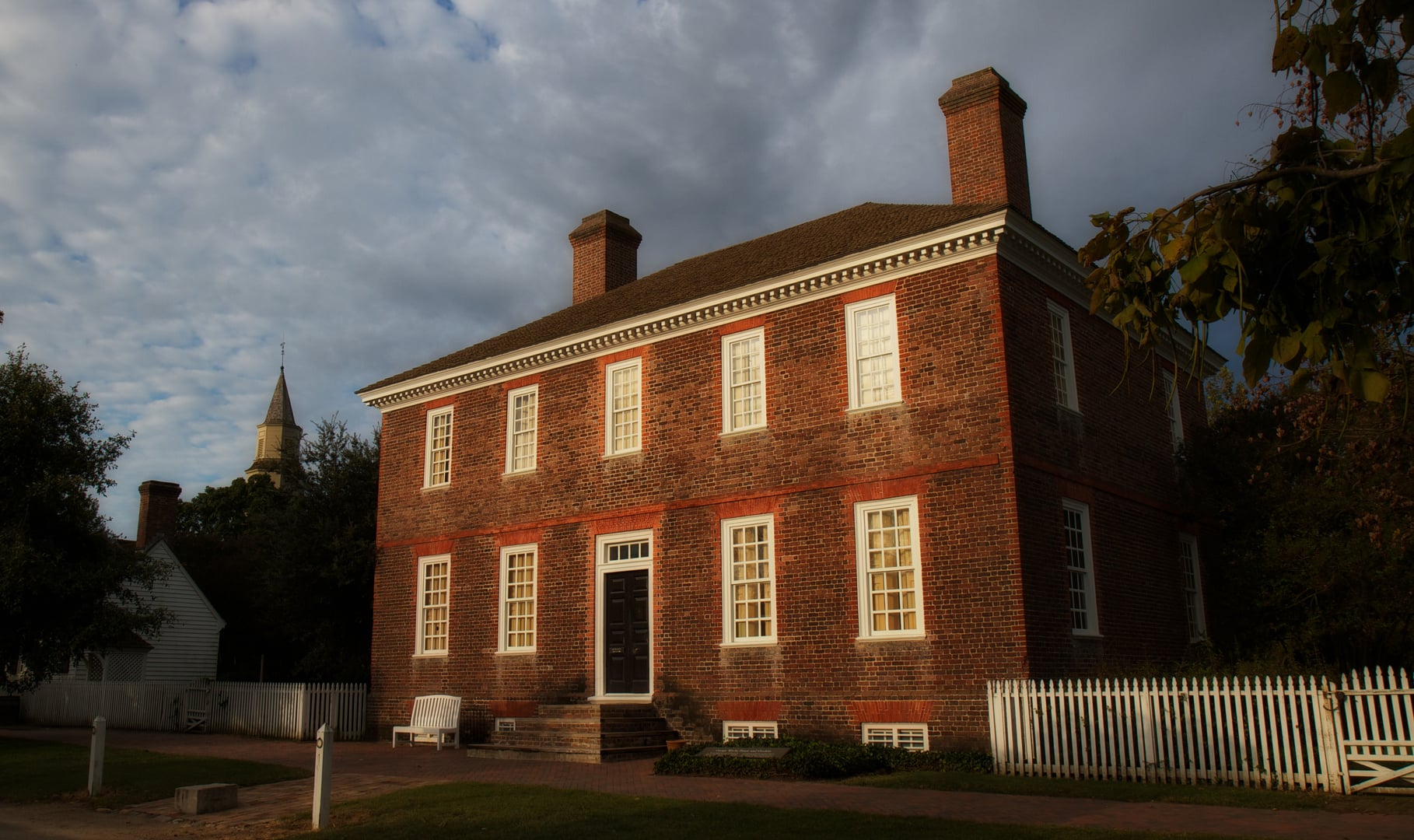
Georgian brick George Wythe House on the Palace Green in Colonial Williamsburg, Virginia
Museum / Historical Site

George Wythe House

Williamsburg, VA

The George Wythe House is a Georgian brick residence on Williamsburg's Palace Green, built around 1755 by Richard Taliaferro and given to his daughter Elizabeth on her marriage to George Wythe. Wythe — the first Virginian to sign the Declaration of Independence, the first American law professor, and mentor to Thomas Jefferson — was poisoned in Richmond in 1806 by his grandnephew George Sweeney. The house is now an interpreted museum operated by the Colonial Williamsburg Foundation.

$$$ All Ages Family: High
Front facade of the reconstructed Governor's Palace at Colonial Williamsburg, Virginia
Haunted House / Historic Home

Governor's Palace (Colonial Williamsburg)

Williamsburg, VA

The Governor's Palace served as the official residence of British royal governors of Virginia from 1722 and later of Patrick Henry and Thomas Jefferson, the first two governors of the Commonwealth. The original building burned on December 22, 1781, while in use as a Continental Army hospital. The Palace was reconstructed in the 1930s, during which 156 Revolutionary War soldiers' remains were unearthed.

$$$ All Ages Family: High
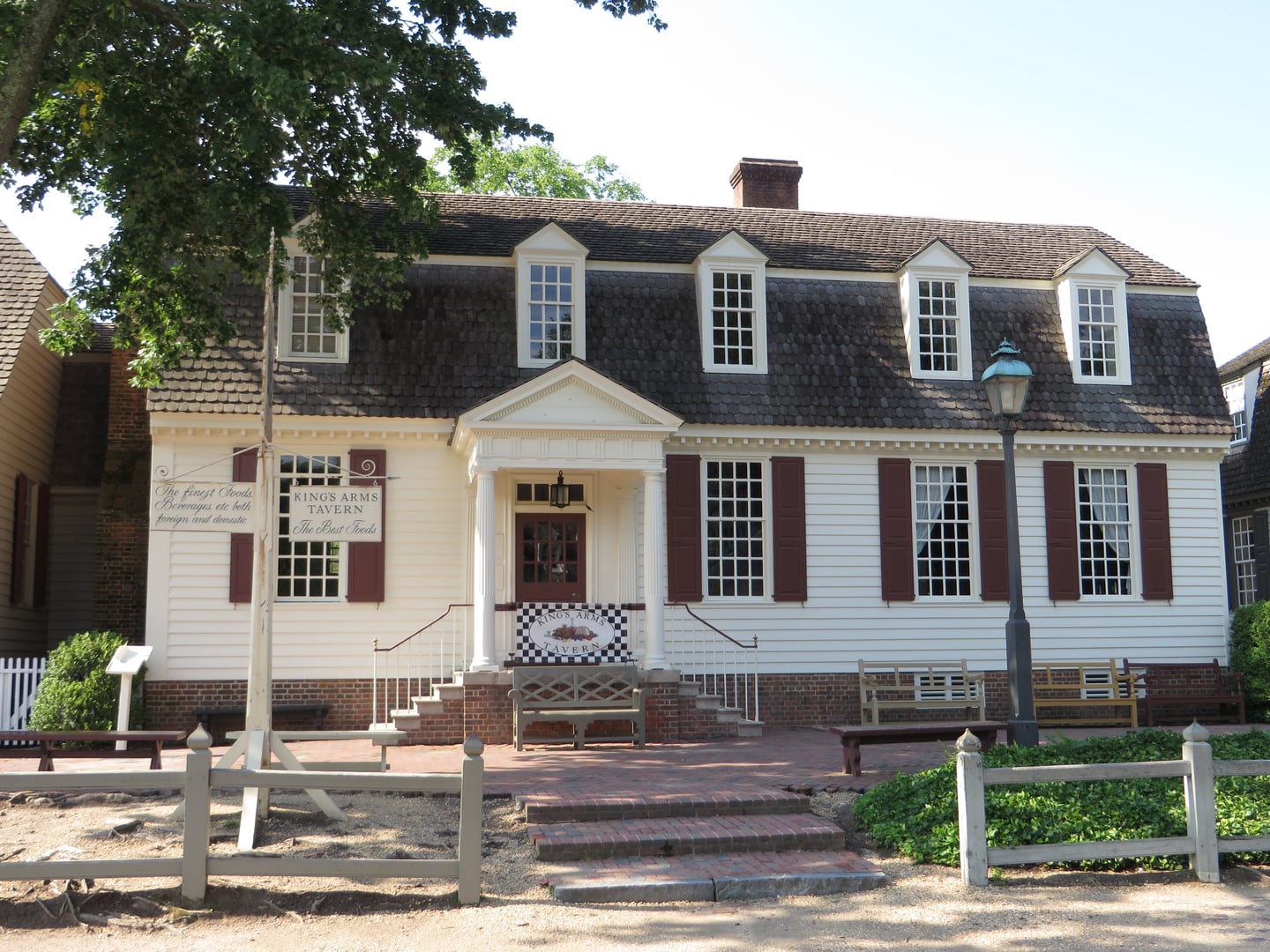
Exterior of King's Arms Tavern on Duke of Gloucester Street in Colonial Williamsburg, Virginia, showing 18th-century brick facade with period signage
Haunted Dining / Bar

King's Arms Tavern

Williamsburg, VA

King's Arms Tavern was opened on February 6, 1772, by Jane Vobe on East Duke of Gloucester Street in Colonial Williamsburg. It served as one of the foremost gathering places in colonial Virginia, where genteel planters, merchants, and politicians dined on dishes including peanut soup and Virginia ham. The tavern is now operated by Colonial Williamsburg and continues as a full-service restaurant in a carefully restored 18th-century structure.

$$$ All Ages Family: High
Photo of Ludwell-Paradise House
Haunted House / Historic Home

Ludwell-Paradise House

Williamsburg, VA

Built in 1752–1753 for Philip Ludwell III as a rental property, the house passed to his daughter Lucy Ludwell Paradise after his death in 1767. Lucy returned to Williamsburg permanently in 1805 after decades in England and was committed to the Eastern State Hospital (then called the Williamsburg Public Hospital) in January 1812, where she died in 1814. In December 1926 John D. Rockefeller Jr. authorized the purchase of this property for $8,000 — making it the first acquisition for the Colonial Williamsburg restoration project.

$ All Ages Family: High
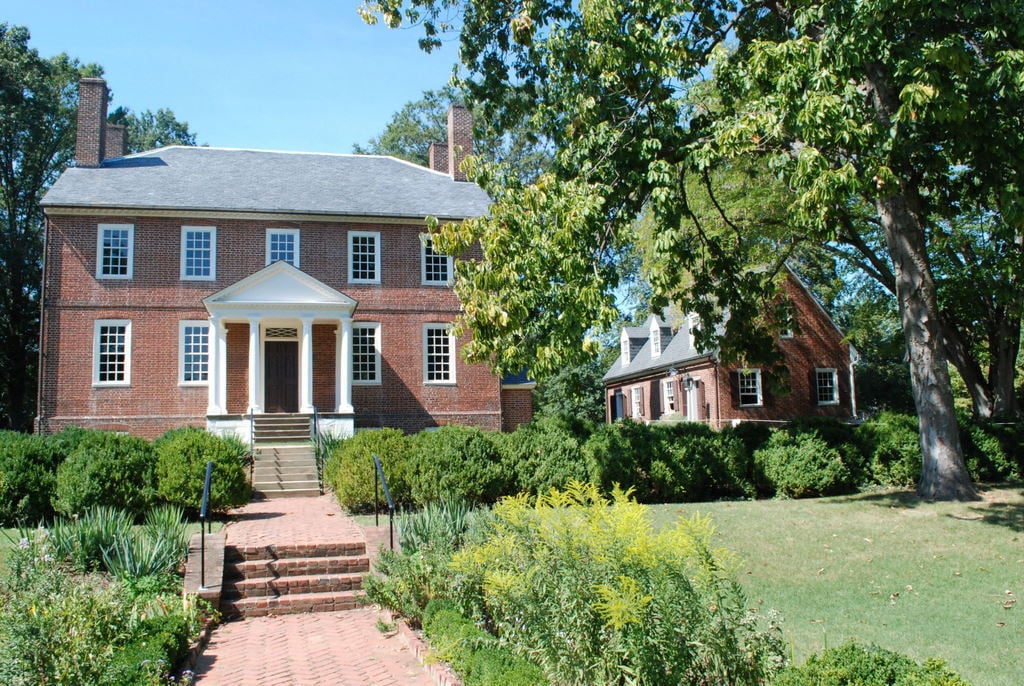
Peyton Randolph House colonial-era residence, Colonial Williamsburg Virginia
Haunted House / Historic Home

Peyton Randolph House

Williamsburg, VA

The Peyton Randolph House in Colonial Williamsburg was built circa 1715 by William Robertson and expanded in subsequent decades. Sir John Randolph purchased the property in 1721; his son Peyton Randolph, who served as the first President of the Continental Congress, inherited and enlarged it. The house enslaved approximately 27 people. During the Civil War the building served as a field hospital, with wounded soldiers treated in its rooms.

$$ All Ages for daytime tours; check ghost tour operators for evening age restrictions Family: Moderate
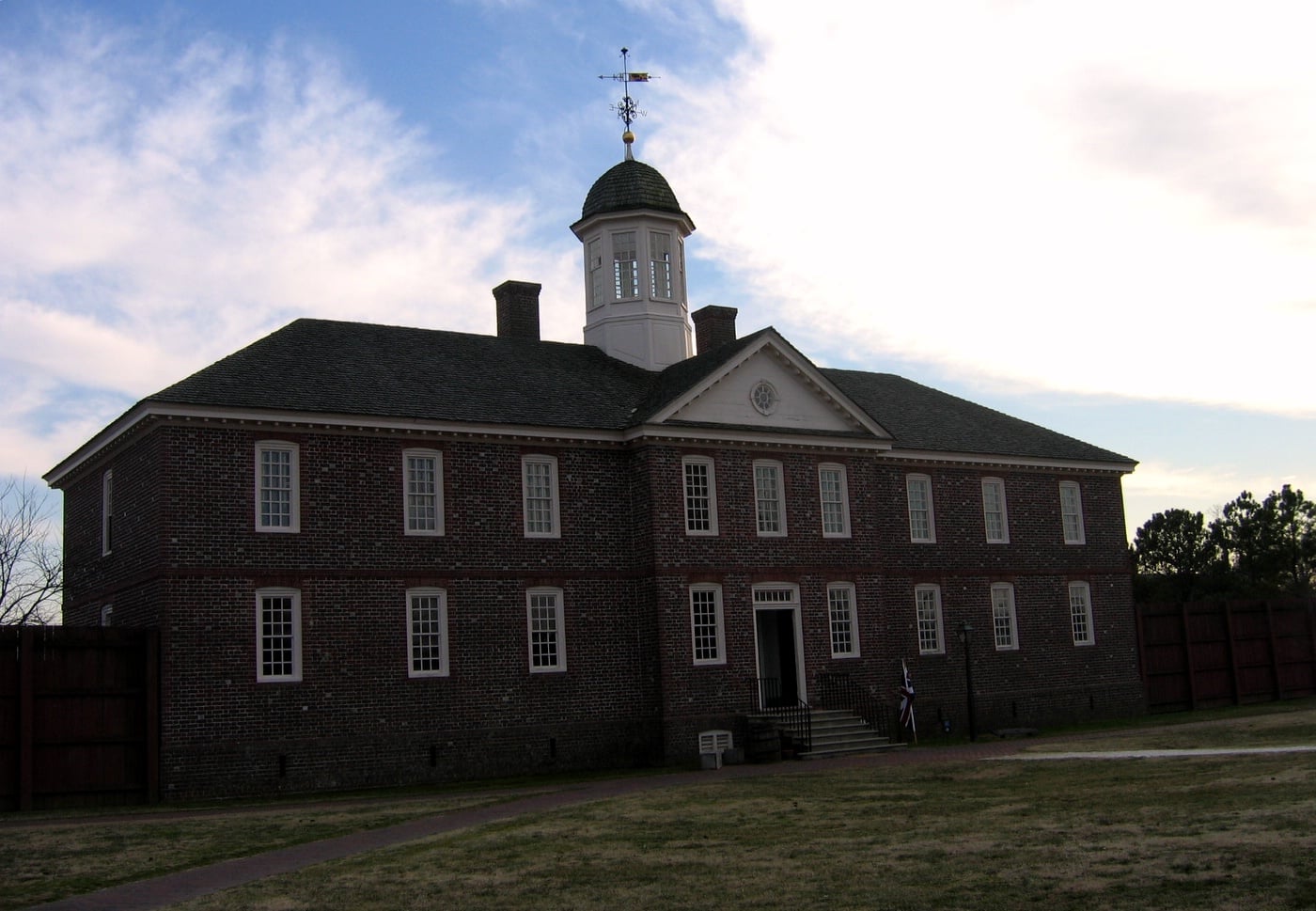
Reconstructed 1773 Public Hospital for Persons of Insane and Disordered Minds, the first U.S. mental hospital, in Colonial Williamsburg, Virginia
Museum / Historical Site

Public Hospital of 1773

Williamsburg, VA

The Public Hospital of 1773 in Williamsburg, Virginia, was the first public facility in British North America built specifically for the care and treatment of people with mental illness. The original building burned in 1885; the current structure is a 1985 reconstruction by the Colonial Williamsburg Foundation, opened together with the DeWitt Wallace Decorative Arts Museum.

$$ All Ages Family: Moderate
East front of the 1700 Wren Building at the College of William and Mary in Williamsburg, Virginia
Other Dark Tourism Site

Wren Building & President's House

Williamsburg, VA

The Wren Building is the oldest college building in the United States, first constructed between 1695 and 1700 at the College of William & Mary. The President's House was completed in 1733. During the Revolutionary War the Wren served as a hospital for French soldiers wounded at Yorktown in 1781, and the President's House was occupied successively by Cornwallis, the French and Continental Army wounded, and Lafayette.

$ All Ages Family: High
Theater / Performance Venue

The Kimball Theatre

Williamsburg, VA

The Kimball Theatre stands on Merchants Square in Williamsburg, Virginia, on the site of the former Ware family home. Mrs. Ware, widowed before the Civil War, converted her home to a refuge for poorer families and later to a makeshift field hospital during the May 1862 Battle of Williamsburg, when Union and Confederate forces clashed in the streets of the town.

$$ All Ages Family: Moderate

Winchester — 8

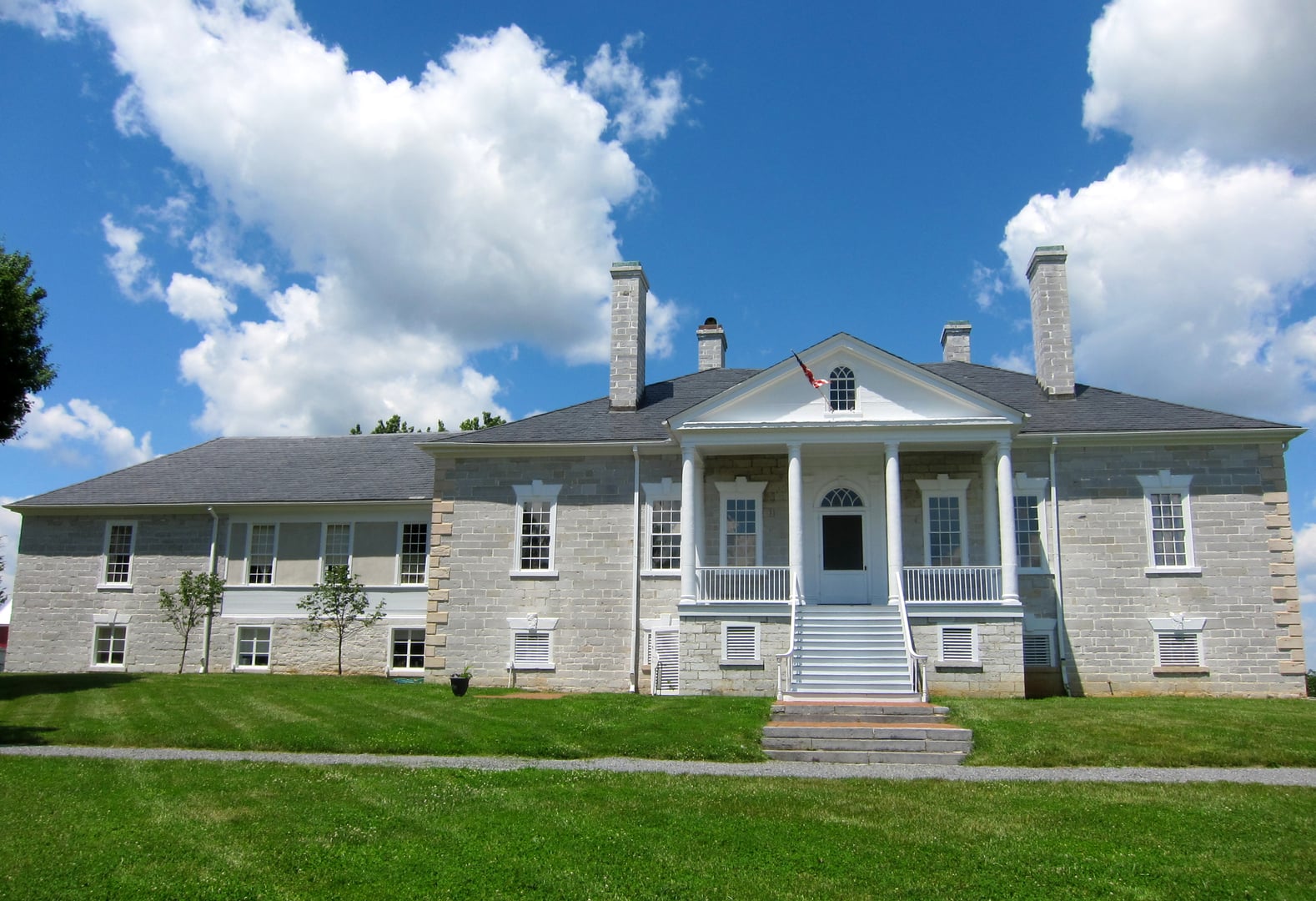
Photo of Abram's Delight (Hollingsworth House)
Museum / Historical Site

Abram's Delight (Hollingsworth House)

Winchester, VA

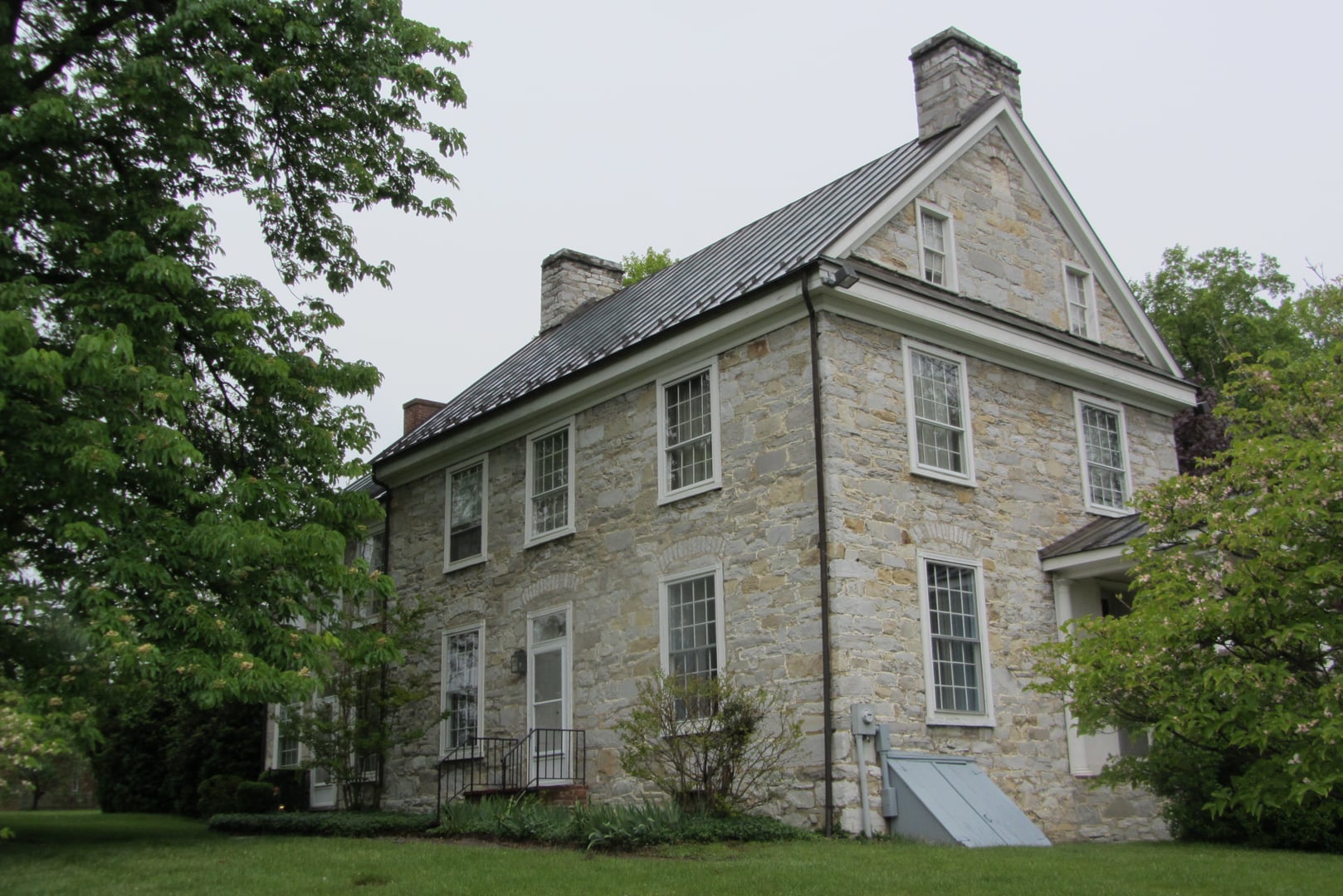
Abraham Hollingsworth obtained a 582-acre land grant in the Shenandoah Valley in 1728 and constructed the two-story limestone house in 1754, declaring the property 'a delight to behold.' It served as the primary residence of five generations of the Hollingsworth family until the early twentieth century and opened as a museum in 1961.

$ All Ages Family: High
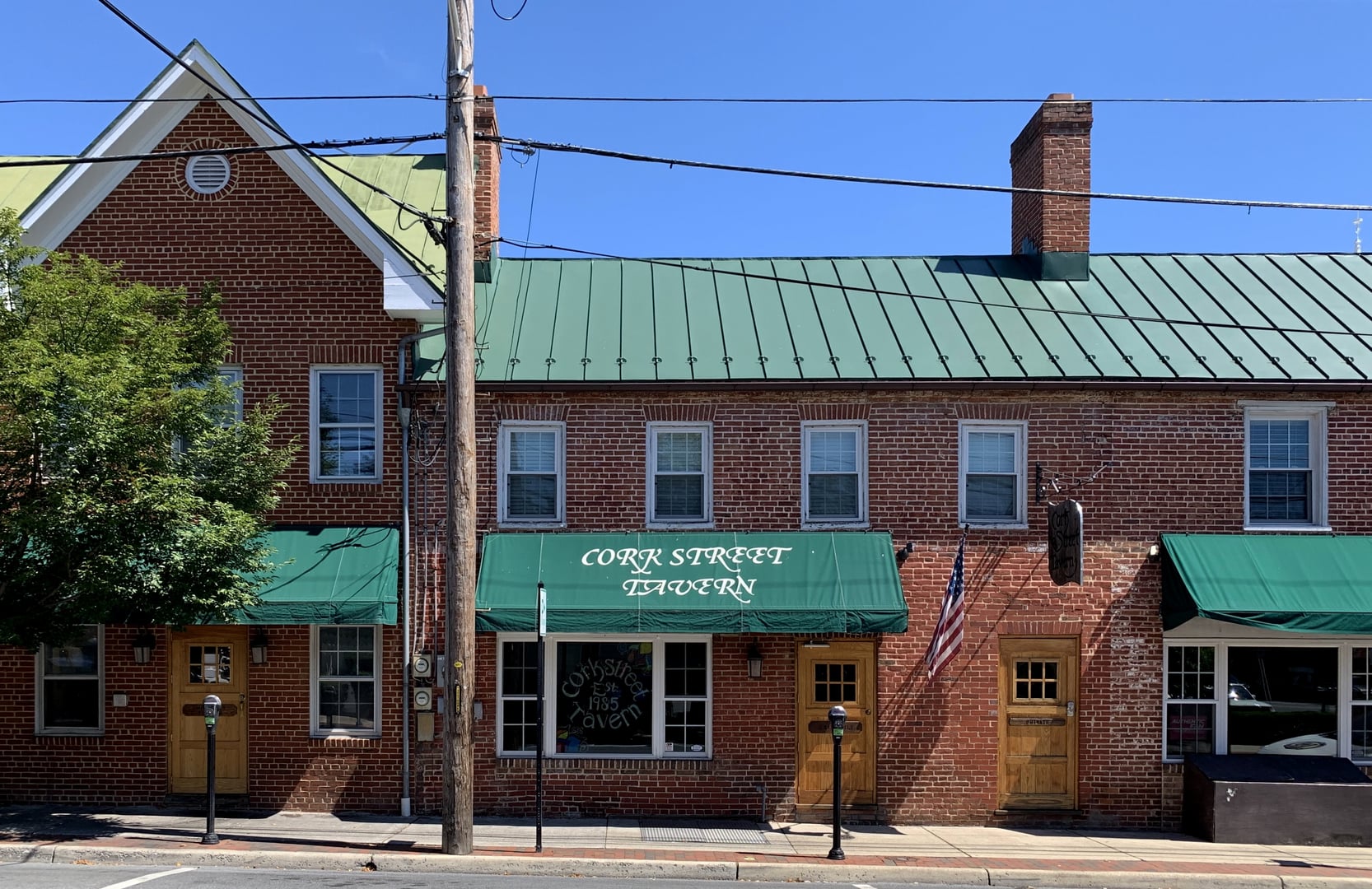
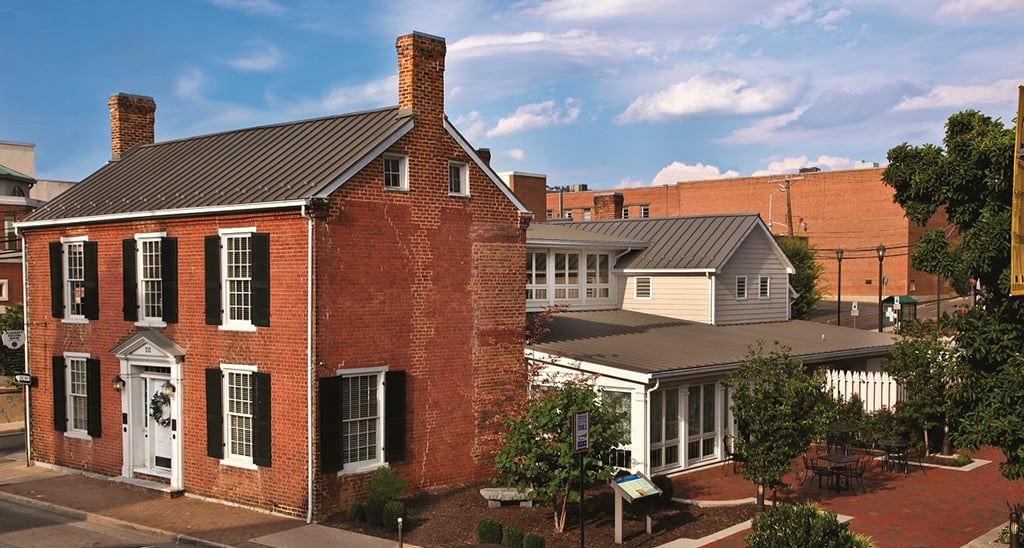
Photo of Cork Street Tavern
Haunted Dining / Bar

Cork Street Tavern

Winchester, VA

The two federal-style redbrick buildings at 8 West Cork Street date to the 1830s. Originally private residences, the ground floors housed a feed store and a Baptist church before possibly operating as a speakeasy during Prohibition. The Rustic Tavern opened in 1932; the current Cork Street Tavern began in 1985.

$$ All Ages Family: High
Preserved 1860s brick house at Fort Collier Civil War Center, Winchester, Virginia
Battlefield / Military Site

Fort Collier Civil War Center

Winchester, VA

Fort Collier is a Confederate earthwork fortification near Winchester, Virginia, constructed in the early summer of 1861 under Lieutenant Cowles Miles Collier. On September 19, 1864, the site was the location of a Union cavalry charge that helped end the Third Battle of Winchester. The Fort Collier Civil War Center, Inc. purchased the ten-acre core of the site in 2002.

$ All Ages Family: High
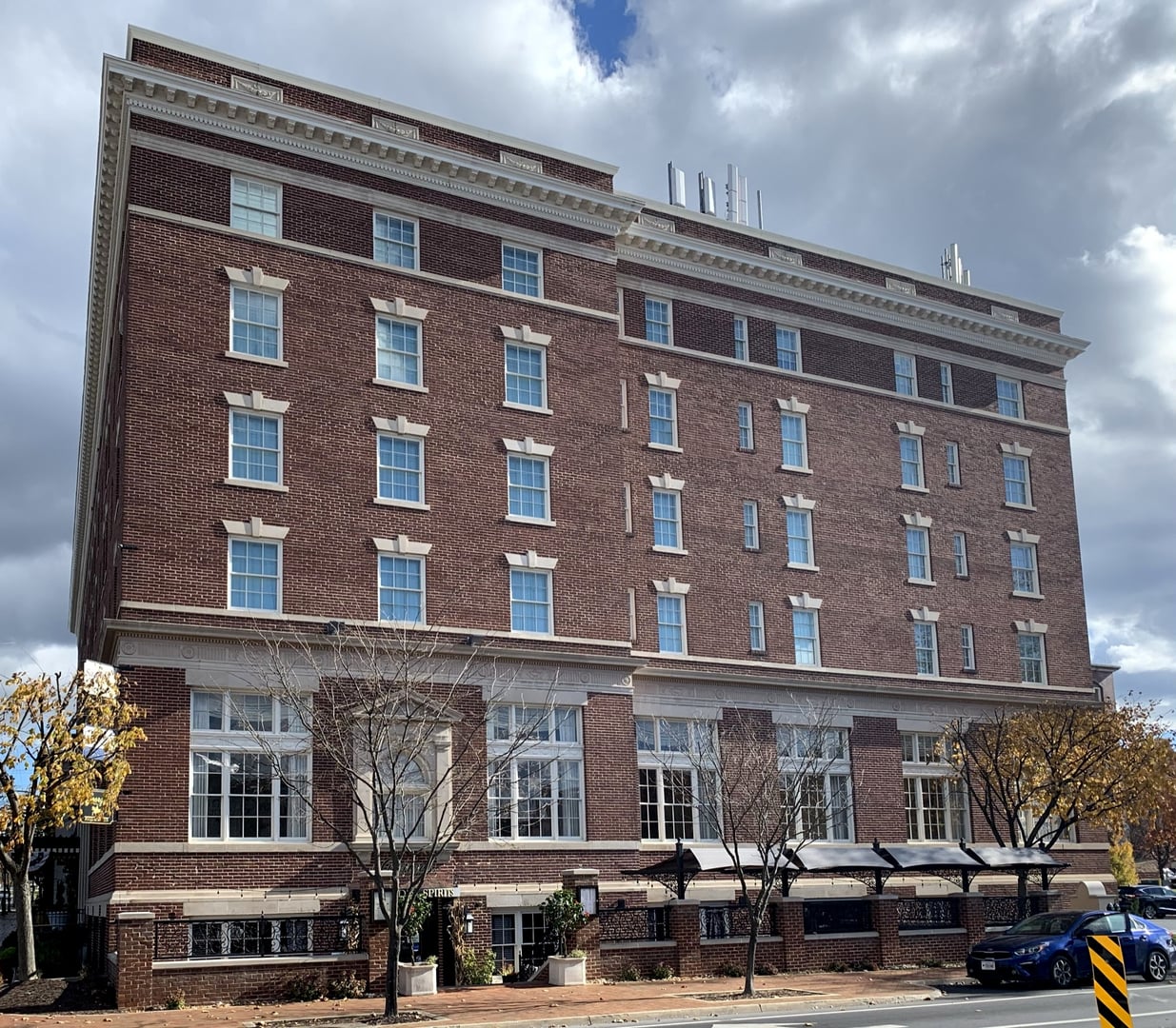
Photo of George Washington Hotel
Haunted Hotel / Inn

George Washington Hotel

Winchester, VA

The George Washington Hotel opened June 18, 1924, as Winchester's tallest building — a six-story steel and concrete structure built by the American Hotels Corporation as part of its Colonial Chain. Originally featuring 102 rooms expanded to 152 by 1929, it hosted luminaries including Lucille Ball, Bob Hope, Jack Dempsey, and Jimmy Cagney. The hotel closed in 1978, operated as a care facility until 1993, then sat vacant until a local investment group reopened it in 2008.

$$$ All Ages Family: High
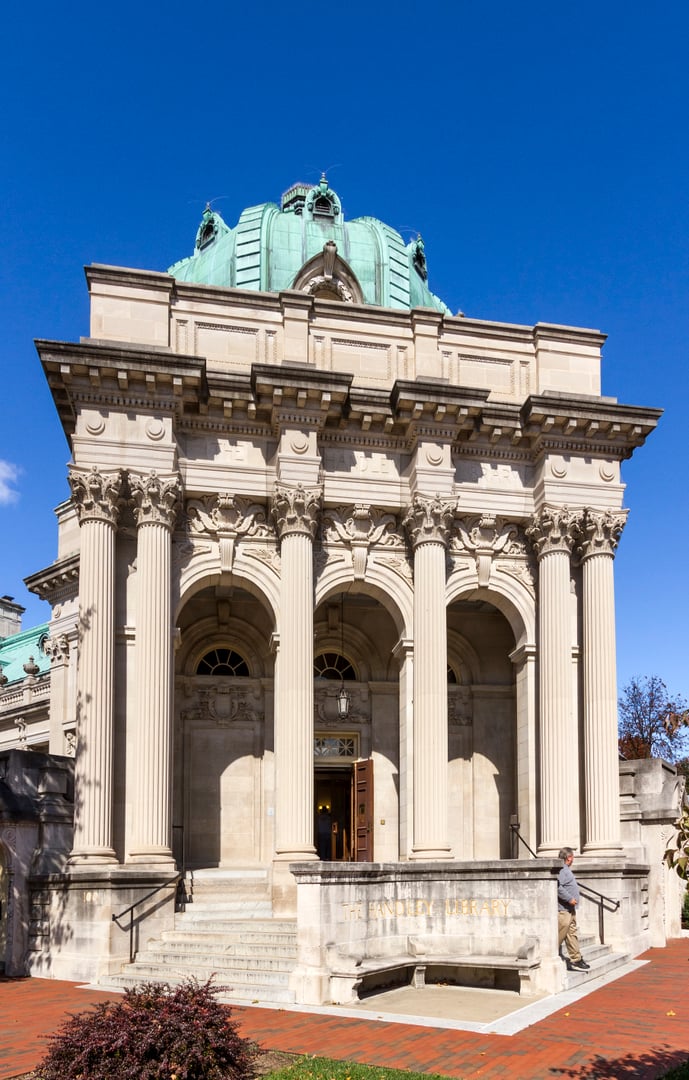
Photo of Handley Regional Library
Museum / Historical Site

Handley Regional Library

Winchester, VA

Opened in 1913, the Handley Library was funded by the bequest of John Handley, an Irish-born Scranton, Pennsylvania coal baron and judge who left $250,000 to the city of Winchester for a public library. Handley died in 1895, nearly two decades before the Beaux-Arts building opened.

$ All Ages Family: High
Haunted Dining / Bar

Joe's Steakhouse (Piccadilly Mansion)

Winchester, VA

The Philip Williams House on West Piccadilly Street was built around 1820 as a three-story Italianate mansion. After the Third Battle of Winchester on September 19, 1864, it served as a field hospital. Confederate Colonel George S. Patton — mortally wounded in the battle while rallying his brigade — died in the building's second-floor Patton Room on September 25, 1864. Joe's Steakhouse opened in the building in 2013.

$$ All Ages Family: High
Photo of Mount Hebron Cemetery / Stonewall Confederate Cemetery
Cemetery / Burial Ground

Mount Hebron Cemetery / Stonewall Confederate Cemetery

Winchester, VA

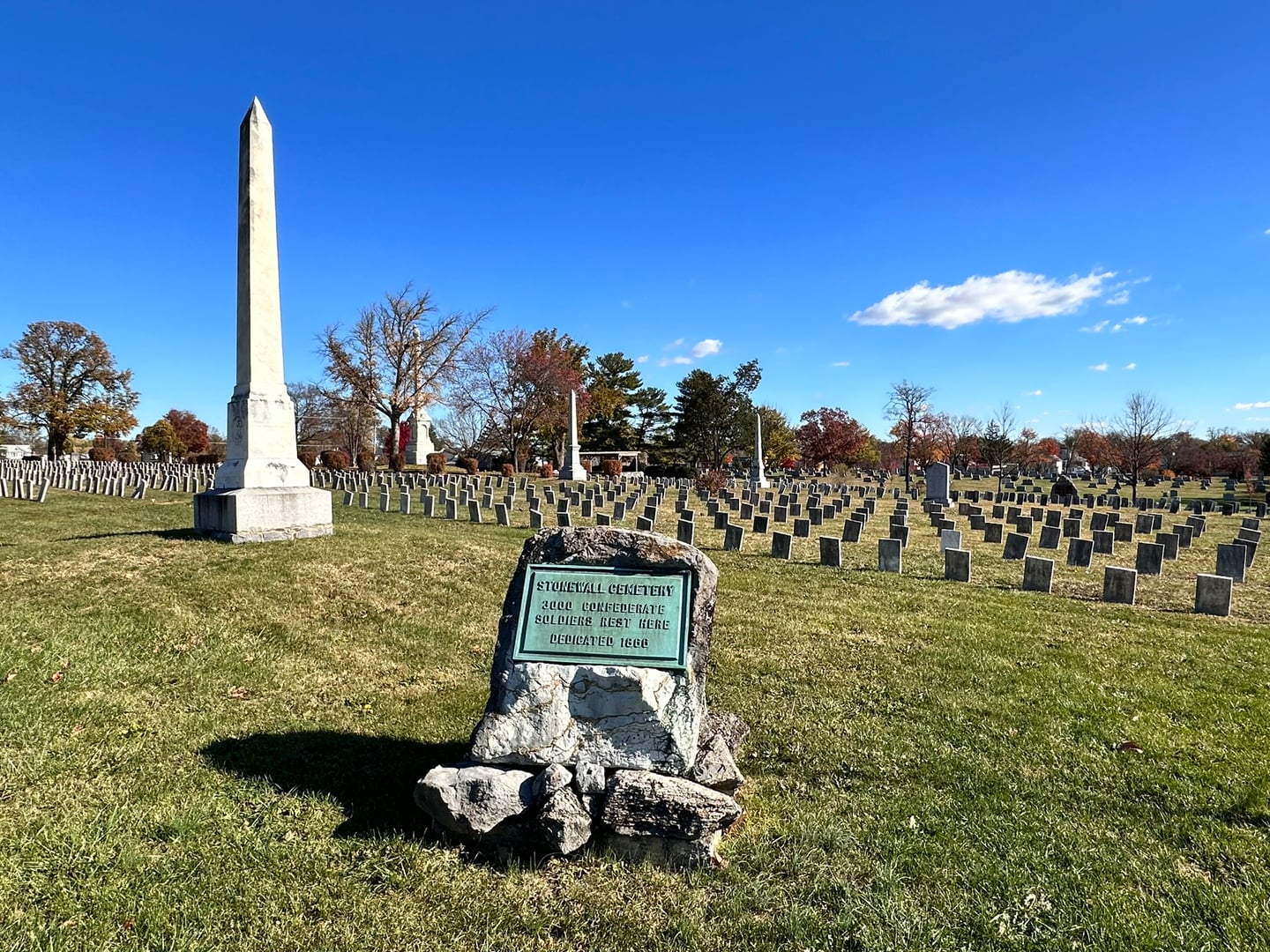
Mount Hebron Cemetery was chartered in 1844 on the sites of older churchyards and covers 56 acres in downtown Winchester. The Stonewall Confederate Memorial Cemetery, established in 1866 within its grounds, holds 2,575 Confederate soldiers who died in the Lower Shenandoah Valley campaigns — making it arguably the first cemetery in the South dedicated exclusively to Confederate reinterments. The complex was added to the National Register of Historic Places in 2009.

$ All Ages Family: High
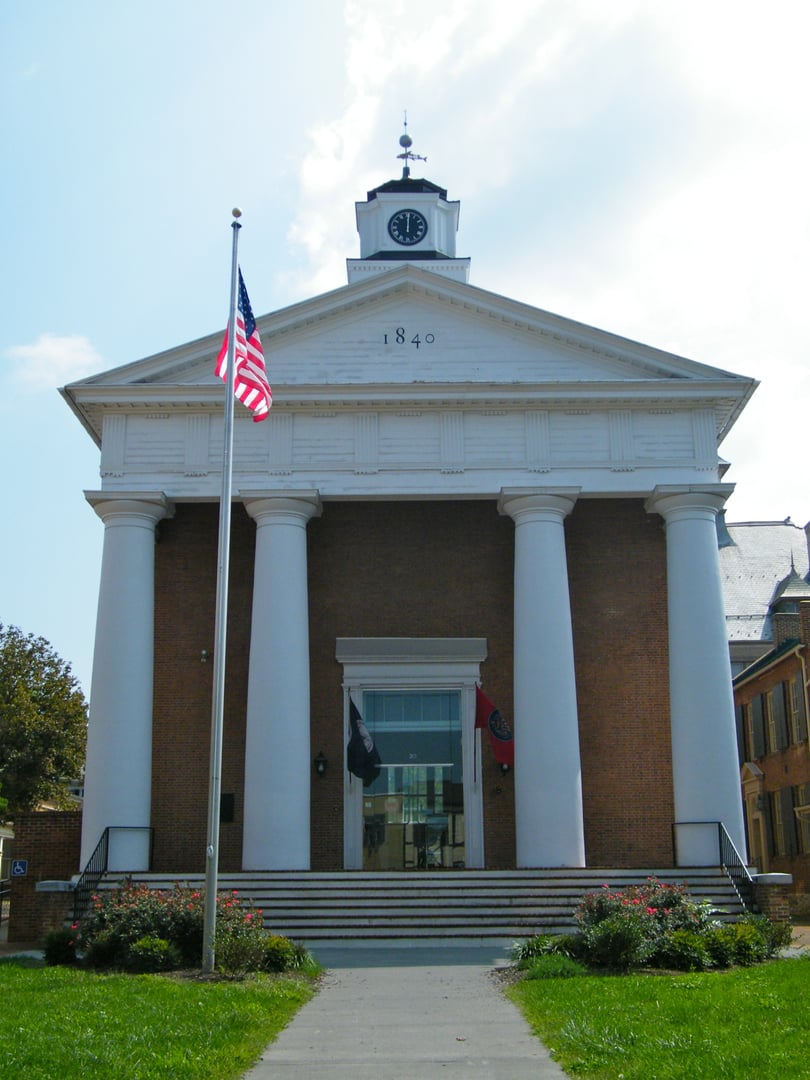
Photo of Old Court House Civil War Museum
Museum / Historical Site

Old Court House Civil War Museum

Winchester, VA

Built in 1840 as the Frederick County Court House, this structure became a hospital and Confederate prisoner-of-war holding facility following the Third Battle of Winchester in September 1864. Original graffiti scratched by soldiers from both sides — names, drawings, and dates — is preserved on the walls.

$ All Ages Family: High

Staunton — 7

Museum / Historical Site

American Hotel (Staunton)

Staunton, VA

The American Hotel was built in 1855 by the Virginia Central Railroad as a traveler's accommodation near Staunton's rail connections. When the Civil War reached the Shenandoah Valley, the hotel was converted into a Confederate receiving hospital in 1862. During Union General David Hunter's 1864 Shenandoah campaign — which burned several structures in the area — the American Hotel was spared. The basement was used as a morgue during the hospital period. President Ulysses S. Grant visited in 1869.

$ All Ages Family: Moderate
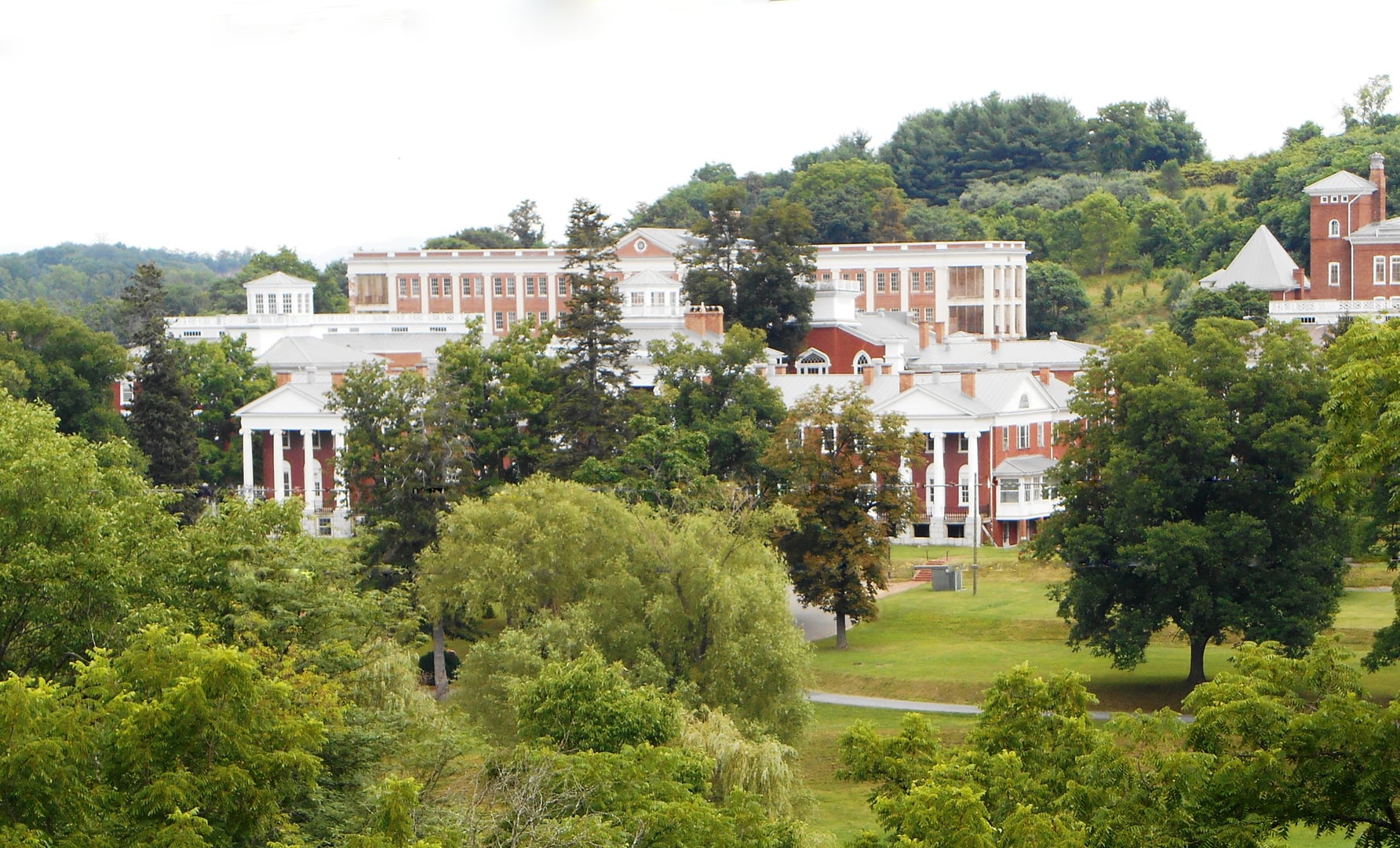
Photo of Blackburn Inn (former Western State Hospital)
Haunted Hotel / Inn

Blackburn Inn (former Western State Hospital)

Staunton, VA

Western State Hospital admitted its first patient on July 24, 1828, in Staunton, Virginia. The architect was Thomas R. Blackburn, a protégé of Thomas Jefferson's builders. Under superintendent Dr. Joseph DeJarnette, who directed the hospital from 1906 to 1943, the facility carried out at least 1,701 forced sterilizations under Virginia's 1924 Eugenical Sterilization Act. The hospital closed in the 1970s, became the Staunton Correctional Center, and closed again in 2003. The Main Administration Building reopened as the Blackburn Inn & Conference Center in 2018.

$$$ All Ages Family: High
Haunted Dining / Bar

Clock Tower Building (Clocktower Restaurant & Bar)

Staunton, VA

Built in 1890, this downtown Staunton structure has hosted several businesses over the decades, including a YMCA facility. Three deaths have occurred on the premises: a heart attack, a fatal fall into a coal chute during the YMCA era, and a third-floor suspected suicide.

$ 21+ Family: High
Photo of Mary Baldwin University (Main Building & Collins Theatre)
Haunted House / Historic Home

Mary Baldwin University (Main Building & Collins Theatre)

Staunton, VA

Mary Baldwin University was founded in 1842 as the Augusta Female Seminary, one of the oldest women's colleges in the South. Its most famous alumna is actress Tallulah Bankhead, who attended in the early twentieth century before her celebrated stage and film career. The institution became Mary Baldwin Seminary and later Mary Baldwin College before achieving university status.

$ All Ages Family: High
Haunted House / Historic Home

Spotts-Coffman House (Kalorama Estate)

Staunton, VA

The land behind this Gospel Hill address traces to 1756 as the Kalorama estate. The current structure, known as Little Kalorama, was built around 1860 by Margaret Sheffey, daughter of the estate's 19th-century owner. Purchased by John M. Spotts in 1900, the home stayed with the Spotts family for 88 years.

$$ All Ages Family: High
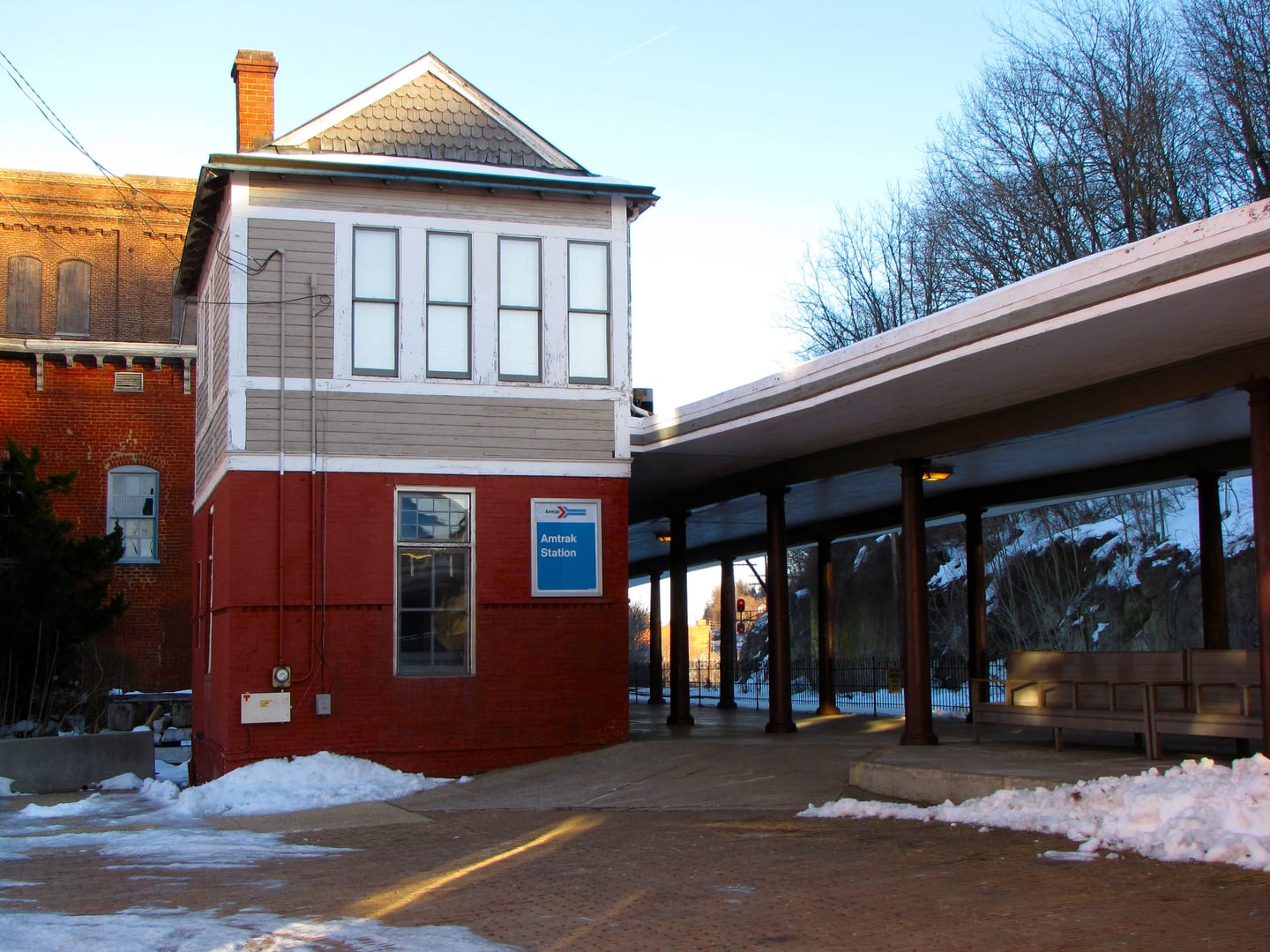
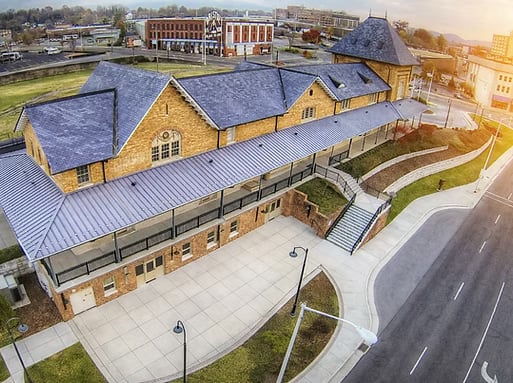
Photo of Staunton Amtrak Station (Train Depot)
Museum / Historical Site

Staunton Amtrak Station (Train Depot)

Staunton, VA

Staunton's original 1854 depot was burned by Union General David Hunter in June 1864 during his Shenandoah Valley campaign. The rebuilt station was then destroyed in an 1890 train derailment that killed at least one person: Myrtle Knox, a 17-year-old opera singer. The current Amtrak station operates near the footprint of these earlier structures.

$ All Ages Family: Moderate
Haunted Dining / Bar

Ubon Thai Victorian Restaurant

Staunton, VA

Built in the 1800s as a private residence, the Victorian structure at 515 West Frederick Street in Staunton later became the Belle Grae Inn before its current use as the Ubon Thai Victorian Restaurant and Inn.

$$ All Ages Family: High

Virginia Beach — 7

West facade of the Adam Thoroughgood House, a c. 1719 brick colonial structure in Virginia Beach Virginia
Museum / Historical Site

Adam Thoroughgood House

Virginia Beach, VA

The Thoroughgood House is one of the oldest surviving brick structures in the United States, built circa 1719. Despite its name, it was not constructed by Adam Thoroughgood — who died in 1640 — but most likely by his great-grandson Argall Thorowgood II, who died during construction; his widow Susannah completed it. The house became a National Historic Landmark in 1960 and has operated as a Virginia Beach museum since 1957.

$ All Ages Family: High
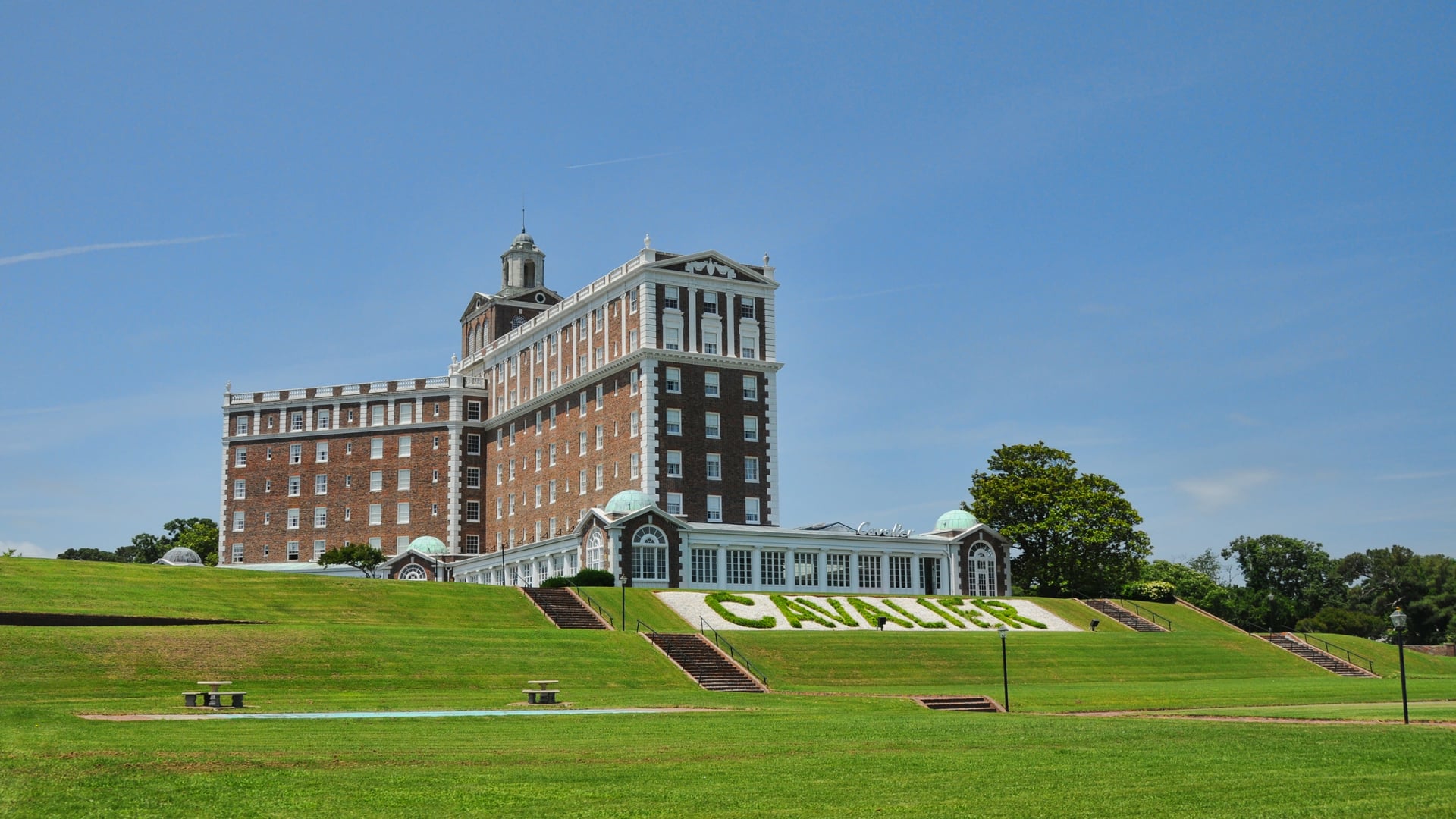
Historic Cavalier Hotel beaux-arts brick facade in Virginia Beach Virginia
Haunted Hotel / Inn

The Historic Cavalier Hotel

Virginia Beach, VA

The Cavalier Hotel opened on Easter Sunday, April 17, 1927, as a 195-room beaux-arts seaside resort on the Virginia Beach oceanfront. Across nearly a century it has hosted ten U.S. presidents, F. Scott Fitzgerald, Bette Davis, Elizabeth Taylor, Muhammad Ali, and Frank Sinatra, anchoring the Atlantic Avenue skyline as a designated National Trust property.

$$$$ All Ages Family: High
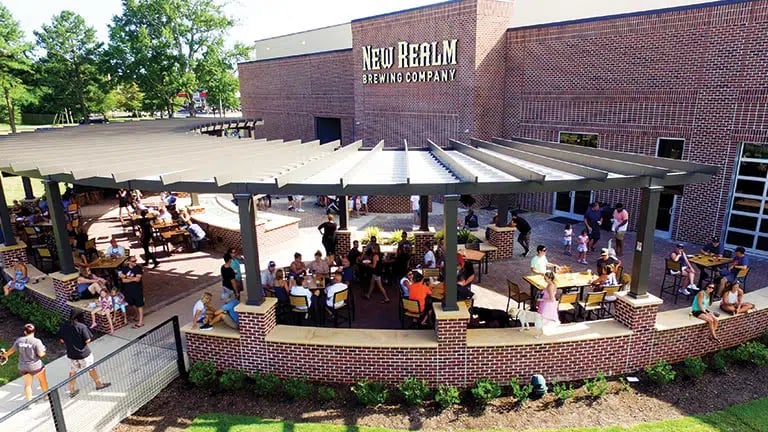
Wide exterior view of New Realm Brewing in the former Chesapeake Beach Volunteer Fire Station, Virginia Beach
Haunted Dining / Bar

Chicks Beach Volunteer Fire Station (New Realm Brewing Co.)

Virginia Beach, VA

The Chesapeake Beach Volunteer Fire and Rescue Station opened in 1962 in the Chicks Beach neighborhood of Virginia Beach. The station served the community for decades before eventually closing and being converted into a commercial space. New Realm Brewing Co. now operates at the site.

$$ 21+ for alcohol service; all ages for dining Family: High
Front facade of Ferry Plantation House, an 1830 three-story brick museum in Virginia Beach, Virginia
Museum / Historical Site

Ferry Plantation House

Virginia Beach, VA

Ferry Plantation House, also known as Walke Manor House or Old Donation Farm, is an 1830 brick house in Virginia Beach. The three-story structure has served as a plantation, courthouse, school, and post office. The City of Virginia Beach received the deed in 1996; the Friends of the Ferry Plantation House restored the building and operate it as a museum.

$ All Ages Family: Moderate
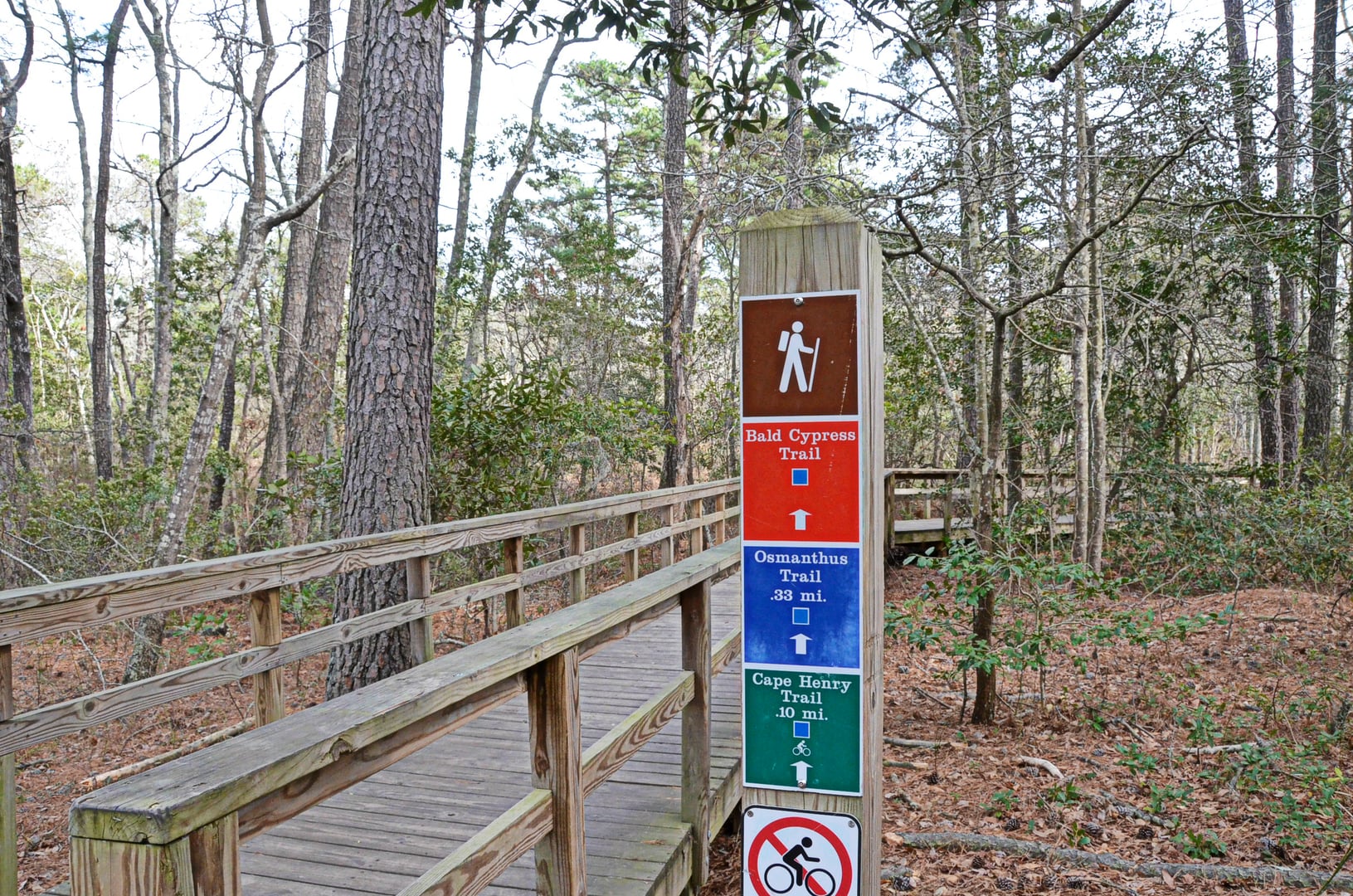
Boardwalk trail through bald cypress swamp at First Landing State Park, Virginia Beach
Outdoor / Natural Site

First Landing State Park

Virginia Beach, VA

Virginia's most-visited state park protects 2,888 acres at Cape Henry, where the Susan Constant, Godspeed, and Discovery made landfall April 26, 1607, before the passengers continued west to found Jamestown. The park opened June 15, 1936, built largely by African American CCC workers on land purchased in 1933.

$ All Ages Family: Moderate
Aerial survey view of Norwegian Lady Statues
Aerial survey · USDA NAIP
Outdoor / Natural Site

Norwegian Lady Statues

Virginia Beach, VA

On Good Friday, March 27, 1891, the Norwegian barque Dictator ran aground off Virginia Beach during a storm, drowning seven people including Capt. Jørgensen's wife Johanne and their son Karl. Life savers from the Seatack station rescued the captain and nine crew members. The ship's wooden female figurehead washed ashore and stood on the beach as a memorial until Hurricane Barbara damaged it in 1953. Identical bronze statues were erected in 1962 in Virginia Beach and in Moss, Norway.

$ All Ages Family: High
Photo of Virginia Beach Surf & Rescue Museum (Old Coast Guard Station)
Museum / Historical Site

Virginia Beach Surf & Rescue Museum (Old Coast Guard Station)

Virginia Beach, VA

The Virginia Beach Life Saving Station was built in 1903 on the oceanfront at what is now 2401 Atlantic Ave, replacing an earlier 1878 station. Listed on the National Register of Historic Places, the building operated as a rescue station through the Coast Guard era and was converted to a maritime museum in 1981. Its crews responded to hundreds of shipwrecks along the treacherous Virginia coast.

$ All Ages Family: High

Hampton — 6

Aerial survey view of Blackbeard's Point (Mill Point Park)
Aerial survey · USDA NAIP
Other Dark Tourism Site

Blackbeard's Point (Mill Point Park)

Hampton, VA

In November 1718, Royal Navy Lieutenant Robert Maynard engaged and killed the pirate Edward Teach, known as Blackbeard, at Ocracoke Inlet off the North Carolina coast. After the battle, Maynard sailed to Hampton with Blackbeard's severed head mounted on his bowsprit. The head was subsequently displayed on a pole at the mouth of the Hampton River — the site now marked at Mill Point Park — as a government-sanctioned warning against piracy.

$ All Ages Family: Moderate
Photo of Casemate Museum at Fort Monroe
Museum / Historical Site

Casemate Museum at Fort Monroe

Hampton, VA

The Casemate Museum occupies the fortified gun-wells of Fort Monroe, America's largest stone fort, constructed between 1819 and 1834. The museum's central exhibit is the preserved cell in which Confederate President Jefferson Davis was held in solitary confinement from May 1865 to May 1867 following the end of the Civil War.

$ All Ages Family: High
Open Graph image from fortmonroe.org
Haunted House / Historic Home

The Chamberlin

Hampton, VA

The original Hotel Chamberlin opened at Old Point Comfort in 1896 and was destroyed by fire on March 7, 1920. The current nine-story Georgian-style Chamberlin opened in April 1928 and served as a Chesapeake Bay resort for decades. The hotel closed after the 2001 security tightening at Fort Monroe and reopened in 2008 as a 55+ independent-living residence.

$ All Ages Family: High
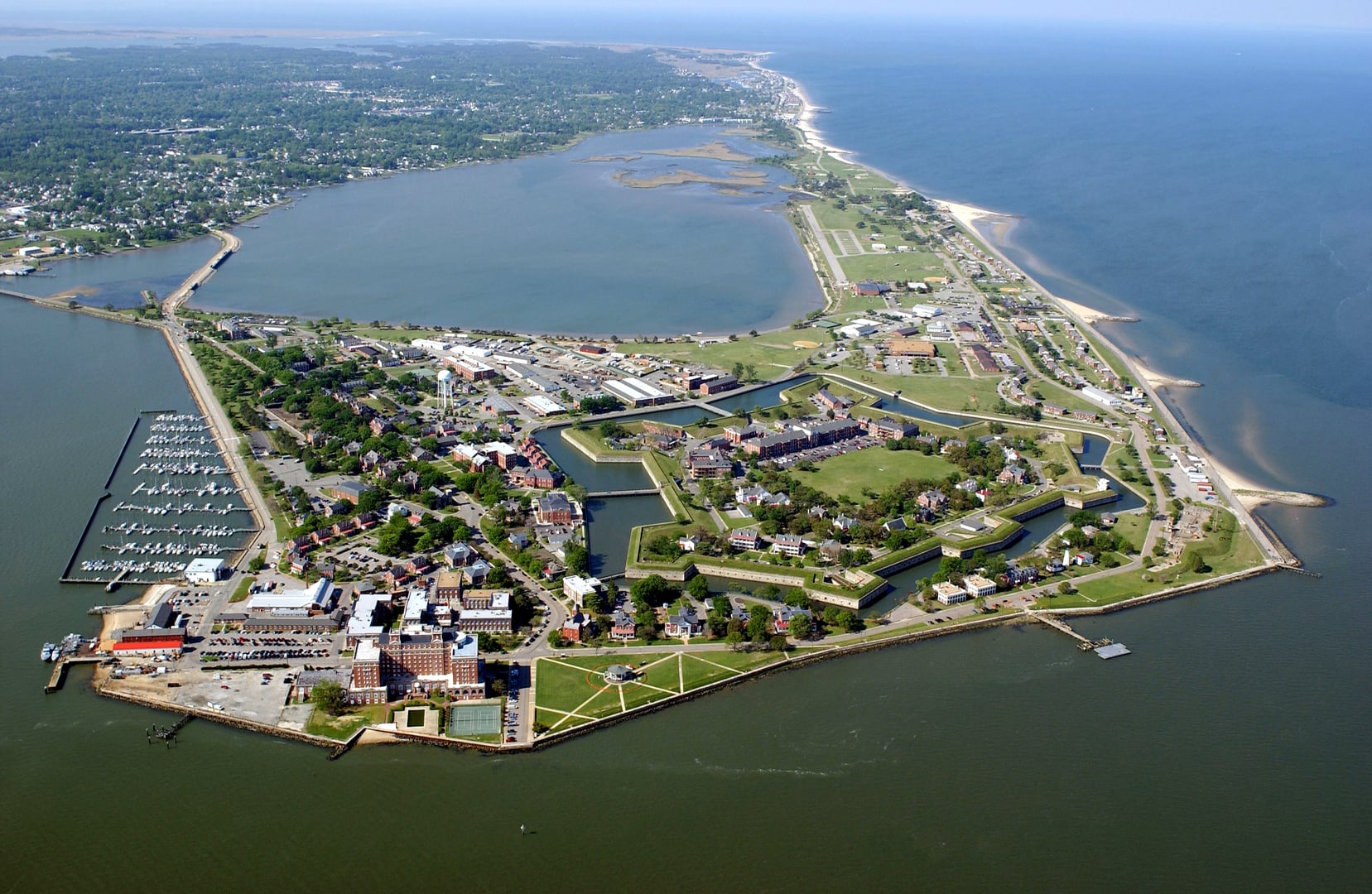
Aerial view of the stone walls and moat of Fort Monroe at Old Point Comfort, Hampton, Virginia
Museum / Historical Site

Fort Monroe National Monument

Hampton, VA

Fort Monroe is the largest stone fort ever built in the United States, completed in 1834 on the Hampton, Virginia peninsula at Old Point Comfort. The site is also the landing point where the first documented enslaved Africans arrived in English North America in 1619. Decommissioned by the Army in 2011, the property became Fort Monroe National Monument under the National Park Service.

$ All Ages Family: High
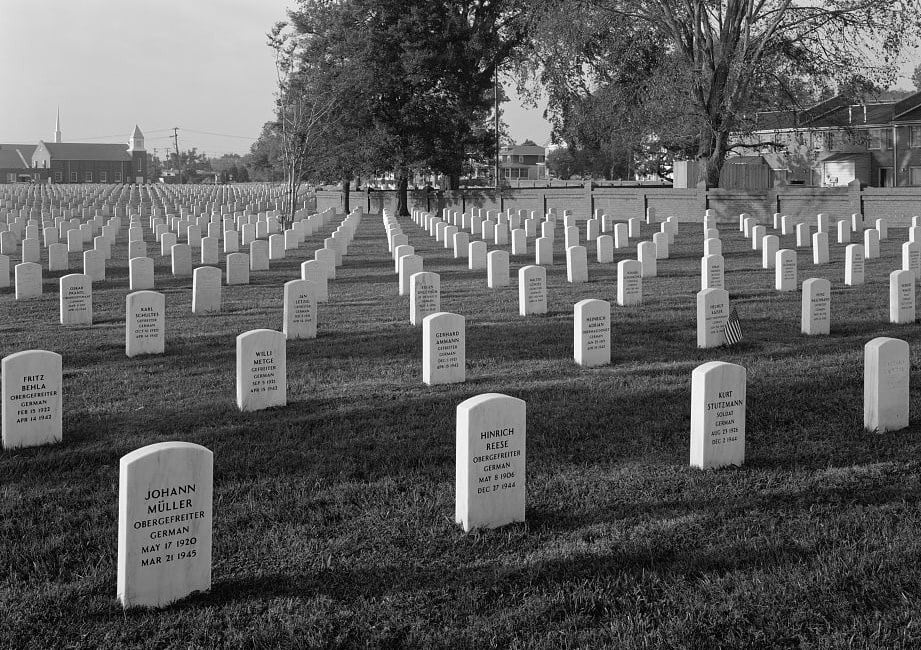
Photo of Hampton National Cemetery
Cemetery / Burial Ground

Hampton National Cemetery

Hampton, VA

Hampton National Cemetery was established in 1866 adjacent to Fort Monroe, Virginia, to inter casualties from the Civil War. Its first burials in 1862 came from the Fort Monroe military hospital, a 1,800-bed facility with a high wartime mortality rate. The cemetery holds 638 unknown Civil War dead, 272 Confederate prisoners of war, and later World War II POW interments.

$ All Ages Family: High
Photo of St. John's Episcopal Church & Cemetery
Cemetery / Burial Ground

St. John's Episcopal Church & Cemetery

Hampton, VA

St. John's Episcopal Church traces its parish to 1610, making it the oldest English-origin parish in Virginia. The current structure was built in 1728. On August 7, 1861, Confederate troops deliberately burned the building when they abandoned Hampton rather than allow Union forces to use it as a base of operations. The church became the only surviving colonial structure in downtown Hampton after the rest of the town was torched in the same action.

$ All Ages Family: High

Norfolk — 6

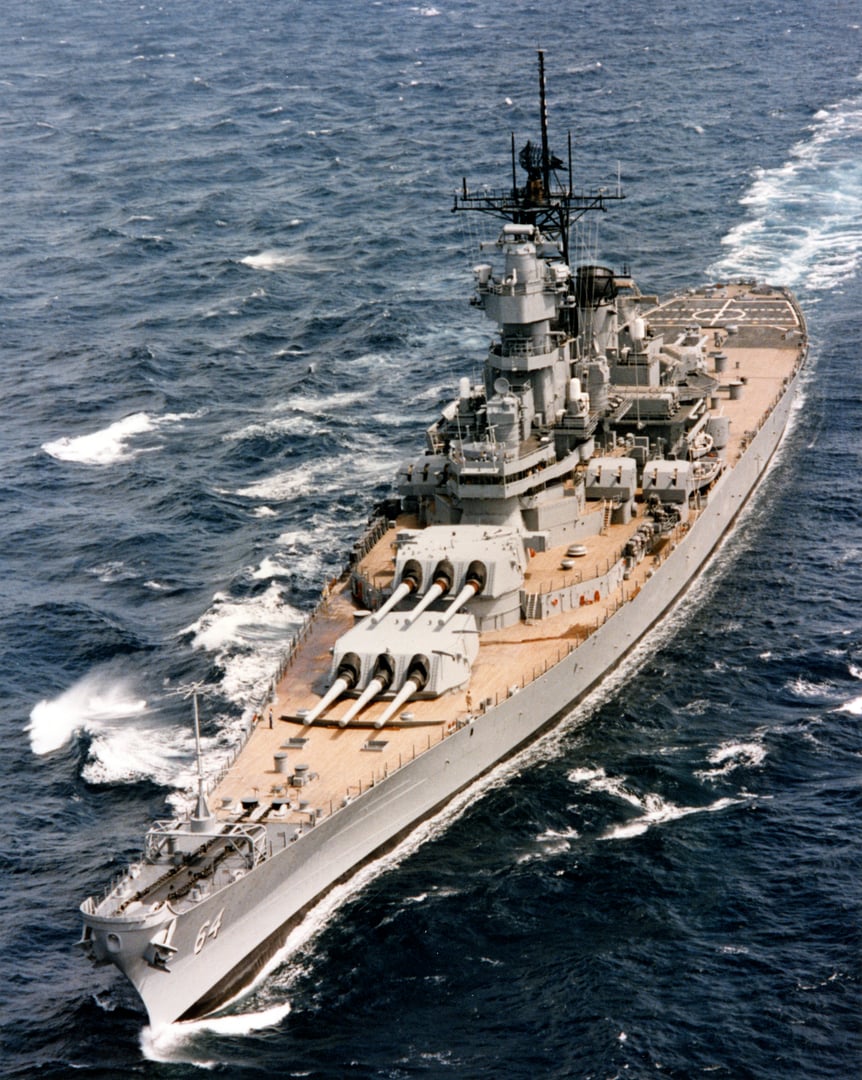
USS Wisconsin (BB-64), the Iowa-class battleship now permanently berthed as a museum ship at Nauticus in downtown Norfolk, Virginia.
Museum / Historical Site

Battleship Wisconsin (USS Wisconsin BB-64)

Norfolk, VA

USS Wisconsin (BB-64) is an Iowa-class battleship commissioned April 16, 1944, that served in the closing campaigns of World War II in the Pacific, then in the Korean War (1951–52), and was reactivated for Operation Desert Storm in 1991. She was officially transferred to the City of Norfolk in December 2009 and is permanently berthed at Nauticus on the downtown Norfolk waterfront as a museum ship.

$$ All Ages Family: High
Exterior of the 1873 former Presbyterian church now housing Freemason Abbey Restaurant in downtown Norfolk, Virginia
Haunted Dining / Bar

Freemason Abbey Restaurant

Norfolk, VA

Freemason Abbey occupies an 1873 brick church in Norfolk's Freemason historic district. Built originally for the Second Presbyterian congregation, the building passed to the First Church of Christ Scientist (1902–1948), then to the Independent Order of Odd Fellows (1948–1987) as a meeting hall, before being converted into a restaurant beginning in 1988.

$$$ All Ages Family: High
Federal-era brick exterior of the 1792 Moses Myers House at East Freemason and North Bank Streets in Norfolk, Virginia.
Museum / Historical Site

Moses Myers House

Norfolk, VA

The Moses Myers House is a 1792 Federal-era brick townhouse built by merchant Moses Myers, one of the first Jewish residents of Norfolk and an early American millionaire. Five generations of the Myers family lived here from 1795 to 1931. The house is now operated by the Chrysler Museum of Art as a historic house museum and is on the National Register of Historic Places.

$ All Ages Family: High
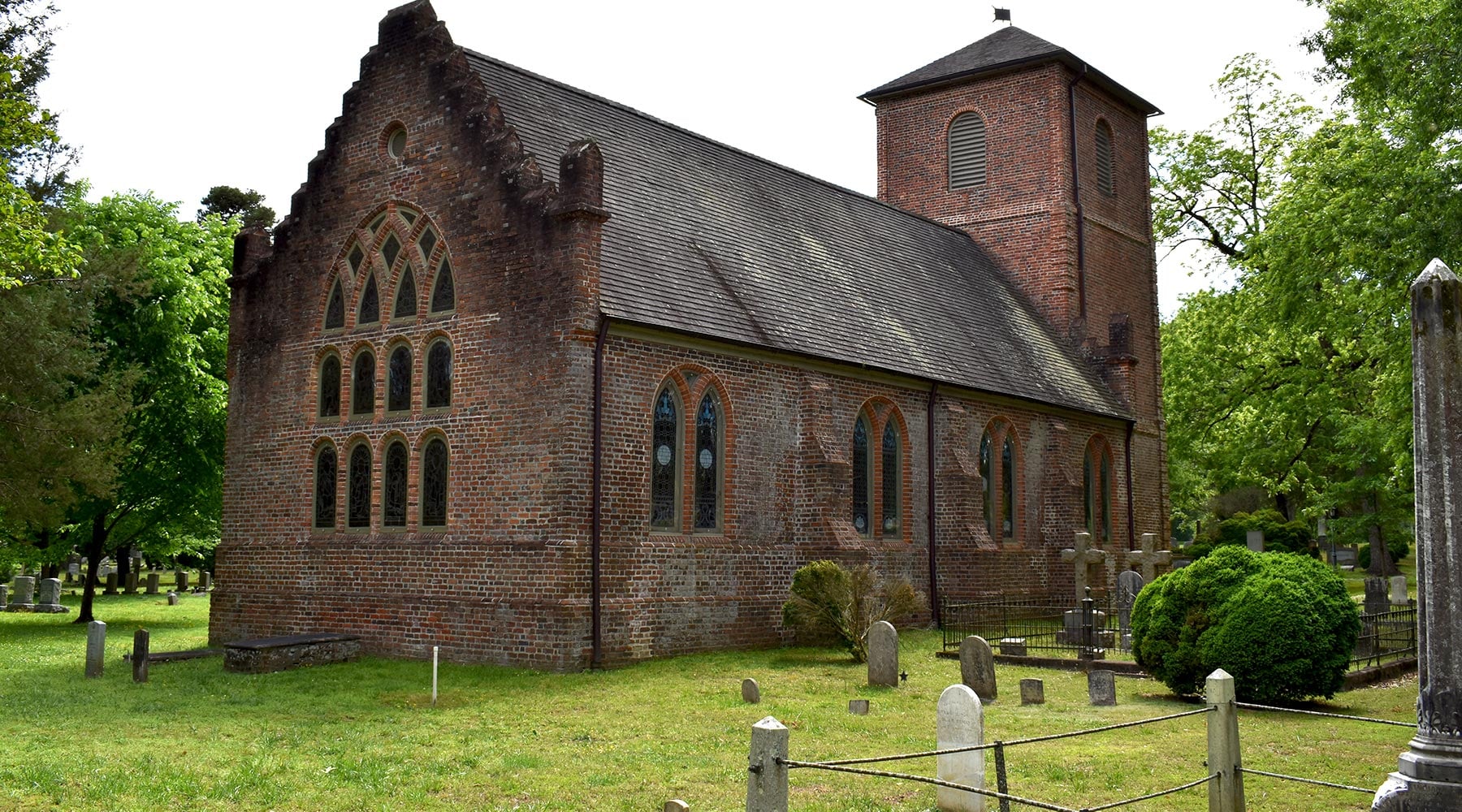
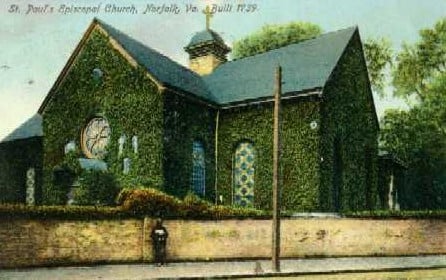
Historic 1907 view of St. Paul's Episcopal Church, the 1739 colonial-era brick church in downtown Norfolk, Virginia.
Other Dark Tourism Site

St. Paul's Episcopal Church

Norfolk, VA

St. Paul's Episcopal Church is the only colonial-era building in Norfolk to survive the British bombardment of January 1, 1776. The current nave was built in 1739 on the site of an earlier 1699 brick chapel known as the 'Borough Church.' A cannonball — purportedly fired by HMS Liverpool during Lord Dunmore's attack — remains embedded in the church's south wall.

$ All Ages Family: High
Chesapeake Bay beach along Willoughby Spit, a narrow Norfolk peninsula formed by 18th-century hurricanes
Outdoor / Natural Site

Willoughby Spit

Norfolk, VA

Willoughby Spit is a narrow sand peninsula extending into the Chesapeake Bay from Norfolk's Ocean View neighborhood. It is named for Thomas Willoughby, who received a land grant in 1625. The spit was largely formed by an 18th-century hurricane in 1749 and substantially reshaped by the Great Coastal Hurricane of 1806, with major erosion and replenishment cycles continuing into the 21st century.

$ All Ages Family: High
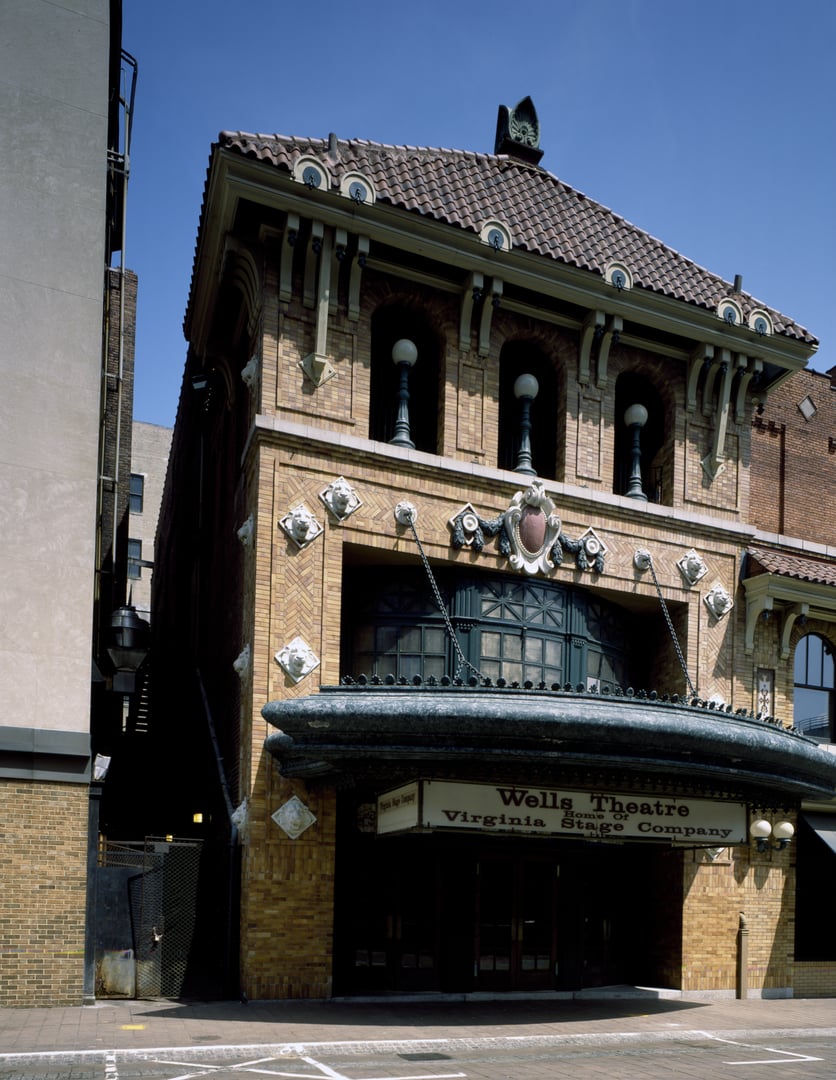
Beaux-Arts neoclassical facade of the 1913 Wells Theatre on East Tazewell Street in downtown Norfolk, Virginia.
Theater / Performance Venue

The Wells Theatre

Norfolk, VA

The Wells Theatre opened August 26, 1913, as a vaudeville and legitimate-stage house built by brothers Jake and Otto Wells. Designed by the New York firm E.C. Horn & Sons in Beaux-Arts neoclassical style, it once seated 1,650 across three balconies and twelve boxes. The Virginia Stage Company has been the resident professional theater company since 1979, and the building is owned by the City of Norfolk. It was added to the National Register of Historic Places on May 19, 1980.

$$ All Ages Family: High

Petersburg — 6

Photo of Centre Hill Museum
Haunted House / Historic Home

Centre Hill Museum

Petersburg, VA

Centre Hill was built in 1823 by Robert Bolling IV, a wealthy Petersburg merchant. During the Siege of Petersburg (1864-65), the house served as a command post for both sides at different points — first Confederate, then Union — while the surrounding city absorbed nine months of siege warfare.

$ All Ages Family: High
Haunted Dining / Bar

Dodson's Tavern

Petersburg, VA

Dodson's Tavern is widely identified as the first inn and tavern built in Petersburg, constructed at the close of the 18th century. The building survived the Great Fire that destroyed much of downtown Petersburg and remained standing through two wars.

$ All Ages Family: High
Haunted Dining / Bar

Hiram Haines Coffee & Ale House (Poe Honeymoon Site)

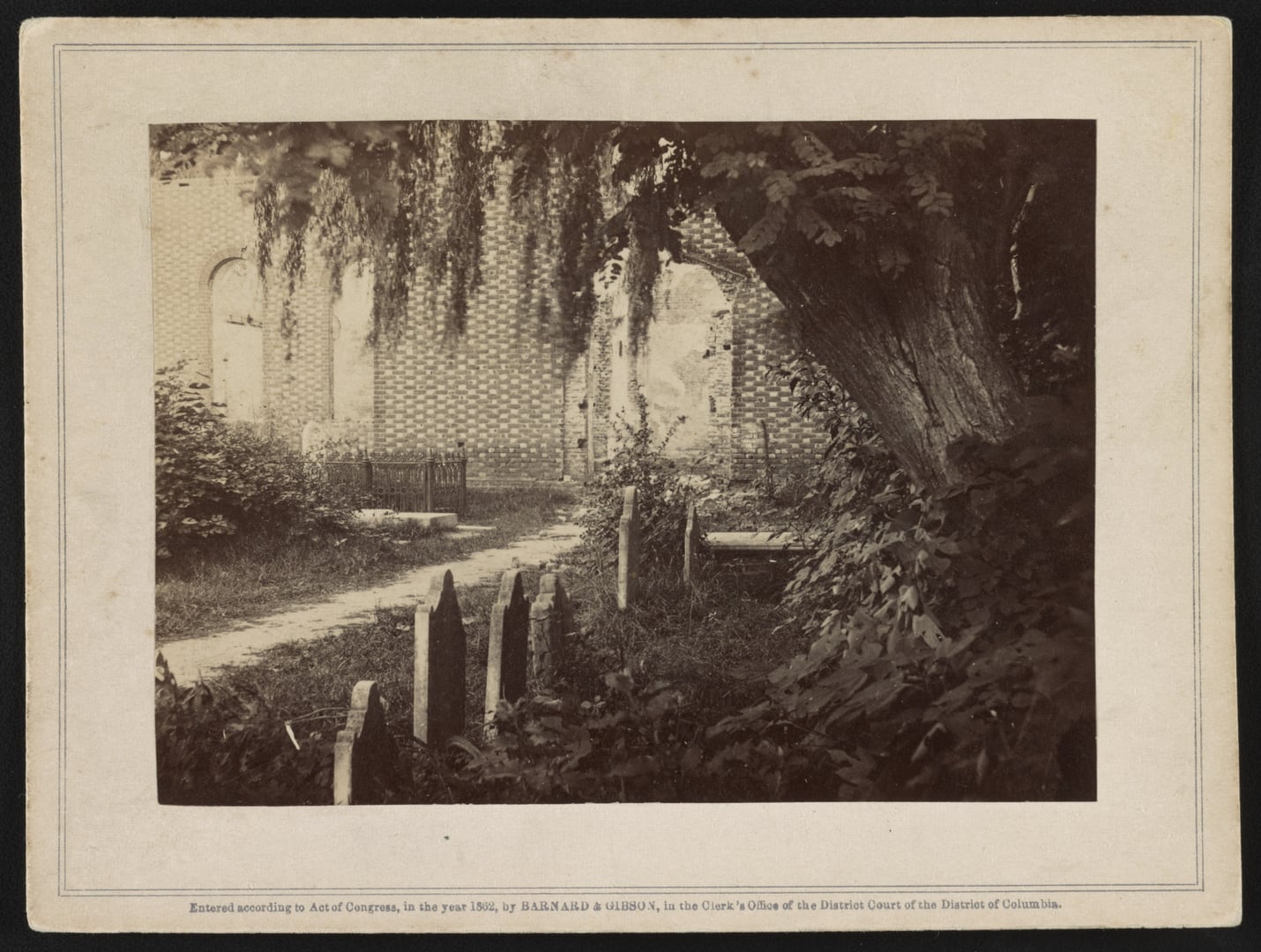
Petersburg, VA

Hiram Haines, a Petersburg newspaper editor and close friend of Edgar Allan Poe, established this tavern at 12 W Bank St in 1829. Poe and his teenage bride Virginia Clemm lodged in the second-floor suite during their honeymoon in May 1836, making it one of the few verified Poe sites in Virginia outside Richmond.

$ All Ages Family: High
Old Blandford Church exterior in Petersburg, Virginia, showing the 1736 stone church with historic cemetery grounds
Cemetery / Burial Ground

Old Blandford Church and Cemetery

Petersburg, VA

Old Blandford Church was built in 1736 and served Petersburg's Anglican congregation until the parish dissolved in 1806. During the nine-month Siege of Petersburg (June 1864–April 1865) the abandoned church served as a Confederate field hospital following the Battle of the Crater. Beginning in 1901, the Ladies Memorial Association commissioned 15 Tiffany Studios memorial windows — one for each Confederate state plus a general window — transforming the ruin into the largest single-site Tiffany collection in existence. The adjacent cemetery holds approximately 30,000 Confederate soldiers.

$$ All Ages Family: High
A line of four Civil War cannons in tall grass marking the earthworks of Fort Morton at Petersburg National Battlefield, Virginia
Battlefield / Military Site

Petersburg National Battlefield

Petersburg, VA

Petersburg National Battlefield preserves sites associated with the Siege of Petersburg, a nine-and-a-half-month Civil War operation from June 1864 to April 1865 in which the Union Army under Grant cut Confederate supply lines into Richmond. The siege's most-recounted action is the July 30, 1864 Battle of the Crater. Approximately 70,000 soldiers became casualties during the siege; the war effectively ended within days of the Confederate evacuation of Petersburg.

$ All Ages Family: High
Aerial survey view of Trapezium House
Aerial survey · USDA NAIP
Other Dark Tourism Site

Trapezium House

Petersburg, VA

Constructed in 1817 by Charles O'Hara, an Irish bachelor who settled in Petersburg, the Trapezium House was built entirely without right angles or parallel walls on the belief — reportedly relayed by O'Hara's West Indian servant — that evil spirits reside in corners. O'Hara also kept pet rats in the house, which earned it the local nickname 'Rat Castle.'

$ All Ages Family: High

Portsmouth — 6

Aerial survey view of Cedar Grove Cemetery (Portsmouth)
Aerial survey · USDA NAIP
Cemetery / Burial Ground

Cedar Grove Cemetery (Portsmouth)

Portsmouth, VA

Cedar Grove Cemetery was established in 1832 as Portsmouth's first public cemetery and is listed on the National Register of Historic Places. It holds the remains of more than 240 Confederate soldiers and is believed to contain the largest mass burial of 1855 yellow fever victims in any single American cemetery — approximately 10 percent of Portsmouth's total population perished in that epidemic.

$ All Ages Family: High
Haunted House / Historic Home

Gaffos House

Portsmouth, VA

The Gaffos House at 218 Glasgow Street is an 18th-century home in Portsmouth's Olde Towne Historic District. During the 1850s yellow fever epidemic it was repurposed as a makeshift hospital. A sea captain's daughter contracted yellow fever and died in the attic during this period.

$ All Ages Family: High
Museum / Historical Site

Hill House Museum

Portsmouth, VA

Hill House at 221 North Street in Portsmouth is a four-story Federal-style 'English basement' home built around 1820. Three generations of the Hill family lived there until the 1960s; it then passed to the Portsmouth Historical Association, which operates it as a museum and the city's primary repository for Olde Towne historical artifacts.

$ All Ages Family: High
Photo of Naval Medical Center Portsmouth (Historic Hospital Building)
Asylum / Hospital

Naval Medical Center Portsmouth (Historic Hospital Building)

Portsmouth, VA

Naval Medical Center Portsmouth, established in 1827, is the oldest U.S. Navy hospital still in operation. It was constructed on the site of Revolutionary War Fort Nelson using 500,000 bricks from the demolished fort. In 1855 it treated 587 yellow fever patients; during the Civil War it cared for nearly 1,300 patients. The naval cemetery on the grounds holds 840 graves including both Union and Confederate dead.

$ All Ages Family: High
Historic Ball House (c. 1784) in the Olde Towne Historic District of Portsmouth, Virginia
Other Dark Tourism Site

Olde Towne Portsmouth

Portsmouth, VA

Olde Towne Portsmouth is a 20-square-block historic district preserving more than three centuries of waterfront architecture across approximately 500 buildings. The neighborhood is anchored by Trinity Episcopal Church and has hosted the Olde Towne Ghost Walk, one of the longest-running events of its kind in the United States, every year since 1980.

$$ All Ages Family: Moderate
Museum / Historical Site

Trinity Episcopal Church (Portsmouth)

Portsmouth, VA

Trinity Episcopal Church in Portsmouth's Olde Towne Historic District traces its congregation to 1762. The current building was constructed 1828-1830. During the Civil War the church served as a Confederate hospital, and the crew of the CSS Virginia worshipped here before the ironclad's 1862 battle with the USS Monitor.

$ All Ages Family: High

Alexandria — 5

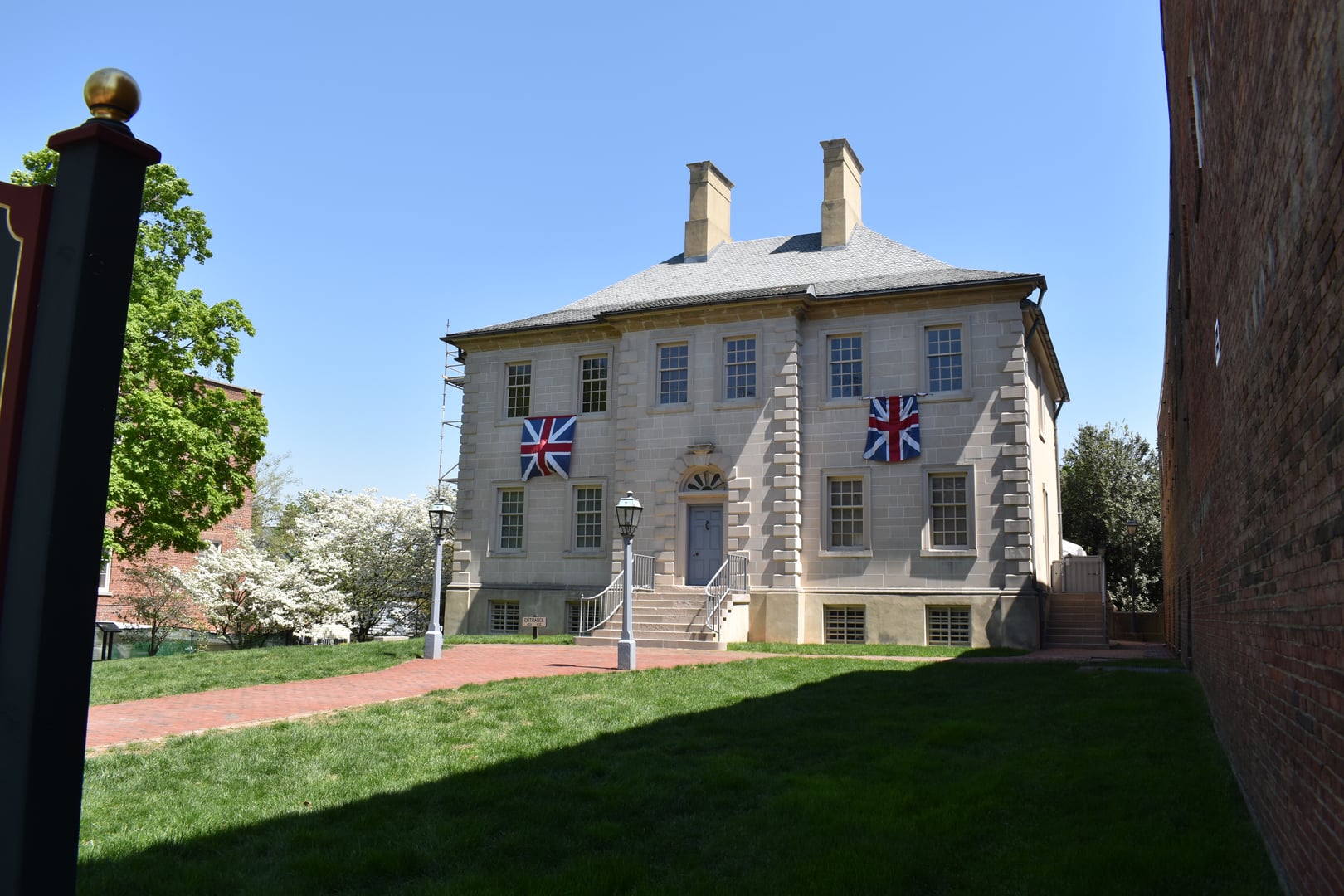
Exterior of the 1753 Carlyle House Georgian sandstone manor at 121 North Fairfax Street in Old Town Alexandria, Virginia
Haunted House / Historic Home

Carlyle House Historic Park

Alexandria, VA

Scottish merchant John Carlyle constructed the Carlyle House at 121 North Fairfax Street in Alexandria between 1751 and 1753, making it one of the oldest surviving structures in the city. The Georgian sandstone manor served as headquarters for Major-General Edward Braddock during the 1755 Congress of Alexandria — the meeting at which Braddock and five colonial governors planned the campaign that began the French and Indian War. During the Civil War, the adjacent Mansion House Hotel (built in front of the original house in 1860) was converted to a Union field hospital. NOVA Parks acquired and restored the property, opening it as a public museum in 1976.

$ All Ages Family: High
Haunted House / Historic Home

Colross (former Mason children burial site)

Alexandria, VA

Colross was built between 1799 and 1800 by Alexandria merchant John Potts and sold unfinished to Jonathan Swift in 1803. The Georgian-style mansion occupied the 1100 block of Oronoco Street and passed into the Thomson Mason family, a branch descended from George Mason. The estate was dismantled in 1929 by John Munn, who had every brick transported to Princeton, New Jersey, where the reconstructed mansion stands today at Princeton Day School.

$ All Ages Family: High
Exterior of Gadsby's Tavern Museum at 134 North Royal Street in Old Town Alexandria, Virginia
Museum / Historical Site

Gadsby's Tavern Museum (Female Stranger)

Alexandria, VA

The Gadsby's Tavern complex comprises a circa-1785 Georgian tavern and the 1792 City Tavern and Hotel at 134 North Royal Street in Alexandria's Old Town. John Gadsby operated the taverns from 1796 to 1808, and the site served as one of the most important social and political gathering places in early Federal-era America, hosting multiple presidents including George Washington and John Adams. The City of Alexandria restored and reopened the buildings as a museum in 1976.

$ All Ages Family: High
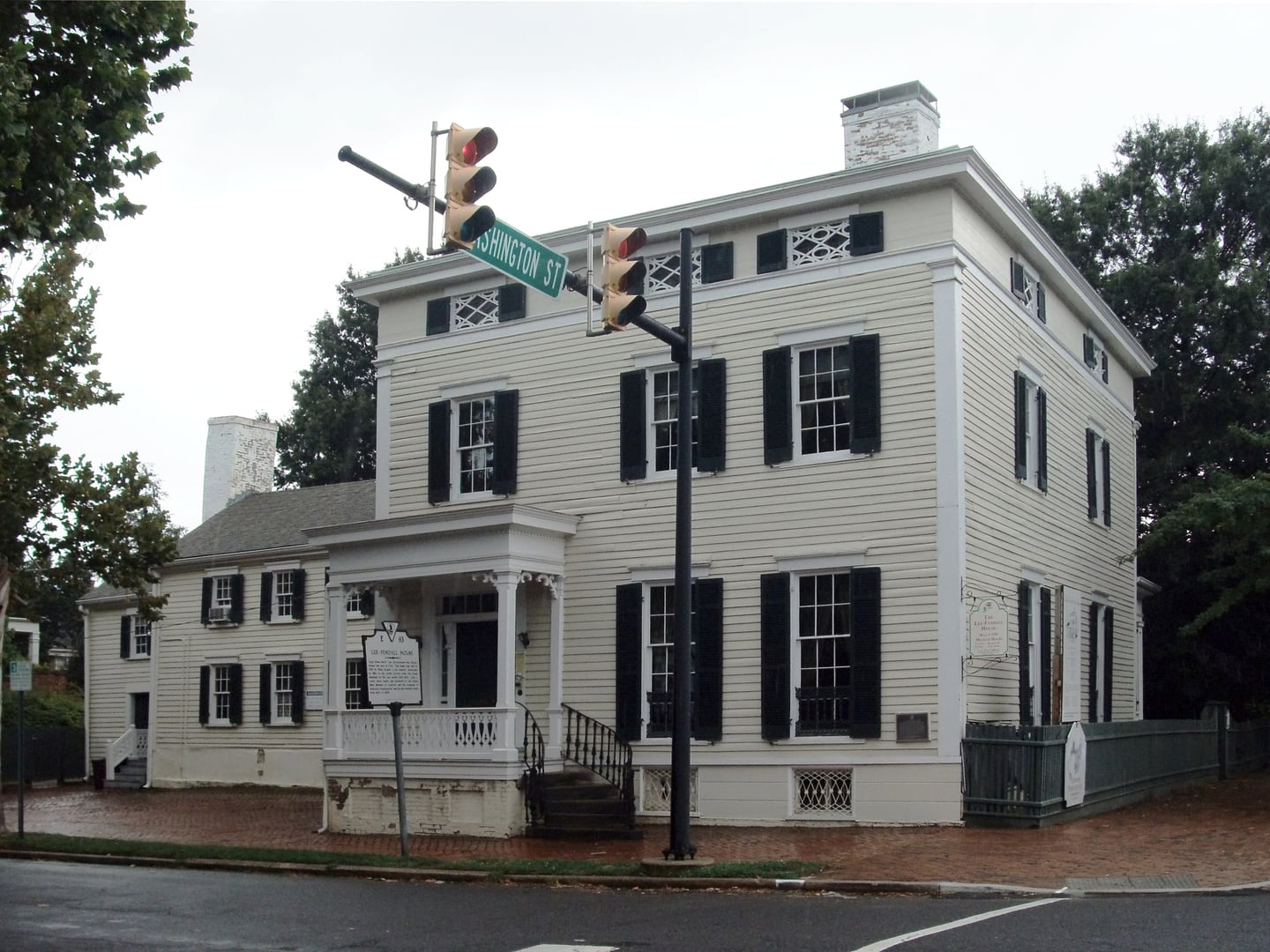
Street view of the 1785 Lee-Fendall House on Oronoco Street in Old Town Alexandria, Virginia
Museum / Historical Site

Lee-Fendall House

Alexandria, VA

The Lee-Fendall House in Old Town Alexandria, Virginia was built in 1785 by Philip Fendall on land originally purchased by Henry 'Light-Horse Harry' Lee. Thirty-seven members of the Lee family lived in the house between 1785 and 1903. The property served as a Union hospital during the Civil War and was the residence of labor leader John L. Lewis from 1937 to 1969. It opened as a museum in 1974.

$$ All Ages Family: High
Woodlawn estate east front, historic 126-acre property originally part of Mount Vernon, Alexandria, Virginia
Museum / Historical Site

Woodlawn

Alexandria, VA

Woodlawn was built in 1805 on land George Washington gave to his nephew Lawrence Lewis and Lewis's wife Eleanor "Nelly" Parke Custis Lewis, Martha Washington's granddaughter. The 126-acre Federal-style estate is owned by the National Trust for Historic Preservation and operates as a museum alongside the relocated Pope-Leighey House by Frank Lloyd Wright.

$$ All Ages Family: High

Fredericksburg — 5

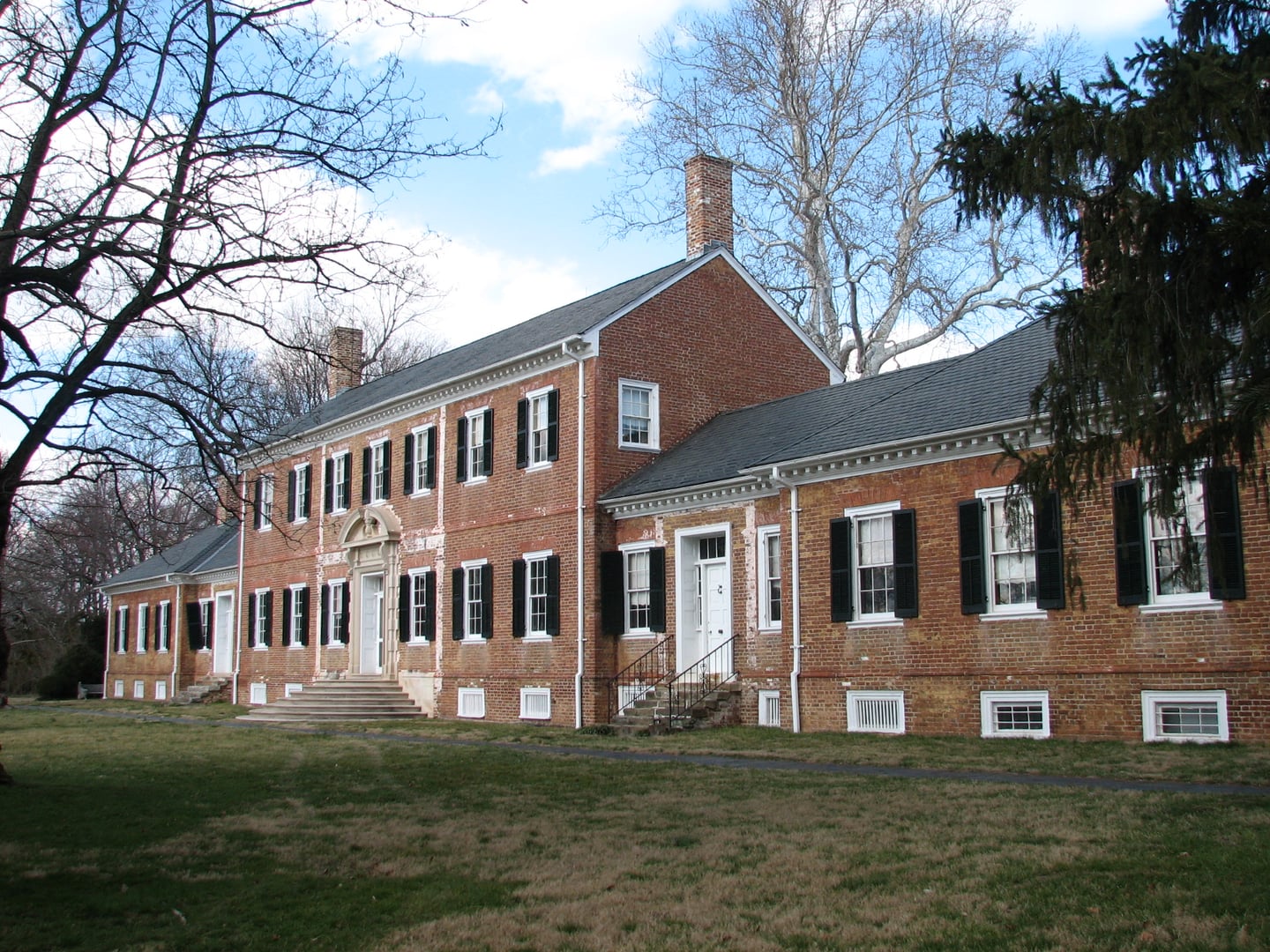
The Georgian-style brick Chatham Manor on the Rappahannock River in Falmouth, Stafford County, Virginia, completed in 1771
Museum / Historical Site

Chatham Manor

Fredericksburg, VA

Chatham Manor is a Georgian-style brick mansion completed in 1771 by William Fitzhugh on the Rappahannock River in Stafford County, Virginia. Built as the center of a plantation that operated on enslaved labor, it later served as a Union headquarters and field hospital during the Battle of Fredericksburg in December 1862. Volunteers at the hospital included Walt Whitman and Clara Barton. The estate was donated to the National Park Service in 1975 and opened to the public in 1977 as the headquarters of the Fredericksburg and Spotsylvania National Military Park.

$ All Ages Family: High
Restored Sunken Road and adjacent stone wall at Fredericksburg and Spotsylvania National Military Park, Virginia
Battlefield / Military Site

Fredericksburg and Spotsylvania National Military Park

Fredericksburg, VA

Fredericksburg and Spotsylvania National Military Park preserves land from four Civil War battlefields fought between December 1862 and May 1864: Fredericksburg, Chancellorsville, the Wilderness, and Spotsylvania Court House. Established February 14, 1927, the park covers 8,405 acres and records more than 15,000 killed and 85,000 wounded across the four engagements. It remains the longest-named unit in the National Park system.

$ All Ages Family: High
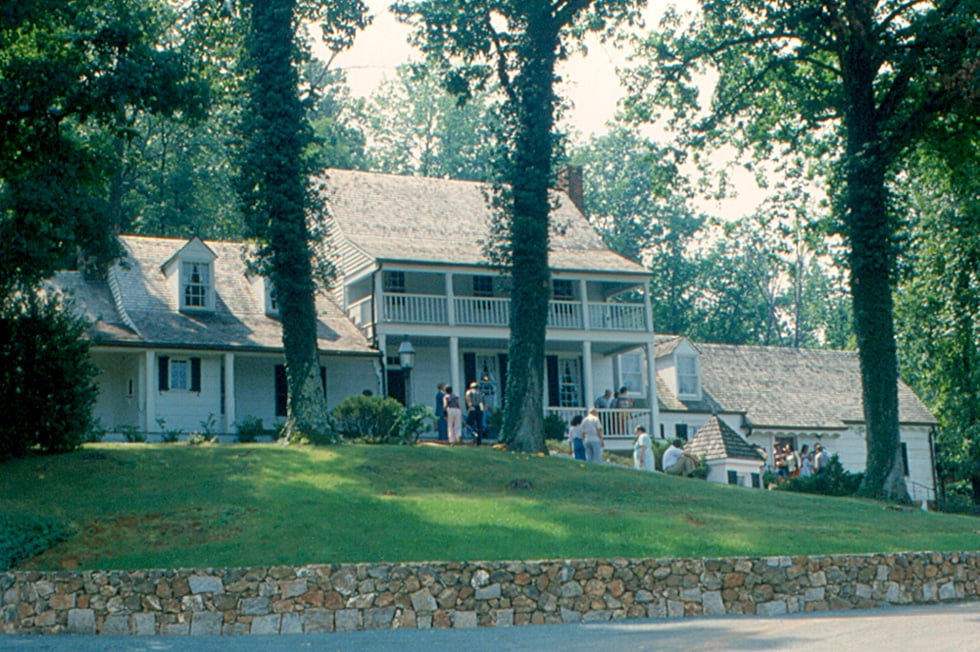
Photo of Kenmore Plantation
Haunted House / Historic Home

Kenmore Plantation

Fredericksburg, VA

Kenmore was built in the 1770s in Fredericksburg, Virginia for Betty Washington Lewis, younger sister of George Washington, and her husband Col. Fielding Lewis. Lewis ruined his health and fortune manufacturing munitions for the Continental Army, dying bankrupt of tuberculosis in 1781. The house served as a Union field hospital after the Battle of the Wilderness in 1864.

$ All Ages Family: High
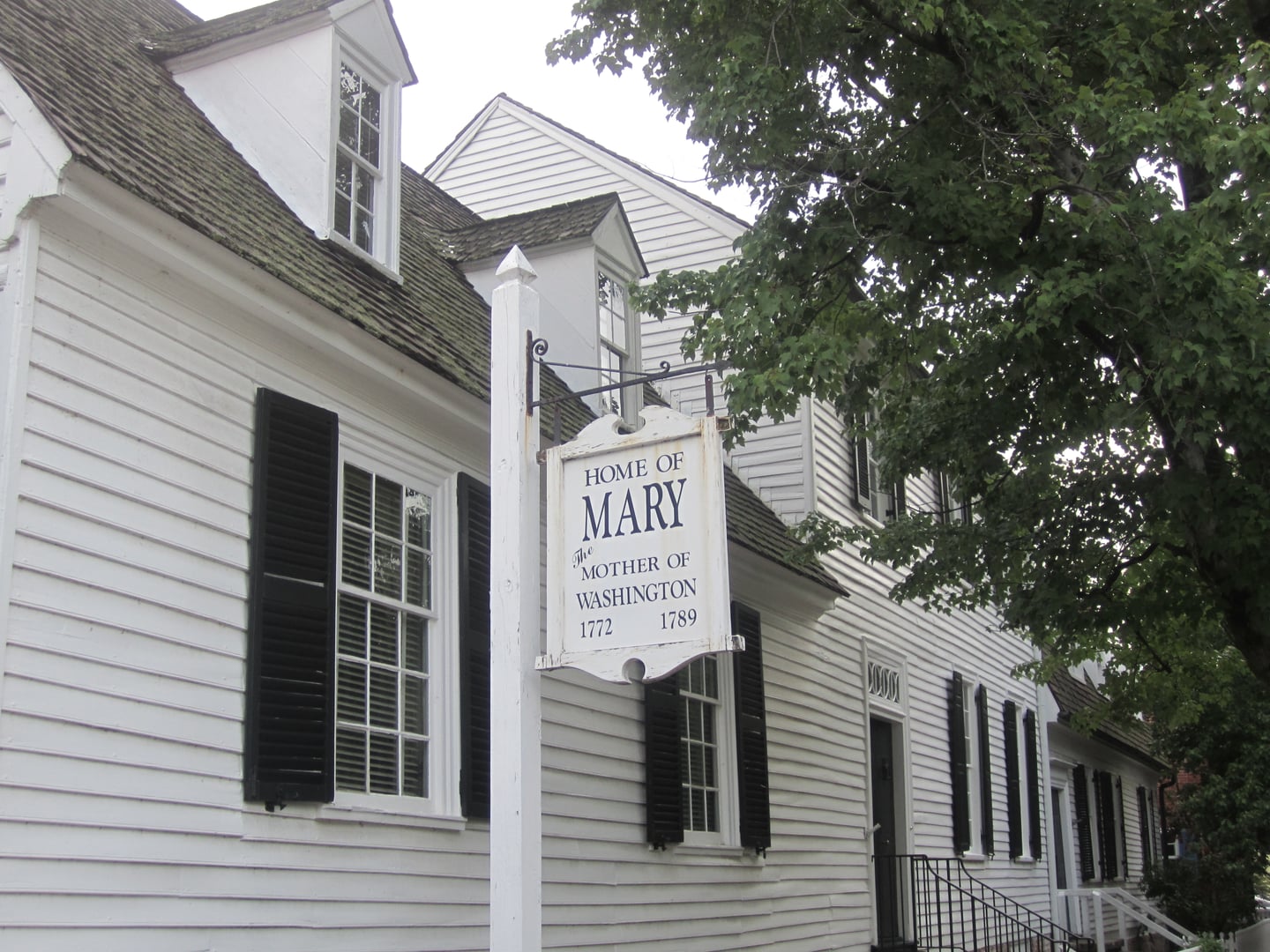
The white frame Mary Washington House at 1200 Charles Street, Fredericksburg, Virginia
Haunted House / Historic Home

Mary Washington House

Fredericksburg, VA

George Washington purchased this modest white frame house in Fredericksburg in 1772 for his mother Mary Ball Washington, who had been managing the family's Ferry Farm alone. She lived here for 17 years, dying on August 25, 1789, just months after her son's inauguration as the first president. The house is now operated by Washington Heritage Museums.

$ All Ages Family: High
Photo of Rising Sun Tavern
Museum / Historical Site

Rising Sun Tavern

Fredericksburg, VA

Charles Washington, youngest brother of George Washington, built this frame structure around 1760 as his Fredericksburg residence. In 1792 it became a tavern under John Frazer, a Continental Army veteran. Frazer died on the premises on November 28, 1793. The building became a public museum in 1907 under the Association for the Preservation of Virginia Antiquities and is now operated by Washington Heritage Museums.

$ All Ages Family: High

Harrisonburg — 5

Museum / Historical Site

Hardesty-Higgins House (Harrisonburg Visitor Center)

Harrisonburg, VA

Construction began in 1848 by physician Henry Higgins and was completed by 1853 under Isaac Hardesty, Harrisonburg's first mayor by charter. The house served as Union Army headquarters during the Civil War under Generals Banks (1862) and Sheridan (1864), and later housed the Virginia Craftsman furniture company from the 1920s through the 1980s.

$ All Ages Family: High
Photo of Joshua Wilton House Inn
Haunted Hotel / Inn

Joshua Wilton House Inn

Harrisonburg, VA

Constructed in 1888, the Joshua Wilton House is a 2.5-story eclectic Late Victorian brick dwelling with two projecting gabled pavilions and a three-story octagonal turret. Added to the National Register of Historic Places in 1979, it has operated variously as a private residence, a Tau Kappa Epsilon fraternity house, and its current incarnation as a bed and breakfast inn.

$$ All Ages Family: High
Aerial survey view of Keister Elementary School
Aerial survey · USDA NAIP
Other Dark Tourism Site

Keister Elementary School

Harrisonburg, VA

Keister Elementary School in Harrisonburg, Virginia, was built in 1955 and named in honor of Dr. William H. Keister, who served in the Harrisonburg public school system for more than fifty years. The school serves the Harrisonburg City Public Schools district and maintains an active nature trail on wooded property behind the building.

$ All Ages Family: High
Museum / Historical Site

Old Harrisonburg Jail (Heritage Museum)

Harrisonburg, VA

The Old Harrisonburg Jail was built in 1890 and served as the city's primary detention facility for decades, housing prisoners some of whom died within its walls. The Harrisonburg-Rockingham Historical Society later took over the building for use as a heritage museum.

$ All Ages Family: High
Museum / Historical Site

Warren-Sipe House

Harrisonburg, VA

Edward Warren built this Victorian mansion in 1856. During the Civil War, the structure was converted for use as a field hospital, treating soldiers whose wounds often proved fatal. The Virginia Quilt Museum occupied the building for years before relocating to Dayton, Virginia.

$ All Ages Family: High

Roanoke — 5

Haunted Dining / Bar

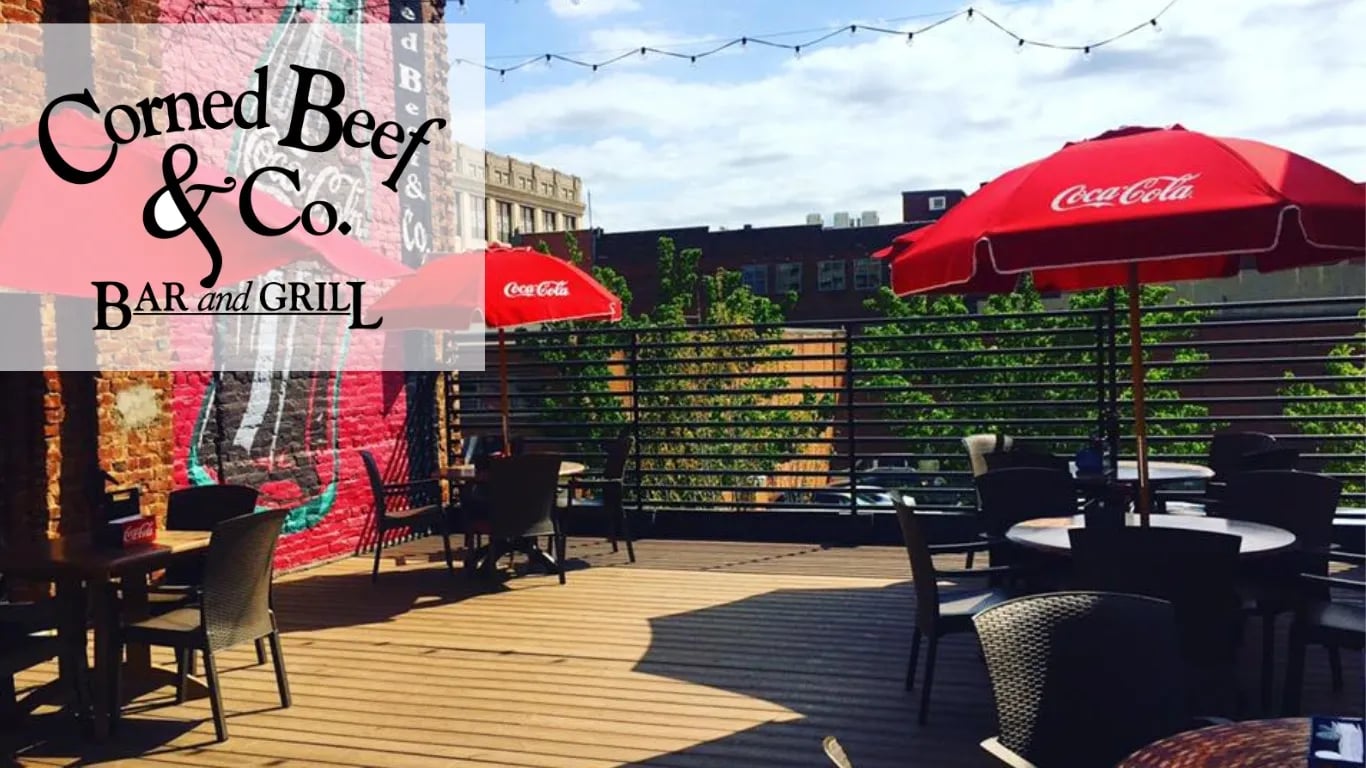
Corned Beef & Co.

Roanoke, VA

Corned Beef & Co. was established in 1985 as a food stand inside the historic City Market Building and has grown into one of downtown Roanoke's anchor dining and entertainment venues. The restaurant is known for classic sandwiches, wood-fired pizza, and live music.

$$ All Ages Family: High
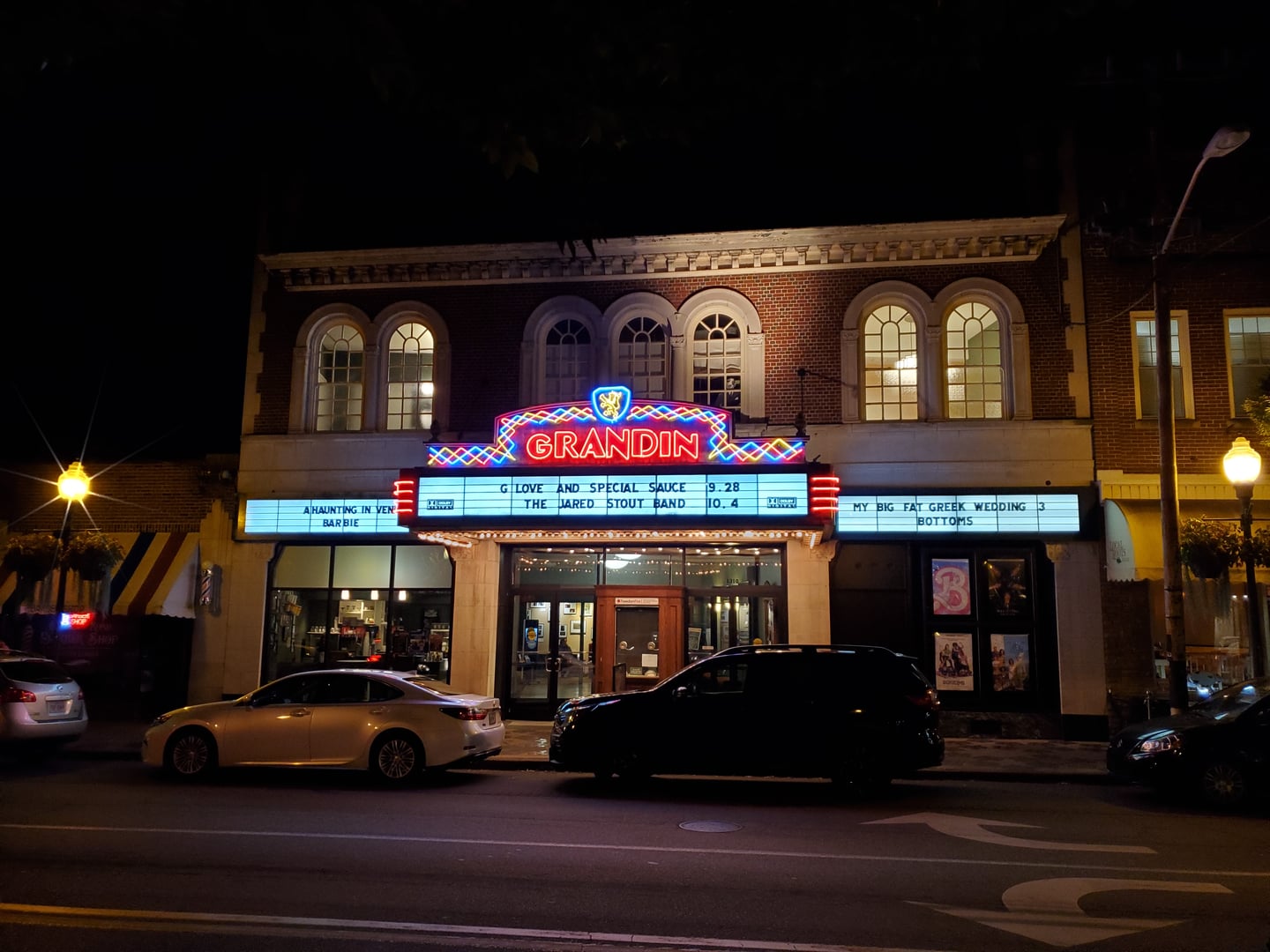
Photo of Grandin Theatre
Theater / Performance Venue

Grandin Theatre

Roanoke, VA

The Grandin Theatre opened in 1932 as a neighborhood movie house in Roanoke's Grandin Village. It is listed on the National Register of Historic Places and has operated continuously as an independent cinema, presenting art house and classic film programming.

$ All Ages Family: High
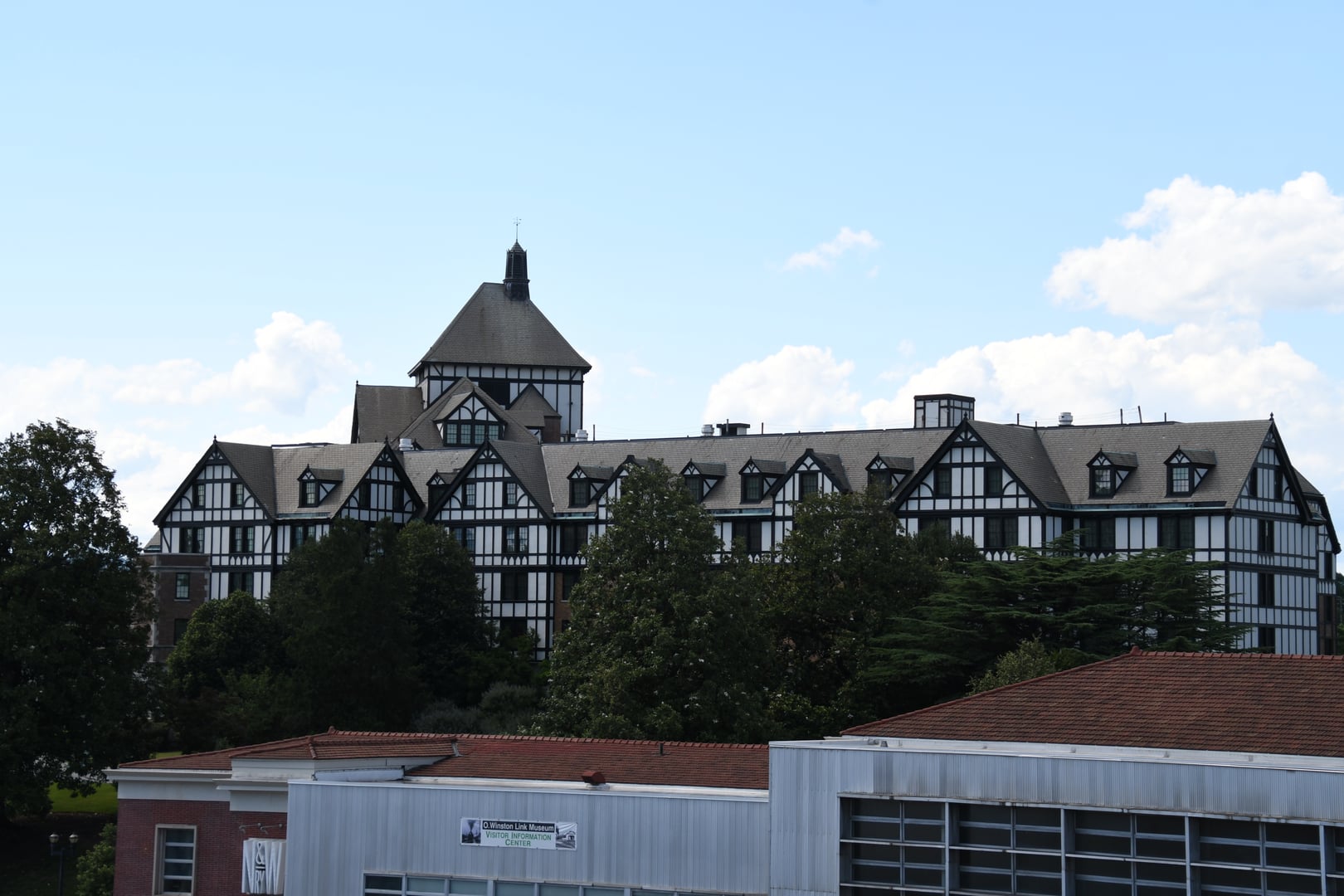
Exterior view of Hotel Roanoke's Tudor Revival facade, Roanoke, Virginia
Haunted Hotel / Inn

Hotel Roanoke

Roanoke, VA

The Norfolk and Western Railway built the Hotel Roanoke in 1882 as a showpiece for the new railroad city it was creating in the Blue Ridge Mountains. The original wood-frame structure was replaced with a Tudor Revival brick complex in subsequent expansions; the central wing was rebuilt in 1938. It was listed on the National Register of Historic Places in 1996 and is now owned by Virginia Tech and operated by Hilton.

$$$ All Ages Family: High
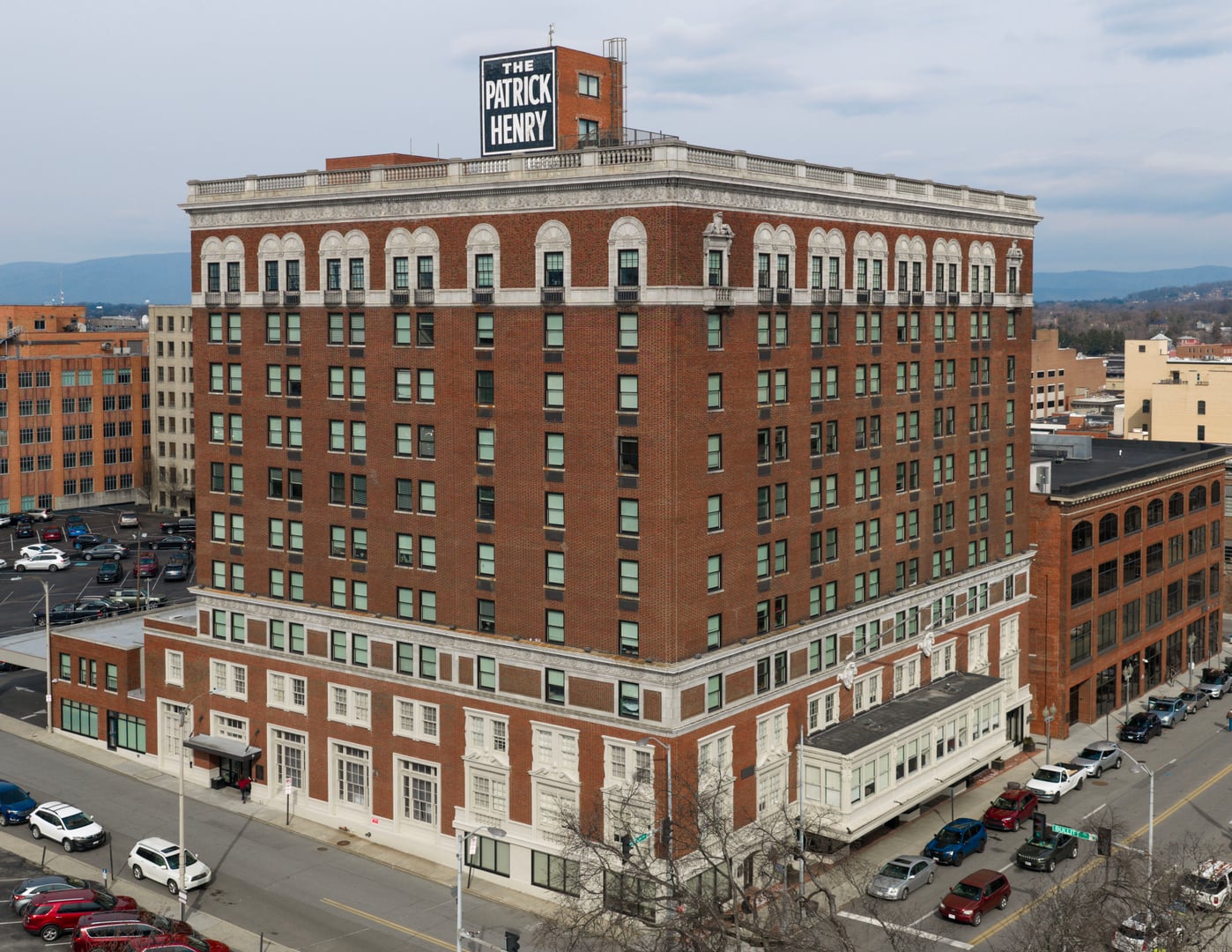
Photo of Patrick Henry Hotel
Haunted Hotel / Inn

Patrick Henry Hotel

Roanoke, VA

Designed by architect William Lee Stoddart and opened November 10, 1925, the Patrick Henry Hotel was a centerpiece of Roanoke society through much of the twentieth century. After decades of financial difficulties and ownership changes, the 300-room hotel closed in 2007 and was subsequently converted to apartments, office space, and a restaurant, while being listed on the National Register of Historic Places.

$ All Ages Family: Moderate
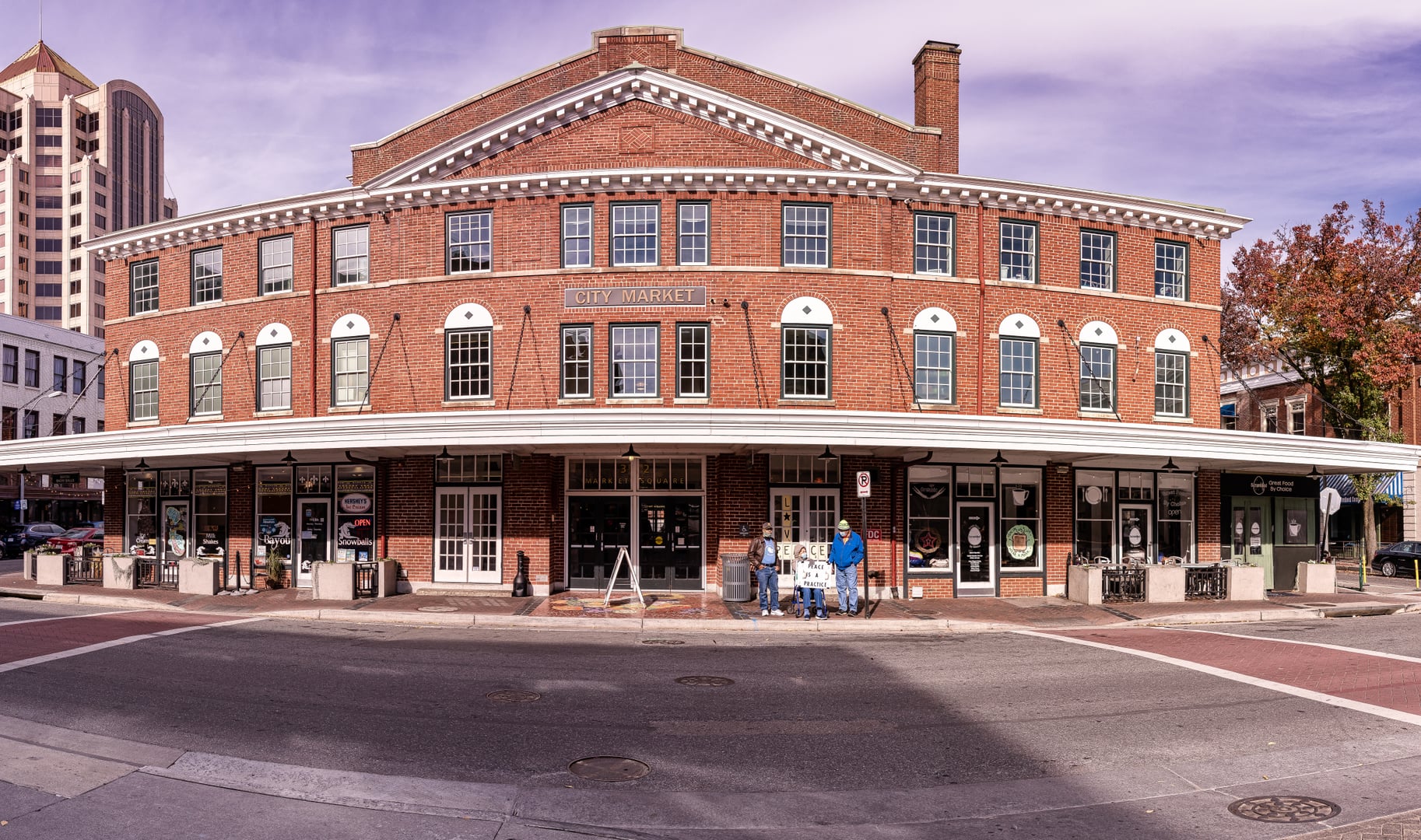
Photo of Roanoke City Market Building
Museum / Historical Site

Roanoke City Market Building

Roanoke, VA

The Roanoke City Market traces its origins to 1882, when the city issued its first vendor licenses on Market Square. The original City Market Building completed in 1886 was destroyed by fire and replaced by the current structure in 1922. The market is the oldest continuously operating open-air market in Virginia.

$ All Ages Family: High

Danville — 4

Haunted House / Historic Home

Bell-Pace-Boatwright House

Danville, VA

Built around 1860 by merchant E.J. Bell, the house at 904 Main Street is among the oldest surviving antebellum residences on Danville's Old West End historic district, sometimes called Millionaires Row for its concentration of pre-Civil War merchant homes.

$ All Ages Family: High
Museum / Historical Site

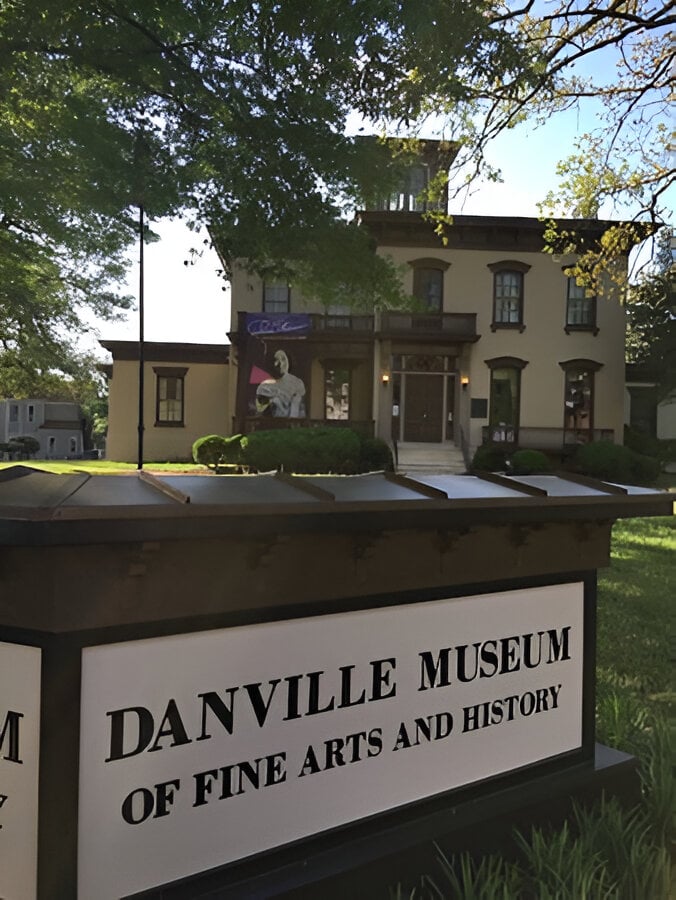
Danville Museum of Fine Arts & History (Sutherlin Mansion)

Danville, VA

Built in 1859 for William T. Sutherlin, a Danville tobacco merchant, the mansion became the temporary Confederate capital from April 3-10, 1865, when Jefferson Davis and his cabinet fled Richmond following its fall. Davis issued his final presidential proclamation from this house before the Confederacy's surrender.

$ All Ages Family: High
Haunted House / Historic Home

Lanier House

Danville, VA

The Lanier House at 770 Main Street was built in 1830 by Captain James Lanier, Danville's first mayor, making it the oldest surviving residence in the city. The early Federal-style frame structure passed through several prominent owners, including the Wyllie family, who added the imposing two-story neo-Classical portico. From the 1940s through the 1970s the house served as home and diagnostic clinic for Dr. Samuel Newman, Danville's first pediatrician.

$ All Ages Family: High
Aerial survey view of Satan's Bridge (Berry Hill Bridge)
Aerial survey · USDA NAIP
Outdoor / Natural Site

Satan's Bridge (Berry Hill Bridge)

Danville, VA

Berry Hill Road crosses the Dan River at the Virginia–North Carolina border south of Danville, passing near a Norfolk Southern rail line. The site acquired the informal name Satan's Bridge from local ghost tradition, and the adjacent road section is one of several documented Gravity Hill locations in Southside Virginia.

$ All Ages Family: Moderate

Lynchburg — 4

True Crime Site

Court Street Baptist Church (1878 Stampede Site)

Lynchburg, VA

On October 16, 1878, at least 8 people were killed in a stampede at an overcrowded African American congregation hall on Court Street when a false alarm of fire ignited panic during a post-wedding revival. The church rebuilt the following year, erecting the current structure with Lynchburg's tallest steeple.

$ All Ages Family: High
Aerial survey view of Old City Cemetery & Pest House Medical Museum
Aerial survey · USDA NAIP
Cemetery / Burial Ground

Old City Cemetery & Pest House Medical Museum

Lynchburg, VA

Established in 1806, Old City Cemetery is the oldest public cemetery in Virginia still in active use. Its 26 acres contain the graves of over 2,700 Civil War soldiers, enslaved African Americans, and free Black Lynchburg residents, along with the Pest House Medical Museum — a surviving Civil War–era quarantine hospital where 102 soldiers died of smallpox.

$ All Ages Family: High
Photo of Randolph College
Other Dark Tourism Site

Randolph College

Lynchburg, VA

Randolph College opened in 1891 as Randolph-Macon Woman's College, one of the first fully accredited women's colleges in the South. In 1973, freshman Cynthia Hellman was murdered on campus by Standaly Hope Smith, a crime that became embedded in the school's ghost lore.

$ All Ages Family: High
Haunted House / Historic Home

Rocking Cradle House

Lynchburg, VA

The house at 1104 Jackson Street has been associated with Lynchburg's most famous ghost story since 1839, when a cradle there reportedly began rocking on its own without human contact, drawing hundreds of visitors. The original cradle was donated to the Lynchburg Museum System in 2021 by direct descendants of the home's first documented occupants, Reverend William and Laura Smith.

$ All Ages Family: High

Abingdon — 3

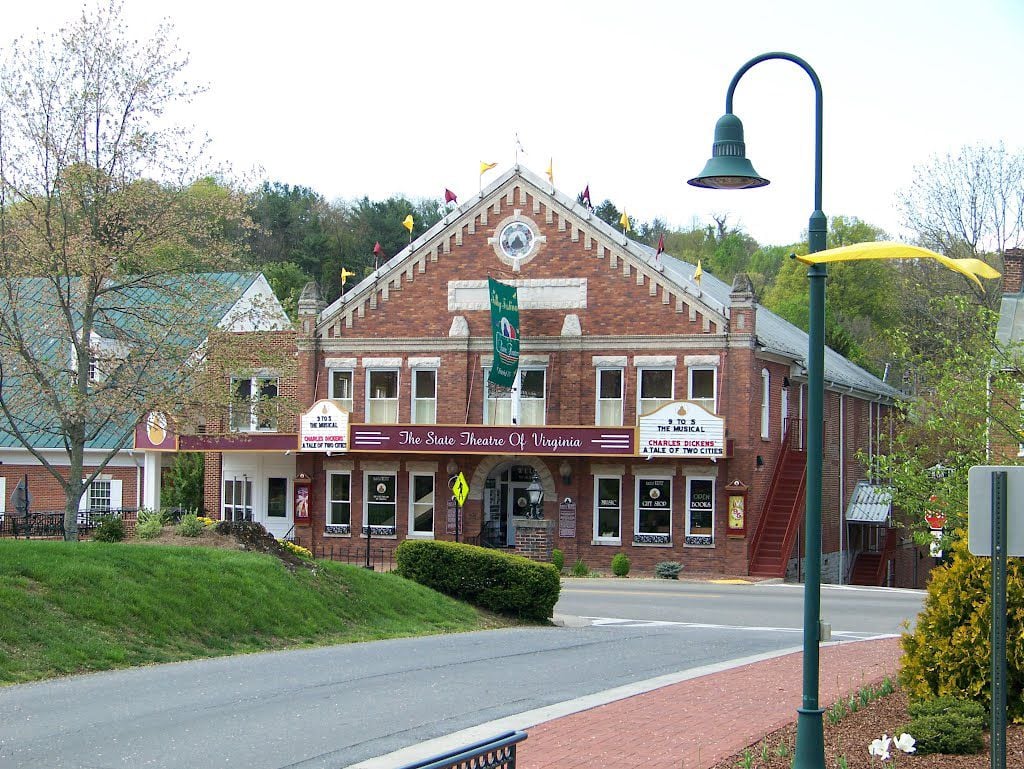
Barter Theatre main entrance on West Main Street in Abingdon Virginia
Theater / Performance Venue

Barter Theatre

Abingdon, VA

The Barter Theatre Gilliam Stage building was constructed in 1833 as Sinking Springs Presbyterian Church. Robert Porterfield, a young actor who had worked in New York, brought a troupe of unemployed Depression-era actors to Abingdon in 1933 and opened the theatre with a novel admission model: farm goods accepted in place of cash. The Virginia General Assembly designated Barter the State Theatre of Virginia in 1946 — the first such designation for a professional theatre in the nation. Porterfield led the company until his death in 1971.

$$ All Ages Family: High
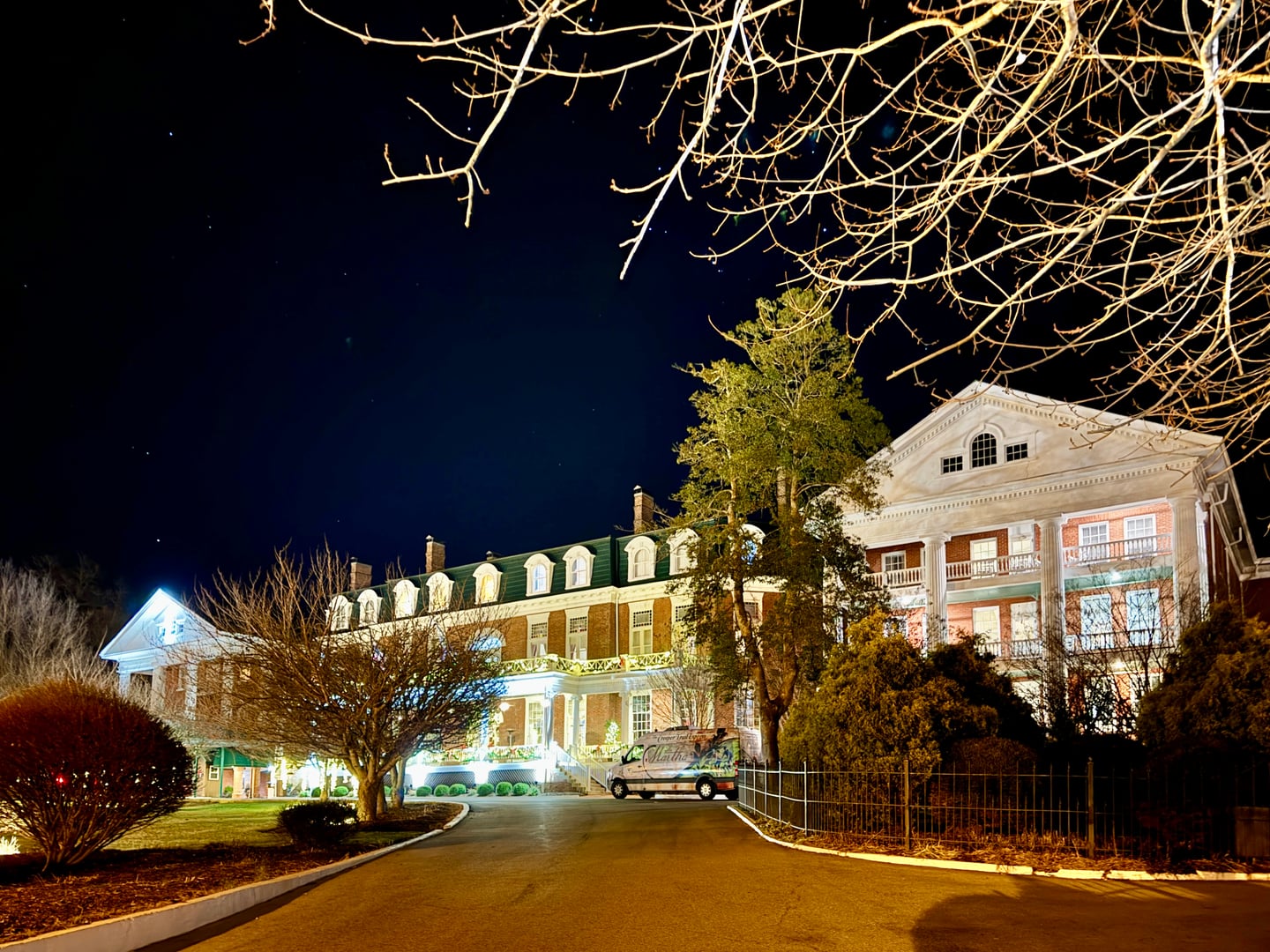
Martha Washington Inn historic 1832 mansion exterior on Main Street in Abingdon, Virginia
Haunted Hotel / Inn

Martha Washington Inn

Abingdon, VA

The Martha Washington Inn was constructed in 1832 for General Francis Preston and his family as a private residence costing approximately $15,000. In 1858 the Preston home was purchased for $21,000 to establish Martha Washington College for young women, an institution that operated for over 70 years until the Great Depression and declining enrollment forced its closure in 1932. During the Civil War the building served as a field hospital, treating both Union and Confederate wounded, and schoolgirls became nurses. The property has operated as a hotel since 1935.

$$$ All Ages Family: High
Photo of The Abingdon Tavern
Haunted Dining / Bar

The Abingdon Tavern

Abingdon, VA

The Tavern was built in 1779, making it the oldest surviving building in Abingdon and one of the oldest west of the Blue Ridge. It served as a stagecoach inn and post office from the start, hosted President Andrew Jackson, King Louis Philippe of France, and Pierre Charles L'Enfant among its documented guests, and served as a hospital for wounded soldiers during the Civil War.

$$$ All Ages Family: Moderate

Big Stone Gap — 3

Photo of John Fox Jr. Museum
Haunted House / Historic Home

John Fox Jr. Museum

Big Stone Gap, VA

The original four-room cottage at 118 Shawnee Ave E was built around 1890 for Fox's older brothers, who came to Big Stone Gap as coal-and-iron investors. John Fox Jr. moved in and expanded the home to 20 rooms over his lifetime; he lived and wrote here from 1890 until his death in 1919. The house was listed on the National Register of Historic Places in 1974 and has operated as a public museum since 1970.

$ All Ages Family: High
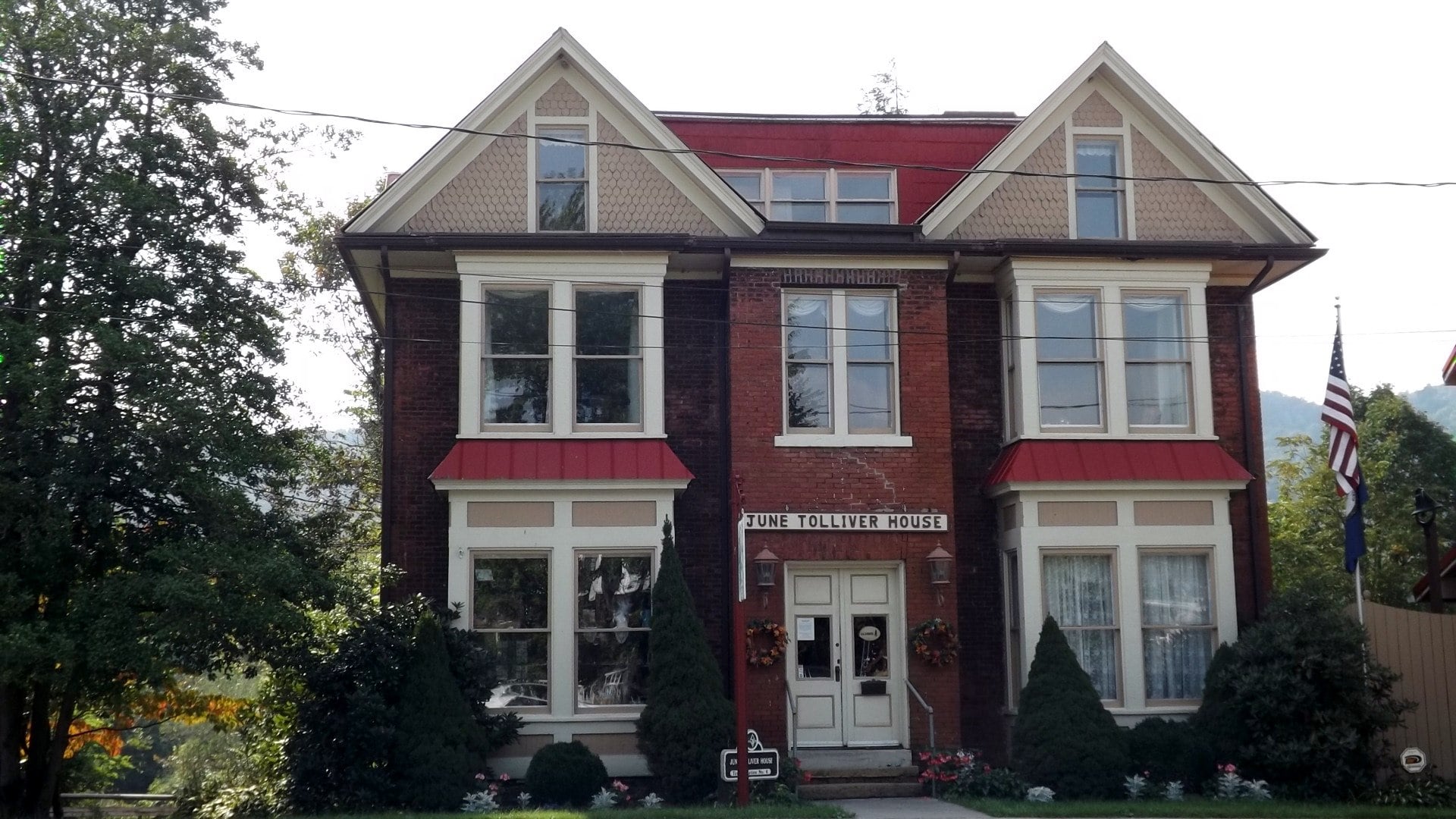
June Tolliver House Queen Anne brick facade in Big Stone Gap Virginia
Haunted House / Historic Home

June Tolliver House & Folk Art Center

Big Stone Gap, VA

Jerome Hill Duff built this 2½-story Queen Anne brick house in 1890. June Morris — the Big Stone Gap schoolgirl after whom John Fox Jr. patterned his fictional heroine June Tolliver in The Trail of the Lonesome Pine (1908) — boarded here during her studies. The house was listed on the National Register of Historic Places in 1973 and now operates as the June Tolliver House & Folk Art Center.

$ All Ages Family: High
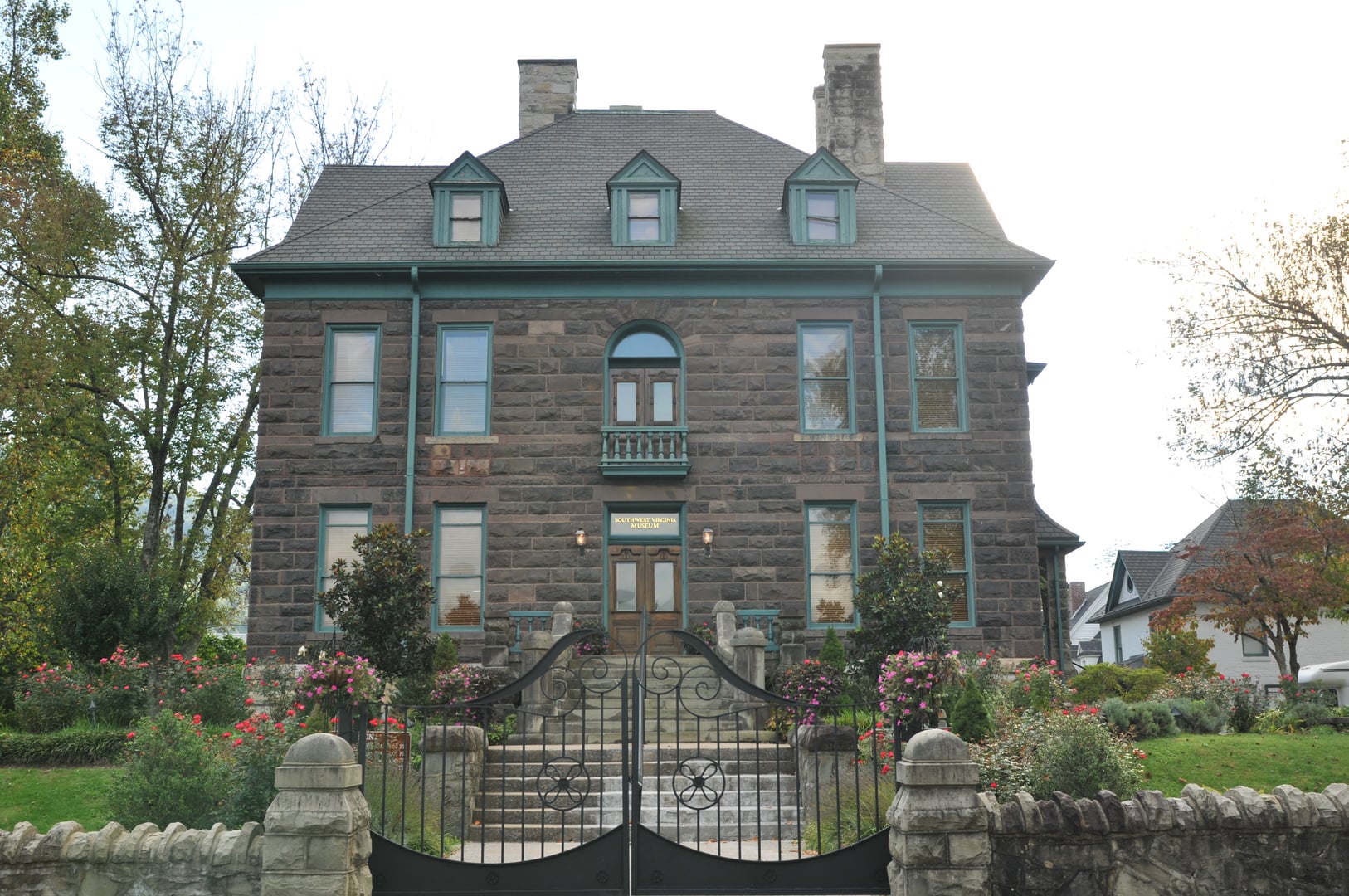
Photo of Southwest Virginia Museum Historical State Park
Museum / Historical Site

Southwest Virginia Museum Historical State Park

Big Stone Gap, VA

Designed by Charles A. Johnson and built between 1888 and 1895 for Rufus A. Ayers — Virginia Attorney General from 1878 to 1885 — this four-story Victorian stone mansion anchors the hilltop above Big Stone Gap's downtown. Ayers invested heavily in the town's anticipated industrial future; when the Pittsburgh-of-the-South boom collapsed, the mansion passed to C. Bascom Slemp in the late 1920s and eventually to the state.

$ All Ages Family: High

Front Royal — 3

Photo of Belle Boyd Cottage
Museum / Historical Site

Belle Boyd Cottage

Front Royal, VA

The Belle Boyd Cottage is one of the oldest buildings in Front Royal. Originally built as guest quarters behind the Fishback Hotel, it was where Maria 'Belle' Boyd lived during the Civil War and eavesdropped on Union officers in May 1862, gathering intelligence she then passed to Confederate General Stonewall Jackson. The building was donated to the Warren Heritage Society in 1981 and relocated to the Society's grounds in 1982.

$ All Ages Family: High
Museum / Historical Site

Ivy Lodge Museum (Warren Heritage Society)

Front Royal, VA

Ivy Lodge dates to approximately 1859 and served as the home of Major Victor Moreau Brown. It is now owned by the Warren Heritage Society, which uses it to house exhibits on Warren County and Front Royal history alongside the adjacent Belle Boyd Cottage and Balthis House.

$ All Ages Family: High
Photo of Prospect Hill Cemetery
Cemetery / Burial Ground

Prospect Hill Cemetery

Front Royal, VA

Prospect Hill Cemetery has served Front Royal since at least 1802, when the oldest confirmed grave was placed. The Ladies' Warren Memorial Association chartered in 1868 collected Confederate dead from scattered sites across Warren County and reinterred them in the cemetery's Soldiers' Circle, eventually gathering 276 soldiers from every state in the former Confederacy.

$ All Ages Family: High

Lexington — 3

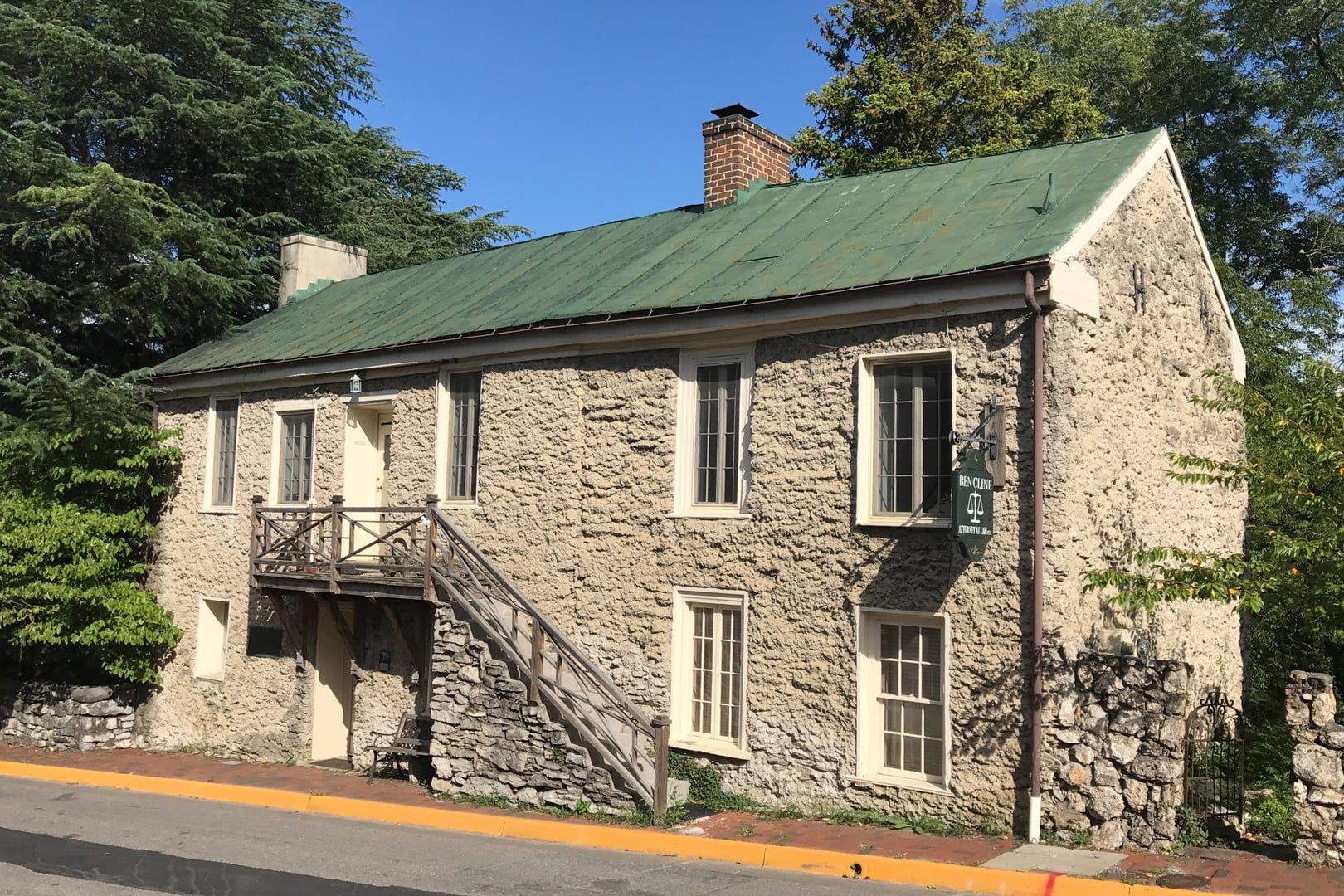
Photo of Rockbridge Historical Society (The Castle)
Museum / Historical Site

Rockbridge Historical Society (The Castle)

Lexington, VA

The building known as The Castle houses the Rockbridge Historical Society at 101 East Washington Street in Lexington, Virginia. The structure dates to the 19th century and sits adjacent to Lawyers' Row, the courthouse complex where Lexington's last public hanging took place.

$ All Ages Family: High
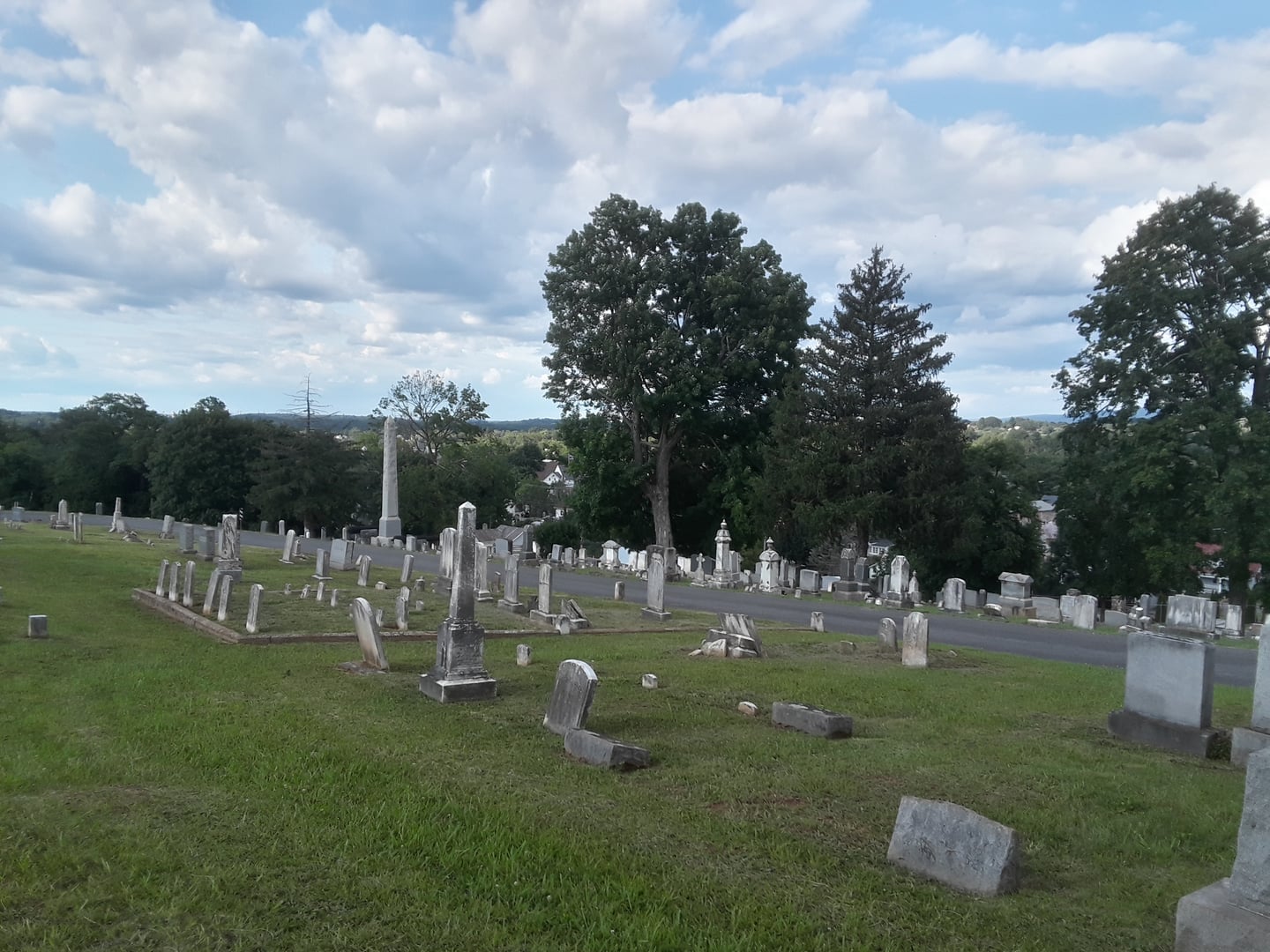
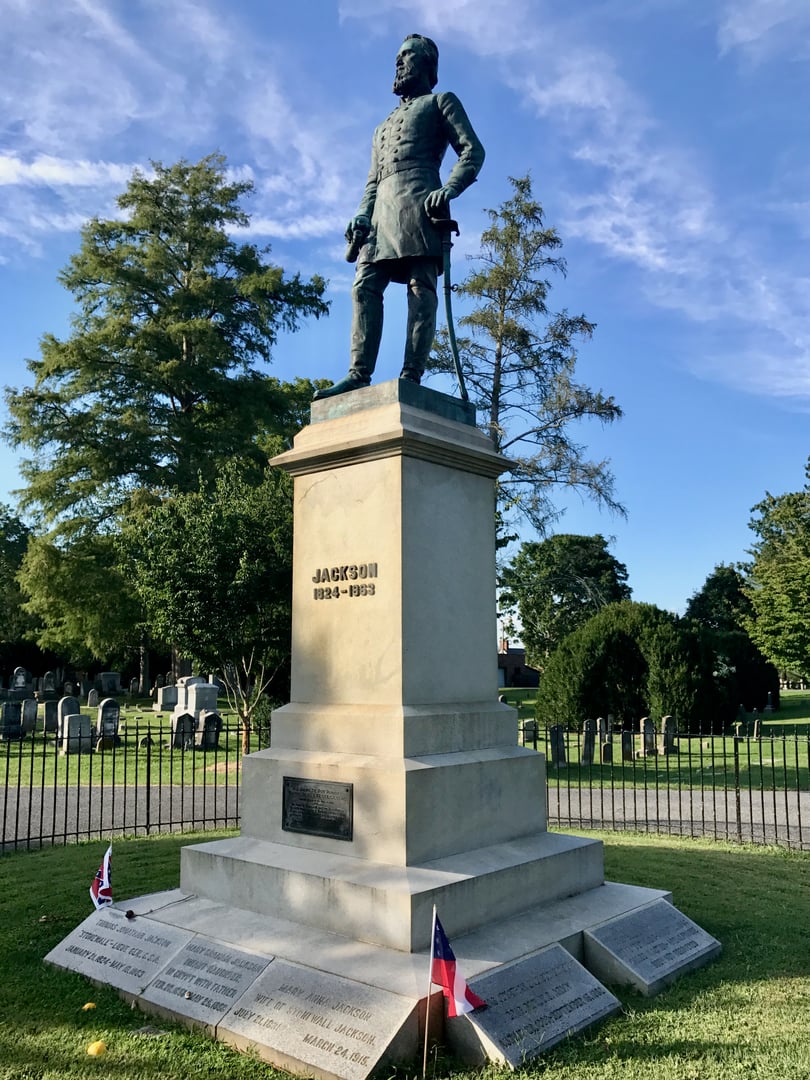
Photo of Stonewall Jackson Memorial Cemetery (Oak Grove Cemetery)
Cemetery / Burial Ground

Stonewall Jackson Memorial Cemetery (Oak Grove Cemetery)

Lexington, VA

Oak Grove Cemetery—known as Stonewall Jackson Memorial Cemetery from 1949 until 2020—is Lexington's main historic burying ground, established as the Presbyterian Cemetery in the early 19th century. It holds approximately 7,500 graves including Confederate General Thomas 'Stonewall' Jackson, two Virginia governors, and 144 Confederate veterans. The cemetery was renamed following a 2020 Lexington City Council vote.

$ All Ages Family: High
Photo of Virginia Military Institute (VMI) Barracks
Museum / Historical Site

Virginia Military Institute (VMI) Barracks

Lexington, VA

Virginia Military Institute opened November 11, 1839, as the first state-supported military college in the United States. Located in Lexington, Virginia, it graduated cadets who fought on both sides of the Civil War; the corps itself fought at the Battle of New Market in May 1864. Thomas 'Stonewall' Jackson taught natural philosophy and artillery tactics at VMI from 1851 until he was called into Confederate service in 1861.

$ All Ages Family: High

Suffolk — 3

Photo of Cedar Hill Cemetery
Cemetery / Burial Ground

Cedar Hill Cemetery

Suffolk, VA

Cedar Hill Cemetery in Suffolk, Virginia was established in 1802 and is the city's primary historic burial ground, covering 25 acres. It was listed on the National Register of Historic Places in 2006. Among its notable interments are Confederate Brigadier General Lawrence O'Bryan Branch, killed at the Battle of Antietam on September 17, 1862, and Brigadier General Laurence Simmons Baker, as well as a U.S. Senator and a North Carolina governor.

$ All Ages Family: Moderate
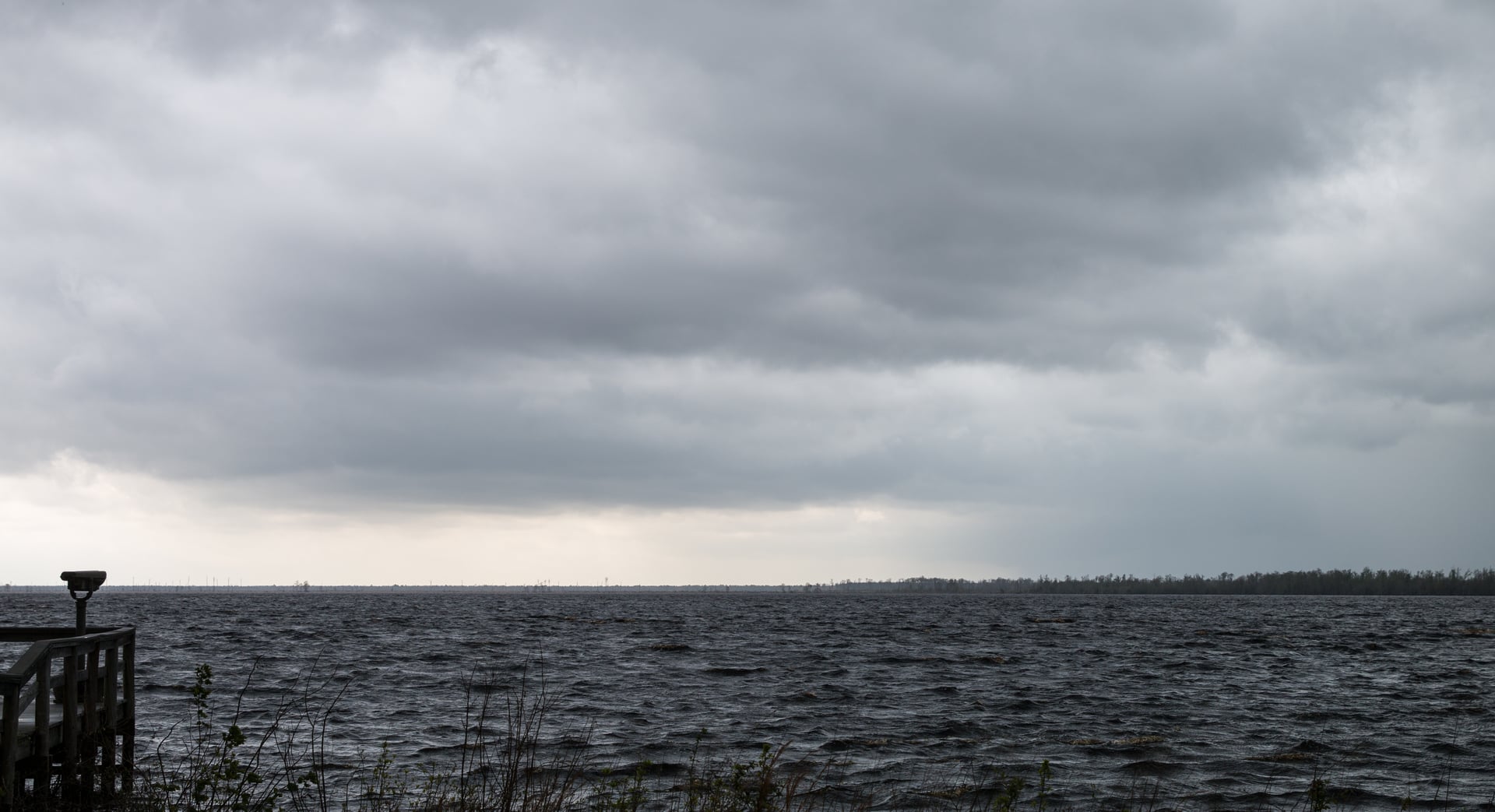
Photo of Great Dismal Swamp / Lake Drummond
Outdoor / Natural Site

Great Dismal Swamp / Lake Drummond

Suffolk, VA

The Great Dismal Swamp spans 112,000 acres across Virginia and North Carolina, at the center of which sits Lake Drummond — first documented by colonial governor William Drummond in 1666. Beginning in the 1660s, communities of people who had escaped enslavement established self-sustaining settlements in the swamp's elevated islands, trading in timber and shingles with nearby residents while maintaining a degree of independence that was unique in the colonial South. The swamp also served as a corridor on the Underground Railroad.

$ All Ages Family: High
Museum / Historical Site

Old Nansemond County Courthouse

Suffolk, VA

Built in 1837 in Greek Revival style, the Old Nansemond County Courthouse served as the seat of county justice for more than a century before Suffolk and Nansemond County consolidated in 1974. The building now operates as the Suffolk Visitor Center and retains its original courtroom architecture, including the heavy wooden doors and the judge's bench area.

$ All Ages Family: High

Yorktown — 3

Aerial survey view of Crawford Road
Aerial survey · USDA NAIP
Outdoor / Natural Site

Crawford Road

Yorktown, VA

Crawford Road is a 3.6-mile rural road in York County, Virginia, designated Route 637, running between Goosley Road and Yorktown Road through woods adjacent to the Yorktown Battlefield and Newport News Park. The bridge associated with the road's folklore is a 1930s concrete overpass where the National Park Service's Tour Road crosses Crawford Road. At least five murders have been documented on or near the road since 1990.

$ All Ages Family: Low
Thomas Nelson House (York Hall) in Yorktown, Virginia — 1730 Georgian home of Declaration signer Thomas Nelson Jr.
Battlefield / Military Site

Nelson House

Yorktown, VA

The Nelson House at 501 Main Street in Yorktown, Virginia, is a circa-1730 brick Georgian townhouse built by Thomas Nelson, called Scotch Tom. His grandson Thomas Nelson Jr. signed the Declaration of Independence, served as wartime Governor of Virginia, and commanded the Virginia Militia at the 1781 Siege of Yorktown. The house was acquired by the National Park Service in 1968 and restored in 1976.

$ All Ages Family: High
Yorktown Battlefield earthworks and cannon at the First Allied Siege Line, Colonial National Historical Park, Yorktown, Virginia
Battlefield / Military Site

Yorktown Battlefield

Yorktown, VA

The Siege of Yorktown, fought September 28 to October 19, 1781, was the decisive engagement of the American Revolutionary War. American and French forces under General Washington and General Rochambeau besieged British General Cornwallis's fortified position; after 19 days, Cornwallis surrendered approximately 8,000 soldiers — the largest British capitulation of the war. Yorktown Battlefield is administered by the National Park Service as part of Colonial National Historical Park.

$ All Ages Family: Moderate

Charles City — 2

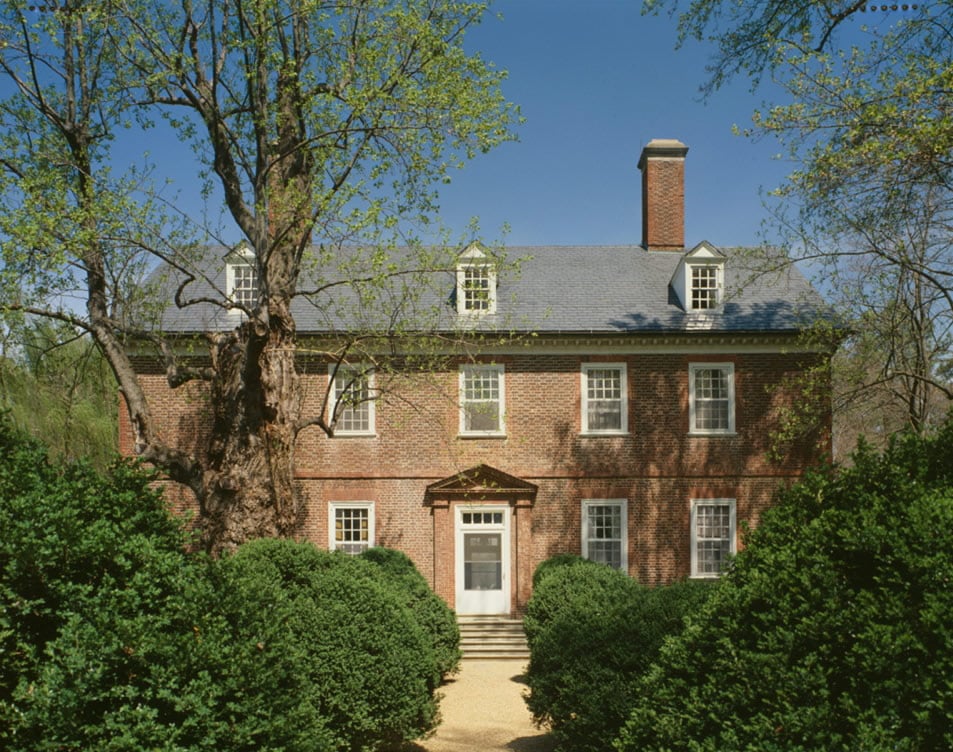
Georgian three-story brick mansion at Berkeley Plantation, the Harrison family home in Charles City Virginia
Haunted House / Historic Home

Berkeley Plantation

Charles City, VA

Benjamin Harrison IV built the current mansion at Berkeley Plantation in 1726, making it the oldest three-story brick structure in Virginia. The plantation became the birthplace of President William Henry Harrison in 1773 and the ancestral seat of a family that produced a signer of the Declaration of Independence and two U.S. Presidents. During the Civil War, General McClellan used the mansion as his headquarters and the cellar held Confederate prisoners.

$$ All Ages for daytime tours; 18+ (16 with adult) for ghost hunts Family: Moderate
Yellow Carpenter Gothic-style Edgewood Plantation house and adjacent Harrison's Mill in Charles City County, Virginia
Haunted Hotel / Inn

Edgewood Plantation

Charles City, VA

Edgewood Plantation is an 1854 Gothic Revival mansion in Charles City County, Virginia, built by the Rowland brothers, millers from New Jersey. Listed on the National Register of Historic Places in 1982, the property served as a Confederate lookout during the Civil War and has operated as a post office, restaurant, and bed-and-breakfast.

$$$ All Ages Family: Moderate

Charlottesville — 2

Exterior of Michie Tavern, the 1784 tavern relocated to Thomas Jefferson Parkway near Monticello
Haunted Dining / Bar

Michie Tavern

Charlottesville, VA

Scotsman William Michie obtained a license to operate an ordinary on November 11, 1784, and the tavern he built served as the social and lodging hub for the Buck Mountain area of Albemarle County. In 1927, Josephine Henderson purchased the property and had the entire building moved seventeen miles to its present location near Thomas Jefferson's Monticello, reopening it as a museum-restaurant in 1928.

$$ All Ages Family: High
True Crime Site

Old Albemarle County Jail

Charlottesville, VA

Built in 1876 from stone salvaged from an earlier jail, the Old Albemarle County Jail served as the county's sole detention facility until 1974. Its most notorious chapter came on February 10, 1905, when former Charlottesville mayor James Samuel McCue was hanged in the yard for the murder of his wife Fannie — the last public execution in Virginia history.

$ All Ages Family: Moderate

Leesburg — 2

Photo of Ball's Bluff Battlefield Regional Park
Battlefield / Military Site

Ball's Bluff Battlefield Regional Park

Leesburg, VA

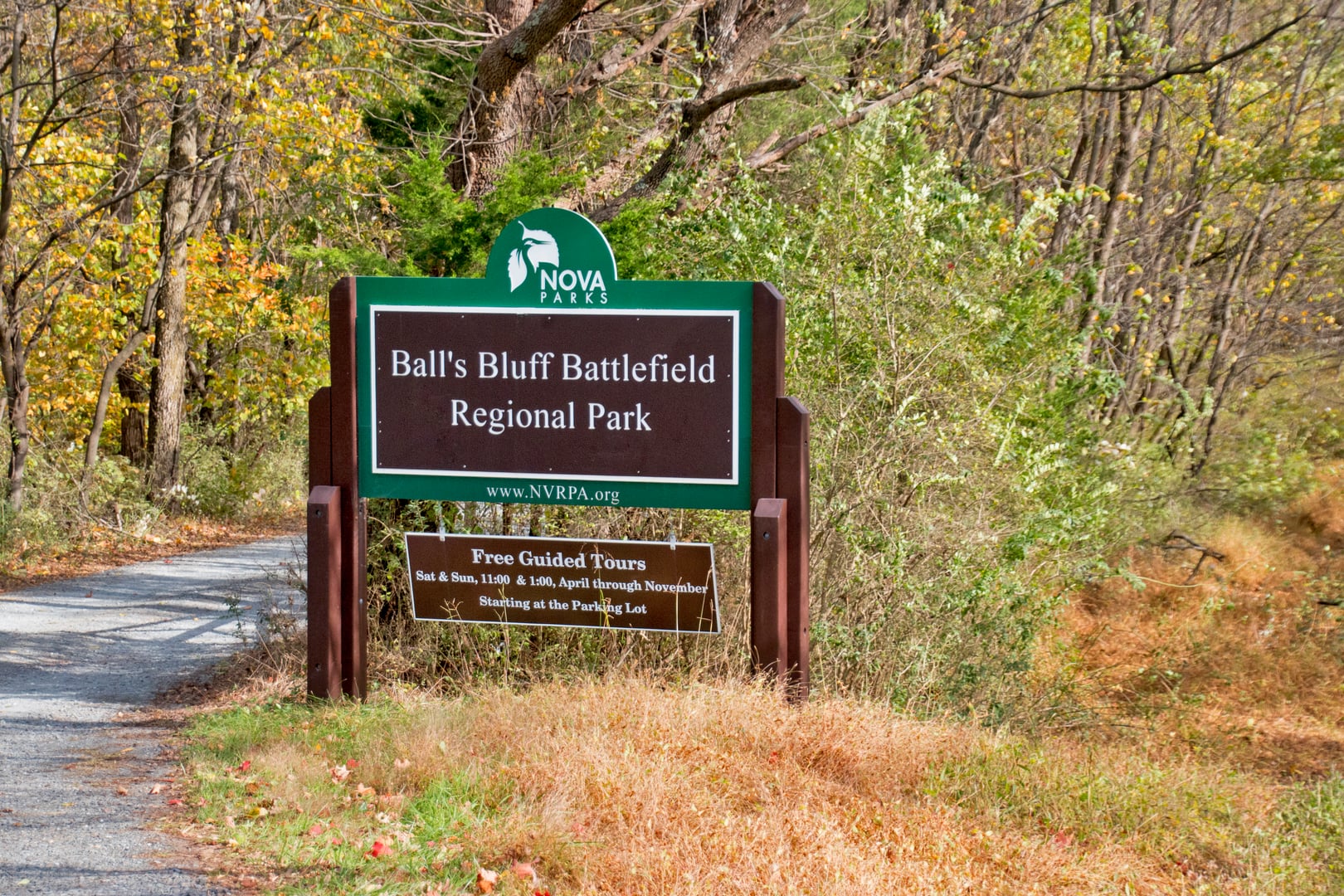
On October 21, 1861, a Union reconnaissance mission across the Potomac River at Ball's Bluff in Loudoun County, Virginia turned into a catastrophe. Colonel Edward D. Baker, a sitting U.S. senator from Oregon and close friend of Abraham Lincoln, was killed in the engagement — the only senator ever killed in battle. Of approximately 1,700 Union soldiers engaged, roughly 223 were killed, 226 wounded, and 553 captured; many drowned attempting to recross the river in overcrowded boats. The site now contains a half-acre national cemetery with 54 burials, only one of whom is identified.

$ All Ages Family: Moderate
Haunted House / Historic Home

Paxton Manor

Leesburg, VA

The nearly 20,000-square-foot mansion known variously as Carlheim and Paxton Manor was designed by New York architect Henry C. Dudley for Pennsylvania industrialist Charles R. Paxton (1816–1889) and his wife Rachel, constructed around 1872. After Rachel's death in 1921, the estate was placed in a charitable trust. The building served as the Paxton Home for Convalescent Children (1921–1954), an orphanage (1954–1980), and a childcare center (1980–2004), before The Arc of Loudoun — a disability services organization — moved in as current operator. The property is on both the National and Virginia Landmarks Registers.

$$ All Ages Family: Low

Marion — 2

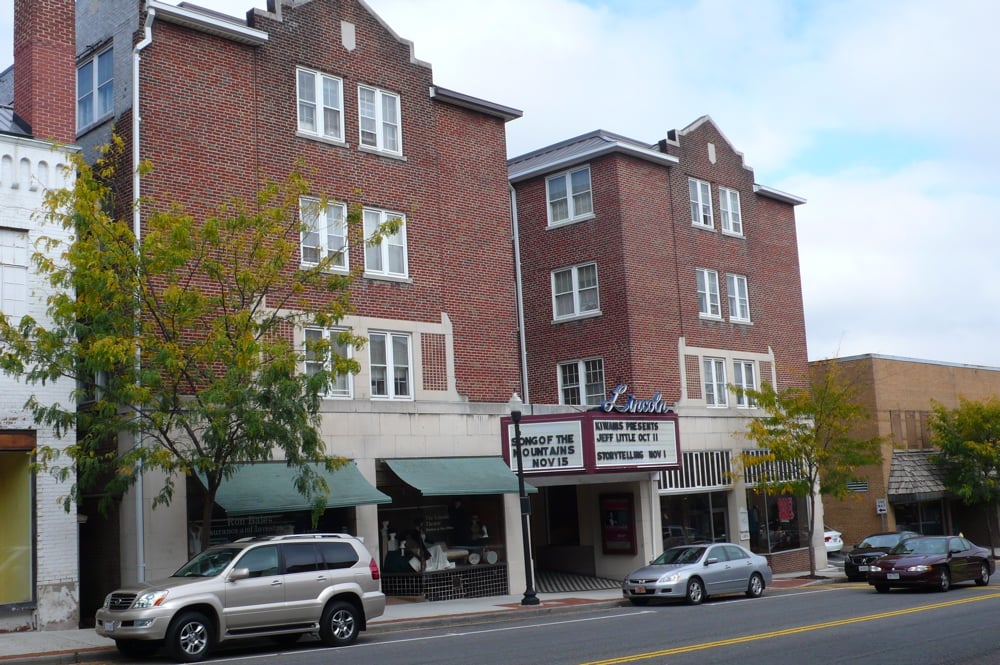
Photo of Lincoln Theatre
Theater / Performance Venue

Lincoln Theatre

Marion, VA

Built in 1929 as a vaudeville and movie house, the Lincoln Theatre in Marion, Virginia is a three-story Mayan Revival structure that operated until 1977 before being listed on the National Register of Historic Places in 1992 and reopened as a community performing arts center in 2004.

$ All Ages Family: High
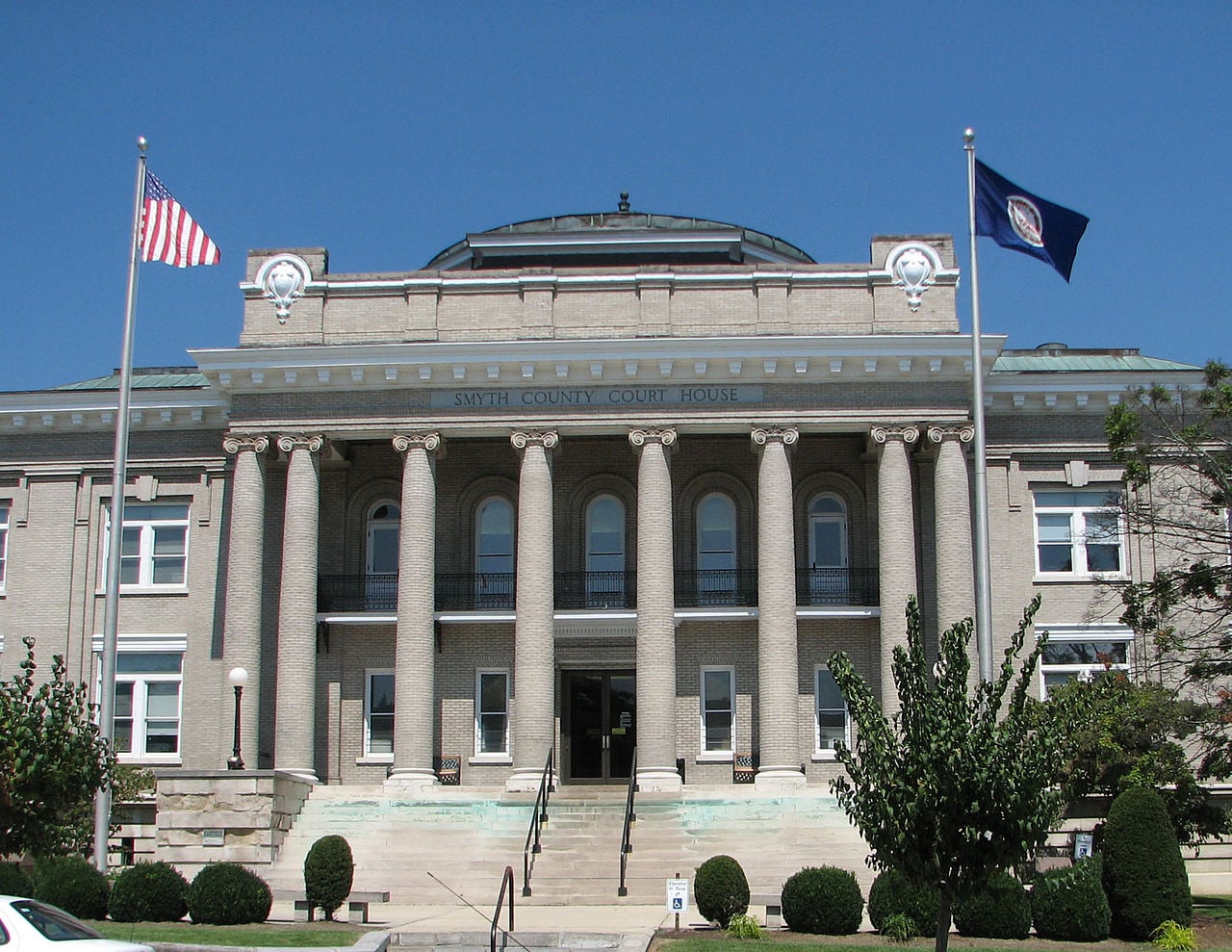
Museum / Historical Site

Smyth County Courthouse

Marion, VA

The Smyth County Courthouse in Marion, Virginia was constructed in 1905-1906 and has served as the seat of county government for more than a century. The building is documented by the Society of Architectural Historians as a significant regional courthouse, and it is recognized by the Virginia Association of Counties as a historic landmark. The upper floors contain decommissioned jail cells that are no longer in active use.

$ All Ages Family: High

Middletown — 2

Photo of Belle Grove Plantation (Cedar Creek Battlefield)
Museum / Historical Site

Belle Grove Plantation (Cedar Creek Battlefield)

Middletown, VA

Belle Grove Plantation was built in 1797 by Major Isaac Hite Jr. and his wife Nelly Conway Madison — James Madison's sister — on a design influenced by Thomas Jefferson. On October 19, 1864, it served as Union General Philip Sheridan's headquarters during the Battle of Cedar Creek, the last major engagement in the Shenandoah Valley Campaign. The basement functioned as a field hospital during the battle. The National Trust for Historic Preservation operates Belle Grove today; it is a core unit of the Cedar Creek and Belle Grove National Historical Park.

$$ All Ages Family: Moderate
The facade of the Historic Wayside Inn on Main Street in Middletown, Virginia, the oldest continuously operating inn in the United States
Haunted Hotel / Inn

Historic Wayside Inn

Middletown, VA

The site of the Wayside Inn has offered lodging to travelers on the Valley Pike since at least 1742, and the inn has operated continuously at this address since 1797 — a claim supported by state historical organizations that have called it the oldest continuously operating inn in the United States. During the Civil War's Shenandoah Valley campaigns, the area around Middletown changed hands repeatedly, and the inn served as lodging and a makeshift hospital for soldiers of both sides.

$$ All Ages Family: Moderate

Smithfield — 2

Photo of 1750 Isle of Wight Courthouse
Museum / Historical Site

1750 Isle of Wight Courthouse

Smithfield, VA

Built in 1750-51, the Old Isle of Wight Courthouse is one of only a handful of surviving colonial courthouses in Virginia. Its rounded exterior walls, modeled after the Governor's Palace complex in Williamsburg, made it architecturally distinctive in the colonial Tidewater. It served as the center of Isle of Wight County's civil and criminal justice for 50 years.

$ All Ages Family: High
Museum / Historical Site

St. Luke's Historic Church & Museum

Smithfield, VA

St. Luke's is widely considered the oldest surviving brick church in British North America, with construction dated by architectural historians to roughly 1632-1682. It is a National Historic Landmark in Isle of Wight County, Virginia, and its graveyard contains burials spanning four centuries.

$ All Ages Family: High

Amelia — 1

Haw Branch in January of 2025
Haunted House / Historic Home

Haw Branch Plantation

Amelia, VA

Haw Branch Plantation was first settled by Colonel Thomas Tabb in 1735 on a 15,000-acre parcel in Amelia County, Virginia, south of Richmond. The main Georgian house was built around 1745 and added to the National Register of Historic Places in 1973. The property remains a working farm and private residence, restored and owned by a descendant of the Tabb family who purchased it in 1965.

$ All Ages Family: High

Appomattox — 1

Old Appomattox Court House and reconstructed McLean House at Appomattox Court House National Historical Park, Appomattox County, Virginia
Battlefield / Military Site

Appomattox Court House National Historical Park

Appomattox, VA

Appomattox Court House National Historical Park preserves the rural Virginia village where Confederate General Robert E. Lee surrendered the Army of Northern Virginia to Lieutenant General Ulysses S. Grant on April 9, 1865, effectively ending the Civil War. The park preserves more than two dozen original and reconstructed structures, including the McLean House parlor where surrender terms were signed.

$ All Ages Family: High

Blacksburg — 1

Lyric Theater historic 1930 movie theater facade with marquee in Blacksburg, Virginia
Theater / Performance Venue

Lyric Theater

Blacksburg, VA

The Lyric Theatre at 135 College Avenue in Blacksburg opened on April 17, 1930, designed by Roanoke architect Louis Phillipe Smithey in an Art Deco and Spanish Colonial Revival blend. The theater seated 900 and was one of Virginia's first cinemas to screen sound films. After closing in 1989 due to multiplex competition, it reopened in 1996 and underwent renovation in 1998-1999, becoming a not-for-profit community arts center.

$ All Ages Family: High

Boissevain — 1

Photo of Boissevain Road
Outdoor / Natural Site

Boissevain Road

Boissevain, VA

Boissevain Road is a rural road in Virginia with reported paranormal phenomena.

$ All Ages Family: High

Bowling Green — 1

HABS archival photograph of the colonial-era brick exterior of Old Mansion at 200 South Main Street in Bowling Green, Caroline County, Virginia
Haunted House / Historic Home

Old Mansion

Bowling Green, VA

Old Mansion at 200 South Main Street in Bowling Green, Virginia was built around 1741 by the Hoomes family. Major John Hoomes donated property for the Caroline County courthouse and gave permission for the new county seat to take the name of his estate, The Bowling Green. The property was added to the National Register of Historic Places in 1969.

$ All Ages Family: High

Bristol — 1

Museum / Historical Site

Bristol Train Station

Bristol, VA

Bristol's 1902 Norfolk & Western station — locally called Union Station — served passenger trains at the Virginia-Tennessee state line until 1971. It is listed on the National Register of Historic Places and now operates as an event venue. The original depot on this site was the scene of a fatal 1887 accident that killed Emma Tompkins and her husband.

$ All Ages Family: Moderate

Cismont — 1

Castle Hill plantation mansion facade in Albemarle County, Virginia, photographed by Frances Benjamin Johnston circa 1926
Haunted House / Historic Home

Castle Hill

Cismont, VA

Castle Hill is a Virginia plantation home in Albemarle County, originally built in 1764 by Dr. Thomas Walker. On June 4, 1781, Walker's wife reportedly delayed British Colonel Banastre Tarleton at breakfast long enough for the rider Jack Jouett to warn Thomas Jefferson of an approaching cavalry raid.

$ All Ages Family: High

Clifton — 1

Aerial survey view of Bunny Man Bridge (Colchester Road Overpass)
Aerial survey · USDA NAIP
Other Dark Tourism Site

Bunny Man Bridge (Colchester Road Overpass)

Clifton, VA

The Colchester Road overpass near Clifton became tied to the Bunny Man legend through regional folklore, not the actual 1970 incidents. Two documented Fairfax County police reports from October 1970—involving a man in a white rabbit costume who threw a hatchet through a car window and later chopped at a construction-site pole—occurred on Guinea Road, nowhere near the bridge. The case was marked inactive in March 1971 with no suspect identified. The legend migrated to the overpass during the 1970s–80s, eventually spawning over 50 documented variants.

$ All Ages Family: Moderate

Cohoke — 1

Aerial survey view of Cohoke Light (Cohoke Crossing)
Aerial survey · USDA NAIP
Outdoor / Natural Site

Cohoke Light (Cohoke Crossing)

Cohoke, VA

Cohoke Crossing is a rural railroad intersection in King William County, Virginia, near the small crossroads community of Cohoke between Richmond and West Point. The railroad line running through Cohoke carried Confederate supply and troop movements during the Civil War. The crossing drew visitors so consistently during the mid-twentieth century that the county sheriff regularly had to disperse crowds.

$ All Ages Family: High

Diggs — 1

Aerial survey view of Old House Woods
Aerial survey · USDA NAIP
Outdoor / Natural Site

Old House Woods

Diggs, VA

Old House Woods is a stretch of dense coastal forest near Diggs in Mathews County, Virginia, on the western shore of the Chesapeake Bay. The woods take their name from the eighteenth-century Frannie Knight house that once stood at the center of the area. The associated folklore — pirate treasure, a ghost Spanish galleon, headless dogs, and the green light — has been documented in regional oral history for more than two centuries and is included in the Virginia Department of Forestry's Ghosts of Forests Past program.

$ All Ages Family: High

Emory — 1

Aerial survey view of Emory & Henry College
Aerial survey · USDA NAIP
Other Dark Tourism Site

Emory & Henry College

Emory, VA

Founded in 1836 by Methodist Episcopalians and named for bishop John Emory and Virginia patriot Patrick Henry, Emory & Henry is the oldest institution of higher education in Southwest Virginia. The college served as a Confederate hospital during the Civil War and has operated continuously for nearly two centuries in Washington County.

$ All Ages Family: High

Fairfax Station — 1

The Fairfax Station Railroad Museum building in Fairfax Station, Virginia — a 1987 reconstruction of the 1852 Orange & Alexandria depot where Clara Barton helped evacuate 3,500 Union casualties in 1862
Museum / Historical Site

Fairfax Station Railroad Museum

Fairfax Station, VA

The original Fairfax Station depot was built around 1852 on the Orange & Alexandria Railroad line. During the Second Battle of Bull Run in August 1862, Union forces used the station to evacuate an estimated 3,500 wounded soldiers to hospitals in Alexandria and Washington, D.C. Clara Barton was among the civilian volunteers who assisted with the evacuation. The current museum building is a 1987 reconstruction that incorporated approximately 20% of the original structure and opened to the public in April 1988.

$ All Ages Family: High

Farmville — 1

Open Graph image from www.longwood.edu
Other Dark Tourism Site

Longwood College (Longwood University)

Farmville, VA

Longwood University in Farmville, Virginia was founded in 1839 and is one of the oldest public universities in the United States. The building associated with the elevator legend, formerly called Curry Hall, was constructed in 1969 as one of two 10-story high-rise residence halls. In 2020, both towers were extensively renovated and renamed: Curry Hall became Johns Hall, in honor of Barbara Rose Johns, who led the 1951 student walkout at Robert Russa Moton High School.

$ All Ages Family: Moderate

Gloucester — 1

The surviving brick chimney and wall ruins of Rosewell Plantation in Gloucester County, Virginia, remnants of the grandest colonial mansion in 18th-century America
Haunted House / Historic Home

Rosewell Plantation Ruins

Gloucester, VA

Rosewell was begun in 1725 by Mann Page I and completed by his son Mann Page II around 1738. The three-story brick mansion, roughly 12,000 square feet, was widely considered the largest and finest house of colonial America, rivaling the Governor's Palace in Williamsburg. The Page family, one of Virginia's First Families, held it for over a century before it passed out of the family; the mansion burned in 1916, leaving the dramatic brick ruins that survive today.

$ All Ages Family: High

Gordonsville — 1

Exchange Hotel Civil War Medical Museum exterior, Gordonsville Virginia
Museum / Historical Site

Exchange Hotel Civil War Medical Museum

Gordonsville, VA

The Exchange Hotel opened in 1860 as a Greek Revival railroad hotel at the junction of the Virginia Central and Orange & Alexandria lines in Gordonsville, Virginia. In March 1862 it became the Gordonsville Receiving Hospital, admitting more than 23,000 soldiers in under a year. By war's end, more than 70,000 men had been treated on the premises and roughly 700 were buried on surrounding grounds. After the war it served as a Freedman's Bureau hospital before returning to commercial use. Historic Gordonsville, Inc. acquired and restored the building in 1971.

$ All Ages Family: Moderate

Hartfield — 1

Haunted House / Historic Home

Hartfield Historic House

Hartfield, VA

A colonial-era three-story home in Hartfield, Middlesex County, Virginia, reportedly dates to the 1600s and features carved exterior ornamentation said to depict residents from the colonial and post-colonial periods. Middlesex County was part of the Virginia Tidewater's earliest European settlement zone, with structures from the 17th and 18th centuries scattered across the Piankatank River drainage. Specific historical documentation for this property was not found in publicly accessible records during research.

$ All Ages Family: High

Hopewell — 1

Appomattox Manor historic house at City Point in Hopewell, Virginia, General Grant's Union headquarters during the 1864–65 Siege of Petersburg
Battlefield / Military Site

Appomattox Manor (Grant's Headquarters at City Point)

Hopewell, VA

Appomattox Manor, built in 1751, was the centerpiece of the Eppes family's City Point plantation at the confluence of the James and Appomattox Rivers. During the 1864-65 Siege of Petersburg it became the nerve center of the Union war effort as General Ulysses S. Grant's headquarters, surrounded by one of the largest supply depots of the war. The Eppes family later donated the property to the National Park Service.

$ All Ages Family: High

King George — 1

Federal-style Belle Grove plantation house at Port Conway in King George County, Virginia
Haunted House / Historic Home

Belle Grove Plantation

King George, VA

Belle Grove Plantation in King George County, Virginia was established around 1670 on the banks of the Rappahannock River. The plantation is the birthplace of President James Madison, born here March 16, 1751 in an earlier house that no longer stands; his mother Eleanor Conway Madison was visiting her family's plantation. The current Federal-style mansion was built in 1790 by John Hipkins for his daughter Fannie, and expanded in the mid-1800s by Carolinus Turner who added the porticos and terminal wings. The property now operates as a bed and breakfast and paranormal investigation venue.

$$$ 18+ for ghost hunts (16+ with adult); All ages for B&B stays Family: Low

Manassas — 1

Historic Stone House at Manassas National Battlefield Park, Virginia Civil War site
Battlefield / Military Site

Manassas Battlefield

Manassas, VA

Manassas National Battlefield Park preserves the sites of the First and Second Battles of Bull Run, fought in July 1861 and August 1862 respectively. The two engagements produced combined casualties exceeding 22,000. The Second Battle included a brutal contest over the Unfinished Railroad — a partially constructed rail line that Confederate forces used as a defensive position — where the 5th New York Zouave Regiment suffered approximately 300 casualties in ten minutes, the highest single-regiment loss rate of the entire war.

$ All Ages Family: Moderate

Max Meadows — 1

Exterior of the Major David Graham House at Cedar Run Farm in Wythe County, Virginia, an iron-furnace-era plantation home
Haunted House / Historic Home

Major Graham Mansion

Max Meadows, VA

Major Graham Mansion at Cedar Run Farm was built in four sections between roughly 1830 and 1890 by the Graham family of Wythe County, Virginia. Constructed around an existing 1785 log house, the mansion served as the seat of an iron-furnace operation and was the home of Major David Pierce Graham of the 51st Virginia Infantry. It was added to the National Register of Historic Places in 1985.

$$ All Ages for history tours; seasonal attraction has separate age guidance Family: Moderate

Mechanicsville — 1

Photo of Cold Harbor Battlefield (Garthright House)
Battlefield / Military Site

Cold Harbor Battlefield (Garthright House)

Mechanicsville, VA

Cold Harbor was the site of two major Union assaults in late May and early June 1864, when Lt. Gen. Ulysses Grant ordered attacks against entrenched Confederate lines. The June 3 assault alone produced roughly 3,000 Union casualties in under an hour. The Garthright House, a farmhouse belonging to Miles Garthright, was commandeered as a Union field hospital and used for ten days.

$ All Ages Family: High

Mount Vernon — 1

The Mount Vernon mansion's east facade, a white wood-frame Georgian house on the Potomac River
Museum / Historical Site

George Washington's Mount Vernon

Mount Vernon, VA

George Washington's Mount Vernon is the first president's plantation home on the Potomac River in Fairfax County, Virginia. Washington inherited the property in 1754 and expanded the mansion from a story-and-a-half farmhouse to its current 21-room form by 1787. He died there on December 14, 1799, and is buried on the grounds.

$$ All Ages Family: High

Newport News — 1

Colonial Revival exterior of the 1897 Simon Reid Curtis House, now the Historic Boxwood Inn at 10 Elmhurst Street, Newport News, Virginia.
Haunted Hotel / Inn

The Historic Boxwood Inn

Newport News, VA

The Historic Boxwood Inn is the 1897 Simon Reid Curtis House at 10 Elmhurst Street in the Lee Hall neighborhood of Newport News. Curtis, the 'Boss Man' of then-Warwick County, built the 2.5-story Colonial Revival house to combine his family dwelling with the county Hall of Records, post office, and general store. The house was added to the Virginia Landmarks Register in June 2009 and the National Register of Historic Places in August 2009.

$$ All Ages Family: High

Norton — 1

Aerial survey view of Ramsey Cemetery (Laurel Grove Cemetery, Ramsey Section)
Aerial survey · USDA NAIP
Cemetery / Burial Ground

Ramsey Cemetery (Laurel Grove Cemetery, Ramsey Section)

Norton, VA

Ramsey Cemetery, also known as Laurel Grove Cemetery's Ramsey Section, is a small rural family cemetery in Wise County, Virginia, holding burials of the Ramsey and Nance families. The cemetery has been documented for genealogical research by Paul Kilgore in Laurel Grove Cemetery: Ramsey Section of Norton, Virginia, Wise County.

$ All Ages (respect cemetery boundaries) Family: Moderate

Orange — 1

Federal-style brick manor house at The Inn at Willow Grove with willow trees in foreground
Haunted Hotel / Inn

The Inn at Willow Grove

Orange, VA

The Inn at Willow Grove occupies a Federal-style manor house begun in 1778 by Joseph Clark in Orange County, Virginia. A brick wing was added by his son in 1820. The property witnessed both Revolutionary War and Civil War activity in the rolling country at the foothills of the Blue Ridge Mountains.

$$$$ All Ages Family: High

Radford — 1

St Albans Sanatorium front exterior in Radford Virginia, 1892 former Lutheran school turned psychiatric hospital
Asylum / Hospital

St Albans Sanatorium

Radford, VA

St Albans Sanatorium in Radford, Virginia was founded in 1892 by George W. Miles, a University of Virginia graduate, as a Lutheran preparatory school for boys. In 1916 it was converted to a psychiatric hospital; it joined the Carilion Health System in the 1990s and closed in 2004. The structure, built on a 56-acre tract in what was then rural Pulaski County, is now operated as a paranormal investigation and event venue.

$$ All ages for some events; 18+ for overnight investigations Family: Moderate

Rice — 1

Photo of Sailor's Creek Battlefield State Park (Hillsman House)
Battlefield / Military Site

Sailor's Creek Battlefield State Park (Hillsman House)

Rice, VA

On April 6, 1865, the Battle of Sailor's Creek — the last major engagement in Virginia before Lee's surrender three days later — resulted in nearly 7,700 Confederate casualties and captures. The Overton-Hillsman Farm served as the Union 6th Corps field hospital, treating 358 Union and 161 Confederate wounded soldiers. The farmhouse's original pine floors still bear bloodstains from that day's surgeries. The site is now a Virginia state park with preserved battlefield terrain and the Hillsman House open for interpretation.

$ All Ages Family: Moderate

Sealston — 1

Lamb's Creek Church, a 1769 colonial brick Anglican church near Sealston, King George County, Virginia
Other Dark Tourism Site

Lamb's Creek Church

Sealston, VA

Lamb's Creek Church is a colonial Anglican church built between 1769 and 1777 to serve Brunswick Parish in King George County, Virginia. Credited to colonial architect John Ariss, it is a classic example of a rural colonial church and was added to the National Register of Historic Places in 1972. Its interior was damaged during the Civil War and it remains in occasional use today within the Episcopal Diocese of Virginia.

$ All Ages Family: High

South Boston — 1

Haunted Hotel / Inn

Berry Hill Plantation

South Boston, VA

Berry Hill Plantation was built around 1839 for James Cole Bruce in the Greek Revival style, on a plantation where more than 200 enslaved people labored. It is a National Historic Landmark and contains Diamond Hill Cemetery, one of the largest enslaved burial grounds in Virginia, along the Dan River bank.

$$$ All Ages Family: High

Spotsylvania — 1

Open field and treeline at Chancellorsville Battlefield in Spotsylvania County, Virginia
Battlefield / Military Site

Chancellorsville Battlefield

Spotsylvania, VA

The Chancellorsville Battlefield preserves the site of Robert E. Lee's tactically celebrated May 1863 victory over a Union army nearly twice his size. The four-day battle produced roughly 30,000 combined casualties and mortally wounded Confederate Lt. Gen. Thomas J. "Stonewall" Jackson.

$ All Ages Family: High

Stanardsville — 1

The Lafayette Inn, a historic 1840 brick stagecoach-stop inn on Main Street in Stanardsville, Virginia, viewed from the street
Haunted Hotel / Inn

The Lafayette Inn

Stanardsville, VA

The Lafayette Inn has welcomed guests in Stanardsville, Virginia since 1840, occupying a Main Street building near the foothills of the Shenandoah Mountains. The Battle of Stanardsville, a small Civil War cavalry engagement, took place in the surrounding town in 1864 and is woven into the inn's local lore.

$$$ All Ages Family: Moderate

Surry — 1

Bacon's Castle (Arthur Allen House) — 1665 Carolean brick house in Surry County, Virginia
Museum / Historical Site

Bacon's Castle

Surry, VA

Bacon's Castle, built in 1665 in Surry County, Virginia, is the oldest documented brick dwelling in what is now the United States and the sole surviving example of High Jacobean architecture in the Western Hemisphere. Originally the home of merchant-planter Arthur Allen, the structure was seized during Bacon's Rebellion in 1676 and held by rebel forces for several months — earning its popular name despite Nathaniel Bacon himself never setting foot there. Preservation Virginia has owned and maintained the property since 1972.

$$ 12+ for Haunted History Tours; all ages for daytime tours Family: Moderate

Warrenton — 1

Prison / Reformatory

Fauquier History Museum at the Old Jail

Warrenton, VA

The Old Fauquier County Jail was built in 1808 on Ashby Street in Warrenton, Virginia. A second stone cell block was added in 1823, including a walled hanging yard used through 1896. It is one of Virginia's most intact antebellum county jails and is listed on the National Register of Historic Places.

$ All Ages Family: Moderate

West Augusta — 1

Wytheville — 1

Museum / Historical Site

The 1870 Octagon Mansion at 585

Wytheville, VA

Built beginning in 1870 by Dr. Henry Quincy Adams Bowyer on a lot he purchased in 1866, this is one of Virginia's two surviving two-story octagonal dwellings, inspired by Orson S. Fowler's 1848 treatise on octagon-house design. James Lucian Gleaves added the side wings in 1890, and the property passed through several owners before John and Debbie Cushman operated it as a private American history museum for roughly a decade.

$ All Ages Family: High

By type