National Register of Historic Places · Virginia Colonial History · Southside Virginia Federal Architecture · Virginia Plantation Heritage
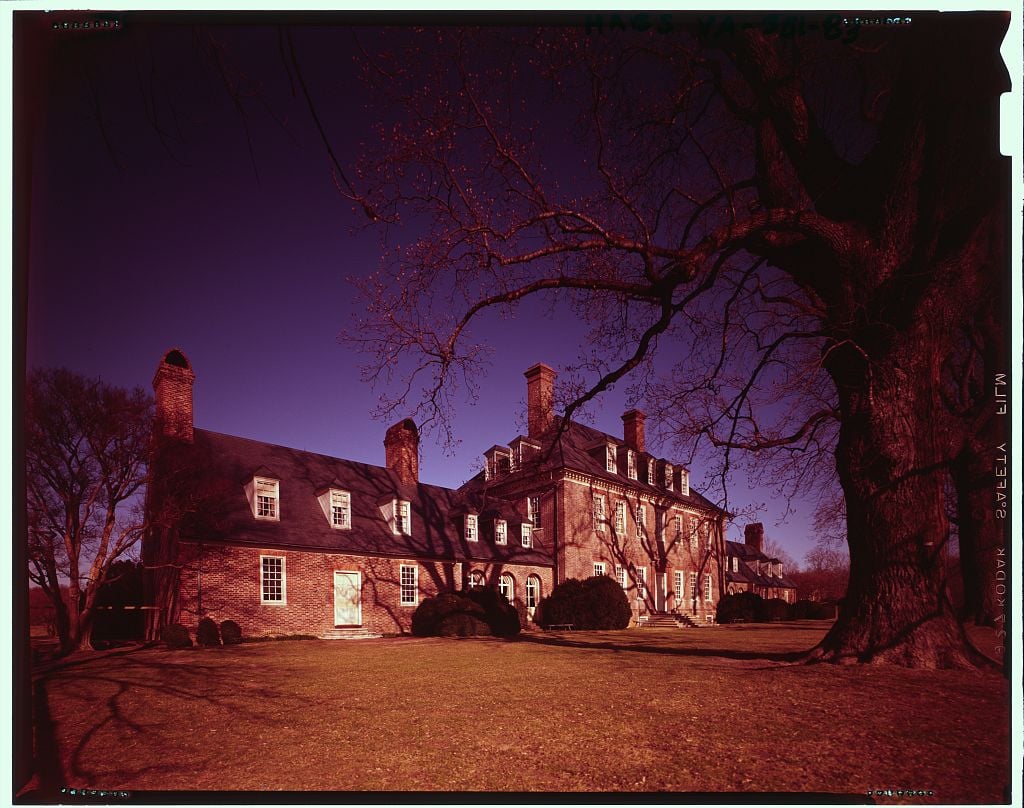
Haw Branch Plantation takes its name from a creek — a haw branch — running through the property in Amelia County, Virginia. Colonel Thomas Tabb, a wealthy merchant who relocated from Gloucester County in the mid-1730s, assembled the plantation before 1745. Under John Tabb, the house received its present Federal form in the early 19th century, incorporating an earlier house in its west wing.
The plantation operated over the following two centuries through the standard arc of Tidewater Virginia agricultural history: colonial prosperity, Revolutionary-era disruption, antebellum agricultural expansion, Civil War dislocation, and the long decline of the plantation economy thereafter. By the mid-20th century, the property had passed through multiple owners.
In 1965, a descendant of the original Tabb family purchased the house and undertook its restoration. That restoration brought the family back into close contact with the house's long history — and, by their account, with something that had been there all along. Haw Branch was officially listed on the National Register of Historic Places in 1973, recognized for its architectural and historical significance to Amelia County and the Virginia Tidewater region.
Sources
- https://rvaghosts.com/haw-branch-plantation-in-amelia-va/
- https://mysteriousuniverse.org/2021/07/the-haunting-of-the-haw-branch-plantation/
- https://www.dhr.virginia.gov/historic-registers/004-0002/
- https://en.wikipedia.org/wiki/Haw_Branch
- https://www.virginiahauntedhouses.com/real-haunt/haw-branch-plantation.html
ApparitionsPhantom voicesPhantom soundsPhantom footstepsPhantom smellsDisembodied screamingResidual haunting
The paranormal record at Haw Branch Plantation is notable for its specificity and its documented witnesses. Unlike many haunted houses where the accounts are anonymous and undated, Haw Branch has a documented family record — the McConnaughey family, who restored the property — and specific dated incidents.
In 1967, Gibson McConnaughey observed what he described as a slim, luminous female figure floating through the front hall. The figure disappeared after a few seconds, leaving behind a strong scent of orange blossoms. The orange blossom detail appears in accounts independently from the description of the figure — both the scent and the vision have been reported separately across different years and witnesses.
The parlor presents a recurring pattern: voices, laughter, and the sounds of conversation audible from outside the door, stopping the instant the door opens to reveal an empty room. Footsteps on the staircase follow a similar pattern — audible movement that belongs to no visible person.
On certain nights, a woman's screams are heard from outside the house. The screaming does not correspond to any visible figure and does not persist long enough to trace to a source.
The portrait in the house is reported to blush — the painted face appearing to change color when observed directly. Whether this is a property of the pigment, the lighting, or something else has not been resolved.
Additional figures in the legend include a man walking from the barn carrying a lantern, a man in riding boots calling for help, and the apparition of great-grandmother Harriet Mason. The plantation's record is one of the more extensively documented residential hauntings in Virginia.
Notable Entities
Luminous Woman in WhiteHarriet MasonMan with the LanternMan in Riding Boots
Media Appearances
- Ghosts at Haw Branch Plantation by Gibson Jefferson McConnaughey (1977)