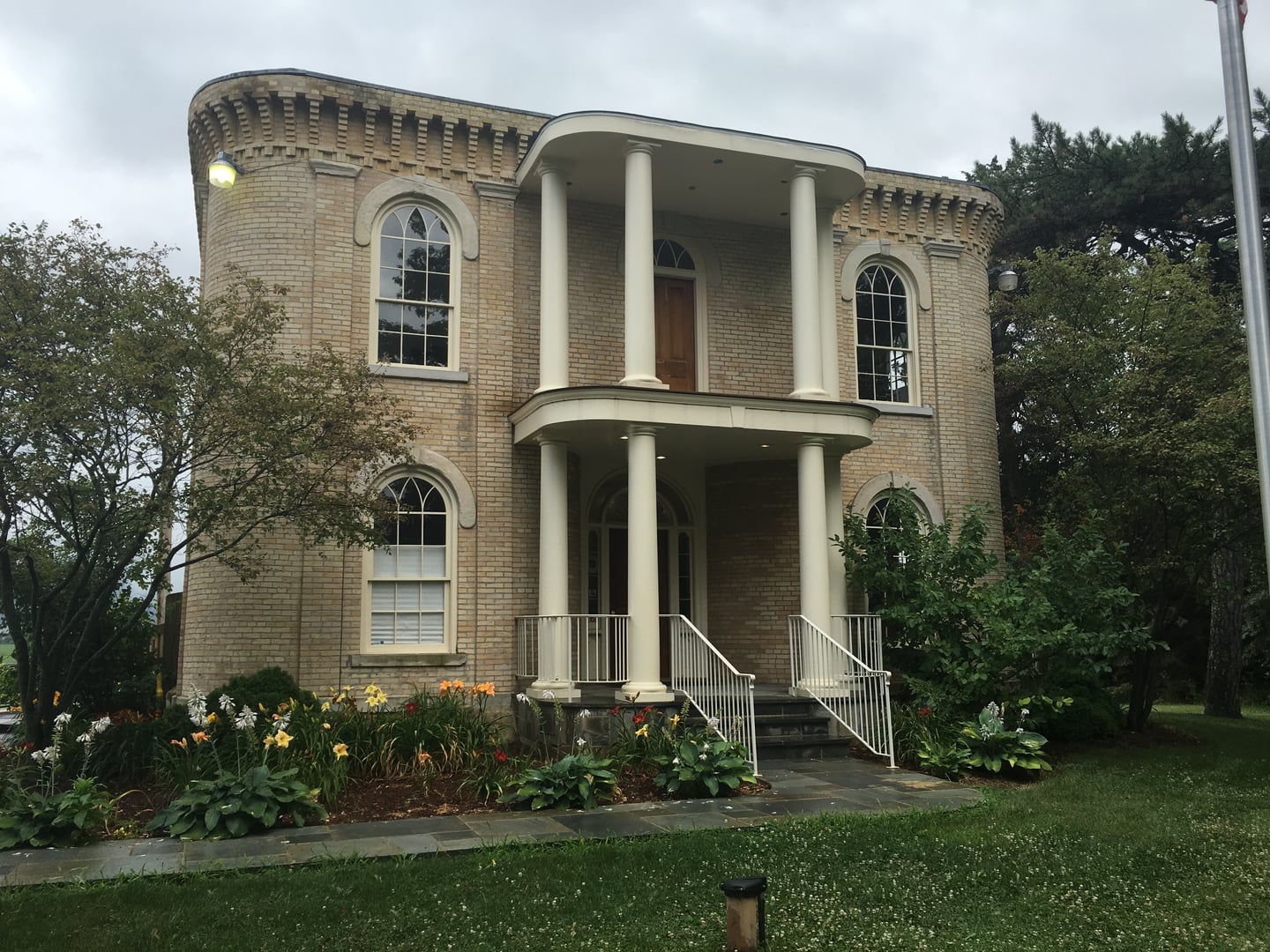
Est. 1833 · National Register of Historic Places (1978) · Site of the 1932 murder of Jennie Surget Merrill · Central setting of the Karen L. Cox book 'Goat Castle: A True Story of Murder, Race, and the Gothic South' (UNC Press, 2017)
Glenburnie occupies a 4.7-acre estate originally granted to Adam Lewis Bingaman (1790-1869) in 1798. The current mansion was constructed in 1833 in a Federal style and was expanded in 1901-1904 by H.G. Bulky into a Classical Colonial Revival profile. The property was added to the National Register of Historic Places on December 19, 1978 (NRHP ref. 78001579) and is located adjacent to Elms Court.
Glenburnie's most consequential history is its connection to Jane 'Jennie' Surget Merrill (1864-1932), an unmarried Natchez heiress who lived at the house until her death. Merrill was descended from the Surget family, one of the wealthiest planter dynasties in antebellum Natchez, and her wealth ultimately rested on the slavery-and-cotton economy of the region.
On the evening of August 4, 1932, Merrill was shot and killed inside Glenburnie during a botched robbery. Her body was discovered later that night by her cousin Duncan Minor; the scene showed signs of a violent struggle, broken glass, and overturned furniture, and Merrill had sustained multiple .32-caliber gunshot wounds. The case immediately drew national attention because of the involvement — initially as suspects — of Merrill's eccentric neighbors at Glenwood, Richard 'Dick' Dana and Octavia Dockery, whose squalid, goat-overrun property was nicknamed 'Goat Castle' in the resulting press coverage.
Dana and Dockery were ultimately exonerated. Investigators identified George Pearls — a Black man who had moved from Natchez to Chicago and returned in the summer of 1932 — as the man who fired the shot during the attempted robbery. Pearls was killed by an Arkansas police officer before he could be returned to Natchez for trial. Emily Burns, a 37-year-old Black laundress who had hosted Pearls in Natchez, was tried as an accessory in a proceeding widely criticized at the time and ever since for its racial bias. Burns was convicted by an all-white jury after less than half an hour of deliberation and was sent to Parchman Penitentiary, where she served eight years before a 1940 'mercy court' under Governor Paul B. Johnson Jr. led to her release. She returned home, eventually remarried, and died a respected member of her church.
Historian Karen L. Cox documented the case in 'Goat Castle: A True Story of Murder, Race, and the Gothic South' (UNC Press, 2017), which reframes the long-told 'Goat Castle' sideshow narrative around the racial injustice done to Emily Burns. The neighboring Glenwood mansion (the actual 'Goat Castle') deteriorated after Dana and Dockery's deaths in the 1940s and was demolished.
Glenburnie itself remains a private residence and is not open to the public.
Sources
- https://en.wikipedia.org/wiki/Glenburnie_(Natchez,_Mississippi)
- https://mississippitoday.org/2018/08/14/goat-castle-details-tragic-bizarre-natchez-murder/
- https://countryroadsmagazine.com/art-and-culture/history/murder-she-rewrote/
- https://www.americanhauntingsink.com/goat
- https://www.jstor.org/stable/10.5149/9781469635040_cox
- https://www.mississippihauntedhouses.com/real-haunt/goat-castle.html
- https://www.onlyinyourstate.com/experiences/mississippi/natchez-ms-ghost-stories
Apparition of Jennie Merrill in a bloody blue dress in the woods between Glenburnie and the former GlenwoodDisembodied voice calling a 1980s owner's name during restoration workElectrical work repeatedly undone by unseen hands
According to American Hauntings and the aggregator literature on the case, the most-told Glenburnie ghost narrative locates Jennie Merrill's spirit in the wooded grounds between her own home and the former Glenwood property. Witnesses describe her as a barefoot figure in a bloody blue dress, occasionally accompanied by audible mournful cries.
American Hauntings also records the testimony of a 1980s Glenburnie owner who, during restoration work on the mansion, reported a disembodied voice repeatedly calling her name and unseen hands continually undoing the electrical work being installed. Interpreters connect this account to Merrill's well-documented 19th-century-style aversion to modern conveniences, particularly electric lighting.
These narratives are anchored primarily by a single aggregator and by oral tradition rather than by archival evidence, and they involve a still-occupied private residence. The lore should be treated with editorial care: any ghost-story framing that flattens the Emily Burns racial-injustice dimension into background color for a 'Gothic South' aesthetic misses the actual stakes of the 1932 case. Karen L. Cox's 'Goat Castle' (UNC Press, 2017) is the responsible starting point for any serious treatment of this story.
Notable Entities
Jennie Surget Merrill
Media Appearances
- Karen L. Cox, 'Goat Castle: A True Story of Murder, Race, and the Gothic South' (UNC Press, 2017)