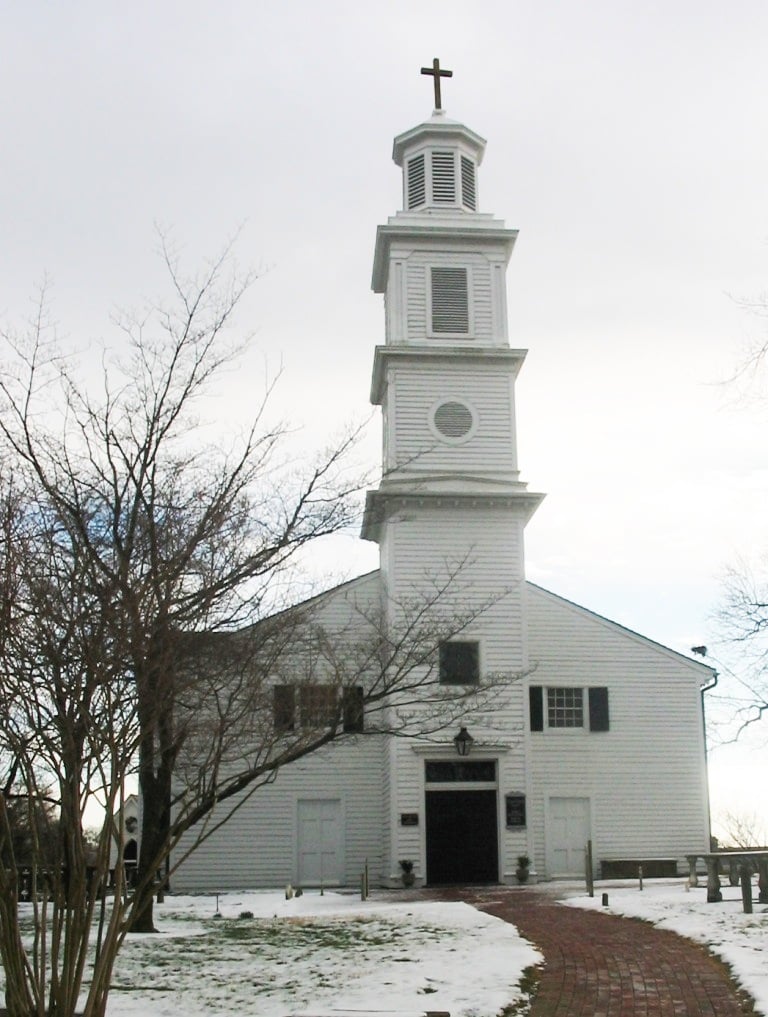
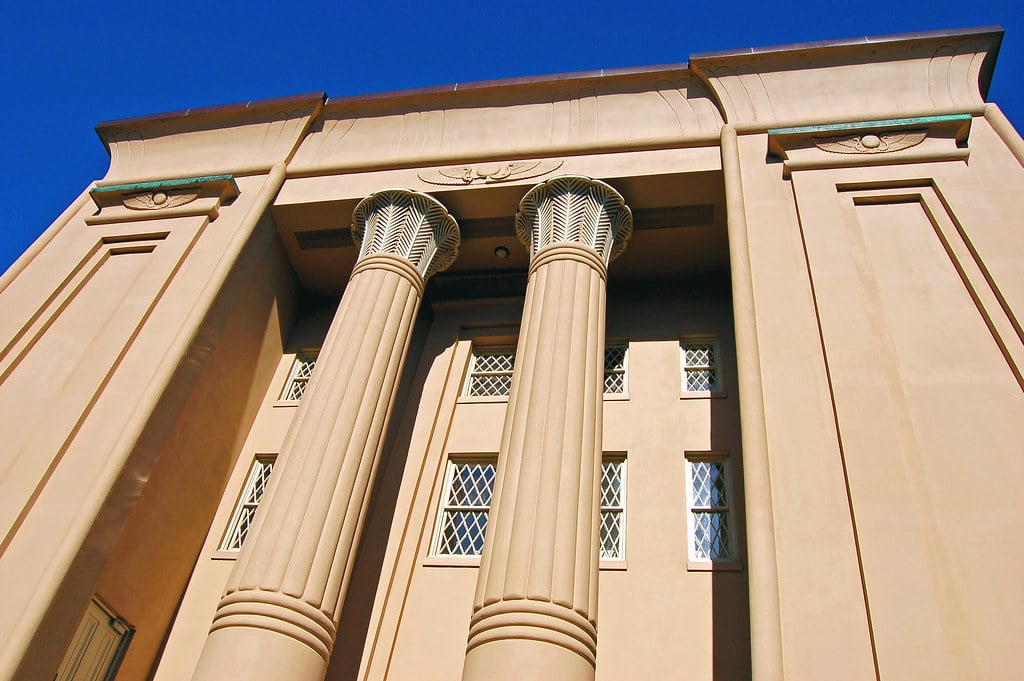
Est. 1814 · Built 1812-1814 on the site of the December 26, 1811 Richmond Theatre fire (72 dead) · Designed by Robert Mills, pupil of Thomas Jefferson and architect of the Washington Monument · Commissioned by a committee chaired by U.S. Chief Justice John Marshall · Crypt beneath the sanctuary holds the remains of the 72 fire victims · National Historic Landmark
On the night of December 26, 1811, approximately 600 people filled the Richmond Theatre on Broad Street for a benefit performance. A stagehand hurriedly raised a lit chandelier into the painted-canvas scenery above the stage and the canvas ignited. The fire spread through the dry wooden interior with horrifying speed; in roughly 10 minutes the theater was engulfed. Of the audience, 72 died — including Governor George William Smith, who fought his way back into the theater to rescue his son and never came out, and former U.S. Senator Abraham B. Venable. Many of the dead were Richmond's most prominent women and children: Pages, Nelsons, and Braxtons, descendants of First Families of Virginia.
In the disaster's aftermath, U.S. Chief Justice John Marshall — himself a member of the Richmond community — chaired a committee that resolved to build a memorial church on the burned theater's foundations. The committee hired Robert Mills, the South Carolina-born pupil of Thomas Jefferson who would later design the Washington Monument and the U.S. Treasury Building. Mills' Monumental Church, constructed 1812-1814, is an octagonal Greek Revival sanctuary fronted by a deep portico bearing a large marble urn-monument inscribed on all four faces with the names of the 72 victims.
Most critically, the actual remains of the dead — gathered from the theater's ashes — were interred in a brick crypt beneath the sanctuary floor. The crypt remains intact today. The building functioned as an active Episcopal congregation through the mid-20th century, with parishioners including Chief Justice John Marshall (pew 23), Edgar Allan Poe's foster parents the Allans (pew 80), and the Marquis de Lafayette during his 1824 Richmond visit. The church was deconsecrated in the late 20th century and is now stewarded by the Historic Richmond Foundation, which offers guided tours.
Monumental Church is a National Historic Landmark and is on the National Register of Historic Places.
Sources
- https://en.wikipedia.org/wiki/Monumental_Church
- https://en.wikipedia.org/wiki/Richmond_Theatre_fire
- https://encyclopediavirginia.org/entries/fire-richmond-theatre-1811/
- https://historicrichmond.com/news/richmond-theatre-fire-monumental-church-tragedy-united-stewardship/
- https://www.dhr.virginia.gov/blog-posts/preservation-easement-stewardship-spotlight-monumental-church-richmond/
Heavy, palpable atmosphere in the sanctuary above the cryptSense of being watched from the choir loftUnexplained temperature drops in the closed buildingFaint crying or muffled voices at duskApparitions of a woman in early-19th-century dress and a child near the sanctuary doors
According to Haunts of Richmond — which features the church as 'Macabre Lore of Monumental Church' on its ghost walks — and the Historic Richmond Foundation's tour narration, the most-recounted phenomena center on the brick crypt beneath the sanctuary that holds the actual remains of the 72 theater-fire victims. Tour participants describe a heavy, oppressive atmosphere in the sanctuary directly above the crypt, the sense of being watched from the choir loft, and occasional unexplained drops in temperature in the closed building.
Individual reports collected by Richmond ghost-tour operators include faint sounds described as crying or muffled voices, particularly when tours visit at dusk; a sensed presence near the marble urn-monument in the portico, where the 72 names are inscribed; and rare apparitions described variously as a woman in early-19th-century dress and a child near the sanctuary doors. The 1811 fire killed Pages, Nelsons, Braxtons, and the state's governor — and the crypt below the floor is the closest a visitor can come to standing directly atop a documented mass-fatality site in the city.
Most paranormal claims trace to ghost-tour operators rather than independent investigations. We frame the lore with editorial care: the 72 victims are real people whose names are inscribed on the memorial urn, and the suggestion of their lingering presence — whether literal or symbolic — is interwoven with the building's foundational purpose as a memorial.
Notable Entities
Unnamed spirits of the 72 Richmond Theatre fire victims of December 26, 1811
Media Appearances
- The Richmond Theater Fire: Early America's First Great Disaster by Meredith Henne Baker (2012)