Est. 1665 · National Historic Landmark · Bacon's Rebellion · Jacobean Architecture · Colonial Virginia
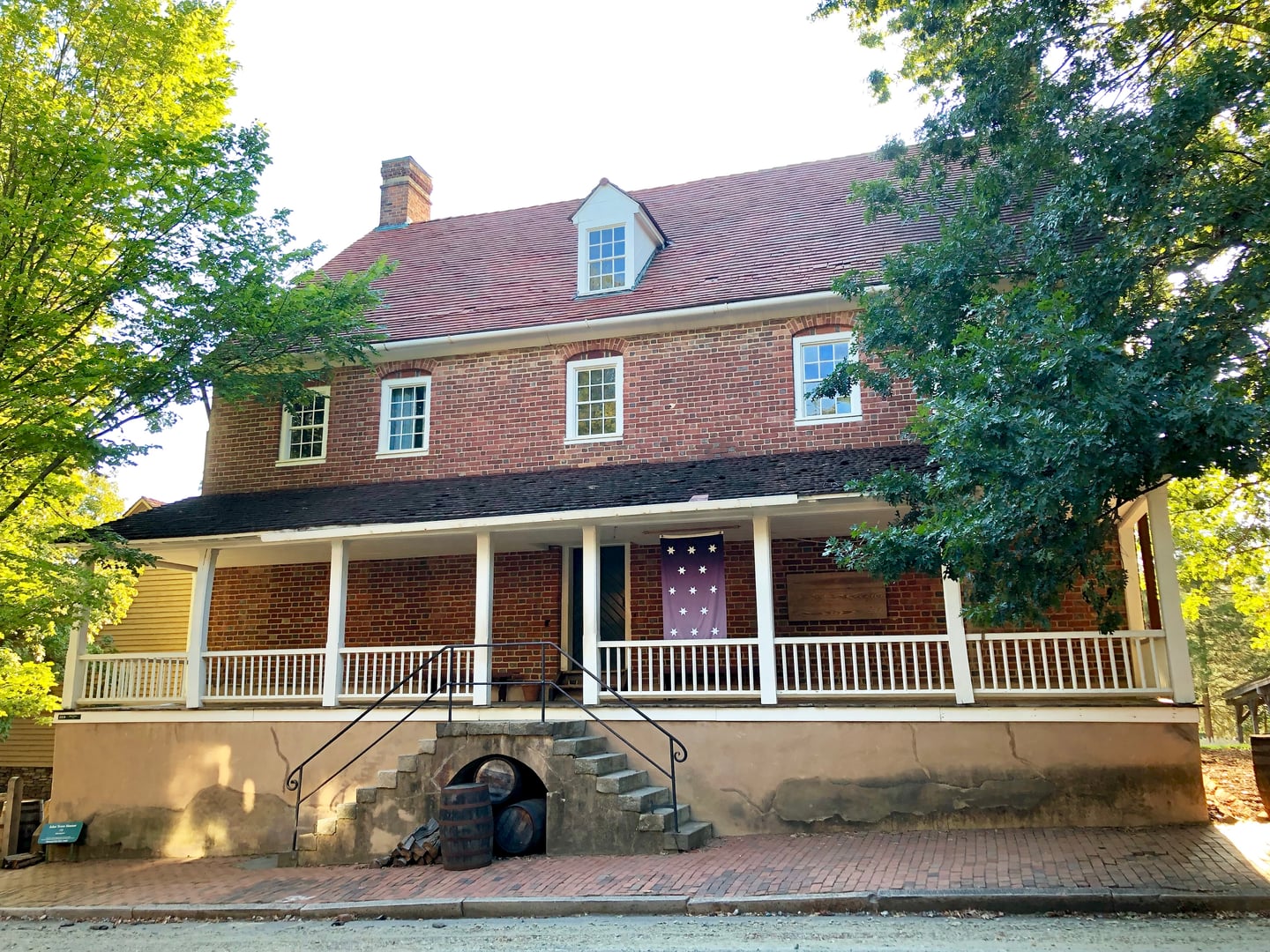
Arthur Allen acquired 500 acres in Surry County in 1661 and completed the brick house in 1665. The structure's cruciform floor plan, triple-diamond stacks, and curvilinear Flemish gables mark it as High Jacobean architecture — a style common in England during the reign of James I but virtually nonexistent in the American colonies. No other surviving building in the Western Hemisphere shares this design vocabulary.
In September 1676, rebel forces loyal to Nathaniel Bacon seized Allen's home and fortified it as a garrison during the colonial uprising known as Bacon's Rebellion. Allen himself fled. The rebels held the structure for roughly four months before surrendering to loyalist forces. The dramatic occupation cemented the property's popular name, though Bacon never visited — he died of dysentery in October 1676 before the garrison fell.
After the rebellion, Allen recovered his property and the family retained it for generations. By the 20th century the house had passed through multiple private hands, functioning variously as a plantation house and farmstead. In 1972 the Association for the Preservation of Virginia Antiquities (now Preservation Virginia) acquired the property and began an ongoing program of archaeological investigation and architectural restoration.
Excavations at the site have uncovered more than 100,000 artifacts, including ceramics, glass, and domestic items that illuminate daily life across four centuries of occupation. The adjacent garden has been restored based on documentary and physical evidence from the 17th century. The site is listed on the National Register of Historic Places and is recognized as a National Historic Landmark.
Sources
- https://en.wikipedia.org/wiki/Bacon's_Castle
- https://preservationvirginia.org/historic-sites/bacons-castle/
- https://www.nps.gov/jame/learn/historyculture/a-brief-history-of-bacons-castle.htm
- https://surrycountyvahistory.org/articles/2019/1/22/bacons-castle-ghost-light
ApparitionsShadow figuresCold spotsEVPResidual haunting
The most documented anomaly at Bacon's Castle is the ghost light. Accounts spanning generations describe a fireball that appears somewhere between the garret and second floor near the stair tower, exits through what was once the rear door (now bricked over), crosses the farm fields toward the ruins of Lawnes Creek Parish Church, wanders for a time, then reverses course and disappears back at the church ruins. The Surry County Virginia Historical Society has documented this phenomenon in its records. No conventional explanation has been established.
The Center for Paranormal Research and Investigation conducted a formal investigation of the property and publicly named Bacon's Castle among the most haunted locations in Virginia. Investigators have recorded apparent EVP in the interior rooms and reported cold spots concentrated on the upper floors.
Visitors and interpreters have described seeing a translucent figure ascending the main staircase before vanishing. A woman in period dress has been reported moving through the grounds. Near the entrance, witnesses have described figures interpreted as colonial-era soldiers — which may reflect the building's years as a rebel garrison during Bacon's Rebellion.
The ghost light phenomenon in particular has drawn attention from researchers since the 19th century. The Surry County Historical Society notes the fireball as part of the site's documented regional folklore and has collected accounts from multiple independent witnesses across different time periods.
Notable Entities
The Weeping WomanThe Floating Apparition
Media Appearances
- Ghost Hunters: The Castle Light Mystery (S14E5) (2021)
- WAVY-TV 10 — Haunted Hampton Roads: Bacon's Castle