Est. 1857 · 1857 Italianate brick townhouse built for tobacco merchant William H. Grant · Sheltering Arms Hospital 1892-1965 — Richmond's first free hospital · Subbasement morgue and incinerator from hospital era · Physically connected to the Benjamin Watkins Leigh House · Virginia Landmarks Register 1968; National Register of Historic Places 1969 · Currently used as VCU offices, including Radiation Safety
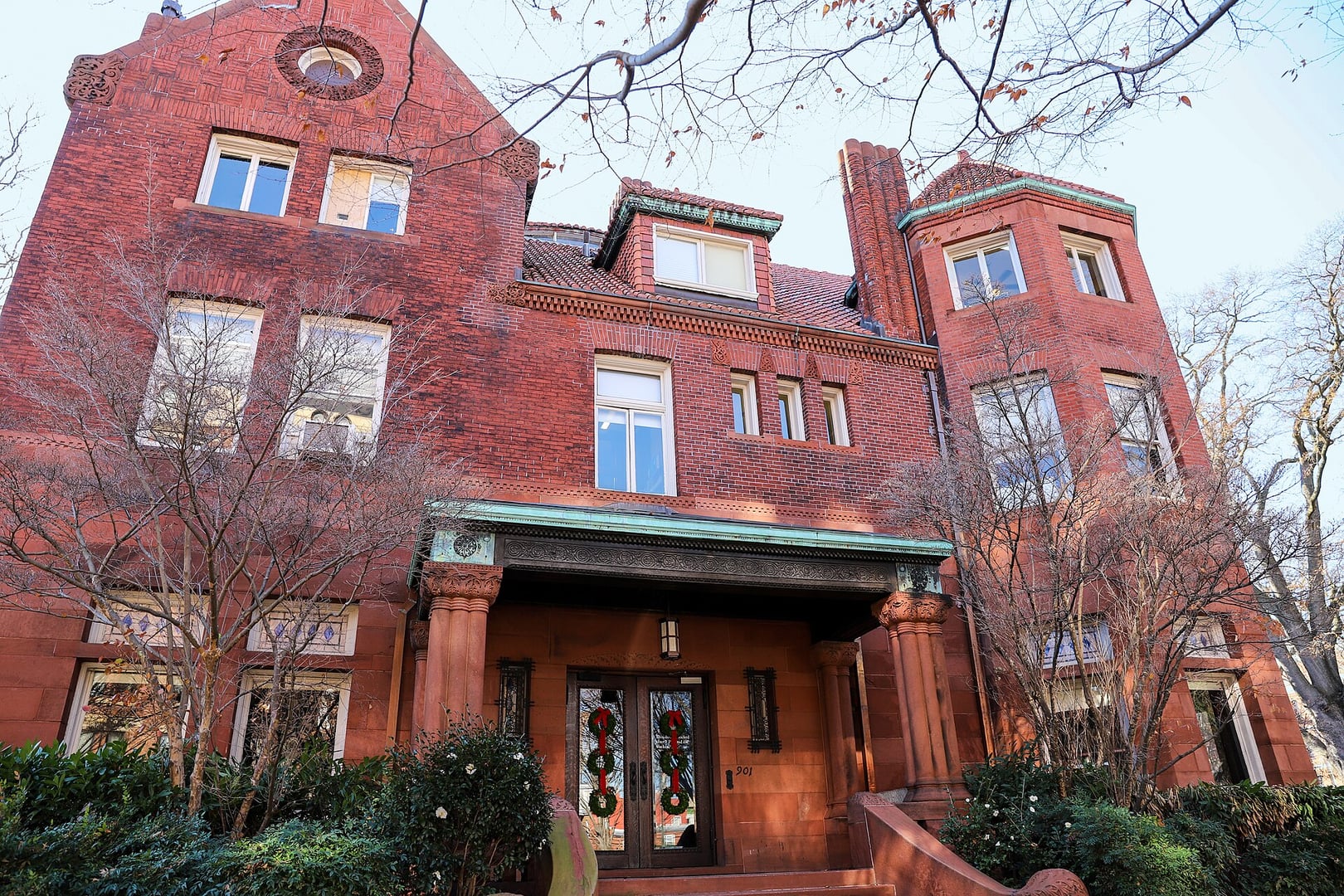
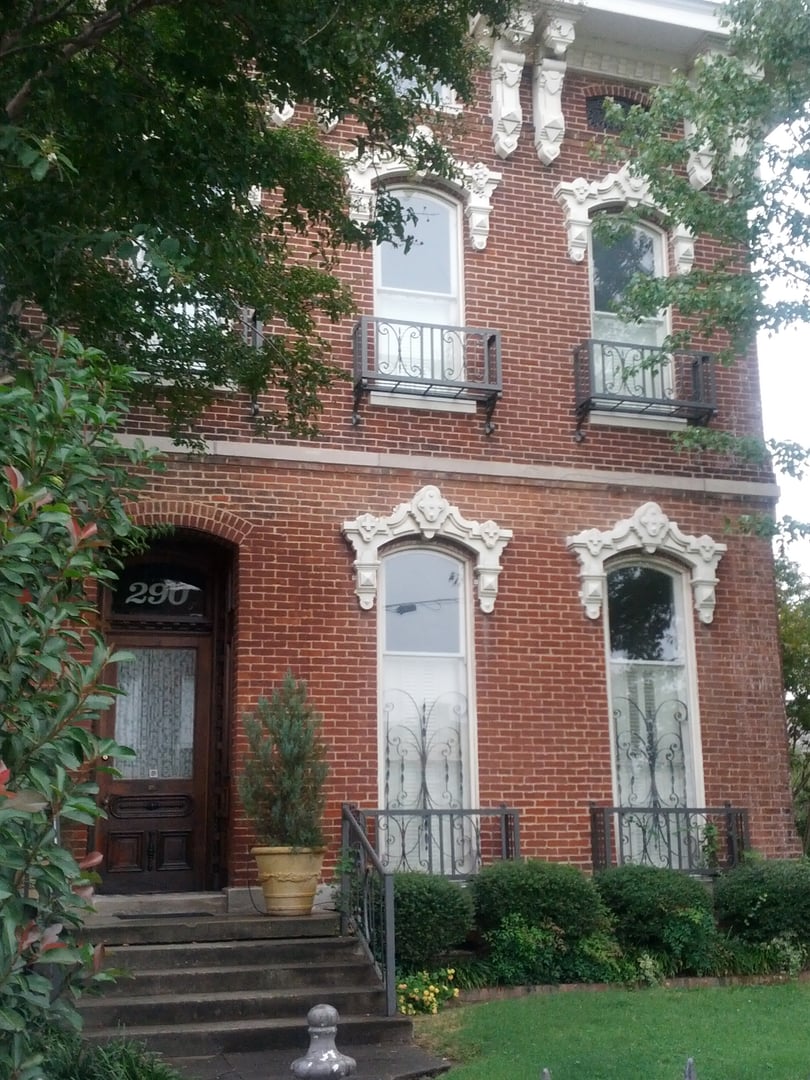
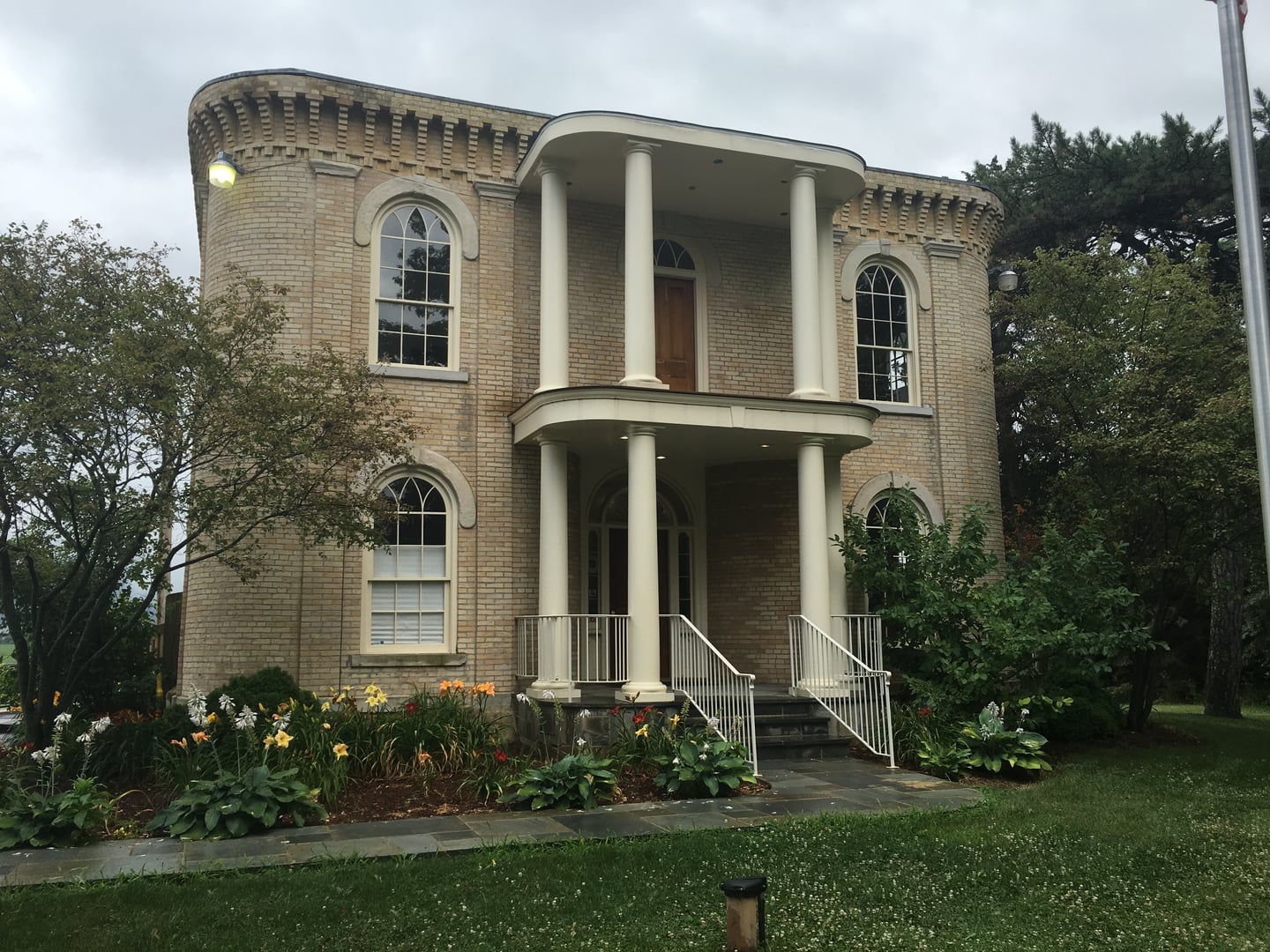
The William H. Grant House stands at 1008 East Clay Street in Richmond's Court End historic district, physically connected to the adjacent Benjamin Watkins Leigh House and a short walk from the John Marshall House and the Egyptian Building on the MCV campus. The three-story brick townhouse was built in 1857 for William H. Grant, a Richmond tobacco merchant. Its Italianate styling is restrained — a flat-roofed cubic massing — but the small arched front porch is richly ornamented in carved brownstone.
In 1892 the house was acquired by the Sheltering Arms Hospital, an organization founded in 1888 to provide free care to those who could not afford to pay. The Grant House served as its primary facility for 73 years, from 1892 until Sheltering Arms relocated in 1965. The clinical conversion included a subbasement-level morgue and an incinerator — features now central to the building's haunted reputation. After Sheltering Arms moved out, the property was eventually acquired by Virginia Commonwealth University, which adapted it for use as office space on the MCV campus. VCU's Radiation Safety office is on the second floor.
The Grant House was added to the Virginia Landmarks Register in 1968 and listed on the National Register of Historic Places in 1969. Historic Richmond Inc. has profiled it in their 'Buildings We Love' series as a meaningful surviving example of pre-Civil-War Court End domestic architecture and as a marker of Richmond's institutional medical history.
The building's medical-history layer is important context for its present-day reputation: not only did it serve as a hospital for over seven decades, but it sits directly within VCU's MCV campus, two blocks from the Egyptian Building and the site of the 1994 East Marshall Street Well discovery — the well into which the Medical College disposed of more than 53 individuals' remains after dissection in the mid-19th century. The Grant House predates that institutional history but is now embedded in its physical landscape.
Sources
- https://en.wikipedia.org/wiki/William_H._Grant_House_(Richmond,_Virginia)
- https://historicrichmond.com/buildings-we-love-william-h-grant-house-1857/
- https://news.vcu.edu/article/Haunts_of_VCU
'Heavy footsteps that sounded like someone was wearing cement boots' on the third floor (Rochelle Clarke, VCU)Four hallway paintings repeatedly tilted at identical angles; activity ceased after Clarke verbally asked it to stopSolid mass brushed against in the kitchenette (Megan McDermott, VCU)All three bathroom sinks running at full hot-and-cold at 10 a.m.; handles returned to normal after police were called (Amanda Shaw, VCU)Apparition of 'a tall, lean doctor with dark hair in a buttoned-up lab coat' passing an office window and vanishing (Amanda Shaw)
The William H. Grant House anchors the 'Haunts of VCU' feature published by VCU News. The article quotes three named VCU employees in detail; the staff reports are tied to the building's 73-year hospital era rather than to any specific named individual.
Rochelle Clarke, working weekend shifts in the building, reported hearing 'heavy footsteps that sounded like someone was wearing cement boots' on the third floor when she was alone in the building. On two separate occasions she also found a series of four hallway paintings tilted at identical angles. According to her account in VCU News, after she verbally asked the activity to stop, the picture-tilting permanently ceased — a pattern often described as 'mutual respect' negotiation in haunting folklore.
Megan McDermott described a kitchenette encounter in which she 'brushed against a solid mass' while alone in the room: 'It was like I had bumped into someone or something.' She found the room empty.
Amanda Shaw of the VCU Department of Physical Medicine and Rehabilitation contributed the most-vivid Grant House stories. On one occasion she found all three bathroom sinks running with both hot and cold handles fully open at 10 a.m.; the water noise stopped and the handles returned to normal positions after she called VCU Police. On a separate occasion, working alone, she observed 'a tall, lean doctor with dark hair in a buttoned-up lab coat' pass her office window from outside the door; when she stepped out to greet him, he had vanished before reaching the end of the corridor.
The building's 1892-1965 Sheltering Arms Hospital era — including the subbasement morgue and incinerator — is the most-commonly cited frame for these reports; the apparition in the lab coat is folk-attributed to that hospital tenure, not to William H. Grant or his family. We treat these reports as on-the-record contemporary lore rather than as evidence of any specific historical figure.
Notable Entities
Unidentified 'tall, lean doctor' apparition tied folklorically to the 1892-1965 Sheltering Arms Hospital era