Colonial Alexandria Architecture · George Mason Family Connection · Civil War Occupation · Architectural Relocation
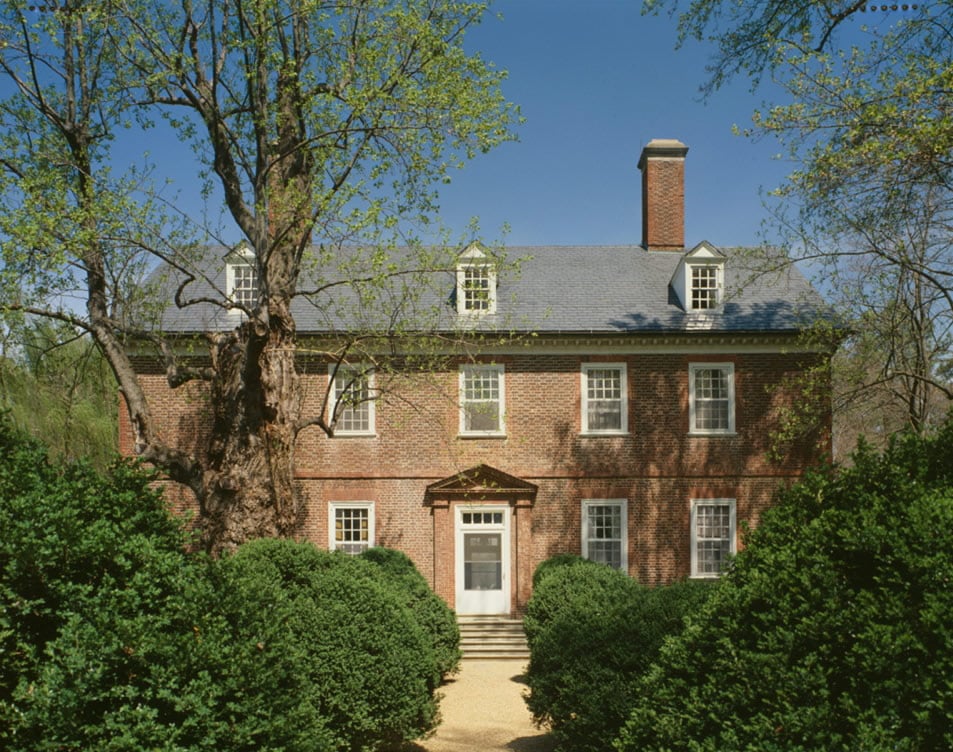
John Potts, an Alexandria merchant, began construction of Colross around 1799 on the block bounded by North Fayette, Oronoco, Henry, and Pendleton streets in Old Town Alexandria. He sold the unfinished structure in 1803 to Jonathan Swift for $9,000, who completed the two-story Georgian brick mansion with its Neoclassical portico, three dormer windows, and balustraded roof deck.
The property passed through several hands before coming into the Thomson Mason family. Thomson F. Mason was a former mayor of Alexandria and a descendant of George Mason, the Virginia statesman and author of the Virginia Declaration of Rights. Under the Masons, the estate's grounds included a formal garden, outbuildings, and a family burial vault—a feature common to large Alexandria estates of the period.
The two Mason children William and Ann died on the property in circumstances that local oral tradition has preserved in some detail. William reportedly sought shelter in a chicken coop during a storm, and the structure collapsed on him. Ann was found drowned in a bathtub days later. Both were interred in the estate vault.
During the Civil War, Union forces occupied Alexandria and used Colross. Local tradition holds that at least two Union deserters were executed with their backs against the estate's high exterior brick wall, and that a bounty jumper named Downey was also shot there. The wall itself survives.
In 1929, John Munn purchased the property and dismantled the mansion with the intention of reconstruction. Workers numbered each brick and shipped the entire structure to Princeton, New Jersey, where it was rebuilt. In 1958 Princeton Day School purchased the reconstructed Colross for use as an administrative building, where it still stands. Modern townhouses now occupy the original Alexandria site.
Sources
- https://en.wikipedia.org/wiki/Colross
- https://media.alexandriava.gov/docs-archives/historic/info/attic/2011/attic20110331colross.pdf
Phantom soundsAuditory phenomena
The haunting tradition at the former Colross site focuses on William and Ann Mason, two children of the Thomson Mason family who died on the property under separate circumstances—William killed when a storm toppled a chicken coop where he'd hidden, and Ann drowned in a bathtub two days later. Both were buried in the estate's vault.
Accounts gathered from successive owners and from the Connection Newspapers' 2006 survey of Alexandria ghost stories describe auditory phenomena throughout the block: children's laughter, giggling, singing, and playful noises heard in the area where the mansion stood and the vault was located. Witnesses describe the sounds as emanating from multiple directions simultaneously, consistent with children at play.
The haunting tradition is complicated by the mansion's physical absence since 1929—the actual building is now in Princeton, NJ—which has led to questions about whether a haunting that attached to a structure could persist when the structure is gone, or whether it attaches to the land and vault. Alexandria ghost tour operators have incorporated this philosophical wrinkle into their presentations.
The exterior brick wall, which local tradition associates with Civil War deserter executions, also remains. The US Ghost Adventures guide to Alexandria's most haunted sites lists Colross as a documented location with multiple independent accounts.
Notable Entities
William MasonAnn Mason
Where this legend is told