Est. 1890 · National Register of Historic Places (1973) · Inspiration for The Trail of the Lonesome Pine · Queen Anne Architecture — Southwest Virginia · John Fox Jr. Literary Connection
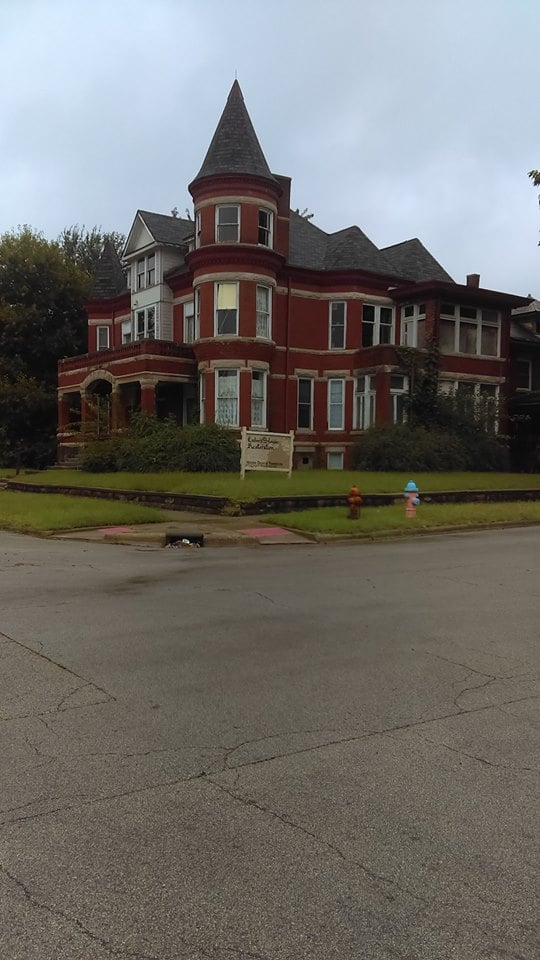
Jerome Hill Duff constructed the residence at what is now 22 Jerome Street in Big Stone Gap in 1890, the same year that ambitious coal and iron investors — including John Fox Jr.'s brothers — were pouring into Wise County expecting an industrial boom. Duff had moved his family to Big Stone Gap in 1881 and had established The Central Hotel across the street, the town's first hotel. His new Queen Anne-style brick dwelling was among the more substantial private residences in the young town.
June Morris, a local girl, boarded at the Duff house while attending school in Big Stone Gap. She became the inspiration for the character June Tolliver in John Fox Jr.'s 1908 bestselling novel The Trail of the Lonesome Pine — the first American novel to sell a million copies. Fox, who lived and wrote just a few hundred feet away on Shawnee Avenue, set much of the novel's action in the town and the surrounding Powell Valley landscape.
The house was added to the National Register of Historic Places on August 28, 1973 (NRHP reference no. 73002067). It operates today as the June Tolliver House & Folk Art Center, with exhibits focused on Fox, the novel, and the broader context of Appalachian regional culture. The center also hosts productions of the Trail of the Lonesome Pine outdoor drama.
Sources
- https://en.wikipedia.org/wiki/June_Tolliver_House
- https://bigstonegap.com/local-attraction/june-tolliver-house/
- https://www.dhr.virginia.gov/historic-registers/101-0003/
ApparitionsObjects moving on their ownFigures in windowsUnexplained lights
The ghost tradition at the June Tolliver House centers on a woman in white carrying a lit candle, seen both inside the building and in the windows looking out. Local lore holds that a newspaper photographer captured her image in a photograph that subsequently circulated in the area, though the original publication has not been independently verified.
Witnesses have also reported paintings shifting position on the walls without apparent cause and a figure visible in upstairs windows when the house is unoccupied. No specific identity is attached to the apparition in any of the accounts encountered — she is described as a female presence in period dress, and connection to June Morris herself is implied rather than stated.
The June Tolliver House does not commercially market itself as a haunted venue. The legends circulate primarily through regional ghost-lore compilations and local oral tradition.
Notable Entities
Woman in White