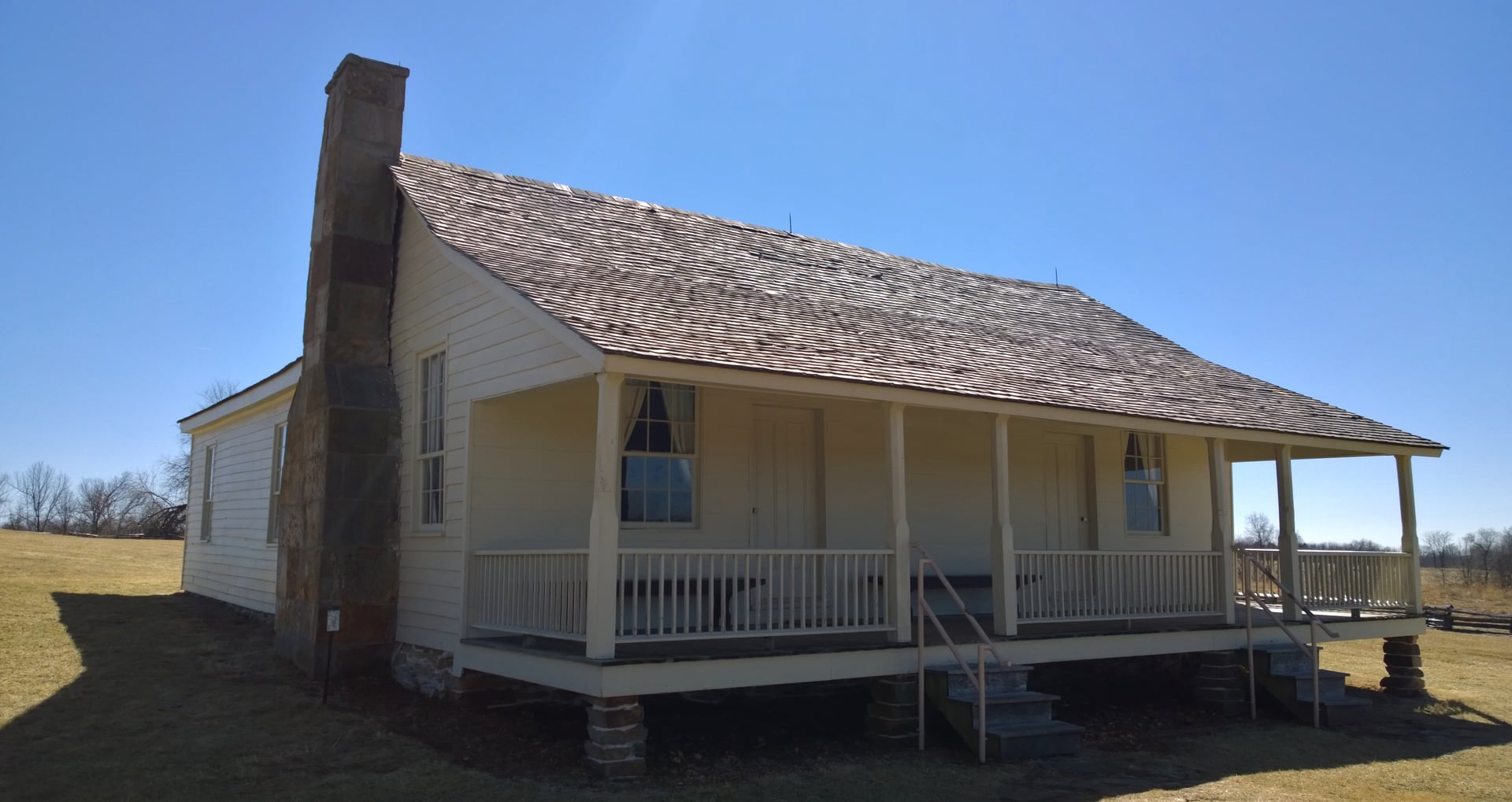
Est. 1845 · Confederate Surrender April 9 1865 · Effective End of Civil War · Wilmer McLean House · National Park Service Reconstruction
Appomattox Court House was the county seat of Appomattox County, a small Virginia village of approximately 150 residents in 1865, located along the Richmond-Lynchburg Stage Road. The village's name reflected its administrative function — the county courthouse stood at its center — and was not the location of an actual battle, though a brief engagement on the morning of April 9, 1865, took place on nearby fields.
After the fall of Petersburg and Richmond in early April 1865, the Army of Northern Virginia under General Robert E. Lee retreated west along the Appomattox River, pursued by Union forces under Lieutenant General Ulysses S. Grant. Lee's army, reduced to roughly 28,000 men and effectively cut off from supply, attempted a final breakout at the Battle of Appomattox Court House on the morning of April 9. The attack was checked, and Lee requested a meeting with Grant to discuss surrender terms.
The two generals met that afternoon in the front parlor of the home of Wilmer McLean, a Virginia merchant who had relocated to Appomattox in 1863 specifically to escape the war — his Manassas home having been the site of the First Battle of Bull Run in 1861. The terms Grant offered were generous by contemporary standards: paroles allowing soldiers to return home rather than imprisonment, the retention of officers' sidearms and horses, and the issuance of Union rations to the surrendering troops. Lee signed the terms that day. On April 12, the Army of Northern Virginia formally laid down its arms in a ceremony along the village's main road.
The surrender at Appomattox is conventionally treated as the end of the Civil War, though Confederate forces continued to operate in the field for weeks afterward. Joseph E. Johnston's surrender to William T. Sherman in North Carolina on April 26, 1865, formally ended major Eastern theater operations.
The village declined rapidly after the war as the county seat was relocated. The original McLean House was dismantled in 1893 with the intention of moving it to Washington as a memorial; the move never occurred, and the building's materials were lost. The site was authorized by Congress in 1930 for War Department administration, transferred to the National Park Service in 1933, and the McLean House was reconstructed in 1948. The site was redesignated Appomattox Court House National Historical Park in 1954. The park now preserves more than two dozen structures across approximately 1,800 acres of the original village and surrounding landscape.
Sources
- https://www.nps.gov/apco/index.htm
- https://en.wikipedia.org/wiki/Appomattox_Court_House_National_Historical_Park
- https://www.battlefields.org/visit/heritage-sites/appomattox-court-house-national-historical-park
Phantom footstepsCold spotsResidual haunting
Unlike Antietam, Gettysburg, or Spotsylvania, Appomattox Court House did not see large-scale loss of life and has not accumulated a substantial paranormal-encounter record. The April 9, 1865 engagement that preceded the surrender produced roughly 660 casualties on both sides combined — a small fraction of the casualty counts at the major battles of the war.
The McLean House parlor, where Lee signed the surrender terms, generates the most-told visitor account. Visitors and rangers have occasionally reported a sober and weighted atmosphere in the room, with some accounts describing the sense of being briefly transported to the moment of the signing. These reports read more as commemorative emotional response than as paranormal experience, and the Park Service interprets the parlor primarily as a place of historical reflection.
Clover Hill Tavern, the village's original 1819 lodging house and the oldest building in the park, has been the occasional subject of reports of phantom footsteps on the upper floor and the sense of being watched along the upstairs hallway. The tavern was used as a printing site for parole passes in the days following the surrender — Lee's surrendered soldiers received printed safe-conduct passes here — and the reports are usually framed in terms of the activity of that brief period.
The original village jail and the Sweeney cabin have similar low-intensity reports. None of these accounts have been the subject of formal published paranormal investigation, and the Park Service treats Appomattox as primarily a commemorative and reconciliation-focused site.
The most resonant atmospheric quality reported by visitors is the peacefulness of the village relative to its historical weight — the silence of the fields where the Army of Northern Virginia laid down its arms, the simplicity of the McLean House parlor, and the small scale of the village where the largest war in American history effectively ended.