Urban Legend Studies · Documented 1970 Police Incidents · Folklore Evolution
On October 18, 1970, Air Force Academy Cadet Robert Bennett and his fiancée were parked at 5400 Guinea Road in Fairfax County when a figure in a white rabbit suit emerged from nearby bushes and threw a hatchet through their car's front window. No injuries resulted. Police recovered the hatchet but generated few leads.
Eleven days later, on October 29, security guard Paul Phillips observed the same costumed figure at a construction site at 5307 Guinea Road, where the person had chopped eight gashes into a wooden support pole. The individual threatened violence before fleeing into woods as six police officers responded. Investigator W.L. Johnson of the Fairfax County Criminal Investigation Bureau took over the case, conducted a stakeout, and in March 1971 marked the file inactive with no suspect identified.
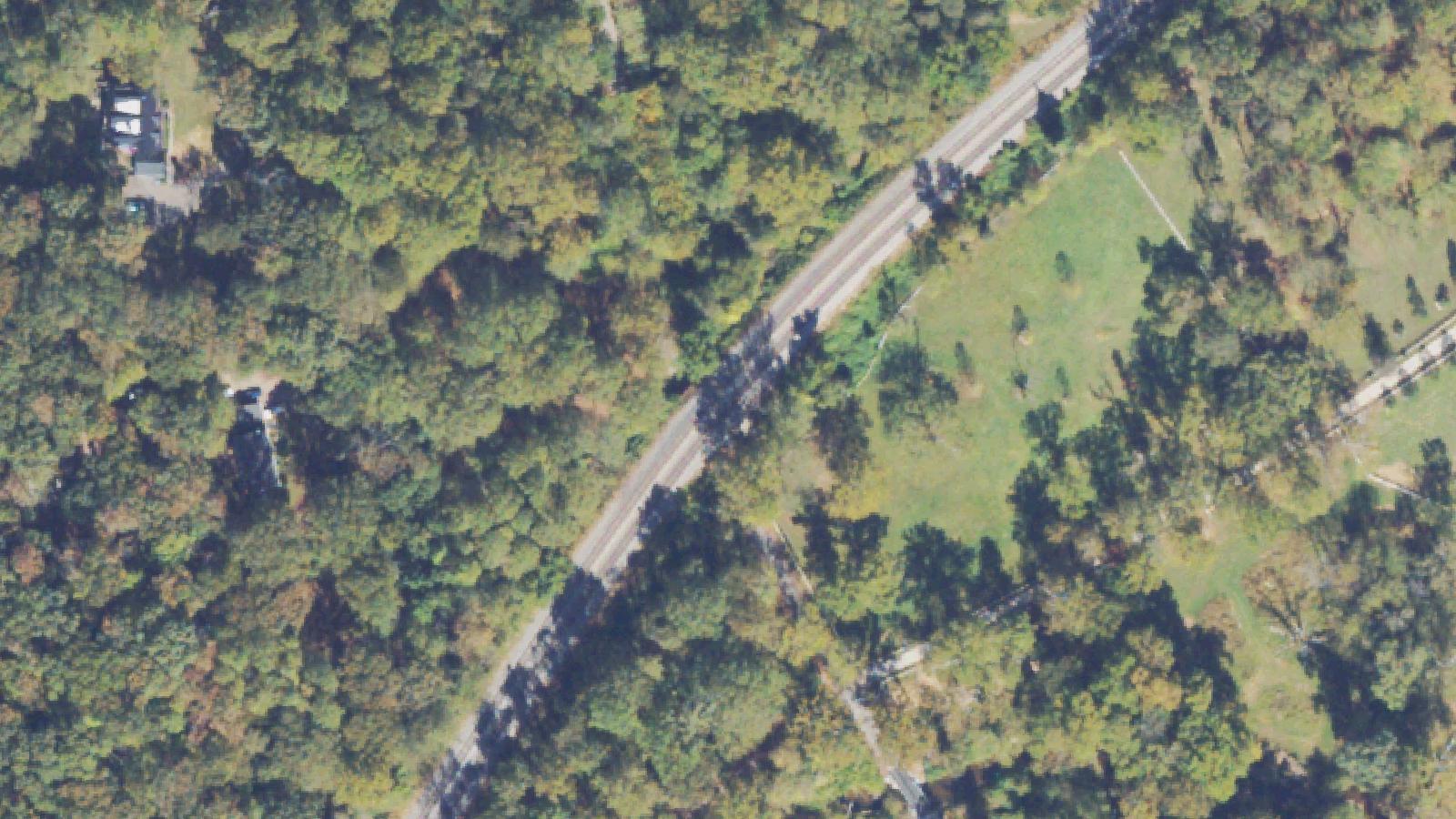
The Fairfax County Public Library's local history project, 'The Bunny Man Unmasked,' is the definitive research on the real incidents. Folklorist Patricia Turner and researcher Brian A. Hiltbrand have documented how the oral legend rapidly mutated: by 1973 it had spread to 14 different geographic locations; by the 1990s variants included 32 victims and an escaped asylum inmate backstory. The Colchester Road overpass—a Southern Railway structure over a secondary road near Clifton—was never part of the documented incidents but became the legend's geographic anchor because it provided a suitably isolated, atmospheric setting.
The Washington Post covered the original 1970 incidents in contemporaneous reporting, providing the closest thing to primary documentation for the real events.
Sources
- https://en.wikipedia.org/wiki/Bunny_Man
- https://research.fairfaxcounty.gov/local-history/bunnyman
- https://washingtonian.com/2015/10/23/the-scary-weird-somewhat-true-story-of-the-fairfax-bunny-man/
Urban legendAlleged apparitions at bridge
The Bunny Man legend is one of the most thoroughly documented examples of urban legend creation and mutation in American folklore. Its verified kernel is narrow: two property-damage and threat incidents in October 1970, both on Guinea Road in Fairfax County, involving an unidentified person in a white rabbit suit. No murders occurred. The suspect was never caught.
By the 1980s the story had expanded to include a fictional backstory: an asylum for the criminally insane that supposedly occupied the Clifton area, inmates transported to a new facility, an escape during transit, and subsequent murders of teenagers at the Colchester Road overpass. Fairfax County Library researchers confirmed this backstory has no basis in local records. No such asylum existed.
More extreme variants describe annual Halloween hangings at the bridge—victims strung from the overpass each October 31—and a tradition that saying 'Bunny Man' three times at midnight under the bridge will summon the killer. These elements have no documented origin and appear to be organic legend accretions from the 1980s onward.
Researchers at the University of California Santa Barbara published an analysis of the legend's 'social selection' mechanisms, examining how the most dramatic variants crowded out the mundane reality. The Fairfax County Library's definitive 2001 research, which consulted original police reports and Washington Post archives, is the authoritative debunking document and is available online.
Notable Entities
The Bunny Man
Media Appearances
- Scariest Places on Earth: Terror on Bunnyman's Bridge (Fox Family Channel) (2001)
Where this legend is told