Est. 1927 · National Register of Historic Places (1971) · Only U.S. Shrine Dedicated to a Sinner · Barrio Viejo / Tucson Folk Tradition · Community Preservation Landmark
El Tiradito — Spanish for 'the little castaway' or 'the thrown one' — stands at the edge of Barrio Viejo, Tucson's oldest surviving neighborhood, at a spot on Main Avenue where a man is said to have died violently sometime in the 1870s and been buried where he fell. More than twenty distinct versions of the legend exist, most centering on a figure named Juan Oliveras, described as a young man killed in a love triangle. Because the site lies outside consecrated ground and the man was regarded as a sinner, the shrine became associated with folk petitions for supernatural intervention — particularly appeals that a church saint would not answer.
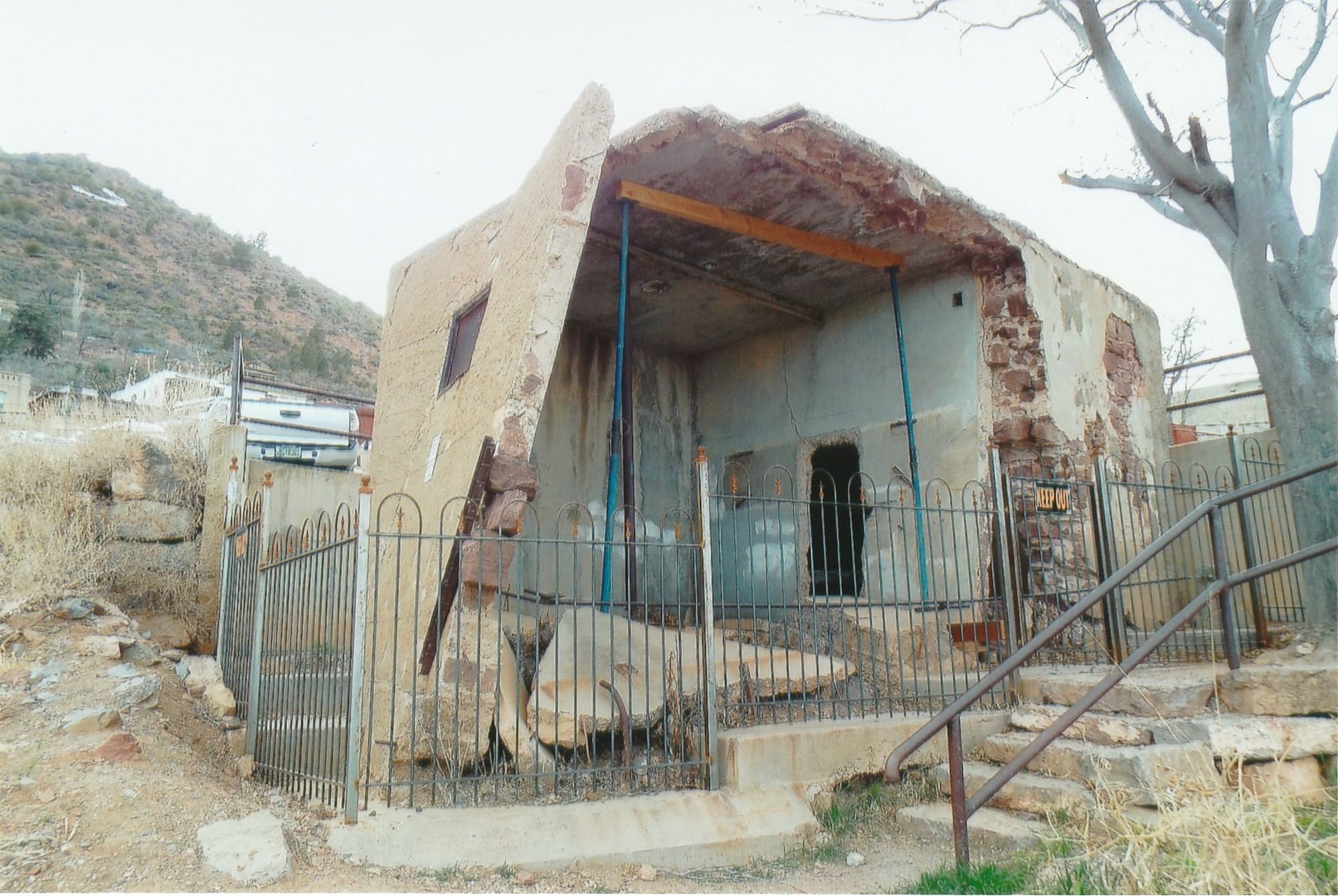
The original shrine was destroyed during road construction in the early twentieth century, but the lot itself was protected: the City of Tucson received the property by deed in 1927, and by 1940 the adobe wall that now forms the shrine's backdrop was constructed. Candles have burned at the site continuously since at least the 1890s, when newspaper accounts described the practice.
In 1971, El Tiradito became the first site added to the National Register of Historic Places specifically because of a community organizing effort to save it from demolition — the Butterfield Freeway project, which would have destroyed the shrine, was rerouted after local activists made the NRHP application. It remains described by the National Park Service as the only shrine in the United States dedicated to a sinner rather than a saint.
The site is maintained by the City of Tucson as part of the Barrio Viejo historic district, which was added to the National Register in 1993.
Sources
- https://en.wikipedia.org/wiki/El_Tiradito
- https://www.visittucson.org/listing/el-tiradito-the-wishing-shrine/816/
- https://nextcity.org/features/a-sinners-shrine-and-the-sacred-city
Folk wish-granting traditionReported answered petitionsVotive candle vigils
The folklore attached to El Tiradito is consistent in its structure even as the specific details vary across more than twenty recorded versions. The common thread: a man died by violence at this spot, was buried here rather than in consecrated ground, and because he was a sinner — killed in circumstances his community regarded as dishonorable — his spirit became available to those whose appeals no saint would hear.
The most widely told version names him Juan Oliveras, eighteen years old, killed after becoming involved with his father-in-law's second wife. Oliveras was supposedly shot by his father-in-law and buried where he fell, his remains never moved to a church cemetery. The story may be entirely legendary; historians have found no corroborating documentary record of Oliveras. The shrine's power, in local understanding, derives precisely from his status as an outsider to sacred spaces.
The wish-granting tradition requires lighting a candle at the adobe wall and keeping it burning through the night. If it burns continuously until morning, the wish is granted. Visitors leave handwritten notes, photographs of missing or sick family members, flowers, and personal objects in the cracks of the wall. The practice has continued without interruption since at least the 1890s and intensified rather than faded over the following century. The Tucson Museum maintains a collection of offerings recovered from the site over the decades.
Notable Entities
Juan Oliveras (legendary figure, historically unverified)
Where this legend is told