Est. 1905 · Jerome Historical Society — Preservation Site · Copper Mining Era Architecture · Geological Curiosity — Structure Displacement
By 1905 Jerome had established itself as one of the most profitable copper-mining operations in the American West, with a population concentrated on the terraced face of Cleopatra Hill. The town's previous two jails had proven inadequate, and the third — a reinforced concrete structure intended to be permanent — was built to hold Jerome's miners, gamblers, and transient laborers. The surrounding structure was wood and tin; only the concrete cell block was designed for durability.
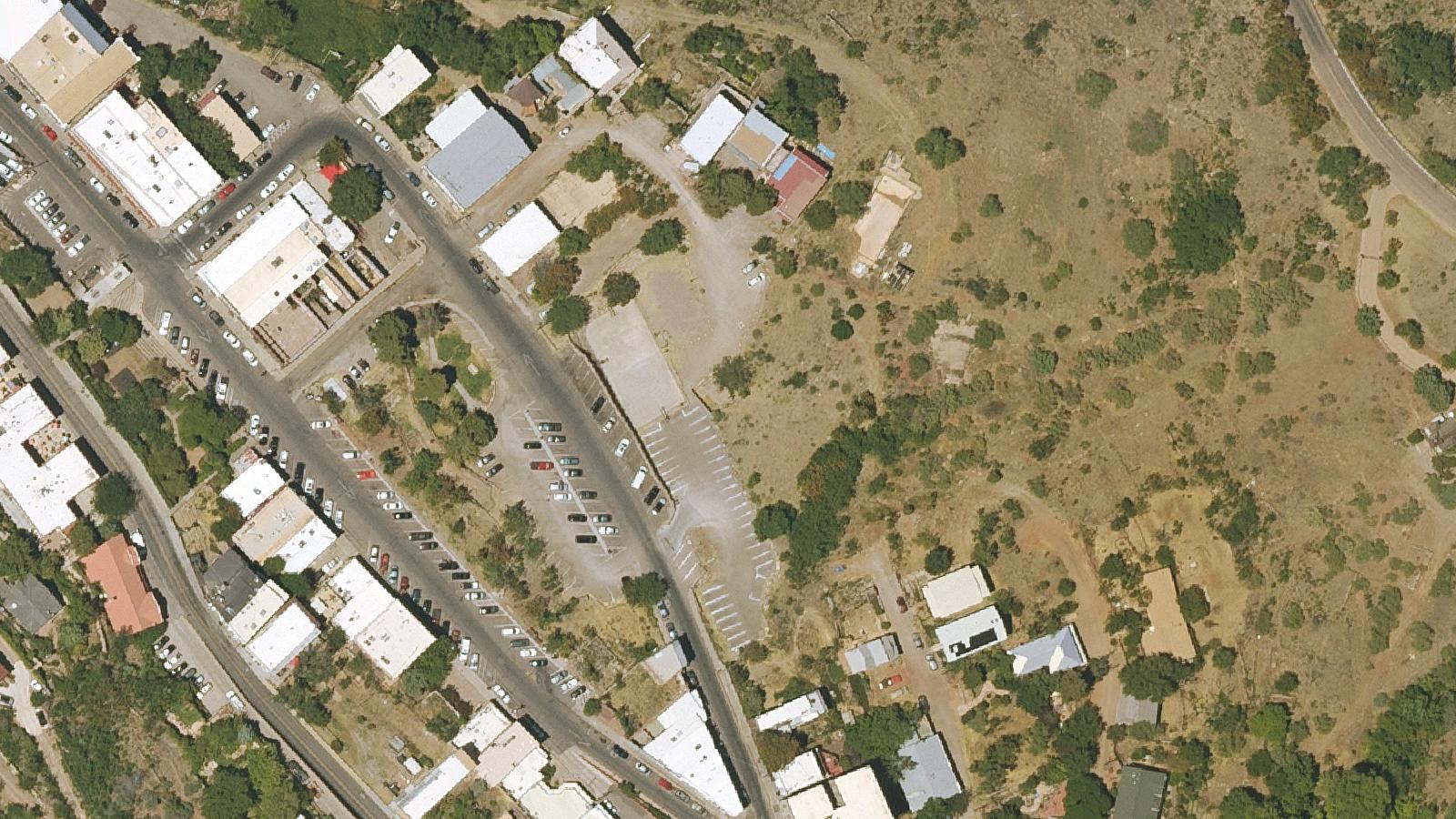
For three decades the jail functioned as intended. Then, in 1938, the cumulative effect of underground dynamite blasting by United Verde and other mining operations began reshaping the hillside itself. The earth beneath the jail's foundation shifted, and the concrete cell block separated from its wooden housing and began moving downslope. By the time it stopped, the block had traveled approximately 225 feet — ending up directly on Hull Avenue, one of Jerome's main streets. Rather than remove it, the town altered the roadway to go around the structure.
The Arizona Department of Transportation later relocated the jail slightly further from the roadway due to continued hillside instability. In 2017, the Jerome Historical Society acquired the structure and undertook stabilization work, adding reinforcing supports and protective fencing to prevent further deterioration. Restoration plans remain in development. Jerome still promotes the jail as one of its central historical attractions — a literal artifact of mining industry's disregard for the ground it worked beneath.
Sources
- https://en.wikipedia.org/wiki/Sliding_Jail
- https://www.roadsideamerica.com/story/55594
- https://www.thetravel.com/what-to-know-about-the-sliding-jail-in-jerome/
- https://thecreativeadventurer.com/a-self-guided-walking-tour-of-the-haunted-streets-of-jerome-az-once-the-wildest-town-in-the-west/
Disembodied voicesShadow figuresSense of presence
Jerome's haunted reputation is built on its concentrated history of mining deaths, violence, and disease — and the Sliding Jail occupies a specific place in that lore. The structure held men arrested for the full spectrum of frontier crime: drunkenness, assault, murder, labor violence. It was not a comfortable facility, and by the accounts of Jerome's former residents, conditions inside were harsh.
The paranormal reports at the site are relatively modest compared to Jerome's grander haunted landmarks, but consistent. Ghost hunters visiting the fenced exterior have reported capturing eerie voices on audio equipment and describing shadow figures moving along the cracked concrete walls. A few investigators have suggested that former prisoners might be attracted to the structure because it remains physically recognizable — one of the few unchanged points of reference in a town reshaped repeatedly by mine blasting and landslide.
The site appears on Jerome ghost tour itineraries — most commonly the evening walking tours that cover Cleopatra Hill's history of labor disputes and sudden deaths. The structure's visible displacement from its original position, the fencing, and its position downhill from the main tourist corridor give it an atmospheric weight that draws visitors even without formal paranormal programming.
Where this legend is told