Drive-By
Exterior View of Carlheim / Paxton Manor
The Second Empire mansion is visible from Catoctin Circle NE. The building's exterior and grounds are accessible during Arc of Loudoun events; grounds are otherwise private.
- Duration:
- 15 min
HauntBound archive · catalog record
Reported phenomena — as catalogued
+ 2 further entries on record
An 1872 Second Empire mansion in Leesburg built for Pennsylvania industrialist Charles Paxton, which served as an orphanage until 2004 and sits less than a mile from Ball's Bluff Civil War battlefield.
601 Catoctin Cir NE, Leesburg, VA 20176
Research updated June 2026
Age
All Ages
Cost
$$
Shocktober haunted house: $100/person ($85 for groups of 4+). Regular tours not consistently offered; check website for current programming.
Access
Limited Access
Historic 32-room Second Empire mansion on sloped grounds; mixed accessibility.
Equipment
Photos OK
Est. 1872 · Designed by New York architect Henry C. Dudley in Second Empire / Italianate styles · Listed on National Register of Historic Places and Virginia Landmarks Register, 1979 · Served as children's convalescent home, orphanage, and childcare center 1921–2004 · Less than one mile from Ball's Bluff Battlefield Regional Park (Battle of October 21, 1861) · Current operator The Arc of Loudoun raises funds via annual Shocktober event
Charles R. Paxton (1816–1889) was a Pennsylvania industrialist who commissioned the 32-room mansion on a 50-acre estate in Leesburg in the early 1870s. The building was designed by New York architect Henry C. Dudley in Second Empire and Italianate styles; its mansard roof and decorative ironwork made it one of the more architecturally distinctive private homes in Loudoun County. Paxton's wife Rachel outlived him by more than thirty years and remained in the house until her death in December 1921.
In her will, Rachel Paxton placed the buildings and 50 acres in a charitable trust to benefit children in need. The resulting institution, the Paxton Home for Convalescent Children (also called the Margaret Paxton Memorial for Convalescent Children), operated from 1921 through 1954, housing children recovering from illness or injury during the summer months. From 1954 to 1980 the property served as an orphanage, and from 1980 to 2004 as a childcare center.
The property was listed on the National Register of Historic Places and the Virginia Landmarks Register in October and December 1979, respectively, and became part of the Leesburg Historic District in 2004. The Arc of Loudoun, which provides services to people with intellectual and developmental disabilities, has operated on the campus since approximately 2008. The organization runs the annual Shocktober theatrical haunted house in October, which uses the mansion's full 32 rooms and raises significant funds for its programs.
The estate sits less than a mile from Ball's Bluff Battlefield Regional Park, where the October 21, 1861 Battle of Ball's Bluff resulted in a Union defeat and the death of Colonel Edward Baker, the only sitting U.S. Senator killed in the Civil War.
Sources
The proximity of Paxton Manor to Ball's Bluff Battlefield — scene of a Union defeat on October 21, 1861 — is the basis for the most historically grounded of the reported paranormal accounts. Investigators and visitors have described a figure believed to be a nurse still tending to injured soldiers, consistent with the building's reported use as a refuge for wounded troops in the Civil War period. The spirit is described as moving purposefully through the building.
A second, distinct category of reports centers on the building's decades as a convalescent home and orphanage. The 83-year span from 1921 to 2004 during which children occupied the building has generated reports of children's sounds in rooms where no children are present, and apparitions described as small figures moving through the upper floors.
Non-specific reports from visitors over many years include footsteps when no one is in an adjacent room, a pervasive sensation of being followed through the hallways, and at least one account of a man seated at the end of a darkened hallway who was not there when the observer returned for a second look. Cold spots have been documented by investigators in multiple rooms.
The figure of Jedidiah Carver, described in some accounts as a man who lived on the property and was exiled after being found guilty of cruelty to animals, is cited in some ghost tour narratives. This account has not been independently verified against primary records and should be treated with caution.
Notable Entities
The Second Empire mansion is visible from Catoctin Circle NE. The building's exterior and grounds are accessible during Arc of Loudoun events; grounds are otherwise private.
Annual theatrical haunted house event that occupies the 32-room mansion, raising funds for The Arc of Loudoun. Rated PG-13. Operates Friday–Sunday evenings in October. A no-scare glow stick is available for purchase for visitors who want to experience the house without theatrical scares.
Every HauntBound history is researched from documented sources. We clearly separate verified historical fact from paranormal folklore.
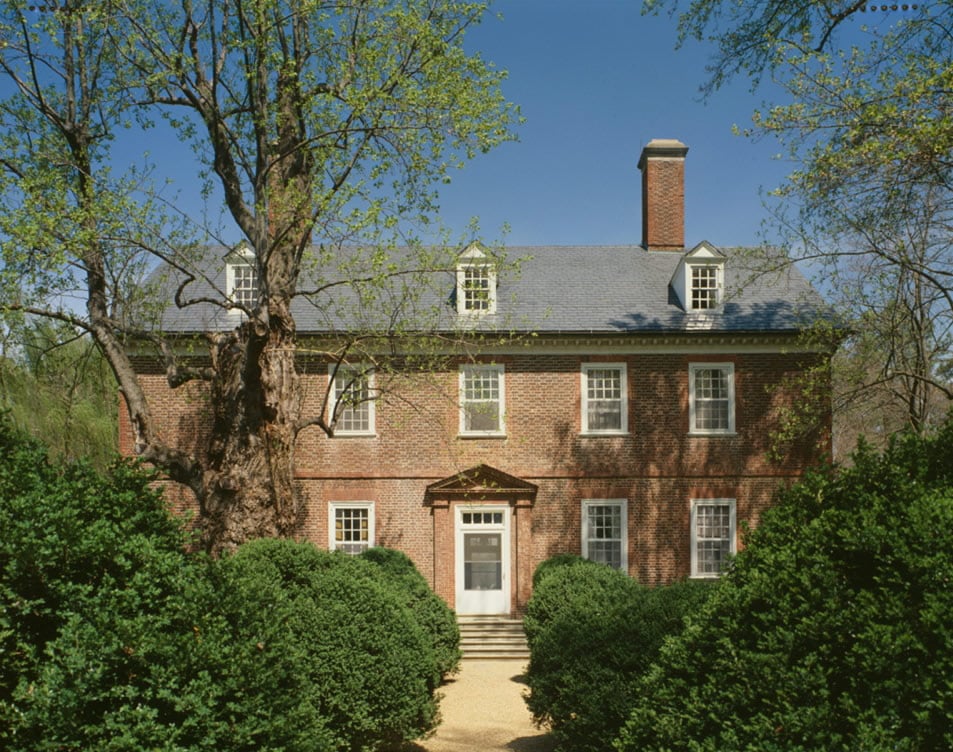
Charles City, VA
Benjamin Harrison IV built the current mansion at Berkeley Plantation in 1726, making it the oldest three-story brick structure in Virginia. The plantation became the birthplace of President William Henry Harrison in 1773 and the ancestral seat of a family that produced a signer of the Declaration of Independence and two U.S. Presidents. During the Civil War, General McClellan used the mansion as his headquarters and the cellar held Confederate prisoners.
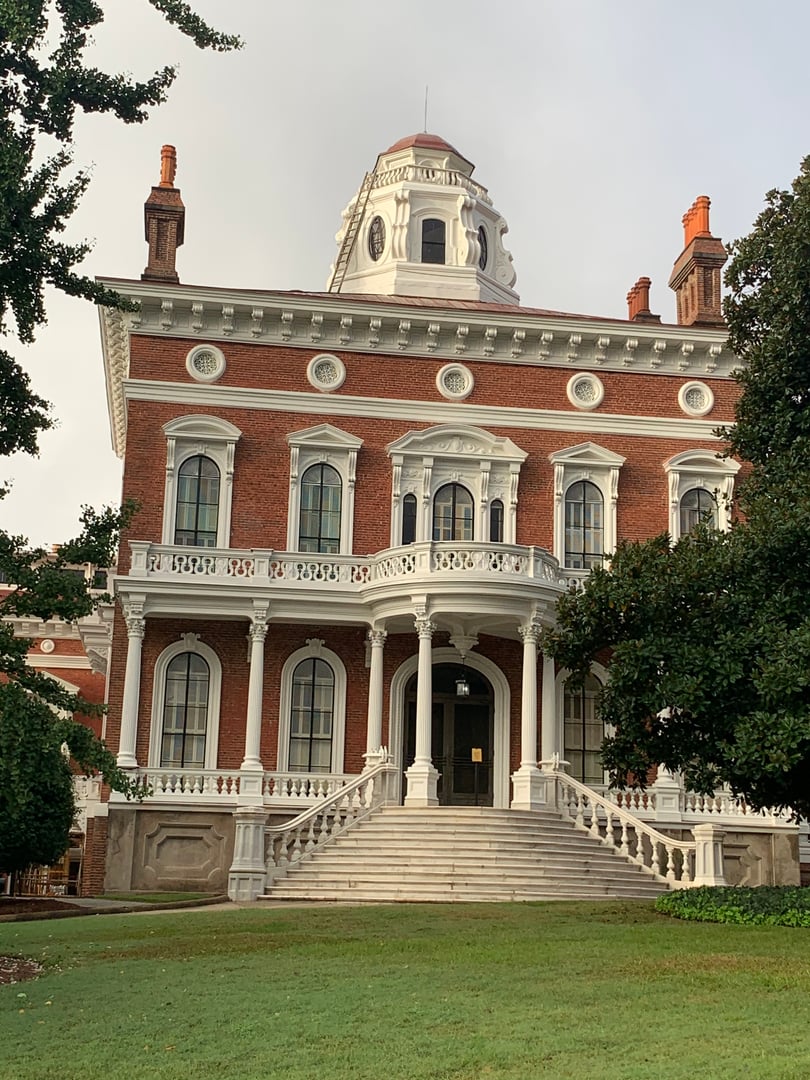
Macon, GA
Built between 1855 and 1859 for businessman William Butler Johnston at a cost of approximately $100,000, the Italian Renaissance Revival mansion at 934 Georgia Avenue has been called the 'Palace of the South' and is a National Historic Landmark. The Felton family held it through the Civil War period; Confederate general Henry Gray Felton occupied it during the war. The Hay family acquired the house in 1926 and donated it to The Georgia Trust for Historic Preservation in 1977.
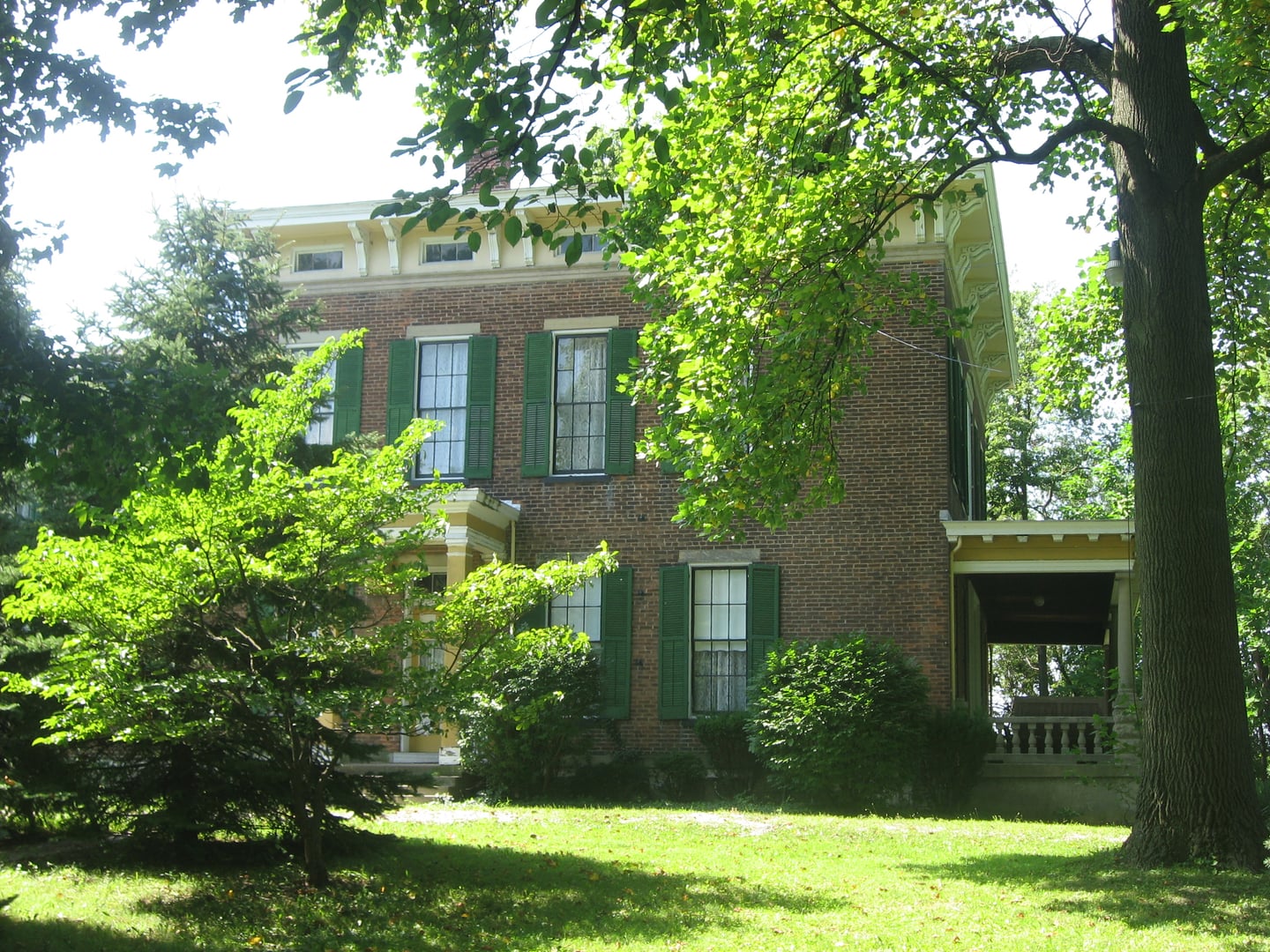
Indianapolis, IN
Hannah House is an 1858 Italianate mansion at 3801 Madison Avenue on the south side of Indianapolis, built by Alexander Hannah, an Indiana businessman who returned wealthy from the California Gold Rush. The property is listed on the National Register of Historic Places.