Est. 1830 · Federal Architecture · Antebellum Virginia · Danville Historic District · Medical History
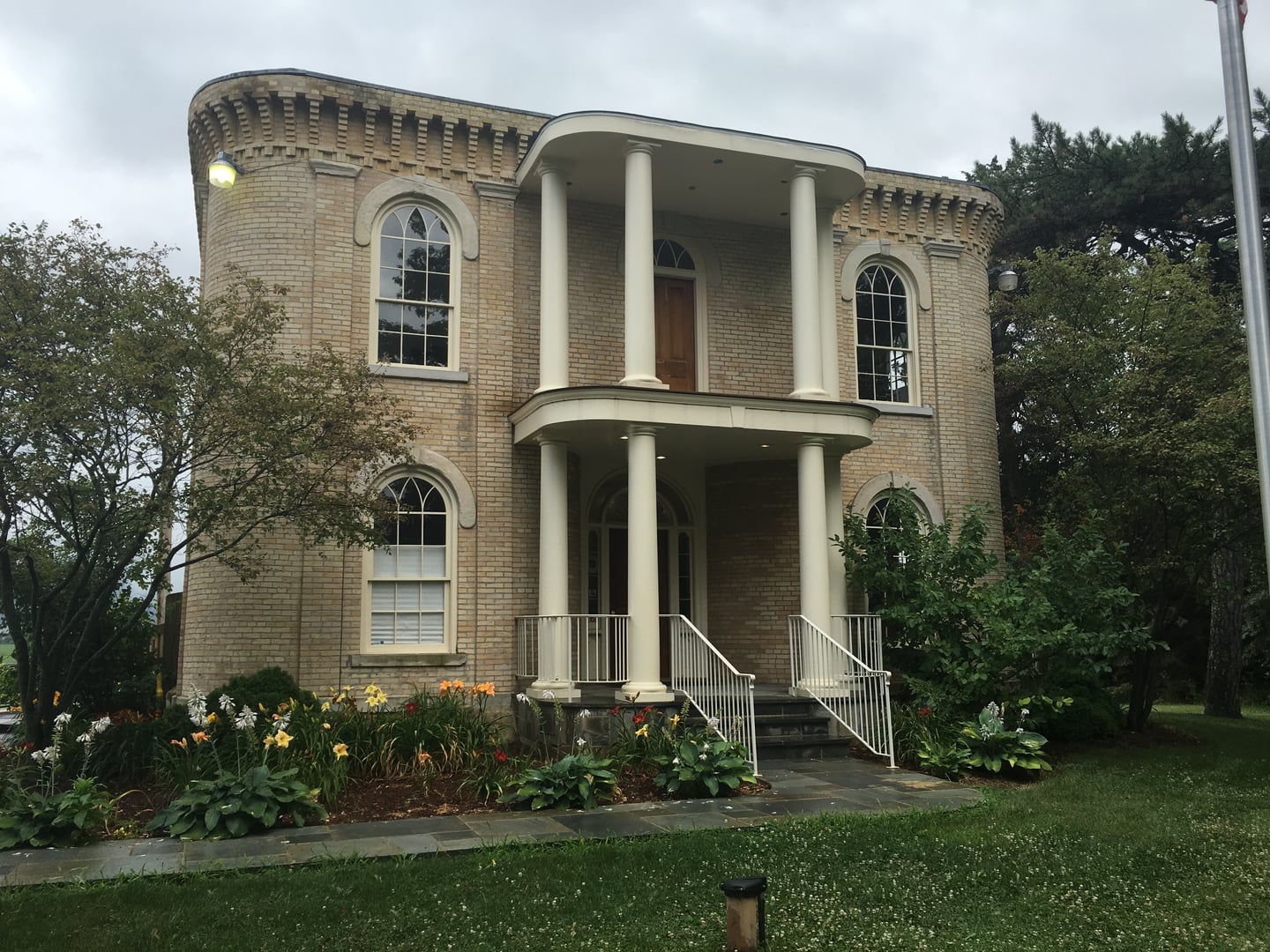
Captain James Lanier arrived in Danville in 1818 and established himself as a postmaster, landowner, and civic figure. In 1830 he constructed a residence in the Federal style at a site then described as a grove at Grove and Ridge Streets — the property now addressed as 770 Main Street. When Danville formally incorporated in 1833, Lanier became its first mayor. The house he built remains the oldest surviving residential structure in the city.
Lanier sold the property in 1839 to Hobson Johns, who later served as Danville's twelfth mayor. The Johns family sold it in 1855 to Colonel Allan Love Wyllie, a wealthy tobacconist, landowner, and horse dealer who held both militia and civil positions in the county. A subsequent Wyllie family member substantially remodeled the interior and exterior — replacing the original fireplace mantles with more ornate pieces and adding the two-story neo-Classical portico that now defines the building's facade.
The Society of Architectural Historians' Archipedia identifies the house as 'an excellent and, for Danville, a rare example of early-Federal architecture.' The building also appears in the Old West End Historic District Walking Tour, a documented historical resource for Danville's antebellum streetscape.
From the 1940s through approximately 1980, Dr. Samuel Newman occupied the house as both residence and diagnostic clinic. Newman, a Polish immigrant who earned his medical degree in the United States, had trained at clinics in Vienna, Berlin, and Paris before settling in Danville, where he became the city's first pediatrician. He died in 1980. The property was purchased by the Garrett family in 1988 and has since served as office space for insurance attorneys Garrett & Garrett.
The Shadowlands account describes the house as having served as a children's clinic during or near the Civil War period. The documented record places Dr. Newman's pediatric clinic in the building during the 1940s-70s, not the Civil War era. The building's relationship to the Civil War, if any, is not corroborated by architectural or historical society sources found during research.
Sources
- https://sah-archipedia.org/buildings/VA-02-PI41
- https://oldwestendva.com/blog/the-lanier-wyllie-house/
- https://hycolakemagazine.com/hauntings-in-the-river-city/
Phantom footstepsPhantom voicesPhantom smells
The Hyco Lake Magazine and its sister publication SoBo Halifax Magazine both documented the hauntings of Danville's Old West End, including the Lanier House, in articles drawing on local historical accounts. Reports from the 1940s through 1970s, during Dr. Newman's residency and practice, describe three recurring phenomena: voices heard when the speaker was alone in the building, footsteps from empty rooms, and the smell of cigar smoke from a space where no one smoked.
The cigar smoke report is the most specific: the Hyco Lake Magazine account notes that no one in the building smoked, which made the periodically detectable tobacco smell difficult to explain in routine terms.
These accounts are attributed to the period of Newman's occupancy. Whether reports continued after the building's conversion to office use is not documented in available sources. The Shadowlands entry adds visual apparitions to the phenomena list, but no independent source corroborates sightings specifically at this address.
The Shadowlands account also claims the building served as a children's clinic during or near the Civil War. This claim is not supported by the architectural or local historical record found during research. The documented clinic use — Newman's pediatric practice — dates to the mid-twentieth century, nearly eighty years after the Civil War.