Drive-By
Exterior Architecture Viewing
View the Egyptian Revival exterior with its diamond-paned windows, bunched-reed columns with palm-leaf capitals, and the mummy-themed cast-iron fence forged by R.W. Barnes of Richmond.
- Duration:
- 15 min
HauntBound archive · catalog record
Reported phenomena, as catalogued
+ 1 further entry on record
1845 Egyptian Revival landmark by Thomas Somerville Stewart — the oldest medical college building in the South — with documented VCU-employee ghost reports tied to the 19th-century grave-robbing era exposed by the East Marshall Street Well discovery.
1223 E Marshall St, Richmond, VA 23298
Research updated June 2026
Age
All Ages
Cost
Free
Active VCU academic building; exterior viewing is free, interior access is for VCU students and staff or by special tour arrangement.
Access
Wheelchair OK
Public sidewalk and ADA-accessible main entrance from E Marshall Street.
Equipment
Photos OK
Est. 1845 · 1845 design by Thomas Somerville Stewart — oldest medical college building in the South · National Historic Landmark in Egyptian Revival style · Original home of the Medical College of Virginia (now VCU School of Medicine) · 19th-century dissection rooms; tied historically to grave-robbing of African American burial grounds · Adjacent to 1994 East Marshall Street Well discovery (44 adults, 9 children; mostly of African descent) · VCU announced $3.6M memorial in 2026 with construction beginning summer 2027
The Egyptian Building rises from 1223 East Marshall Street in Richmond, two blocks from the original Court End neighborhood and at the western edge of what is now VCU's Medical Center campus. Designed in 1845 by Thomas Somerville Stewart and completed in 1846, it was built as the first permanent home of the Medical Department of Hampden-Sydney College. In 1854 the medical department parted ways with Hampden-Sydney and received an independent charter as the Medical College of Virginia (MCV). The Egyptian Building became MCV's primary teaching home and remained so for the rest of the 19th century. MCV merged with Richmond Professional Institute in 1968 to form Virginia Commonwealth University, and the Egyptian Building is now part of VCU's MCV Campus.
The building's Egyptian Revival design — exceptionally rare in 19th-century American institutional architecture — features battered (sloping) walls, diamond-paned windows, bunched-reed columns capped with palm-leaf capitals, and a polychrome interior with original cast-iron Egyptian-motif fence forged by R.W. Barnes of Richmond. The choice of Egyptian style reflected mid-19th-century associations between Egypt, medicine (the Pharaoh-physician Imhotep), and the mysteries of mortality.
The upper floors of the original building included ventilated wards and rooms used for cadaver dissection — a routine practice in 19th-century American medical education. Cadavers were often acquired unlawfully through grave-robbing, and in the antebellum South, African American burial grounds were the prime targets. This dark institutional history was forced into public view in April 1994 when construction crews working on the nearby Kontos Building uncovered an abandoned 19th-century well filled with human bones and dissection-room artifacts. The East Marshall Street Well, as it became known, contained the remains of at least 53 individuals — 44 adults and nine children — most of them of African descent and many enslaved at the time of their deaths. Subsequent research by VCU established that these remains had been dumped in the well by MCV medical staff between the 1840s and 1860s after dissection. VCU held a public memorialization ceremony in 2019 and announced in 2026 a $3.6 million permanent memorial and reburial planned for construction beginning summer 2027.
The Egyptian Building was added to the National Register of Historic Places in 1969 and designated a National Historic Landmark.
Sources
The Egyptian Building stands out among Richmond's haunted-lore sites for the unusual quality of its source material: a published VCU News feature, 'Haunts of VCU,' in which named university employees and campus police officers describe firsthand encounters. The most-detailed account belongs to Amanda Shaw of the VCU Department of Physical Medicine and Rehabilitation, who reported coming into the building around 5 a.m. one morning over winter break in 2015 and hearing white-noise sounds from the bathroom that she could not identify. On a separate occasion working alone on the third floor, Shaw saw 'a tall, lean doctor with dark hair in a buttoned-up lab coat' walk past her office window; when she went to greet him, he never appeared around the corner.
Additional reports captured in VCU's own coverage include all three sinks in a bathroom turning on simultaneously when no one was inside, door handles violently rattling in unoccupied corridors, and campus police officers describing a sense of being watched on overnight rounds of the upper floors. Local ghost-tour aggregators and Atlas Obscura repeat these reports.
The lore around the Egyptian Building is framed by the documented history exposed by the East Marshall Street Well: cadavers procured by grave-robbing — primarily from Richmond's African American burial grounds — were brought into this building in the 1840s-1860s, dissected, and disposed of in a nearby well. We do not romanticize that history. Where paranormal narrative connects the apparitions to the cadavers, it is most appropriately framed as the dead asking to be acknowledged — a framing reinforced by VCU's own active memorial and reburial efforts.
Notable Entities
Media Appearances
View the Egyptian Revival exterior with its diamond-paned windows, bunched-reed columns with palm-leaf capitals, and the mummy-themed cast-iron fence forged by R.W. Barnes of Richmond.
Local architectural and medical-history walking tours frequently include the Egyptian Building alongside other VCU MCV historic sites.
Some links on this page may earn HauntBound a small commission when you book, at no extra cost to you. Our editorial picks are independent. Full disclosure
Every HauntBound history is researched from documented sources. We clearly separate verified historical fact from paranormal folklore.
Free Guide
9 verified stops, rated for families, mapped in order. Free.
One email to confirm, then the guide link. Unsubscribe anytime.
Richmond, VA
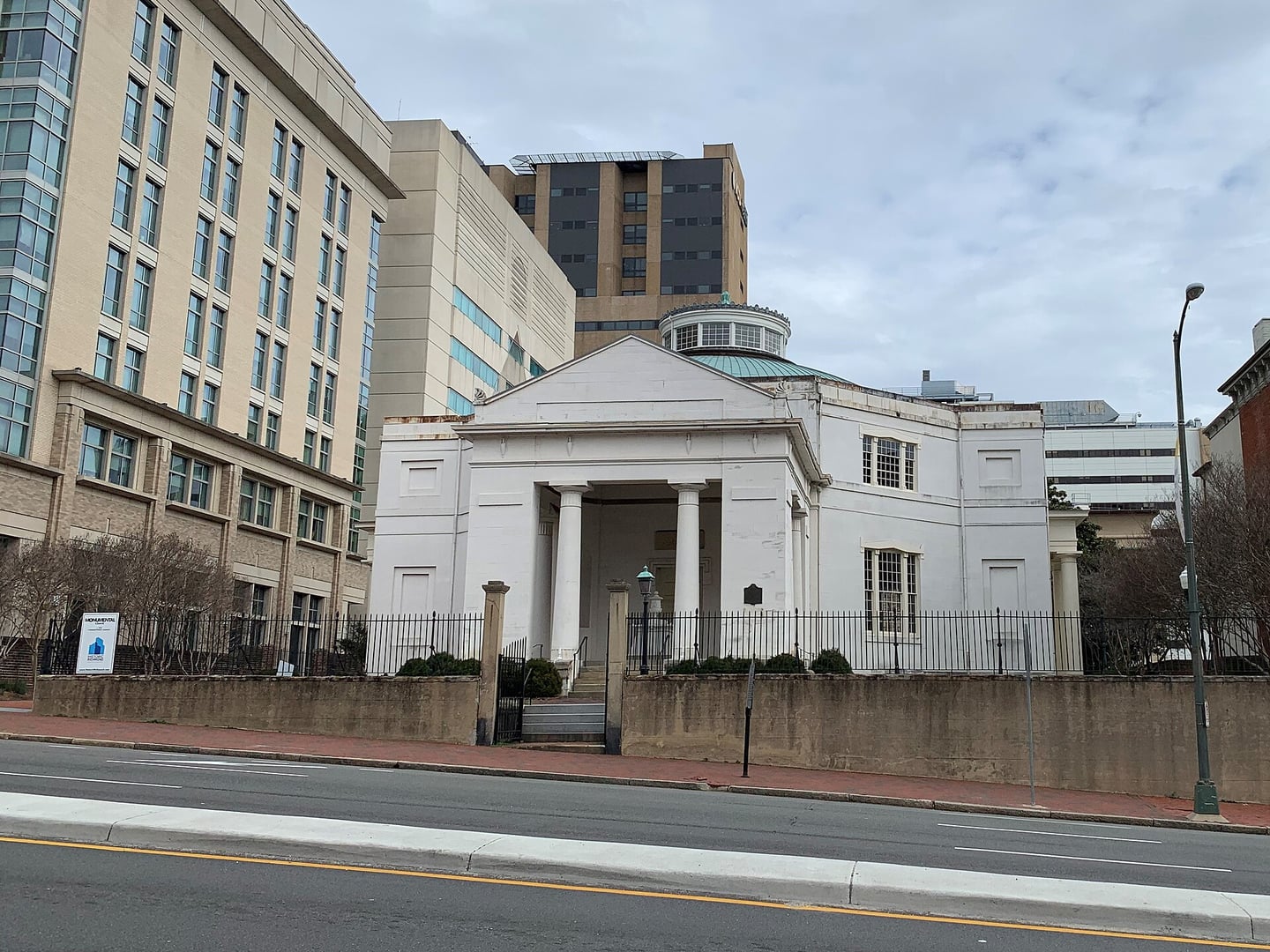
Monumental Church stands at 1224 E Broad Street on the site of the Richmond Theatre fire of December 26, 1811, which killed 72 people including Virginia governor George William Smith and former U.S. senator Abraham B. Venable in what was the worst urban disaster in the early United States. The Greek Revival memorial church was commissioned by U.S. Chief Justice John Marshall, designed by Robert Mills (a pupil of Thomas Jefferson and architect of the Washington Monument), and built between 1812 and 1814. The remains of the fire victims are interred in a brick crypt beneath the sanctuary.
Richmond, VA
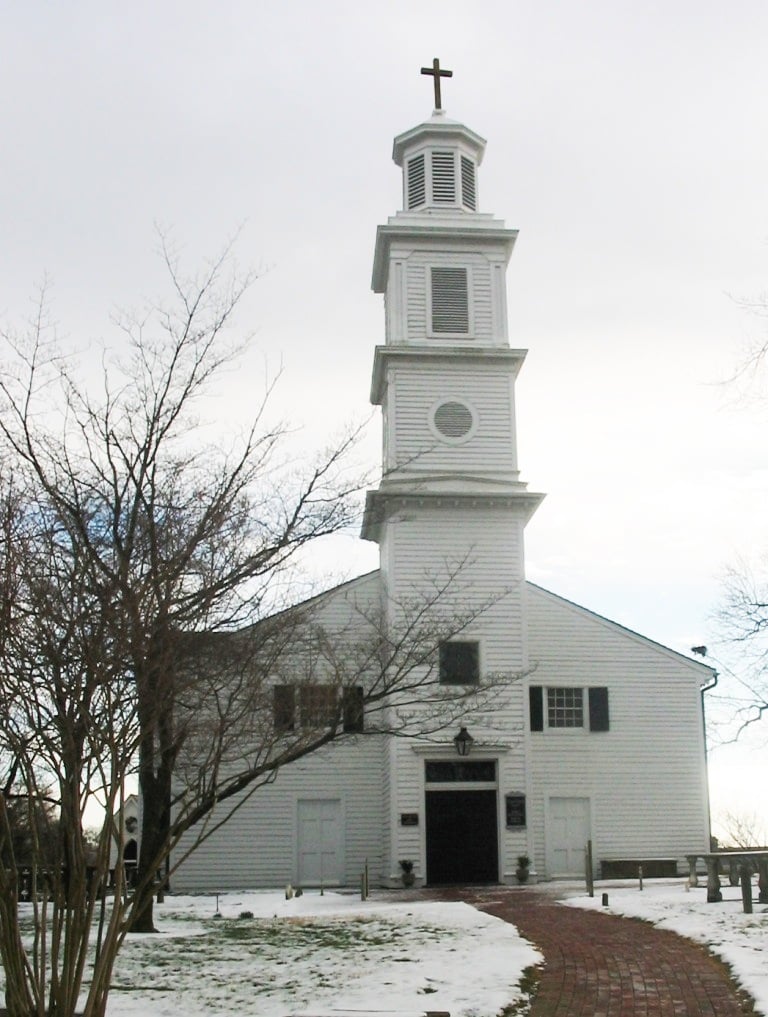
St. John's Episcopal Church is Richmond's oldest church, established in 1741 on land donated by city founder William Byrd II. It is most famous as the site where Patrick Henry delivered his 'Give me liberty, or give me death' speech at the Second Virginia Convention on March 23, 1775. The surrounding churchyard contains notable burials including U.S. Declaration of Independence signer George Wythe and Elizabeth Arnold Poe, mother of Edgar Allan Poe.
Williamsburg, VA
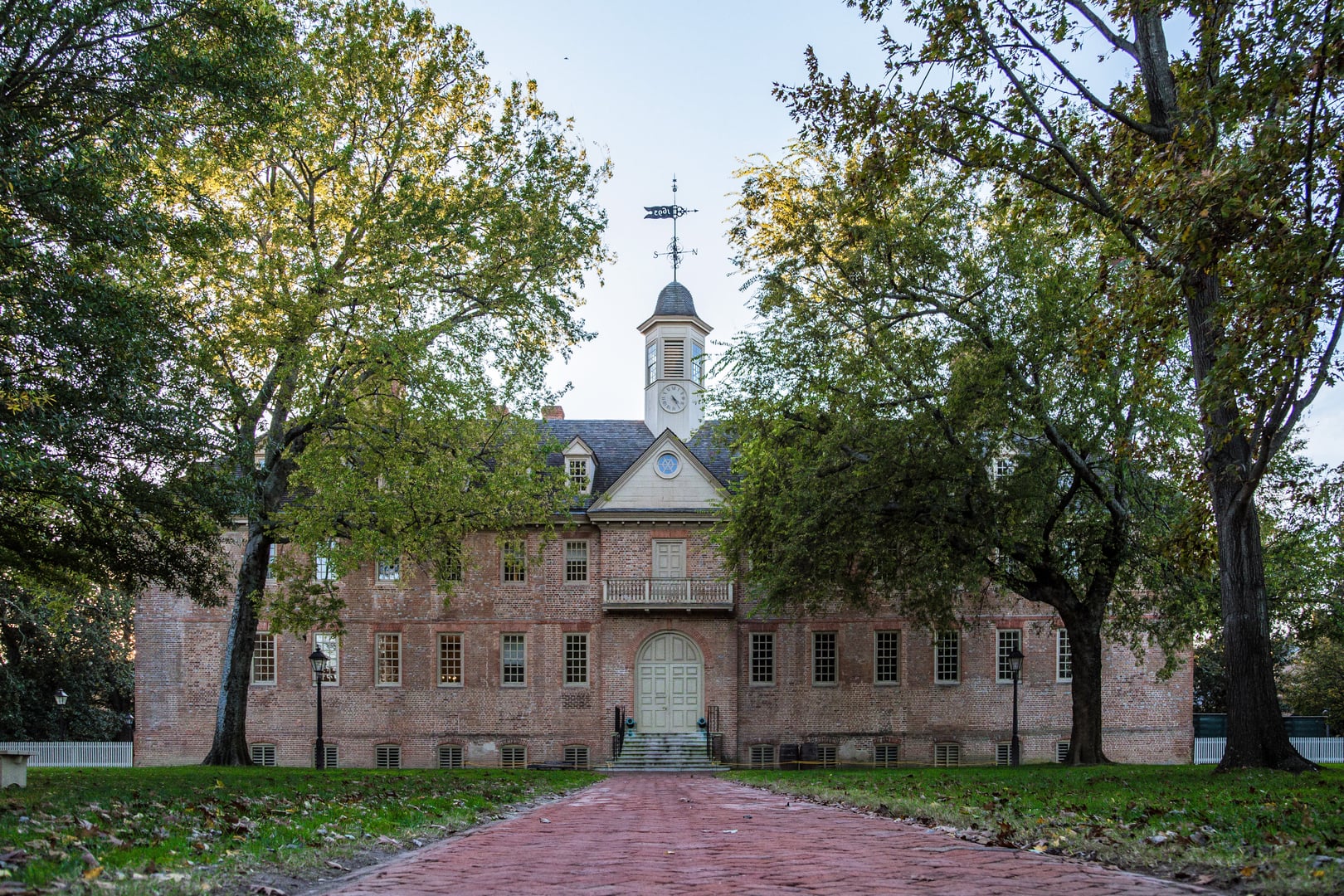
The Wren Building is the oldest college building in the United States, first constructed between 1695 and 1700 at the College of William & Mary. The President's House was built in 1732. During the Revolutionary War the Wren served as a hospital for French soldiers wounded at Yorktown in 1781, and the President's House was occupied successively by Cornwallis, the French and Continental Army wounded, and Lafayette.