Outdoor Exploration
Belle Isle Self-Guided Loop
Hike the loop trail past the Confederate prison footprint, hydroelectric plant ruins, and James River rapids overlooks. NPS-style interpretive signs cover the POW camp history.
- Duration:
- 1.5 hr
HauntBound archive · catalog record
Reported phenomena, as catalogued
+ 2 further entries on record
54-acre James River island that held up to 30,000 Union prisoners as a Confederate POW camp from 1862-1865, with as many as 1,000 deaths from disease, exposure, and starvation; now a Richmond city park.
Belle Isle, James River (footbridge access from Tredegar St), Richmond, VA 23219
Research updated June 2026
Age
All Ages
Cost
Free
Free public park; part of the James River Park System.
Access
Limited Access
Footbridge access from Tredegar Street; gravel paths, rocky river edges, and uneven ruins terrain on the island.
Equipment
Photos OK
Est. 1862 · Confederate POW camp 1862-1865 holding ~30,000 Union enlisted prisoners · Death toll estimated at approximately 1,000 from disease, exposure, starvation · Hydroelectric plant operation 1904-1963 · Incorporated into James River Park System in 1973 · Interpreted through American Civil War Museum programming
Belle Isle is a roughly 54-acre island sitting in the rapids of the James River within the city limits of Richmond. From the early 19th century onward the island hosted iron forges, nail factories, and a small village of workers. When the Civil War began, the Confederate government appropriated the island for use as a prison camp for Union enlisted soldiers; officers were held separately at Libby Prison across the river.
The prison opened in 1862 and remained in operation through early 1865. Approximately 30,000 prisoners passed through Belle Isle during the war. Initially designed to hold around 3,000 men in tents within a stockade, the camp was repeatedly overcrowded to more than 10,000. Conditions were notoriously brutal: scant tent shelter against Virginia winters, severely inadequate rations, contaminated water, and rampant disease. Death-toll estimates vary—Confederate records claim several hundred dead, Union accounts run to several thousand—but the most commonly cited figure today is approximately 1,000 deaths, comparable on a per-capita basis to the more famous Andersonville. Firsthand accounts from John L. Ransom's published diary (1881) and federal Assistant Treasury Secretary Lucius Eugene Chittenden's investigations established the historical record.
After the Confederacy abandoned Richmond in April 1865, Belle Isle returned to industrial use. From 1904 to 1963 a hydroelectric power plant operated on the south shore; its concrete ruins, penstock, and twin-turbine pits remain on the island today as picturesque industrial archaeology. In 1973 Belle Isle was formally incorporated into the James River Park System and opened as a public park, accessible from downtown via a pedestrian bridge suspended beneath the Robert E. Lee Bridge approach from Tredegar Street.
The Civil War prison footprint is interpreted through several state and city historical markers and through programming by the American Civil War Museum at Tredegar Iron Works, directly across the river.
Sources
According to the Haunted History of Belle Isle (rvaghosts.com), Style Weekly's 'A Deathly Island,' and a survey by paranormal author M.A. Kleen, visitors and ghost-tour participants have reported a consistent set of phenomena across the island's trail loop. The most-cited reports include footsteps following lone hikers along the river trails, disembodied voices murmuring in the open areas around the former stockade footprint, and orbs and shadowy figures photographed near the hydroelectric plant ruins.
A frequently cited firsthand account comes from Beth Brown, author of 'Haunted Battlefields: Virginia's Civil War Ghosts,' who reported capturing an audio recording on the island that—when reviewed—appeared to contain a male voice asking 'Where are we?' Other visitors have reported being struck by small stones thrown by unseen hands, twinkling lights at dusk, and a strong sense of unease near the patches of trail closest to the documented prison death site.
We frame these reports with editorial caution: the suffering of approximately 1,000 Union soldiers who died here is a documented historical tragedy, and contemporary paranormal lore is layered atop that record rather than substituting for it. Most paranormal claims trace to ghost-tour operators and a small number of paranormal authors rather than to controlled investigations.
Notable Entities
Media Appearances
Hike the loop trail past the Confederate prison footprint, hydroelectric plant ruins, and James River rapids overlooks. NPS-style interpretive signs cover the POW camp history.
Periodic ranger-led and museum-led tours of the Belle Isle Confederate prison site, coordinated with the American Civil War Museum at Tredegar.
Some links on this page may earn HauntBound a small commission when you book, at no extra cost to you. Our editorial picks are independent. Full disclosure
Every HauntBound history is researched from documented sources. We clearly separate verified historical fact from paranormal folklore.
Free Guide
9 verified stops, rated for families, mapped in order. Free.
One email to confirm, then the guide link. Unsubscribe anytime.
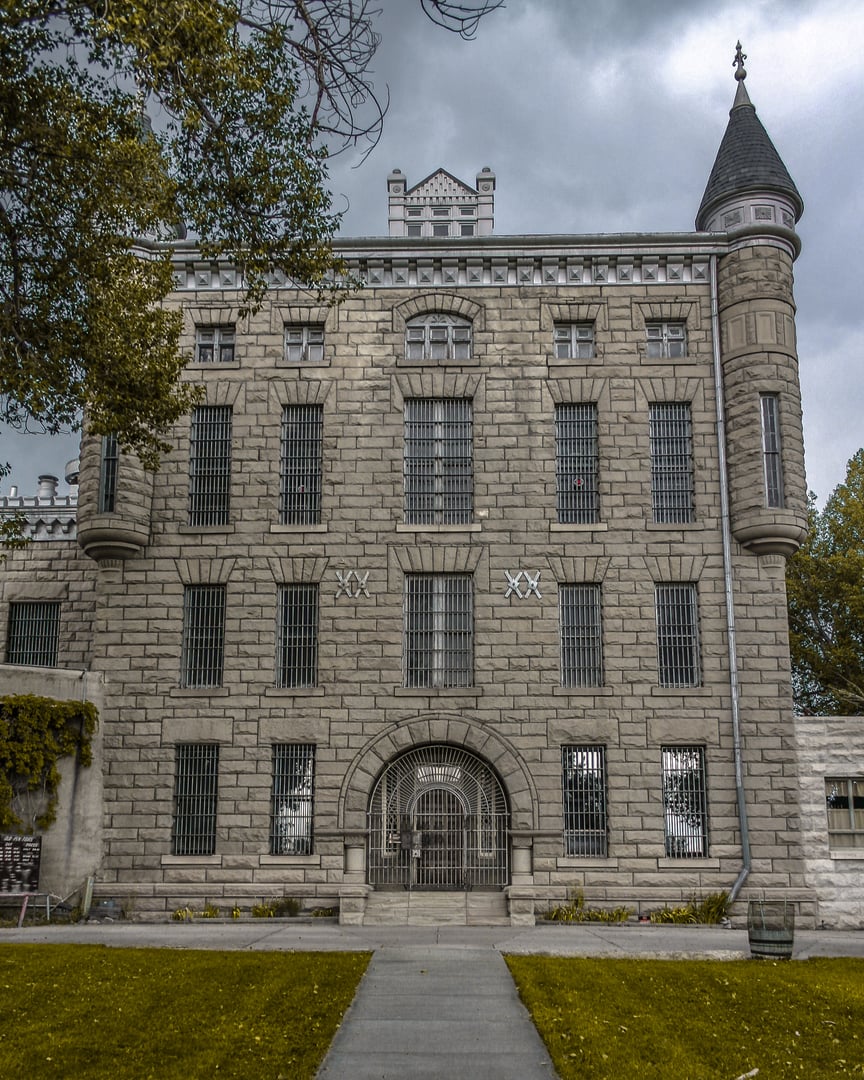
Rawlins, WY
Construction of the Wyoming Frontier Prison began in 1888 and completed in December 1901, opening with 104 cells, no electricity, no running water, and minimal heating. Over its operational history, 13,500 people were incarcerated there and 14 death sentences were carried out — nine by hanging and five in the gas chamber added in 1936. The prison closed in 1981 when a new facility opened near Rawlins.
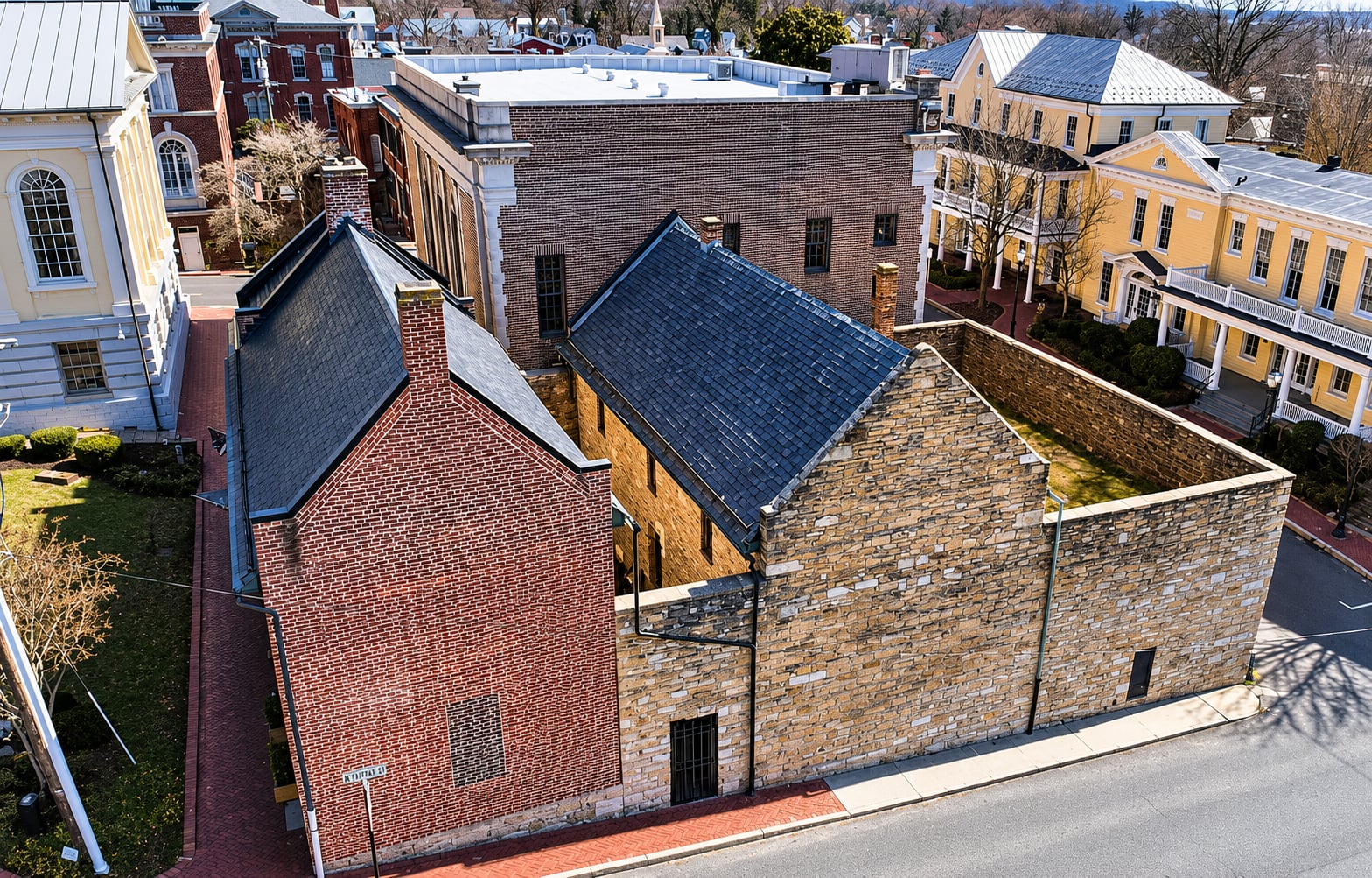
Warrenton, VA
The Old Fauquier County Jail was built in 1808 on Ashby Street in Warrenton, Virginia. A second stone cell block was added in 1823, including a walled hanging yard used through 1896. It is one of Virginia's most intact antebellum county jails and is listed on the National Register of Historic Places.
Edenton, NC
Completed in 1825, the Chowan County Jail served the county seat of Edenton, North Carolina for 150 years. At various points documented as the oldest active jail in the United States, it imprisoned 21 Black men in the collective fear following Nat Turner's 1831 rebellion in Virginia, and held family members of Harriet Jacobs — the enslaved author whose 1861 memoir 'Incidents in the Life of a Slave Girl' documented their incarceration. The building is now a museum operated by the Edenton Historical Commission.