Est. 1858 · National Register of Historic Places · Route 66 Heritage · Castellated Gothic Architecture · American Penal History
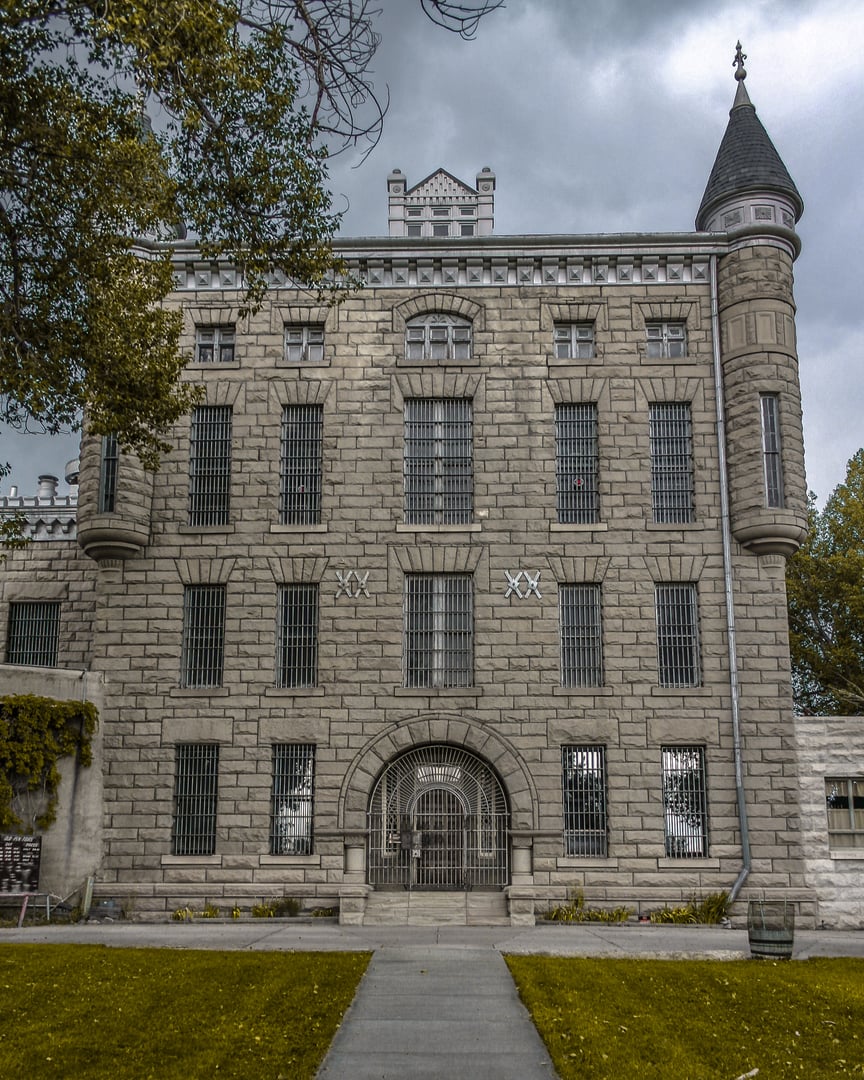
The Old Joliet Prison — formally the Illinois State Penitentiary at Joliet, also known as the Collins Street Prison — opened on May 22, 1858. On that date fifty-three prisoners arrived at a partially completed structure and, working under guard, began constructing the larger penitentiary around themselves. The limestone for the perimeter walls and cell houses was quarried directly from the site.
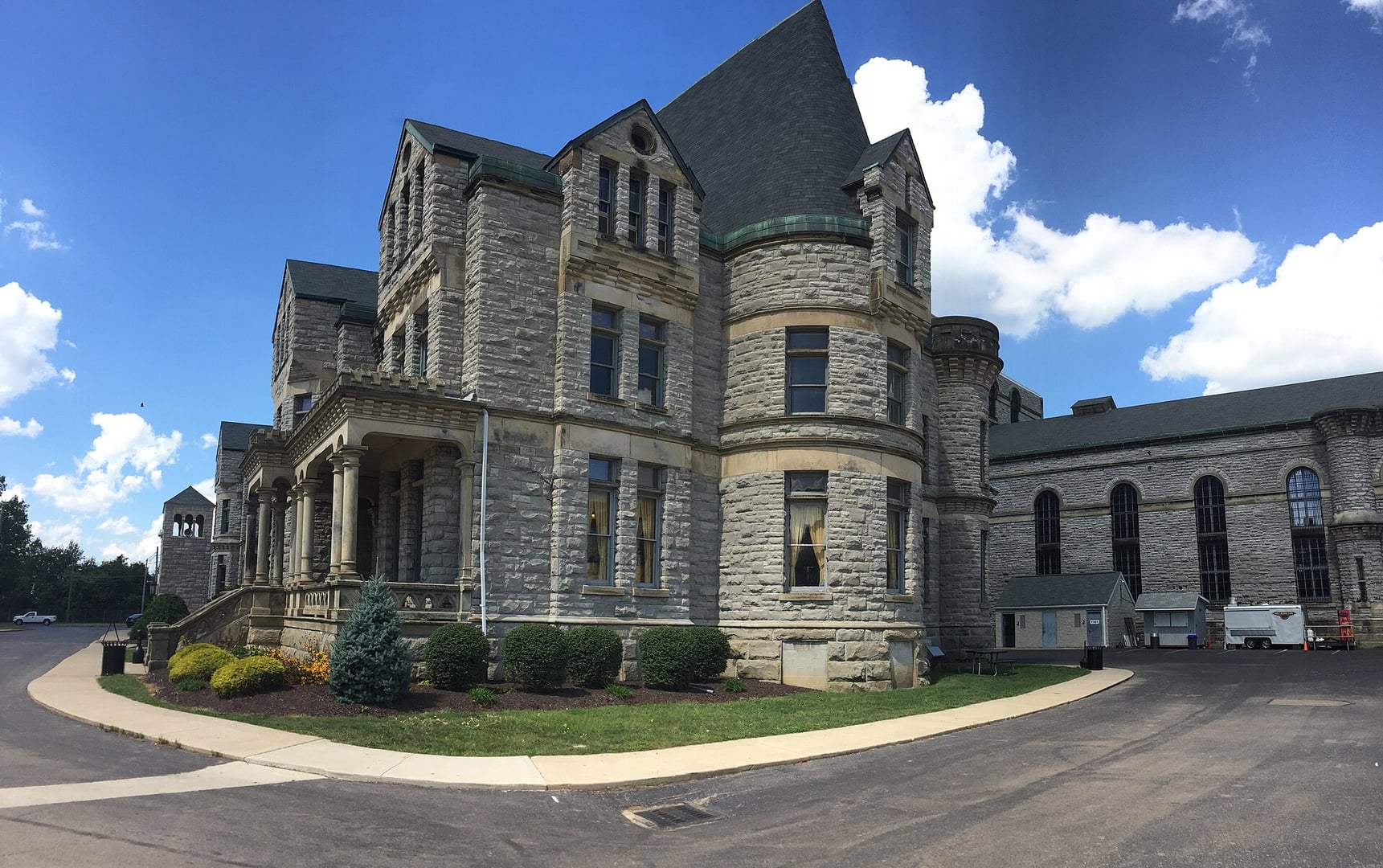
The complex was designed by William W. Boyington, the Chicago architect best known for the city's surviving 1869 Water Tower. Boyington's penitentiary set a Castellated Gothic standard for American prison architecture: paired sally ports, crenellated towers, and a central administration building flanked by long cell houses. Stone was cut by inmates transferred from the older Alton Prison downstate.
In 1917 the state began construction of a larger and more modern facility three miles to the north-northwest. That site, Stateville Correctional Center, opened in March 1925. Stateville was intended to replace the Joliet prison entirely; instead, both institutions operated simultaneously for the rest of the twentieth century. Joliet housed several inmates whose names have become bywords for American crime, including Nathan Leopold and Richard Loeb in the 1920s.
The prison closed in 2002. Ownership eventually transferred to the City of Joliet, which partnered with the Joliet Area Historical Museum to stabilize the site and reopen it for public tours. Preservation has been ongoing and incremental. The administration building suffered a partial roof collapse in 2020. In 2024, work began on stabilizing that building, new roofs were installed on both cell houses, and preservation began on the mid-century modern chapel. The Old Joliet Prison was placed on the National Register of Historic Places in 2023.
The site sits on Historic Route 66 and is now operated as a heritage attraction with self-guided and docent-led tours. Filmmakers have used the location since the late twentieth century, most famously in the 1980 opening sequence of The Blues Brothers and as the fictional Fox River State Penitentiary in the FOX television series Prison Break.
Sources
- https://en.wikipedia.org/wiki/Joliet_Correctional_Center
- https://www.jolietprison.org/history.html
- https://www.jolietmuseum.org/old-joliet-prison.html
- https://www.enjoyillinois.com/explore/listing/joliet-prison-tours/
- https://theprisondirect.com/the-old-joliet-haunted-prison/
- https://www.wbez.org/curious-city/2024/10/29/illinois-ghost-stories-old-joliet-prison-hauntings-prison-reform
Phantom footstepsCold spotsOrbsPhantom voicesEMF anomalies
The Old Joliet Prison's paranormal reputation is bound up with the scale of its institutional history. Across 144 years of operation the site witnessed riots, executions, and tens of thousands of incarcerations, and visitors today consistently report sensory anomalies that the operating museum documents without endorsing.
The most frequently reported phenomena cluster in the East and West cell houses. Tour participants describe phantom footsteps echoing along the iron galleries when no one else is present on the tier, sudden cold spots inside individual cells, and a persistent feeling of being watched from the upper ranges. Photographers occasionally capture orbs and unexplained lens flare against the limestone. The administration building, severely damaged by the 2020 roof collapse, is reported as the most active interior space, with staff describing voices and door movements during preservation work.
The Joliet Area Historical Museum has positioned the prison as a Site of Conscience along Route 66 — an explicit decision to foreground the lived experience of inmates and staff over haunted-attraction theatrics. Tour narratives address the prison as a place where roughly a million Illinoisans were processed through the carceral system between 1858 and 2002, and where named individuals lived, worked, and in some cases died.
The site has appeared on paranormal television series and is a regular subject of investigation by Illinois-based research groups, though the museum itself does not currently operate overnight ghost-hunt programs. Documented reports remain at the level of phantom sounds, cold spots, and equipment anomalies — phenomena consistent with an aging stone complex undergoing active stabilization.
Media Appearances
- The Blues Brothers (1980)
- Prison Break (FOX)
- Ghost Adventures: Serial Killer Spirits: John Gacy Prison (2019)
- Destination Fear: Joliet Prison (S2E10) (2020)