Est. 1775 · Revolutionary War Arms Manufacturing · George Washington Family · Civil War Field Hospital · National Historic Landmark · Georgian Architecture
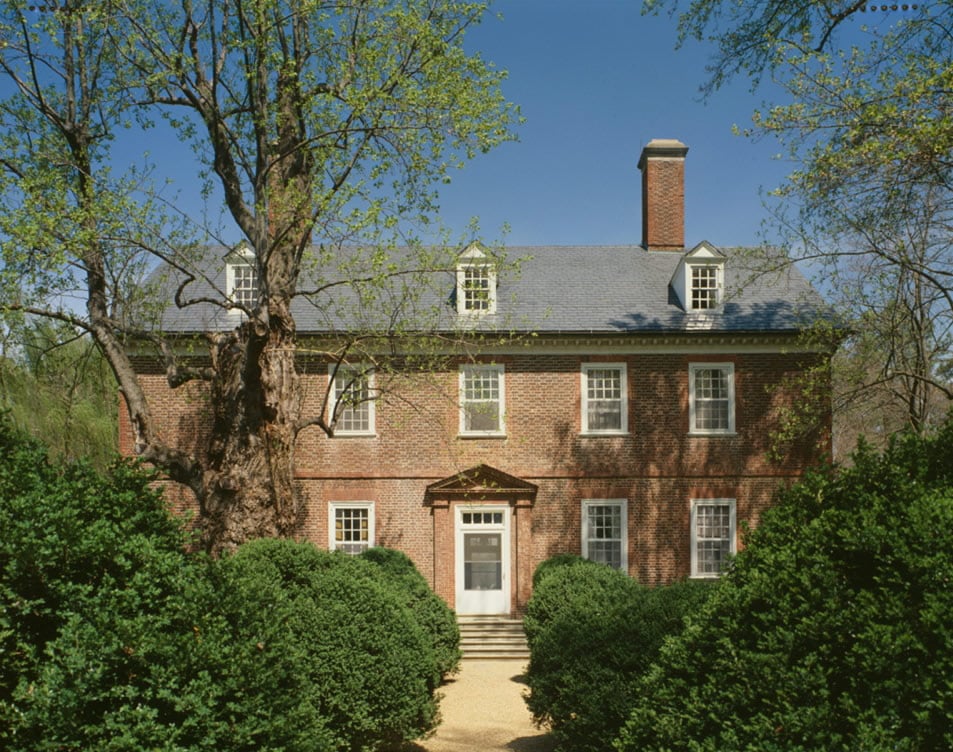
The house now known as Kenmore was built between 1770 and 1775 for Col. Fielding Lewis and his wife Elizabeth (Betty) Washington Lewis, George Washington's younger sister. Lewis was a prosperous Fredericksburg merchant and planter who operated extensive tobacco, wheat, and corn operations on the 1,300-acre plantation.
When the Revolutionary War began, Lewis — driven by patriotism and personal loyalty to his brother-in-law — organized and personally financed the Fredericksburg Gun Manufactory to produce arms for the Continental Army. The Congress assured him reimbursement. At war's end, the new nation was broke. Lewis received nothing. His health broken by tuberculosis and his fortune spent, he died in 1781, deeply in debt. Betty Lewis was eventually forced to sell most of the property.
The house is architecturally notable for its exceptional decorative plasterwork, particularly on the ceilings of the first-floor rooms. The same craftsmen who executed the plasterwork at Mount Vernon worked at Kenmore — the two properties share a distinctive rococo-influenced style.
After Betty Lewis's death in 1797, the property changed hands several times. The Gordon family acquired it in 1819 and gave the house its present name, Kenmore. The Civil War brought another chapter: after the Battle of the Wilderness in May 1864, Union forces converted the mansion into a field hospital. In 1970, the property was designated a National Historic Landmark.
Kenmore is today owned and operated by the George Washington Foundation and is open for guided tours that address the Lewis family, the enslaved community, and the Revolutionary War sacrifice that defined the property's history.
Sources
- https://en.wikipedia.org/wiki/Kenmore_(Fredericksburg,_Virginia)
- https://kenmore.org/visit-historic-kenmore/
- https://www.virginiahauntedhouses.com/real-haunt/kenmore-plantation.html
Phantom footstepsApparitionsCold spotsObject movementDoorknobs turning
The haunting tradition at Kenmore centers almost entirely on Col. Fielding Lewis, and the logic behind it is specific: the master bedroom was his primary workspace in his final years, where he pored over accounts that grew more desperate as Congress failed to repay his war debts. He died in that room, with tuberculosis and bankruptcy as his companions.
Staff and visitors over many years have reported the sound of heavy boots pacing on the second floor when no one is there, cold drafts that appear and vanish in the upper rooms, and doors whose knobs turn and release without anyone touching them. The fireplace tools — pokers and tongs — have been found moved between staff checks, as if someone had been stoking a fire.
On multiple occasions, a figure in 18th-century attire has been described in the upper rooms during tours. The accounts describe a man reviewing documents or standing at a window, who disappears when approached. The description — period coat, working posture, attention directed to papers — fits Lewis rather than any later owner.
The building's use as a Union hospital in 1864 has generated its own minor strand of lore, with reports of cold spots in rooms that functioned as surgical areas, but Lewis remains the dominant presence in reported accounts.
Notable Entities
Col. Fielding Lewis
Where this legend is told