Est. 1771 · Georgian Plantation Architecture · Enslaved Community Interpretation · Battle of Fredericksburg Field Hospital · Walt Whitman and Clara Barton · National Park Service Site
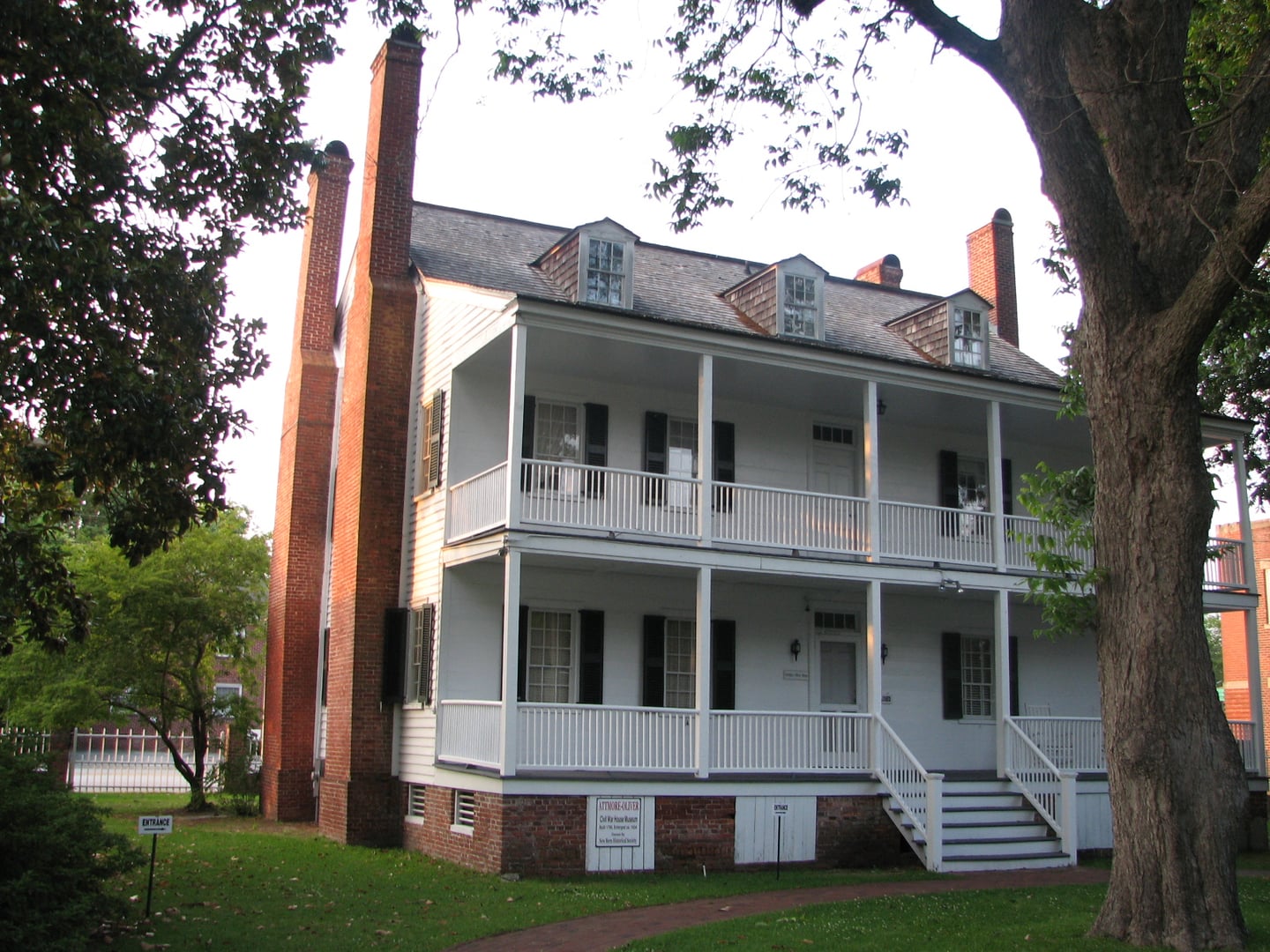
Chatham Manor is a Georgian-style brick mansion completed in 1771 after roughly three years of construction by William Fitzhugh, a Virginia farmer and statesman who named the house after his friend William Pitt, the Earl of Chatham. The mansion sat at the center of a working plantation that, at its peak under Fitzhugh, extended to roughly 49,000 acres of land holdings with about 6,000 at Chatham. The National Park Service's interpretive materials at the site document that Fitzhugh held more than 100 enslaved people in bondage, with 60 to 90 working at Chatham depending on the season. The site's interpretive program centers the labor and lives of these enslaved men, women, and children alongside the documented Fitzhugh-family history.
Chatham is the only private residence in the United States to be visited by George Washington, Thomas Jefferson, Abraham Lincoln, and Dwight D. Eisenhower.
During the American Civil War, Chatham served as a Union headquarters in the run-up to the December 1862 Battle of Fredericksburg. Federal artillery flanked the house, which subsequently functioned as a field hospital. Walt Whitman, who was searching for his wounded brother George, and Clara Barton, who later founded the American Red Cross, served as volunteers at the field hospital.
The National Park Service acquired the property in segments between 1964 and 1993; the estate was willed to the NPS in 1975 and the site opened to the public on October 15, 1977. Chatham now serves as the headquarters for the Fredericksburg and Spotsylvania National Military Park.
Sources
- https://en.wikipedia.org/wiki/Chatham_Manor
- https://www.nps.gov/frsp/learn/historyculture/chatham.htm
- https://www.nps.gov/articles/chatham-manor-300178.htm
- https://www.nps.gov/frsp/learn/historyculture/fitzchm.htm
Apparition along Ghost Walk pathCold spots in mansion interiorSense of presence in field-hospital rooms
The most-cited Chatham Manor folklore involves a White Lady figure said to walk the river-bluff path that came to be called Ghost Walk. According to a long-running tradition reflected in Legends of America and 19th-century regional collections, an English friend of William Fitzhugh brought his daughter to Chatham to end her relationship with a commoner; tradition holds that her death was tied to the failed romance and that her figure has been reported at Chatham on or near the anniversary of her death.
Separately, regional ghost-lore writing and Civil War folklore frequently reference Chatham's December 1862 field-hospital period. The trauma associated with that brief but intensely violent period — recorded firsthand by Walt Whitman in his Civil War notes — has shaped accounts of cold spots in interior rooms and reports of activity in the mansion's basement, which served as a treatment area.
Notable Entities
The White Lady