Est. 1855 · First Federal Psychiatric Hospital · Kirkbride Plan · National Historic Landmark · Lobotomy Era · OSS Wartime Research
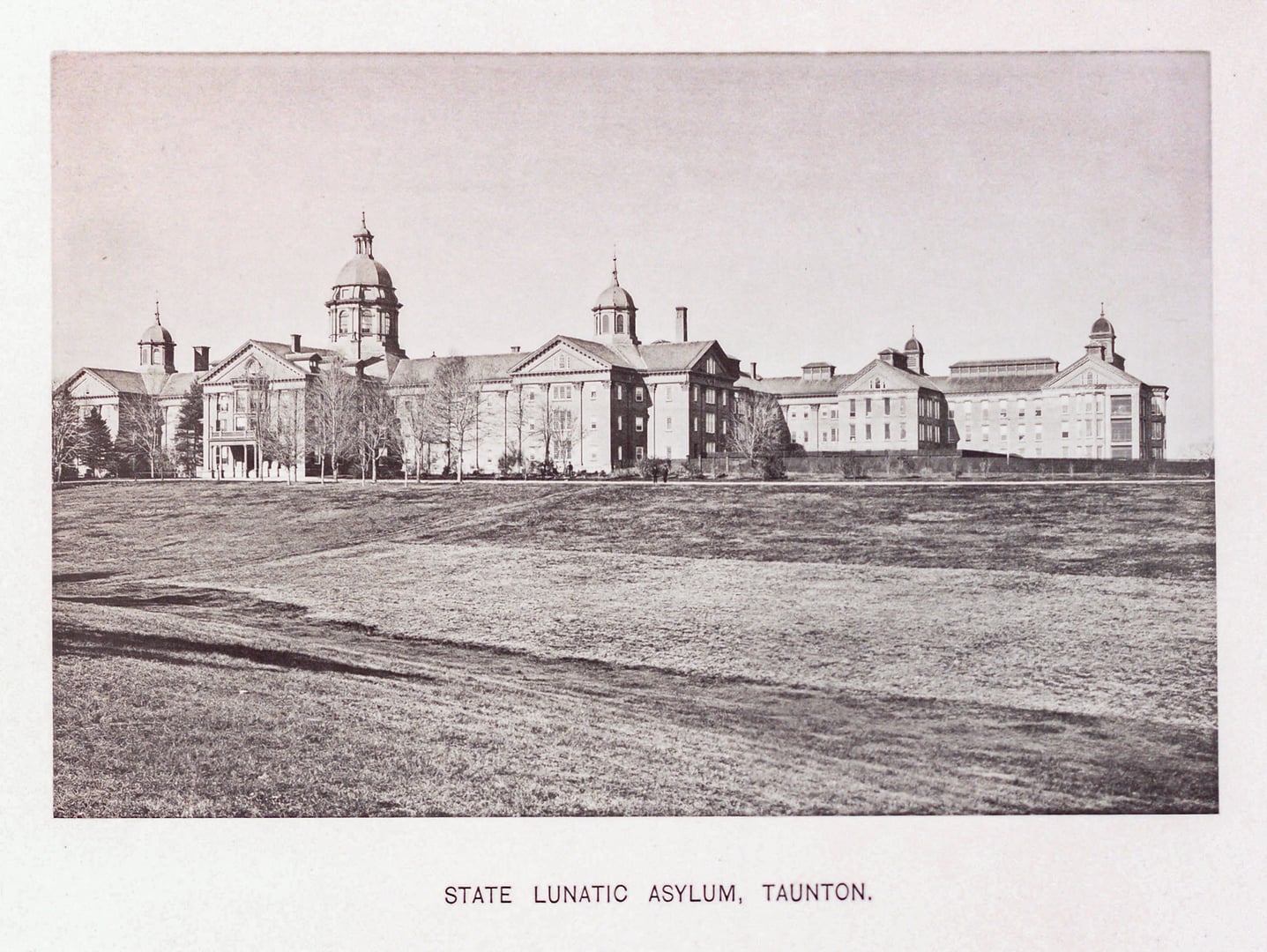
St. Elizabeths opened in 1855 in southeast Washington under the name Government Hospital for the Insane. It was the first federally operated psychiatric hospital in the United States, established through the advocacy of reformer Dorothea Dix. The Center Building, designed by Thomas U. Walter according to the principles of the Kirkbride Plan, was constructed in stages between 1852 and 1895 and stretches 948 feet in length.
At its peak in the 1950s the hospital housed more than 8,000 patients and operated a fully equipped medical-surgical unit, a school of nursing, and accredited psychiatric residencies. Records suggest more than 125,000 individuals were treated across its history; an exact number is unknown owing to fragmented record-keeping. Thousands of patients are believed to have been buried on the grounds in graves whose markers and identifying records have been lost.
The hospital is associated with controversial figures in 20th-century American medicine. Walter Freeman, the neuropathologist who later popularized transorbital lobotomy, began his career as director of St. Elizabeths' Blackburn Pathological Laboratory from 1924 to 1933, where he performed autopsies and brain studies on deceased patients. He developed his lobotomy practice afterward, elsewhere — performing the 1941 lobotomy of President Kennedy's sister Rosemary at George Washington University Hospital and roughly 3,500 lobotomies across his career, not at St. Elizabeths. In 1942 the OSS, the wartime predecessor of the CIA, partnered with the hospital on research into the use of mind-altering drugs in interrogation.
The campus was designated a National Historic Landmark in 1990. The historic museum operated nearly 20 years and closed in the mid-1990s; a smaller successor museum has presented historic photographs, furniture, and artifacts in subsequent years. The West Campus is undergoing federal redevelopment as the headquarters of the U.S. Department of Homeland Security, while the East Campus continues to operate the District-run psychiatric hospital.
Sources
- https://en.wikipedia.org/wiki/St._Elizabeths_Hospital
- https://www.archives.gov/research/guide-fed-records/groups/418.html
- https://www.atlasobscura.com/places/st-elizabeths
- https://historicsites.dcpreservation.org/tours/show/13
- https://www.wusa9.com/article/news/local/the-lobotomist-ghosts-of-st-elizabeths-hospital/204464983
- https://www.archives.gov/publications/prologue/2010/summer/institutional.html
Shadow figuresPhantom footstepsDoors opening/closingApparitions
The Center Building's haunted reputation comes from former staff and journalists rather than from organized paranormal investigations. WUSA9 producer Bruce Leshan has documented the building's reputation in long-form reporting, framing the Blackburn Lab — where Walter Freeman worked — as the site that draws the most attention.
A former employee from the 1987 era, the source of the original Shadowlands report, described unexplained phenomena experienced firsthand and corroborated by colleagues across the records-and-museum function the original main building eventually served. Specific accounts in available reporting tend toward the residual: heavy footsteps in empty wards, doors closing without an obvious draft, and the felt presence of recently deceased patients in the hours after their passing.
Local commentary on the campus has resisted the language of haunting. As one journalist put it, the documented histories of lobotomy, mass graves, and wartime interrogation research are stranger and more troubling than any supernatural account; the reluctance to call St. Elizabeths haunted is partly an editorial choice, partly a refusal to romanticize a complicated institutional record. Visitors to the West Campus on DC Preservation League tours are generally given the institutional history rather than the folklore.
Media Appearances
- WUSA9 News - The Lobotomist: Ghosts of St Elizabeths Hospital