Est. 1889 · New Mexico's First Territorial Insane Asylum · Three on-grounds patient cemetery sections · Unmarked human remains discovered during construction
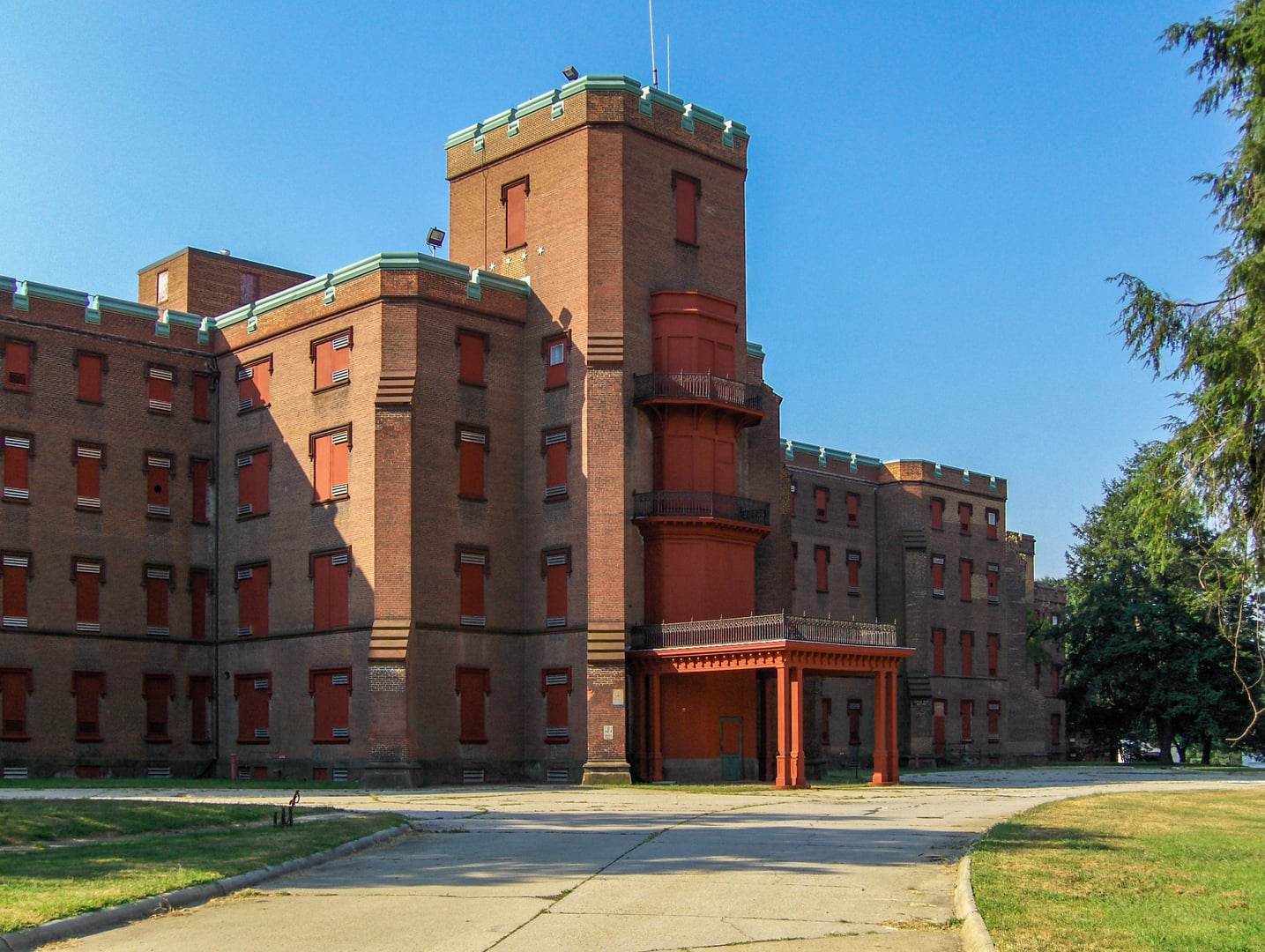
The New Mexico Territorial Insane Asylum was established by the Territorial Legislature in 1889 and received its first patients in 1893. The original building was a straightforward three-story structure on the outskirts of Las Vegas, the northeastern New Mexico city that served as a hub of the territory's railroad economy and early civic life. Las Vegas had been a significant town since the arrival of the Atchison, Topeka and Santa Fe Railway in 1879, and the asylum reflected the territory's attempt to build institutional infrastructure ahead of statehood.
The facility was intended to serve patients from across New Mexico Territory, a vast and sparsely populated region where families and local communities had few options for caring for individuals with mental illness. Over the decades of the territorial period and into statehood in 1912, the institution grew in size and complexity, expanding its patient population and physical plant. Three separate cemetery sections — designated A, B, and C — were established on the grounds, where patients who died at the institution were interred. The burials in these sections represent individuals who in many cases had no family nearby to claim them.
In the years following the institution's opening, as is common with state psychiatric facilities of the era, records of patient care and burial were inconsistently maintained. The unmarked nature of many graves came into sharper focus when construction work near the campus uncovered human remains, reported by the Santa Fe New Mexican. The find documented that the burial footprint extended beyond the formally marked cemetery sections.
The institution has operated continuously under various names and mandates. It is now the New Mexico Behavioral Health Institute, a state-operated inpatient psychiatric facility administered by the New Mexico Department of Health. It provides evaluation and treatment services and remains an active hospital campus.
Sources
- https://sites.rootsweb.com/~nma/sanmiguel/hospital_history.htm
- https://www.santafenewmexican.com/news/local_news/human-remains-found-during-work-near-mental-health-institution/article_cd627033-ebee-4f50-97b0-abc3576556ee.html
- https://searchlightnm.org/when-history-deals-a-bad-hand/
Atmospheric unease near cemetery sectionsDocumented unmarked burials
The New Mexico Behavioral Health Institute does not market itself as a paranormal destination, and the dark history associated with the site is primarily institutional and documentary rather than narrative. Three cemetery sections — A, B, and C — sit on the campus grounds, representing the burials of patients who died at the facility over its long history. For many of the individuals interred here, the state hospital was their last connection to any institutional record.
The discovery of unmarked human remains during construction work near the campus, documented by the Santa Fe New Mexican, served as a material reminder that the formal cemetery boundaries did not capture the full extent of burials. The remains were found close enough to the active facility grounds to prompt coverage and questions about the scope of record-keeping across the institution's history.
Local oral accounts and those who have spent time near the campus at dusk describe the grounds as deeply atmospheric — the old institutional architecture, the proximity of marked and unmarked graves, and the long shadow of the territorial asylum era combine to make the site one of the more somber dark-history stops in northeastern New Mexico. The dark-history weight here is documentary and institutional, grounded in the real experience of patients who were confined far from home, often indigent, and buried without family nearby.