Historic Movie House · Community Performing Arts · Northeast Arkansas Cultural Heritage
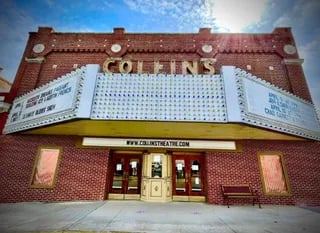
The Strand Theatre opened on Monroe Avenue in Jonesboro in 1926, part of a regional network of movie houses and performance venues built during the decade's entertainment boom. For decades it operated as a cinema, hosting the full range of mid-century Hollywood product.
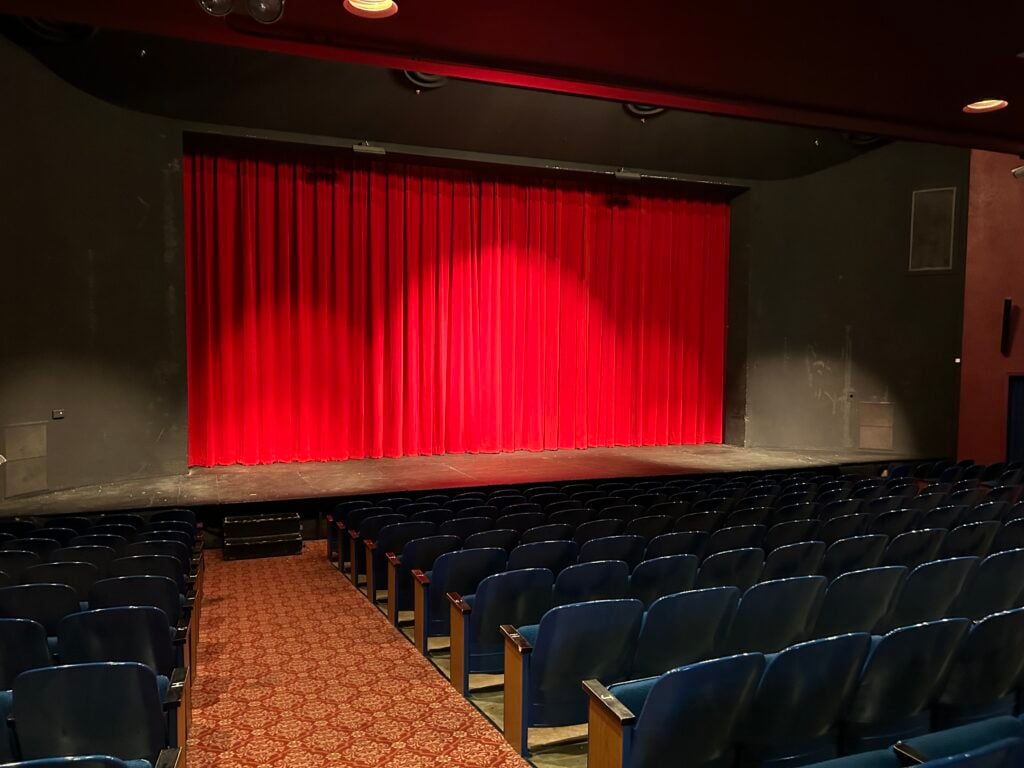
In the late 1970s, the City of Jonesboro purchased the building and funded a substantial renovation, converting the former movie house into a modern performance venue. The renamed Forum Theatre began its second life as a civic cultural facility. Since 1986, the Foundation of Arts — the premier arts organization in northeast Arkansas — has operated the space, filling it with theater productions, musical performances, and arts education programs.
The building has now accumulated nearly a century of continuous use as a performance space. Its catwalk, attic, projection booth, balcony, and boiler room — the infrastructure of a purpose-built entertainment venue — have been worked over by generations of stagehands, cast members, and technical crews. The ghost named Charlie has been a documented presence in the theater's lore since at least the period following the Strand's conversion to the Forum.
Sources
- https://foajonesboro.org/about/facilities/the-forum/
- https://cinematreasures.org/theaters/8741
ApparitionsPhantom soundsPoltergeist activityObject movement
Charlie does not confine himself to one location. His appearances have been documented in the attic, on the catwalk above the stage, in the boiler room, in the balcony, and in the projection booth — essentially the full vertical range of the building's backstage infrastructure.
His clothing changes between sightings. This is an unusual detail in apparition lore, where residual figures typically appear in fixed costume. One account describes him in a red shirt and casual pants. Another sighting offers different clothing. The inconsistency has been noted in accounts of the theater's history without resolution.
The eye contact account stands as the most specific. A visitor making his way toward the projection booth rounded a corner in the balcony and found himself within two feet of Charlie — face to face. He initially assumed the figure was a friend. Charlie vanished before he could speak. Another witness reported seeing Charlie seated on a heating duct in the attic while checking a faulty heating unit.
The grand piano incident predates any specific Charlie account and may represent a separate category of phenomenon. Workers delivering a new grand piano to the theater stepped away for a break, leaving the instrument sealed in its packing crate. When they returned, the piano was playing a recognizable tune. The instrument was not a self-playing model.
A name-erasure incident adds a different texture to the history: at some point, posters bearing Charlie's name were painted over. The event was interpreted by theater staff as a harmless prank. This suggests that whoever did it was aware of the name — that Charlie was already a known presence before the vandalism, not after it.