Est. 1925 · Historic Theatre · Community Performing Arts · Arkansas Cultural Heritage
The Capitol Theatre opened on October 25, 1925, at 120 West Emerson Street. Bertig Realty Company built it; John A. Collins served as its initial manager, giving the building a family association that would outlast the Capitol name by forty years. Opening-week programming included a silent film and live music on a Wisconsin Organ Company unit organ, played at the debut by an organist identified in local accounts only as Ms. Causey. Admission was 25 cents for evening shows, 15 cents for matinees.
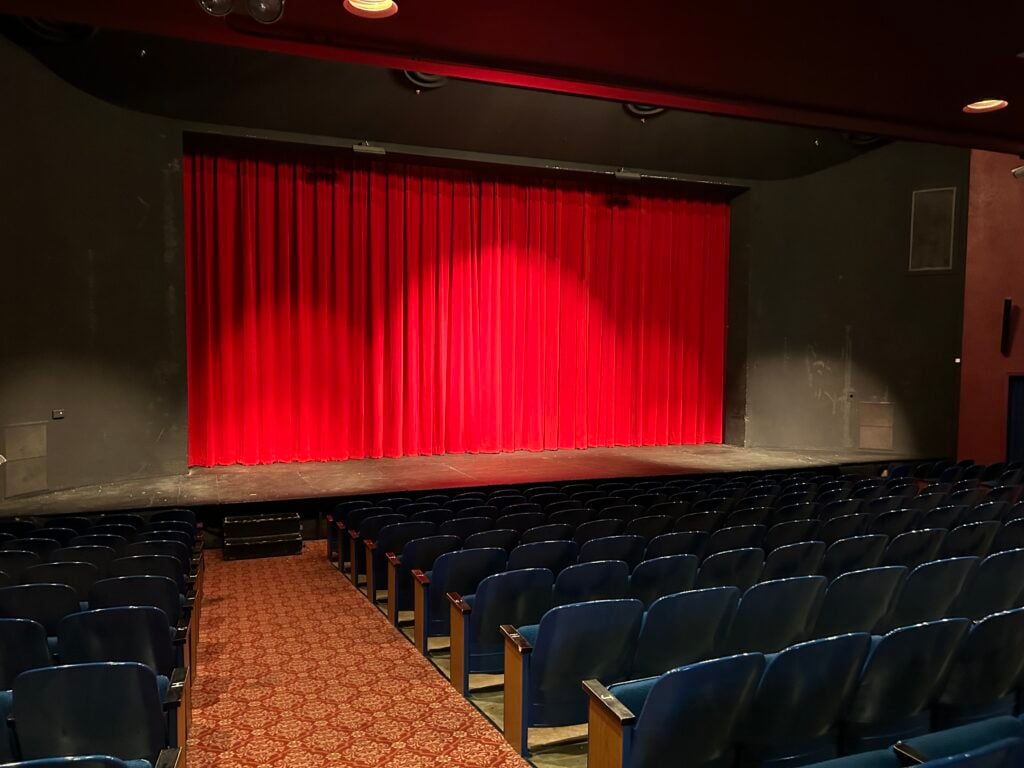
The Capitol hosted vaudeville alongside film through the studio-system years. Will Rogers is documented to have performed on its stage. For much of the twentieth century, it remained the last theatre in Arkansas to maintain full stage facilities — an accident of preservation that later enabled its second act as a live-performance venue.
In 1986, the Collins family deeded the property to the Greene County Fine Arts Council, which renamed it in memory of Frances and Orris Collins and organized the Collins Theatre Foundation in 1990 to manage restoration and ongoing operations. Renovation work began in earnest in 1991. The theater now hosts music, theater, and fine-arts programming on an active calendar, including the KASU Bluegrass Monday series and the annual Big Grass Bluegrass Festival.
Sources
- https://www.collinstheatre.com/history
- https://onlyinark.com/featured/the-collins-theatre/
ApparitionsResidual haunting
The accounts from Collins Theatre involve not a single ghost but two: an elderly couple, seated together in the balcony during rehearsals, watching the stage with the concentration of people who have spent time there before.
Cast members working through rehearsals have looked up, noticed the couple, and eventually — either through direct approach or simply by looking away and back — found them gone. The figures don't interact. They watch. Multiple cast members have reported the same experience independently.
The interpretation that runs through the accounts frames them as the Collins family themselves, or previous owners, returning to check on what became of their theater. This is a coherent reading: people who devoted years to a place, returning to observe what happened after they left.
A skeptical counter-reading exists in local documentation: a source described as the daughter of a former owner states flatly that the theater is not haunted and that the story is, in her characterization, an old wives' tale. This is an unusual element in paranormal folklore — a named skeptic with familial authority over the narrative. Whether her denial reflects firsthand knowledge or protective family preference is not determinable.
No paranormal investigations with published records were located for the Collins Theatre.