Est. 1856 · National Register of Historic Places (1975, ref. 75001645) · Built on Lancaster's pre-1834 Gallows Hill execution site · Gothic Revival architecture by Dixon, Balburnie, & Dixon · Civil War military hospital site
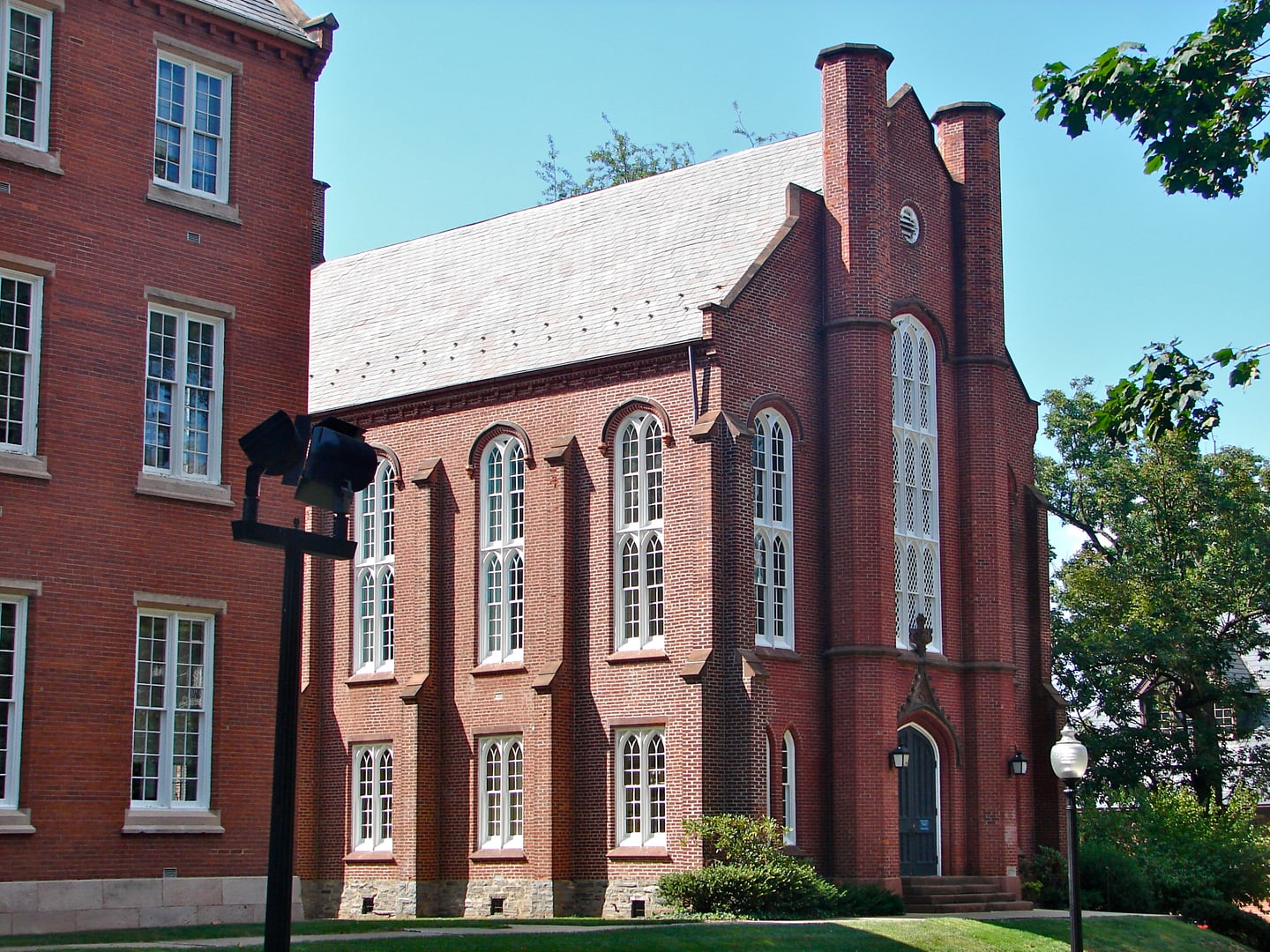
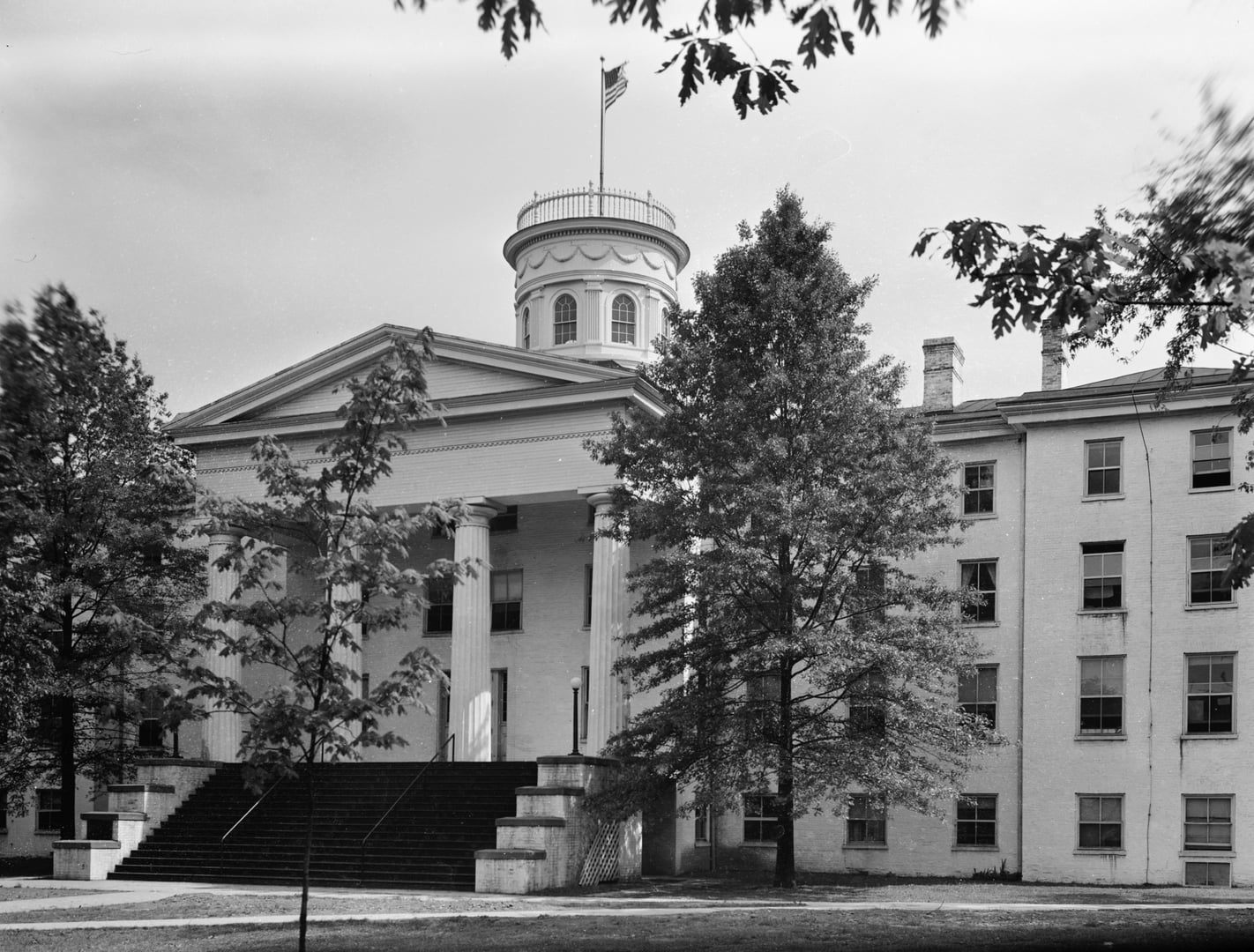
Franklin & Marshall College was created in 1853 by the merger of Franklin College (founded 1787) and Marshall College, and Old Main was built between 1854 and 1856 to anchor the new campus on the rise west of Lancaster's then-city limits. The three-story T-shaped Gothic Revival building, designed by Dixon, Balburnie, & Dixon, features three-story lateral wings, a four-story square entrance tower, and five-story octagonal turrets. Nevin Chapel and a working bell occupy the central tower.
The site itself is the most loaded chapter of the building's history. According to the LancasterOnline 'Scribbler' column drawing on Negley K. Teeters's 1960 article in the Journal of the Lancaster County Historical Society, Lancaster County's public-execution ground—known locally as Gallows Hill—stood on the high ground now occupied by Old Main and surrounding F&M buildings. The county used Gallows Hill for public hangings until 1834. The most-documented event was the October 1822 execution of John Lechler, which drew a crowd reported at between 20,000 and 30,000 onlookers despite the county's total population of about 70,000 at the time. After alcohol-fueled violence during these mass gatherings—including a murder committed in the crowd during Lechler's execution—the county discontinued public executions in 1834 and dismantled the gallows, roughly two decades before Old Main was built on the same height.
During the American Civil War, Old Main and its companion halls served as a Union military hospital, particularly after the Battle of Gettysburg in July 1863, when wounded soldiers were transported to Lancaster for treatment. The buildings later resumed full academic use.
Old Main remains a working academic building on the active F&M campus and houses college administrative offices and Nevin Chapel. The college maintains an institutional Fast Facts page on its ghost folklore through the F&M Library Archives, which catalogs the bell-tower and chapel stories as part of college history rather than active investigation.
Sources
- https://en.wikipedia.org/wiki/Old_Main,_Goethean_Hall,_and_Diagnothian_Hall
- https://lancasteronline.com/opinion/columnists/many-were-hanged-on-gallows-hill-where-f-ms-old-main-now-stands-the-scribbler/article_eb7e2154-ac67-11ec-a572-5f53a318ace2.html
- https://library.fandm.edu/archives/fastfacts/ghoststories
Bell tower ringing without human involvementOrgan music heard from empty Nevin ChapelUnexplained sounds at night near the tower
The F&M Library Archives' Fast Facts page is the most institutional record of Old Main's ghost folklore. The page cites the F&M Gazette of October 1990 reporting that 'the bell of Old Main has been known to ring randomly a number of times in the middle of the night, with no human involvement.' The page notes that the bell is now restricted to special-occasion ringing.
The second recurring story centers on Nevin Chapel inside Old Main. According to campus folklore catalogued by the archive, mysterious organ or chant-like music has been reported drifting from the empty chapel after hours, sometimes prompting investigation by campus security and finding nothing inside.
Uncharted Lancaster's 2021 'Haunting of F&M's Old Main' piece links these stories explicitly to the Gallows Hill backstory, suggesting the building's reputation draws as much on the pre-1834 execution ground beneath it as on any single in-building incident. The Wikipedia 'Reportedly haunted locations in Pennsylvania' list catalogs Old Main and its companion halls collectively.
No independent paranormal investigation has been formally published on Old Main. The lore is best characterized as institutional campus folklore documented by the college's own archive, framed by a heavy, well-attested historical execution-site context.
Notable Entities
Anonymous Gallows Hill executed (per local folklore framing)