Est. 1849 · Rural Cemetery Movement · Presidential Burial Site · Frank Lloyd Wright Architecture · Seneca Nation History
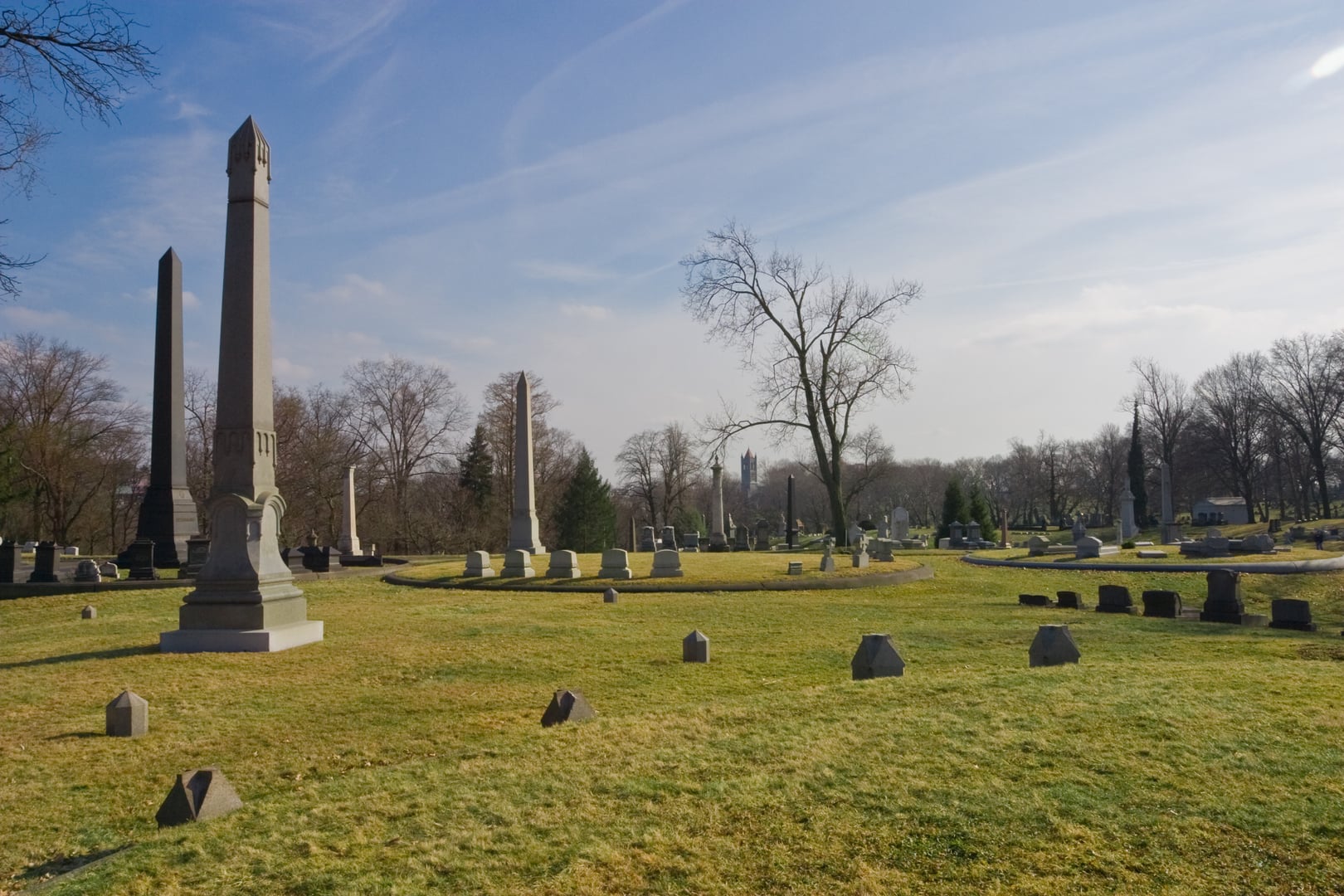
Forest Lawn Cemetery was founded in 1849 by Charles E. Clarke as part of the nineteenth-century rural cemetery movement, which sought to relocate burial grounds from crowded urban churchyards to landscaped settings on the edges of growing cities. The 269-acre site was dedicated on August 18, 1850, with the first burial recorded on July 14 of that year.
The land had been part of Seneca Nation territory before being acquired by William Johnston around 1797 and transferred to Erastus Granger, the federal agent to the Six Nations, in 1806. Forest Lawn's interpretive material now acknowledges this prior history and reburied Seneca leader Red Jacket on the grounds in 1884; his monument remains one of the cemetery's prominent features.
Notable burials include Millard Fillmore, the 13th President of the United States; Dr. Frederick Cook, the early polar explorer; Congresswoman Shirley Chisholm; rapper and musician Rick James; and George Norman Pierce, founder of the Pierce-Arrow Motor Car Company. The cemetery also holds 47 mayors of Buffalo, veterans of eight wars, seven Medal of Honor recipients, and John D. Larkin of the Larkin Soap Company.
Forest Lawn includes architectural features by major designers, most notably the Blue Sky Mausoleum, conceived by Frank Lloyd Wright for the Martin family and built decades after his death. The cemetery's landscape design reflects the era of Frederick Law Olmsted's work in Buffalo and remains an active part of the city's parks-and-cemeteries network.
Sources
- https://en.wikipedia.org/wiki/Forest_Lawn_Cemetery_(Buffalo,_New_York)
- https://forest-lawn.com/famous-residents/
- https://www.olmstedinbuffalo.com/forest-lawn-cemetery/
ApparitionsResidual haunting
Unlike many sites in the dark-tourism canon, Forest Lawn carries minimal paranormal reputation. The cemetery's curatorial and tour programs focus on Buffalo's nineteenth- and twentieth-century history: industrial families, presidential legacy, Seneca leaders, and the rural cemetery movement.
Visitors occasionally report a sense of presence near older monuments or the Red Jacket statue, and casual local accounts describe quiet figures glimpsed at dusk. None of these have been documented by named investigators or published in peer-reviewed paranormal literature. The cemetery's value to thoughtful dark-tourism travelers lies primarily in its dense archive of Buffalo history and the contemplative atmosphere of its Olmsted-era design.