Est. 1907 · National Register of Historic Places · Zane Grey Residence (1920-1939) · First Reinforced-Concrete Home in Altadena · Eaton Fire Heritage Loss
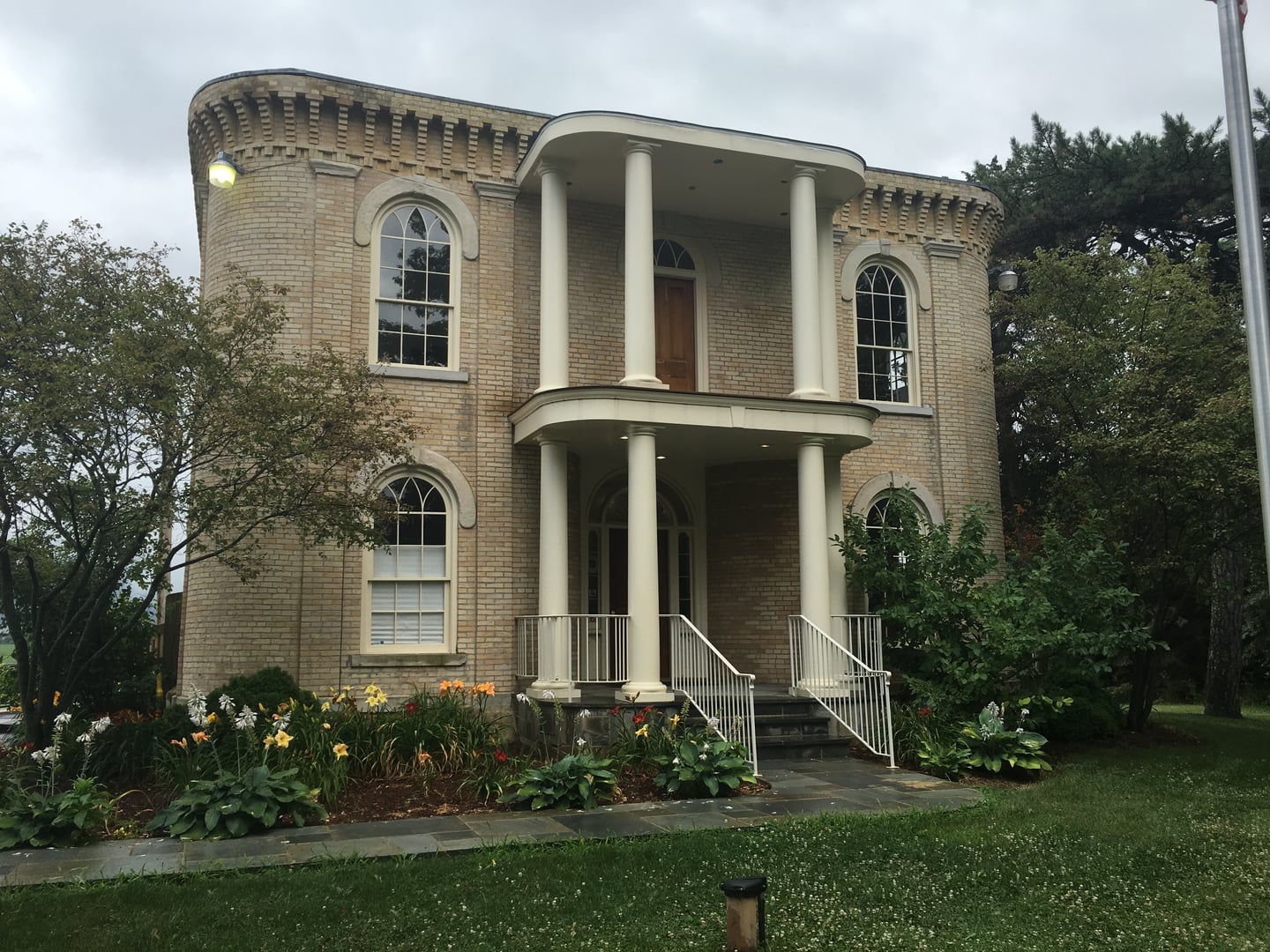
The Zane Grey Estate was constructed in 1907 in Mediterranean Revival style for Arthur Herbert Woodward and Edith Norton Woodward. At Edith Woodward's insistence, the home was built entirely of reinforced concrete, becoming Altadena's first known fireproof residence. The construction was widely covered in early-twentieth-century building literature for its concrete-shell technique.
In 1920, Zane Grey, the prolific author of Riders of the Purple Sage and other defining works of the American Western, purchased the home with his wife Dolly after a honeymoon visit to Altadena. Grey lived and wrote at the estate until his death from heart failure in 1939. The home stayed in the Grey family for several decades and later passed through additional private owners.
The estate was added to the National Register of Historic Places. A Pasadena historical marker on Mariposa Street commemorates Grey's residency.
In January 2025, the Eaton Fire devastated wide portions of Altadena. The Zane Grey Estate's reinforced-concrete walls largely survived the fire, but the roof and interior were destroyed. NPR, KTLA, and Spectrum News 1 documented the structural loss in early-2025 coverage. As of 2026 the property remains in private hands while owners consider preservation and rebuilding options. The site is not open to the public.
Sources
- https://en.wikipedia.org/wiki/Zane_Grey_Estate
- https://www.npr.org/2025/03/31/nx-s1-5336326/la-fires-historic-landmarks-preservation-gamble-house-zane-grey-estate
- https://spectrumnews1.com/ca/southern-california/socal-scene/2025/06/25/inside-what-happened-to-altadena-s-iconic-zane-grey-estate
- https://www.hmdb.org/m.asp?m=144782
Cold spotsPhantom footstepsEquipment malfunction
The folklore attached to the Zane Grey Estate is thin and largely confined to anonymous online accounts. Owner-reported phenomena described in the original Shadowlands listing include cold spots near the fireplaces, library, kitchen and pantry, a kitchen clock that ceased working when specific residents entered, and the sound of footsteps moving across the butler's pantry to the formal dining room.
These reports have not been documented in regional paranormal-investigation literature, news coverage, or academic folklore. The estate's published profile in 2025 was overwhelmingly dominated by news of the Eaton Fire and the question of how to rebuild a heritage residence on a site at increasing climate risk.
The property's primary cultural significance remains its association with Zane Grey, who completed substantial portions of his Western fiction during his nineteen years in residence. The home's haunted reputation should be understood as a minor regional folk-tradition rather than a documented investigation site. Following the Eaton Fire, the building is currently inaccessible and the lore is no longer attached to a complete structure.