Est. 1857 · National Historic Landmark · Natchez On-Top-of-the-Hill Historic District · Antebellum Commercial Architecture
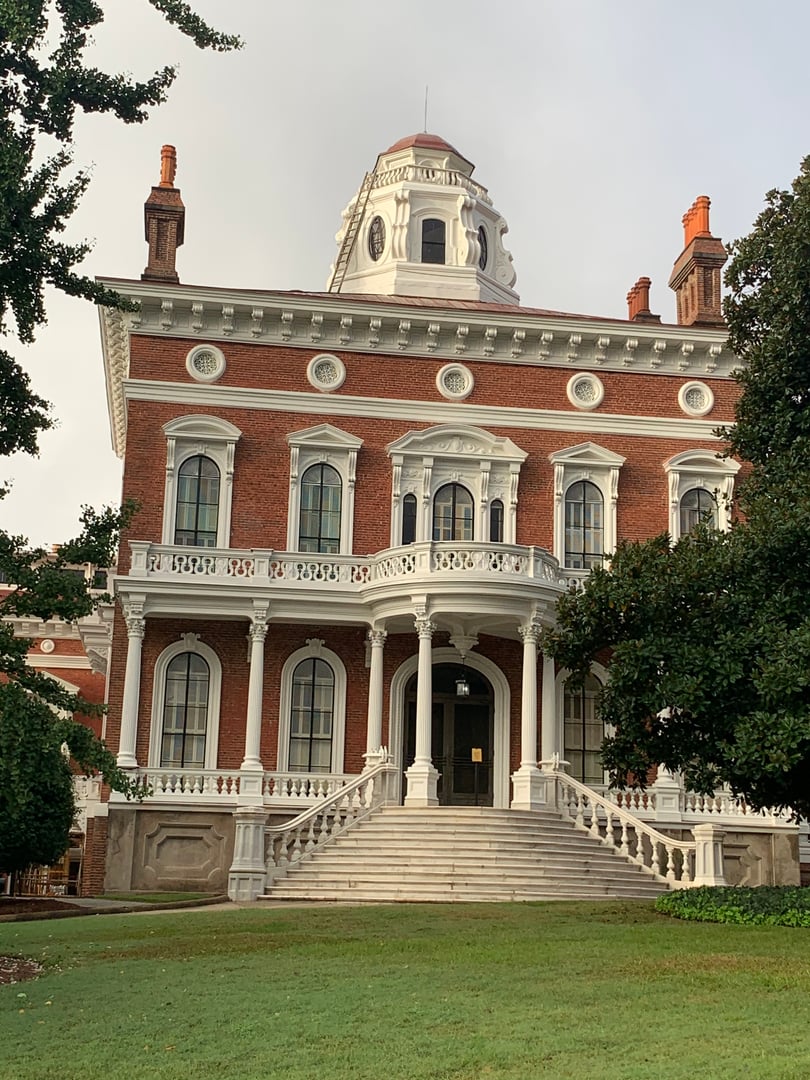
Frederick Stanton emigrated from Belfast, Ireland, and built his fortune in the Natchez cotton trade. Construction on his town residence began in 1851 and continued through 1857 at a reported cost exceeding $83,000 before furnishing. The Greek Revival mansion occupies an entire Natchez city block bounded by High, Pearl, Monroe, and Commerce streets and was originally named Belfast in honor of Stanton's birthplace.
The house was designed by Natchez architect Thomas Rose. Interior finishes included Italian Carrara marble mantels in the principal rooms, imported Parisian wall coverings and textiles, gas chandeliers cast in bronze, and full-length pier mirrors that produce the infinite-reflection effect still present in the double parlors today. The mansion's scale and decorative program reflected wealth generated by the Mississippi cotton economy and the labor of enslaved people held on Stanton's plantation holdings in Louisiana.
Stanton occupied the house only briefly. He died in 1859, fewer than two years after completion. The property remained in the Stanton family until 1894 and passed through several owners before its 1938 acquisition by the Pilgrimage Garden Club, a civic organization established in 1932 to preserve and interpret Natchez's antebellum architecture. The club opened the mansion to public tours that same year. Stanton Hall was designated a National Historic Landmark in 1974.
The Pilgrimage Garden Club continues to operate Stanton Hall through its tour arm, Natchez Pilgrimage Tours, alongside the adjoining Longwood and Monmouth properties. The Carriage House Restaurant, located on the original grounds, serves lunch to mansion visitors.
Sources
- https://en.wikipedia.org/wiki/Stanton_Hall
- https://sah-archipedia.org/buildings/MS-02-ND42
- https://visitnatchez.org/listing/stanton-hall/
- https://www.pilgrimagenatchez.com/
Phantom footstepsDoors opening/closing
Stanton Hall appears on regional haunted-location lists more for its antebellum atmosphere and the brevity of Frederick Stanton's occupancy than for any well-documented investigation. Local oral tradition includes occasional reports from house staff and pilgrimage volunteers of footsteps in the second-floor hallway during closing hours, doors found ajar when they had been latched, and a sense of being watched in the rear parlor near the family-portrait gallery.
The most frequently repeated story attributes these reports to Stanton himself, who died in 1859 only a few months after moving into the completed mansion. No first-person investigation reports appear in the published record, and the Pilgrimage Garden Club does not promote the property as a paranormal site. Visitors interested in Natchez's documented haunted-house traditions are typically directed to King's Tavern, Magnolia Hall, and the Burn rather than to Stanton Hall.
Readers should treat the Stanton Hall paranormal narrative as light folklore rather than archival history. The substantive interest of the property lies in its architecture and its place in the Natchez cotton economy.
Notable Entities
Frederick Stanton