Documented Since 1833 · USGS Investigations (1913 and 1920s) · North Carolina Historical Marker
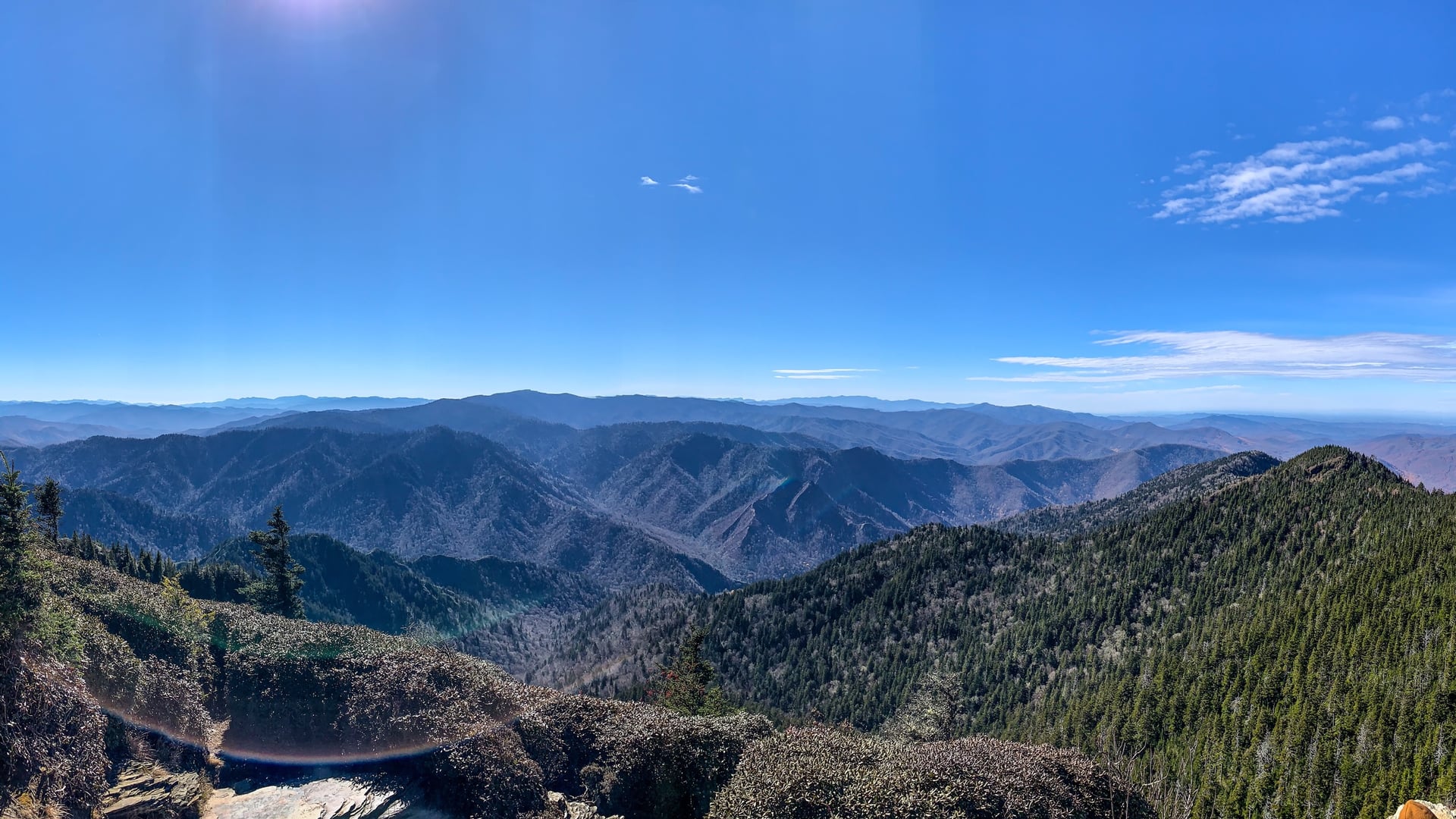
Brown Mountain is a low ridge along the Burke-Caldwell county line in the foothills of the Blue Ridge in western North Carolina, approximately twelve miles northwest of Morganton. The mountain itself supports no homes or roads, sitting inside the Pisgah National Forest on the western edge of the South Mountains. Visible from a small number of public overlooks, including the Brown Mountain Overlook on North Carolina Highway 181 and Wisemans View in the Linville Gorge Wilderness, the mountain is the subject of an unusual recurring optical phenomenon: bright pinpoint or globe-like lights that appear, drift, brighten, and fade against the ridge.
The earliest documented written sighting traces to 1833. Cherokee and Catawba oral traditions describe the lights in earlier centuries; these traditions are preserved by the descendant tribal communities and we treat the specific tribal interpretations as their own to narrate.
The U.S. Geological Survey sent investigator D. B. Sterrett to Brown Mountain in October 1913 at the urgent request of North Carolina Representative E. Y. Webb. A second USGS report followed in the 1920s. Subsequent studies have attributed some sightings to refracted train and automobile headlights, swamp gas, and unusual atmospheric conditions, though no single explanation accounts for all reported observations. The phenomenon has been featured in PBS documentaries, the New York Times, the X-Files, and a long succession of regional press features.
The Blue Ridge Parkway crosses the broader Brown Mountain region, and several Parkway overlooks offer access to the surrounding ridgelines. The North Carolina Department of Transportation maintains a historical-marker plaque at the Brown Mountain Overlook on Highway 181.
Sources
- https://pubs.usgs.gov/circ/1971/0646/report.pdf
- https://www.ncpedia.org/brown-mountain-lights
- https://www.discoverburkecounty.com/all-attractions/brown-mountain-lights/
- https://www.hmdb.org/m.asp?m=268038
ApparitionsOrbs
The Brown Mountain Lights are one of the longest-running recorded unexplained-light phenomena in the United States. Settler accounts from the 1830s describe the lights as a glowing ball of fire or a slow-burning skyrocket against the ridge; later observers added pale white pinpoints, pinwheel motion, and rapid darting movements before fading. Civil War accounts from the Burke County area mention them. Cherokee and Catawba oral traditions describe the lights in earlier centuries, and the descendant tribal communities are the appropriate source for specific cultural interpretations of those traditions.
The folklore that fills the modern vacuum of explanation runs through romantic narratives of women searching for their husbands with torches and parents searching for lost children, common Appalachian retellings collected by twentieth-century folklorists. None of these narratives is meant to be read as documented history; they are folkloric overlays attached to a phenomenon whose physical cause is genuinely unresolved.
Visitors come from across the southeast to attempt to see the lights from the Brown Mountain Overlook on Highway 181, from the Wisemans View parking area in the Linville Gorge Wilderness, and from several pull-offs along the Blue Ridge Parkway in the surrounding mountains. The best viewing conditions are clear moonless nights from late summer through autumn; bring warm layers and patience. Multiple sustained vigils have produced clean sightings; many have produced nothing.
Notable Entities
The Brown Mountain Lights
Media Appearances
- The X-Files (Season 1, Episode 17, Big Blue)
- PBS North Carolina documentaries
- USGS reports (1913, 1922, 1971)
- The X-Files: Field Trip (S6E21, set at Brown Mountain, NC) (1999)
- Alien Abduction (IFC Midnight film based on the Brown Mountain Lights) (2014)