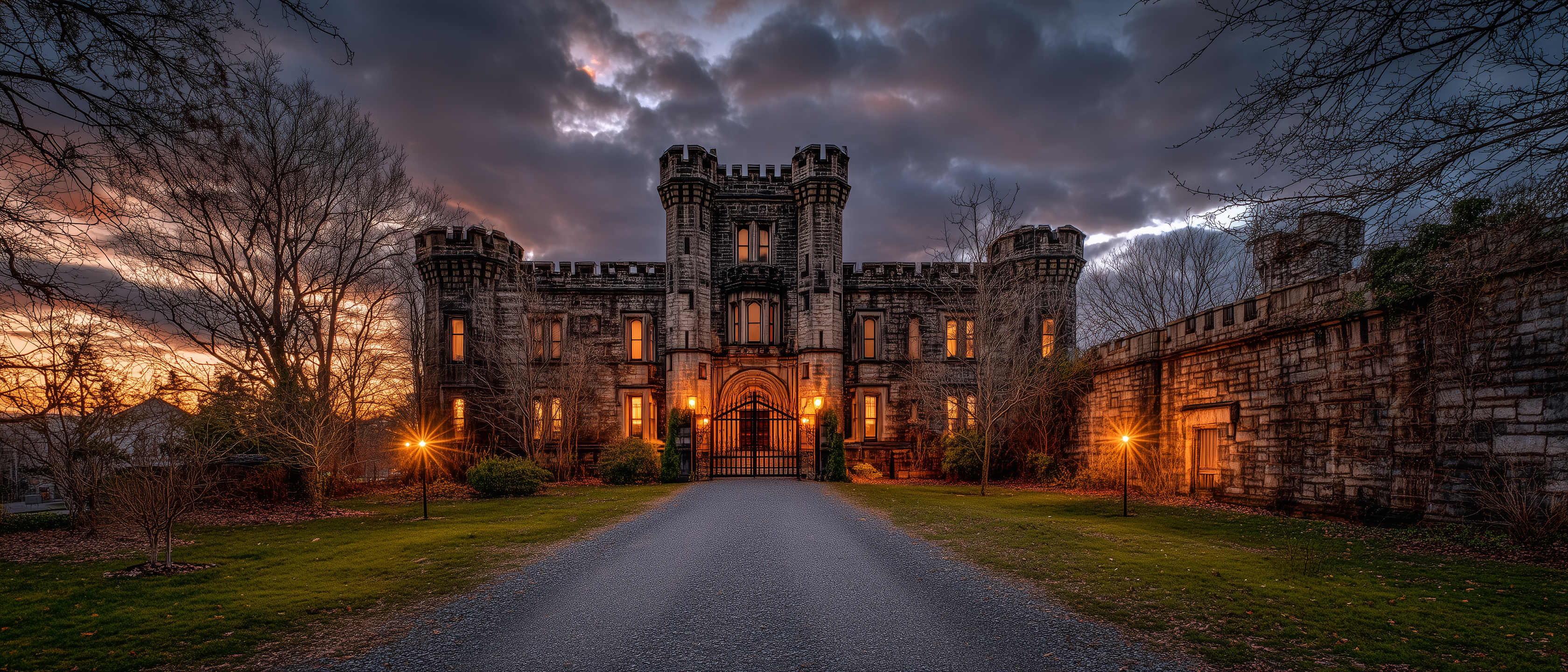
Brighton Women's Correctional Institute operated as a specialized women's detention facility in Livingston County, Michigan, serving the state's female inmate population during a significant period of American criminal justice history.
The facility was operational during the era when Michigan practiced capital punishment, though Michigan abolished capital punishment in 1846, making it among the first U.S. jurisdictions to do so. The facility housed women convicted of serious crimes and served as both a reformatory and long-term detention center.
Conditions within nineteenth and early twentieth century prisons were generally austere and dangerous, with high mortality rates from disease, inadequate medical care, and violence. Women's facilities faced particular challenges including overcrowding and inadequate facilities designed for the female population.
The facility eventually ceased operations as state and federal correctional systems evolved toward more centralized, modern facilities. Its current status and usage remain unclear from available public sources.
Sources
- https://en.wikipedia.org/wiki/List_of_Michigan_state_prisons
- https://hauntpedia.com/haunted-places/state/michigan/
- https://www.paranormaldatabase.com/hotspots/brighton.php
ApparitionsShadow figures
The Brighton Women's Correctional Institute carries a strong paranormal reputation rooted in its historical association with inmate deaths and capital punishment. The darkest narratives concern executed prisoners whose spirits reportedly remain bound to the institution and surrounding roads.
Ghost hitchhiker phenomena represent the primary paranormal activity reported in the vicinity. Motorists traveling roads leading to the facility report encountering spectral figures attempting to hitchhike. These apparitions are interpreted as the souls of executed or deceased inmates attempting to escape their institutional confinement.
The specific circumstances of these deaths—whether executions, murders, suicides, or deaths from disease and neglect—vary in reported accounts. The concentration of trauma, violence, and loss of life within institutional settings creates conditions historically associated with strong paranormal phenomena.
The reported appearances follow classic crisis apparition and residual haunting patterns, with spirits manifesting during times of emotional or psychological intensity. The location's association with state authority, punishment, and loss of freedom may contribute to folklore development and perceptual interpretation of ambiguous road phenomena.
Notable Entities
Executed inmatesEscaped prisoners