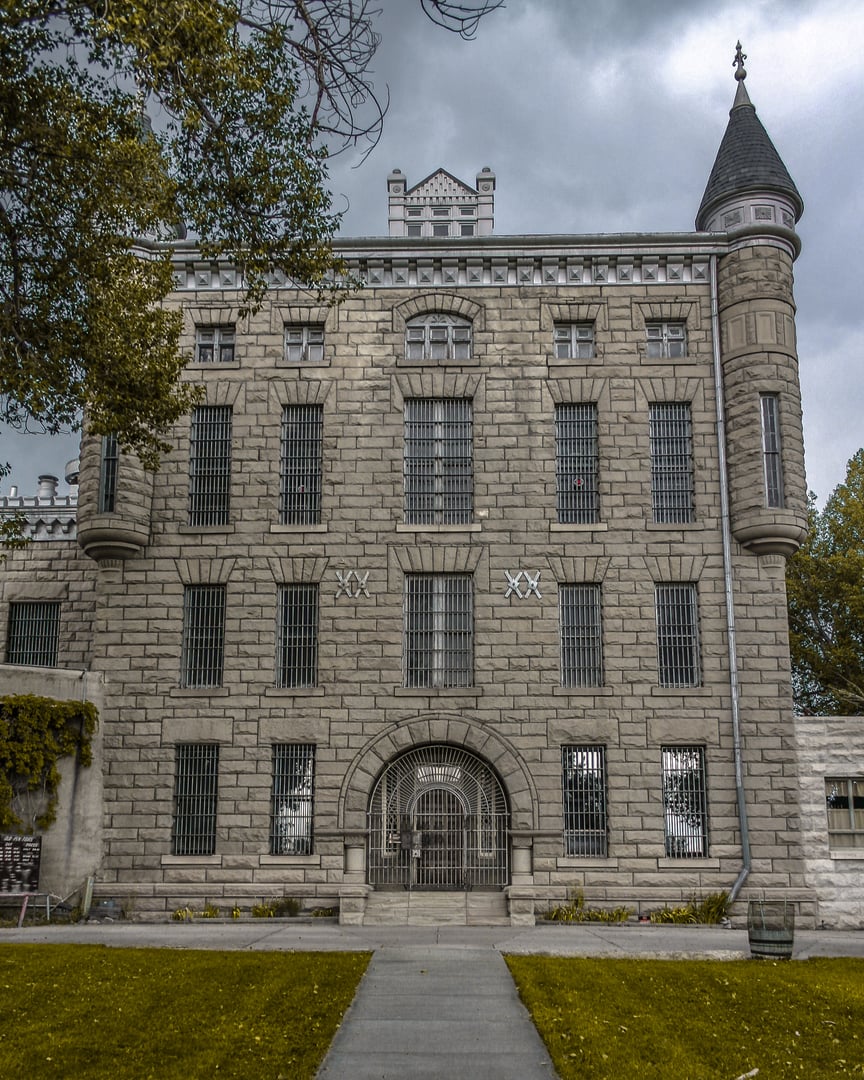
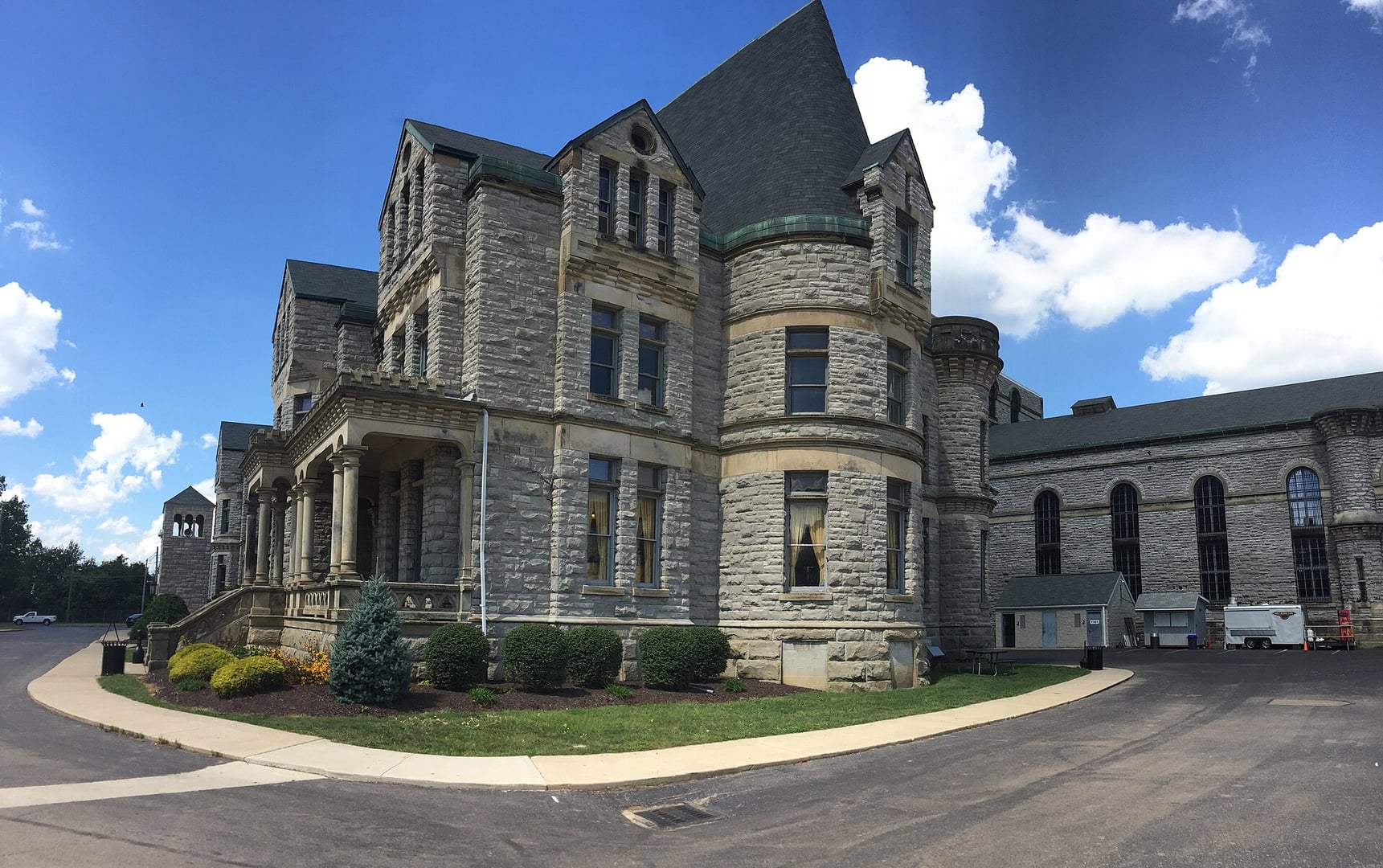
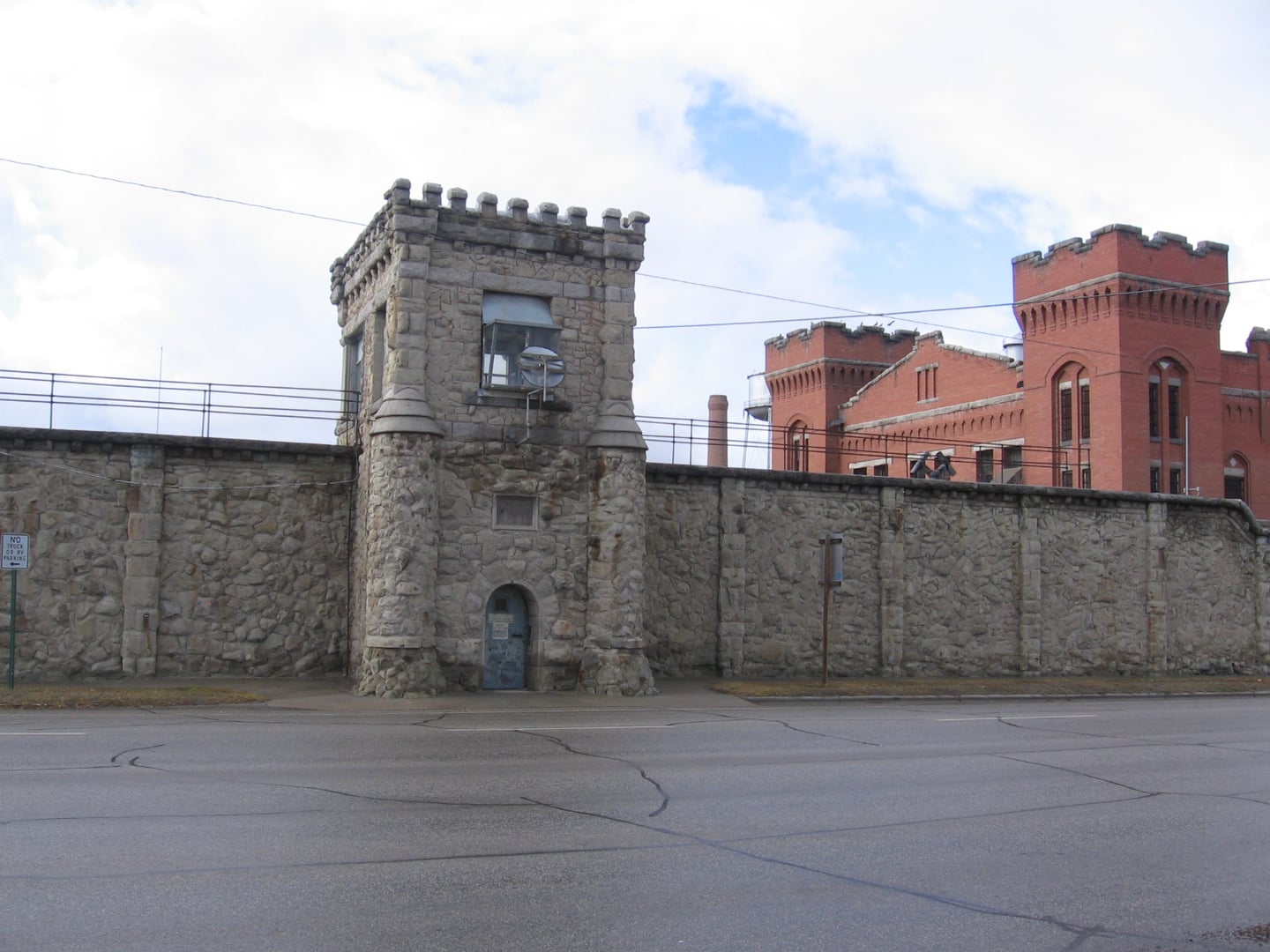
Est. 1871 · Montana Territorial Prison · National Register of Historic Places 1976 · 1959 Prison Riot · 108 Years of Continuous Operation
The Montana Territorial Legislature selected Deer Lodge as the site for the territory's first prison in November 1867. Cornerstone laying occurred June 2, 1870, and the prison received its first occupant — a single inmate — on July 2, 1871. The institution operated continuously for 108 years, transitioning from territorial to state prison when Montana achieved statehood in 1889.
From its earliest years, the facility was plagued by overcrowding and inadequate funding — conditions that persisted through virtually its entire operating history. The prison was immediately insufficient after its 1871 opening, and the following decades saw continual expansion driven by inmate labor. Warden Frank Conley's administration from 1890 to 1921 represents the exception: his use of inmate labor for construction projects produced many of the surviving buildings and significantly expanded the facility's capacity.
The 1959 riot stands as the defining violent event in the prison's history. On a day in 1959, two inmates named Jerry Myles and Lee Smart instigated an uprising that within hours placed the entire facility under inmate control. Three people were killed during the 36-hour standoff before state authorities regained control. The riot's planning and execution demonstrated a level of coordination that alarmed prison officials across the state and shaped Montana corrections policy for years afterward.
The prison was added to the National Register of Historic Places in 1976. A new Montana State Prison opened in 1979, and the old facility closed. The Powell County Museum and Arts Foundation, a local nonprofit, acquired and operates the complex as a museum. The organization has developed ghost tour programming in partnership with the Chilling Paranormal investigative team, running events from April through October.
Sources
- https://www.pcmaf.org/ghost-tours
- https://www.legendsofamerica.com/mt-prisonmuseum/
- https://en.wikipedia.org/wiki/Montana_State_Prison
- https://ghostadventures.fandom.com/wiki/Old_Montana_State_Prison_(episode)
- https://southwestmt.com/blog/a-night-in-montanas-haunted-prison/
- https://www.hauntedrooms.com/montana/ghost-hunts/old-montana-prison
- https://www.montanapress.net/post/ghost-hunts-u-s-a-old-montana-prison
ApparitionsShadow figuresEVPPhantom soundsPhantom footstepsCold spotsEMF anomalies
The Death Tower's place in the prison's investigation reputation comes from the 1959 riot's violent endpoint. Jerry Myles and Lee Smart, the riot's two ringleaders, retreated to the top of the northwest tower of Cell House 1 with rifles seized from catwalk guards. Thirty-six hours into the takeover, the Montana National Guard fired a bazooka into the tower; rescue teams entering the rubble found Myles and Smart dead at the top, an apparent murder-suicide. The tower has carried the 'Death Tower' name since.
The Cell House upper tiers, inaccessible during regular museum hours, provide a physical context that daylight visitors never encounter. The six-hour investigation schedule — beginning at 8 PM, running through 2 AM — means the bulk of investigation time occurs in complete darkness. The Chilling Paranormal team leads with structured vigils in documented active areas, with periods of independent exploration in between.
Ghost Adventures filmed an episode at the Old Montana State Prison, one of multiple productions the facility has hosted. The documented investigation record from television productions and independent teams converges on consistent locations: the solitary confinement areas, the cell block upper tiers, and the yard area where the 1959 riot's violence was most concentrated. (The prison's only two on-grounds executions — the hangings of George Rock in 1908 and William Hayes in 1909 — are also part of its institutional violence record; the original gallows is preserved in the museum.)
The prison's remote location in Deer Lodge adds an isolation quality that investigation accounts consistently mention. Unlike urban historical sites where ambient city sounds provide ambient noise, the Old Montana State Prison sits in a genuinely quiet environment. The sounds investigators document — footsteps, distant voices, metallic resonance in the cell structures — arrive against a background of near-silence.