Drive-By
Court Square exterior viewing
View the Greek Revival former courthouse on Court Street and read the City Hall historical marker describing the site's Stamp Act protests and Tory-execution history.
- Duration:
- 15 min
HauntBound archive · catalog record
Reported phenomena, as catalogued
The 1862-built former Frederick County Courthouse, where visitors report three ghostly chained figures said to be the spirits of three Tories executed on the green for treason in 1781.
101 North Court Street, Frederick, MD 21701
Research updated May 2026
Age
All Ages
Cost
Free
Active municipal government building. Grounds and exterior are free; interior access during business hours for those on government business.
Access
Wheelchair OK
Paved Court Square with sidewalk frontage; building has accessible government entrances during business hours.
Equipment
Photos OK
Est. 1862 · Site of the 1765 Repudiation Day Stamp Act protest, predating the Boston Tea Party · Three of seven convicted Tories were hanged on the courthouse green in 1781 · Original 1785 Georgian courthouse destroyed by fire in 1861 · Current Greek Revival building constructed 1862-1864 by Thomas Dixon · Became Frederick City Hall in 1985 after new county courthouse opened
Court Square has served as Frederick's civic center since the town's founding in the 1740s. A 1765 mock-funeral protest of the British Stamp Act took place on these grounds — Frederick County's judges issued a famous Repudiation Day order refusing to enforce the Stamp Act, and a Fredericktown crowd later buried a copy of the Act and an effigy of the royal tax collector on the courthouse green, predating the Boston Tea Party by several years.
In 1781, during the American Revolution, seven Tories were tried in a sensational treason case at the Frederick County Courthouse and sentenced to be hanged. Three were executed on the courthouse green; the other four were deported, escaping the gallows.
The 1785 Georgian courthouse that occupied the site burned in 1861 under circumstances that have been called mysterious by some local historians; the building was a complete loss. Reconstruction began the next year. The current Greek Revival structure was built between 1862 and 1864 to a design by Baltimore architect Thomas Dixon, with detail work by Frederick craftsmen, and served as the Frederick County Courthouse for the next 120 years.
In 1985, county judicial functions moved to a new courthouse complex nearby, and the building was converted to Frederick City Hall. It now houses the mayor's office, city council chambers, and city administrative functions. The City Hall historical marker on Court Square documents the Stamp Act protest and the Revolutionary-era trials, and the building is a regular stop on Frederick history and ghost tours.
Sources
According to Visit Frederick's haunted-Frederick coverage and the US Ghost Adventures Frederick Ghost Tour narration, the most consistently reported phenomenon at Frederick City Hall is the sighting of three ghostly men chained together moving across the Court Square grounds, as if walking to their sentencing. The figures are described in the lore as the spirits of three Tories convicted of treason in 1781 and executed on the green — though that historical execution count is corroborated by the Visit Frederick American Revolution feature and US Ghost Adventures' tour text.
Ghost-tour operators also weave in the mysterious 1861 courthouse fire — which destroyed the predecessor Georgian building immediately before the current structure was built — as part of the site's broader paranormal narrative, framing it as an unresolved historical event that contributes to the site's atmosphere.
Reports are concentrated in evening hours and are exclusively associated with the Court Square exterior; no interior haunting reports are documented in the public-facing sources we consulted. The lore is best described as a regular tour stop in Frederick's downtown ghost-walking circuit rather than a deeply documented investigation site.
Independent corroboration: US Ghost Adventures' Frederick Ghost Tour and Our Haunted Travels' Old Frederick Courthouse visit both describe the Tory execution-procession reenactment on Court Square as a documented tour stop. HauntedPlaces.org and Visit Frederick separately record the after-hours phenomena — footsteps in empty hallways, doors opening and closing on their own — attributed by local lore to long-dead judges or clerks. Four independent corroborating sources beyond the historical-marker base.
Notable Entities
View the Greek Revival former courthouse on Court Street and read the City Hall historical marker describing the site's Stamp Act protests and Tory-execution history.
Some links on this page may earn HauntBound a small commission when you book, at no extra cost to you. Our editorial picks are independent. Full disclosure
This Frederick tour includes Frederick City Hall on its route.
Every HauntBound history is researched from documented sources. We clearly separate verified historical fact from paranormal folklore.
Free Guide
9 verified stops, rated for families, mapped in order. Free.
One email to confirm, then the guide link. Unsubscribe anytime.
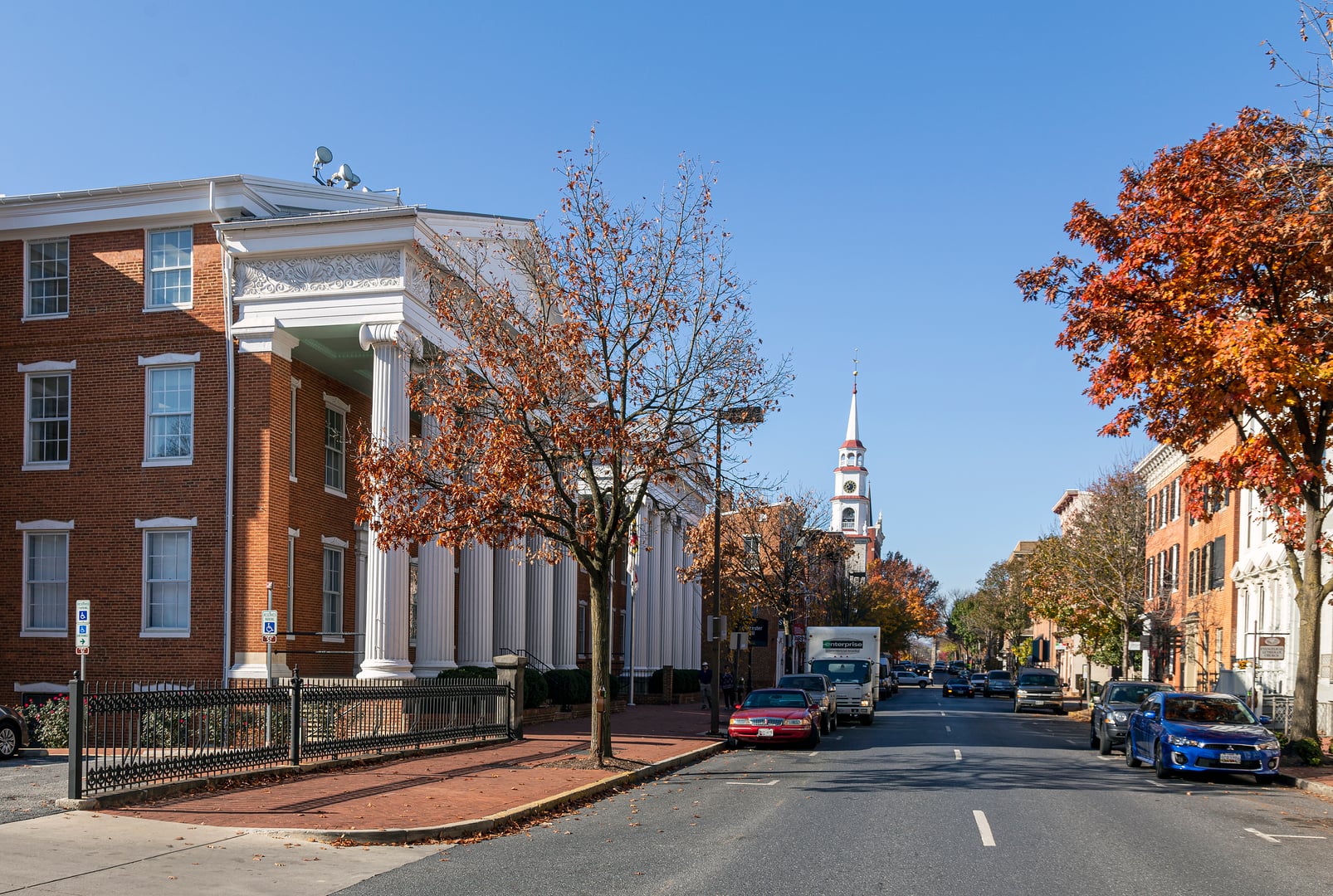
Frederick, MD
Winchester Hall was built starting in 1843 (cornerstone laid 1843; west wing completed 1850) to house the Frederick Female Seminary. After the September 1862 Battle of Antietam, the Union Army occupied the building as part of Frederick General Hospital No. 1. In 1887 workers digging behind the building unearthed sawn human arm and leg bones — remnants of wartime amputations. The building later housed the Women's College of Frederick (precursor to Hood College) before becoming Frederick County government offices.
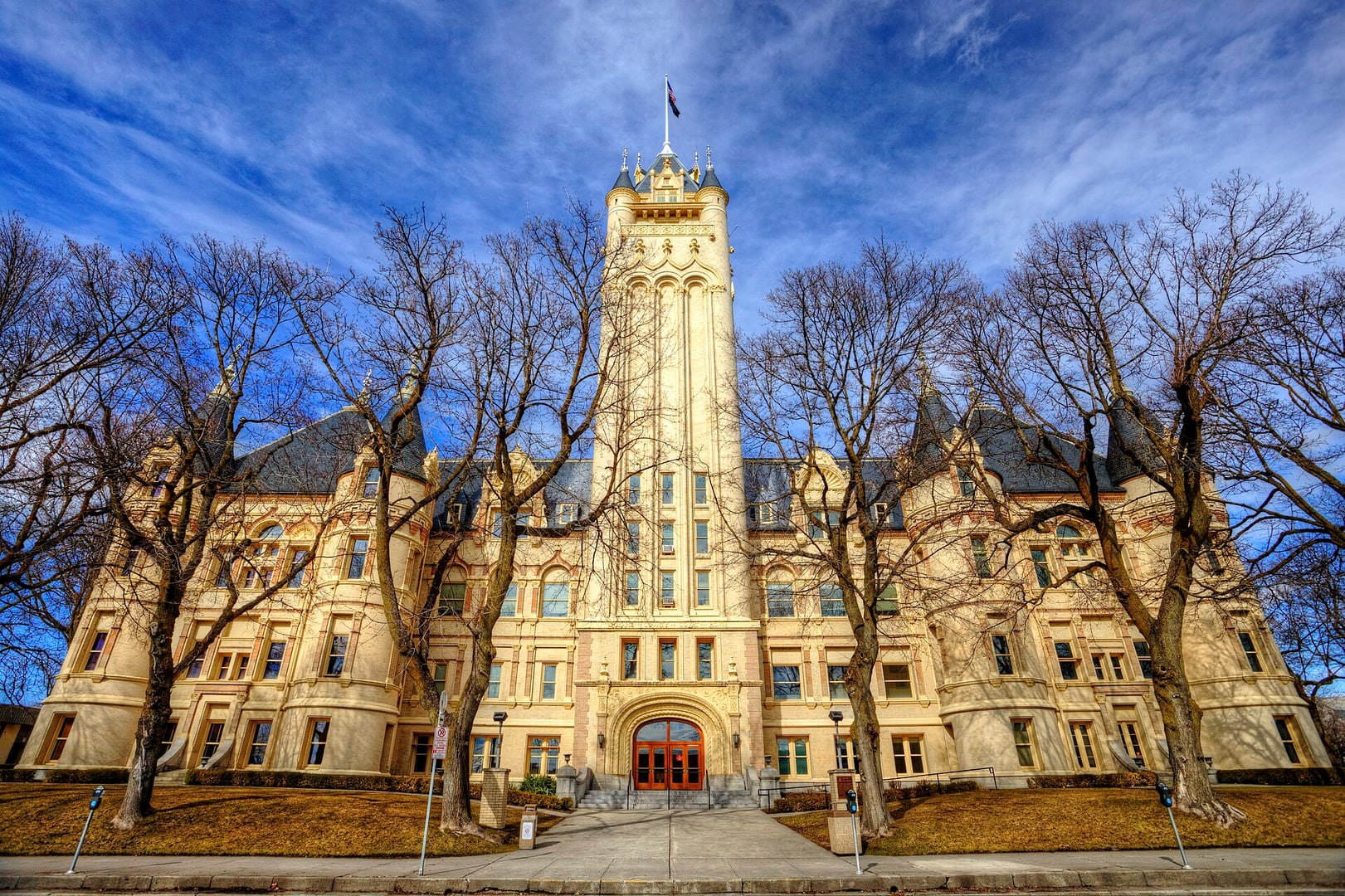
Spokane, WA
Designed by 29-year-old Willis A. Ritchie following an 1893 design competition; constructed 1894-95 by contractor David B. Fotheringham. Built in French Renaissance Châteauesque style, the building has been compared to the Château d'Azay-le-Rideau. Opened November 20, 1895; added to the National Register of Historic Places in 1974.
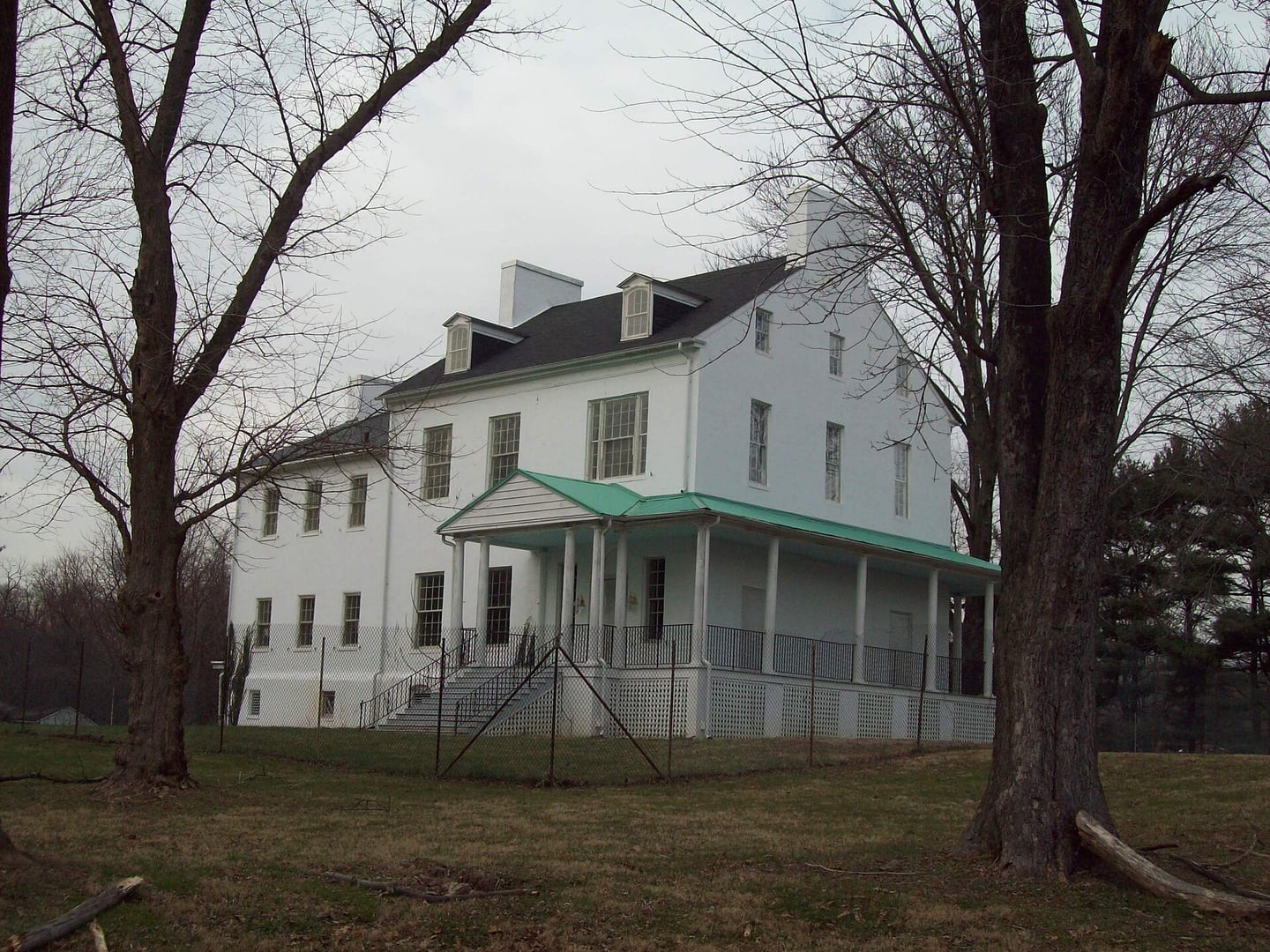
Perry Hall, MD
Construction of Perry Hall Mansion began in 1773 by Corbin Lee on a 1,000-acre Baltimore County estate. After Lee's death later that year, his widow sold the estate to Baltimore merchant Harry Dorsey Gough, who completed the 16-room five-part Georgian mansion. A 1839 fire destroyed roughly 60 percent of the structure, which was rebuilt in Greek Revival style. Baltimore County purchased the dwindled four-acre property in 2001 and is restoring the mansion as a museum and community center.