Drive-By
Exterior viewing on East Church Street
View the 1843 Greek Revival exterior from the public sidewalk. The site is regularly featured as a stop on guided Frederick ghost-walking tours.
- Duration:
- 15 min
HauntBound archive · catalog record
Reported phenomena, as catalogued
An 1843 Frederick building that housed the Frederick Female Seminary and a Union Army hospital after Antietam; 1887 construction unearthed sawn human bones from its Civil War surgical past.
12 E Church Street, Frederick, MD 21701
Research updated May 2026
Age
All Ages
Cost
Free
Active Frederick County government offices; exterior viewing is free. Building accessible during business hours for posted government services.
Access
Wheelchair OK
Urban sidewalk frontage on East Church Street; building has accessible government entrances during business hours.
Equipment
Photos OK
Est. 1843 · Built 1843-1850 to house the Frederick Female Seminary · Used as Union General Hospital No. 1 from September 17, 1862 to January 17, 1863 · 1887 construction unearthed sawn human bones from Civil War amputations · Later home of the Women's College of Frederick (precursor to Hood College) · Now houses Frederick County government offices
Winchester Hall was constructed beginning in 1843 to house the Frederick Female Seminary, a school for young women that operated under several names through the mid-nineteenth century. The cornerstone was laid in 1843 and the west wing was added by 1850, giving the building its current Greek Revival form on East Church Street near Court Square.
On September 17, 1862 — the day of the Battle of Antietam — the Union Army took over the seminary to house wounded soldiers from the South Mountain and Antietam battles, making it part of Frederick General Hospital No. 1. The Army held the building until January 17, 1863. Hundreds of amputations and other surgical procedures were performed in Frederick's hospital complex during this period; the wounded buried at Mount Olivet Cemetery and elsewhere give a sense of the scale of casualties Frederick's medical infrastructure had to handle.
In 1887, W. L. Duvall broke ground behind the building to construct an addition for the Frederick Female Seminary and unearthed a substantial quantity of human arm and leg bones. According to the National Museum of Civil War Medicine's documentation of the discovery, the ends of the bones bore the saw marks characteristic of Civil War-era surgical amputations, confirming they were medical waste from the building's wartime hospital use.
After the seminary closed, the building hosted the Women's College of Frederick, which later evolved into present-day Hood College. The structure then served various county and educational functions before being adapted as Frederick County government offices, which it remains today. Local ghost-walking tours include Winchester Hall as a regular stop because of the well-documented bone discovery and the building's medical-trauma past.
Sources
According to Visit Frederick's haunted-Frederick coverage and to ghost-walking tour operators that include Winchester Hall as a regular stop, visitors who tour the building's exterior in the evening commonly report a pervasive sense of death and suffering — an atmospheric heaviness rather than discrete apparitional sightings.
The lore is anchored by the documented 1887 discovery of sawn human arm and leg bones unearthed during construction behind the building, confirmed by W. L. Duvall's contemporary account and preserved in the National Museum of Civil War Medicine's research file on the discovery. Guides on Frederick ghost tours regularly tie the atmospheric reports to this physical evidence: the building literally surrendered the remains of its wartime surgery to the soil for decades after the Union Army left.
Because Winchester Hall is now an active county government office, contemporary reports come primarily from ghost-tour participants viewing the exterior and from staff anecdotes shared during October tour seasons rather than from sustained paranormal investigation. The lore is single-themed (residual hospital trauma) rather than identifying any named entity.
Independent corroboration: US Ghost Adventures' Frederick Ghost Tour describes Winchester Hall as a site that 'emanates death and suffering' from its Civil War hospital period and reports witness accounts of phantom nurses carrying buckets of amputated limbs. HauntedPlaces.org and Let's Roam's Frederick Ghost Hunt independently profile the building's Civil War surgical-trauma lore. Three independent paranormal-source aggregators corroborate the prior Civil War Medicine museum / Frederick News-Post historical base.
Notable Entities
View the 1843 Greek Revival exterior from the public sidewalk. The site is regularly featured as a stop on guided Frederick ghost-walking tours.
Some links on this page may earn HauntBound a small commission when you book, at no extra cost to you. Our editorial picks are independent. Full disclosure
This Frederick tour includes Winchester Hall on its route.
This Frederick tour includes Winchester Hall on its route.
Every HauntBound history is researched from documented sources. We clearly separate verified historical fact from paranormal folklore.
Free Guide
9 verified stops, rated for families, mapped in order. Free.
One email to confirm, then the guide link. Unsubscribe anytime.
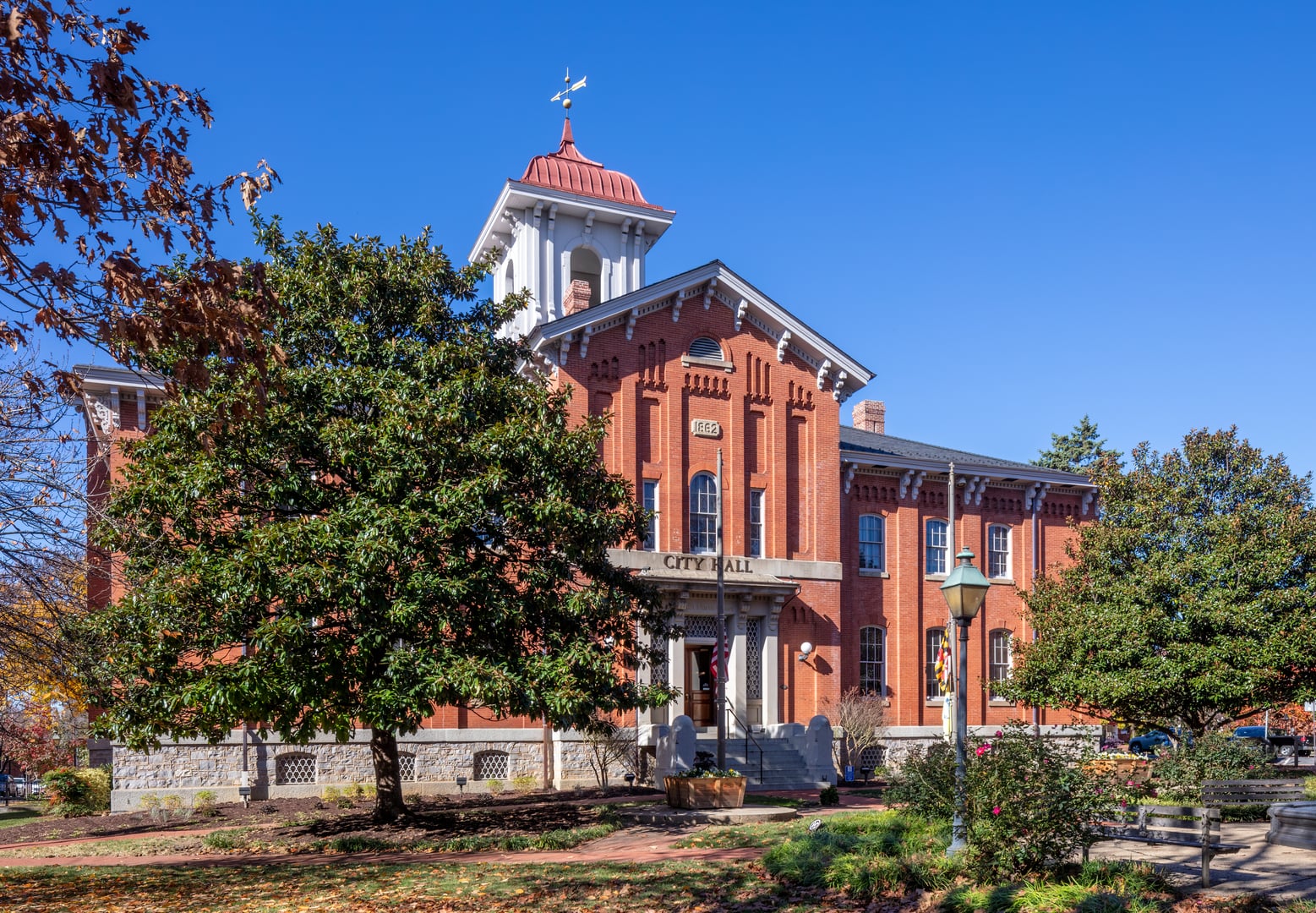
Frederick, MD
The current Greek Revival building at 101 North Court Street was constructed 1862-1864 by Thomas Dixon as the Frederick County Courthouse, replacing a 1785 Georgian courthouse destroyed by fire in 1861. The site has hosted Stamp Act protests in 1765, Revolutionary War Tory executions in 1781, and county judicial business through 1985, when a new county courthouse was built and the building became Frederick City Hall.
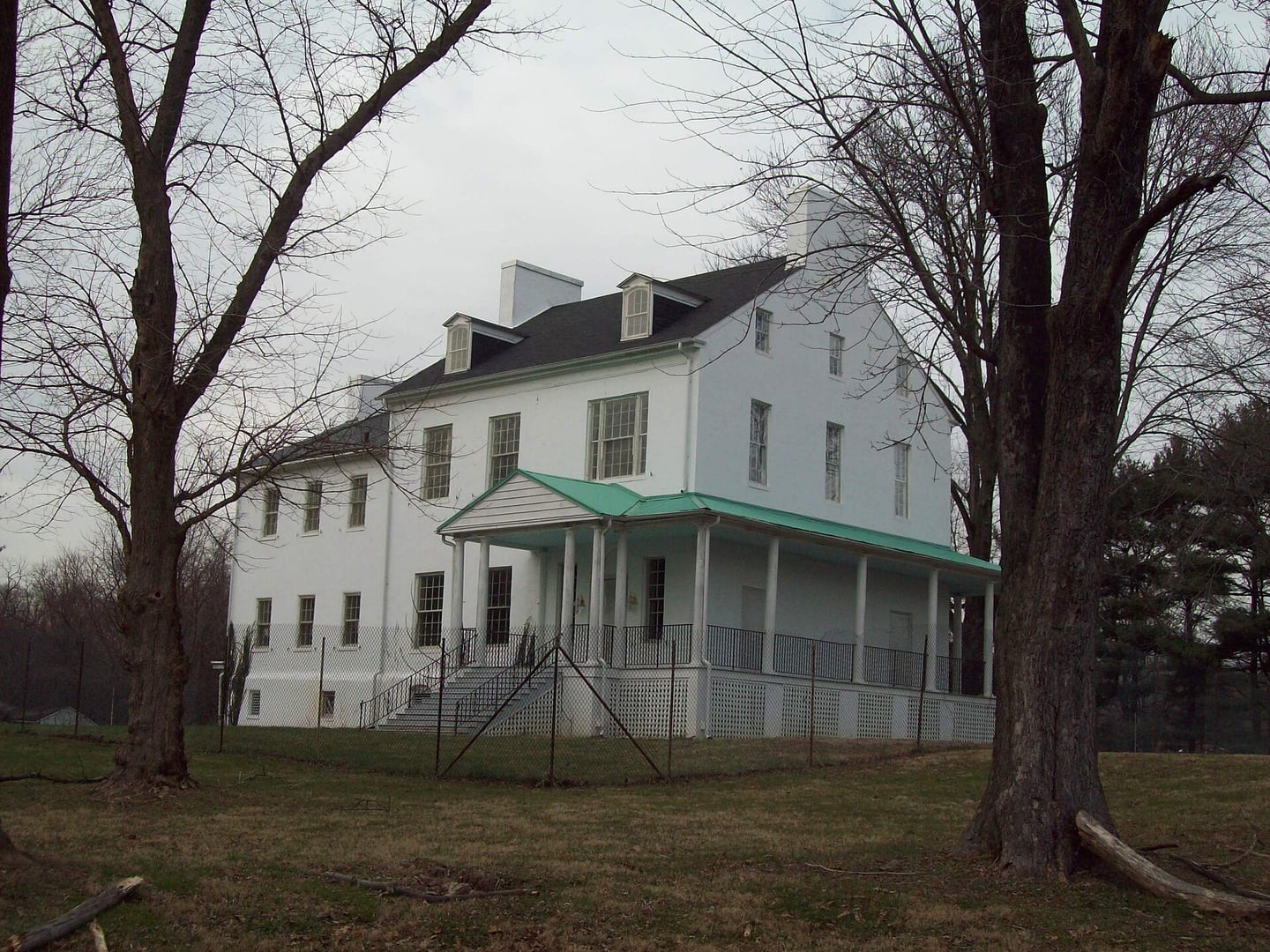
Perry Hall, MD
Construction of Perry Hall Mansion began in 1773 by Corbin Lee on a 1,000-acre Baltimore County estate. After Lee's death later that year, his widow sold the estate to Baltimore merchant Harry Dorsey Gough, who completed the 16-room five-part Georgian mansion. A 1839 fire destroyed roughly 60 percent of the structure, which was rebuilt in Greek Revival style. Baltimore County purchased the dwindled four-acre property in 2001 and is restoring the mansion as a museum and community center.
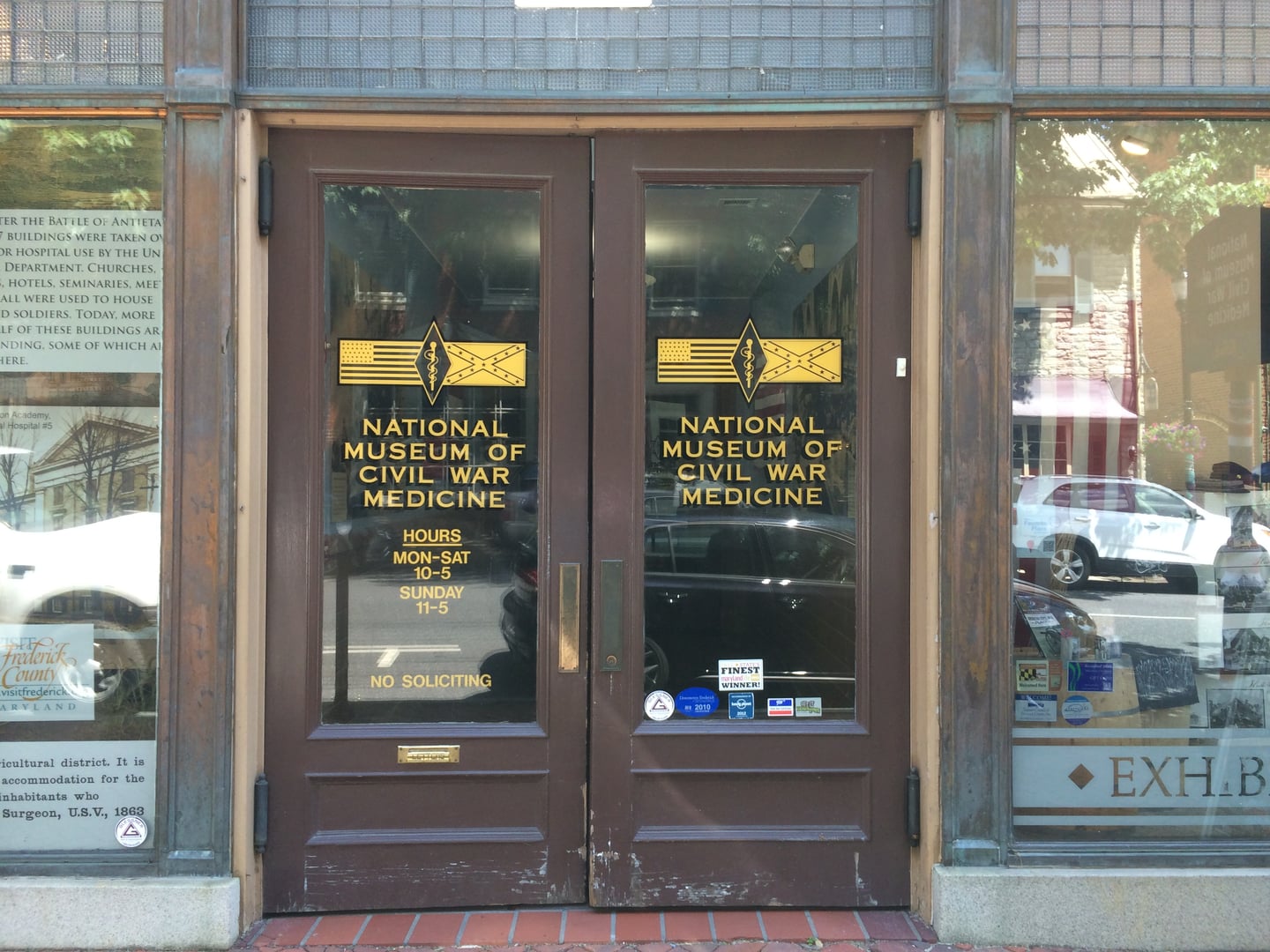
Frederick, MD
The museum opened in 1996 in an 1830s building at 48 E Patrick Street known as the Carty Building. Before the Civil War the structure was owned by furniture maker and undertaker James Whitehill. During the war, embalmer Dr. Richard Burr worked from this location, treating Union dead after the battles of South Mountain and Antietam.