Est. 1891 · Victorian Cemetery Art · Missouri Urban Legend · 19th-Century Memorial Sculpture
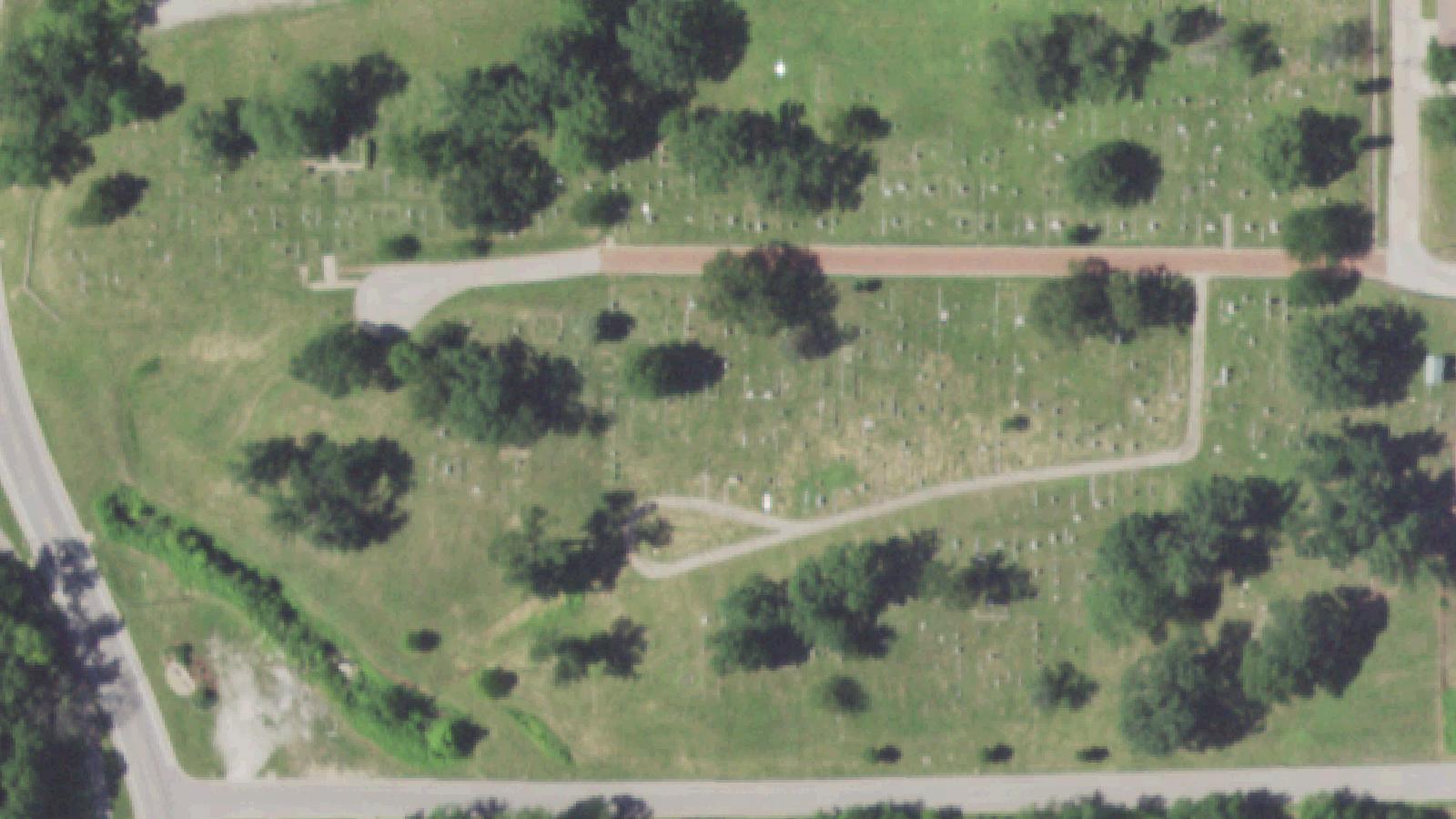
Highland Park Cemetery, established along Jamison Street in Kirksville, Missouri, serves as one of Adair County's primary burial grounds. The cemetery's most-visited feature is the Baird Chair, a concrete sculpture installed circa 1890–1891.
William Baird — founder of the First National Bank of Kirksville — commissioned the piece as a memorial to two family members who had died decades earlier. The chair was carved by Charles F. Grassle and John C. Baird, working from the Baird and Grassle Granite Works in Kirksville. The form belongs to a recognized 19th-century cemetery practice: mourning chairs, which offered visitors a place to rest and reflect beside graves rather than simply standing or kneeling.
Accounts vary somewhat on the specific family members being memorialized, with different local sources pointing to different Baird relatives. What the historical record is consistent on: the chair was never intended as a grave marker, and its carved form — an open-backed chair — was entirely conventional for the period.
The chair sits at the eastern end of the cemetery, near the Jamison Street entrance. A 'Keep Off' sign was eventually added after generations of nocturnal visitors, drawn by the chair's supernatural reputation, began treating it as a destination rather than a memorial.
Sources
- https://khmoradio.com/kirksvilles-devils-chair-a-myth-or-a-date-with-the-reaper/
- https://en.wikipedia.org/wiki/The_Devil%27s_Chair_(urban_legend)
- https://www.roadsideamerica.com/tip/40119
Sensed presence
The transformation of a Victorian mourning chair into a portal to the underworld follows a pattern well-documented in American cemetery folklore: an unusual object, an isolated location, and the right conditions for a dare to take hold among generations of local teenagers.
The core claim is consistent across all versions: sit in the Baird Chair at midnight, and a hand will emerge from the earth and pull the sitter down. Some versions specify Halloween. Some add New Year's Eve. The punishment is invariably described as being dragged to hell, not merely moved or startled. The legend's specificity — a precise time, a precise mechanism, a specific piece of furniture — is part of what has kept it circulating for decades.
The Kirksville Ghost Tour, a project of Truman State University, documented the chair and its legend in detail, noting that local young people have dared one another to visit the site after dark for generations. The resulting nighttime foot traffic became enough of a problem that cemetery staff installed the 'Keep Off' sign directly on or adjacent to the chair.
Atlas Obscura listed the Baird Chair as a notable curiosity, and Roadside America has documented visitor accounts from people who made the pilgrimage specifically to test the legend — or to photograph friends doing so.
No documented case of the legend's central claim proving true has been reported in any news archive or historical society record. The chair's supernatural reputation appears to be a complete folkloric invention, which does nothing to diminish the stream of visitors who arrive after dark to sit in it anyway.
Notable Entities
The Devil's Hand