Est. 1834 · Third System Coastal Fortification · Civil War Battlefield · North Carolina's First State Park · Robert E. Lee Engineering Project
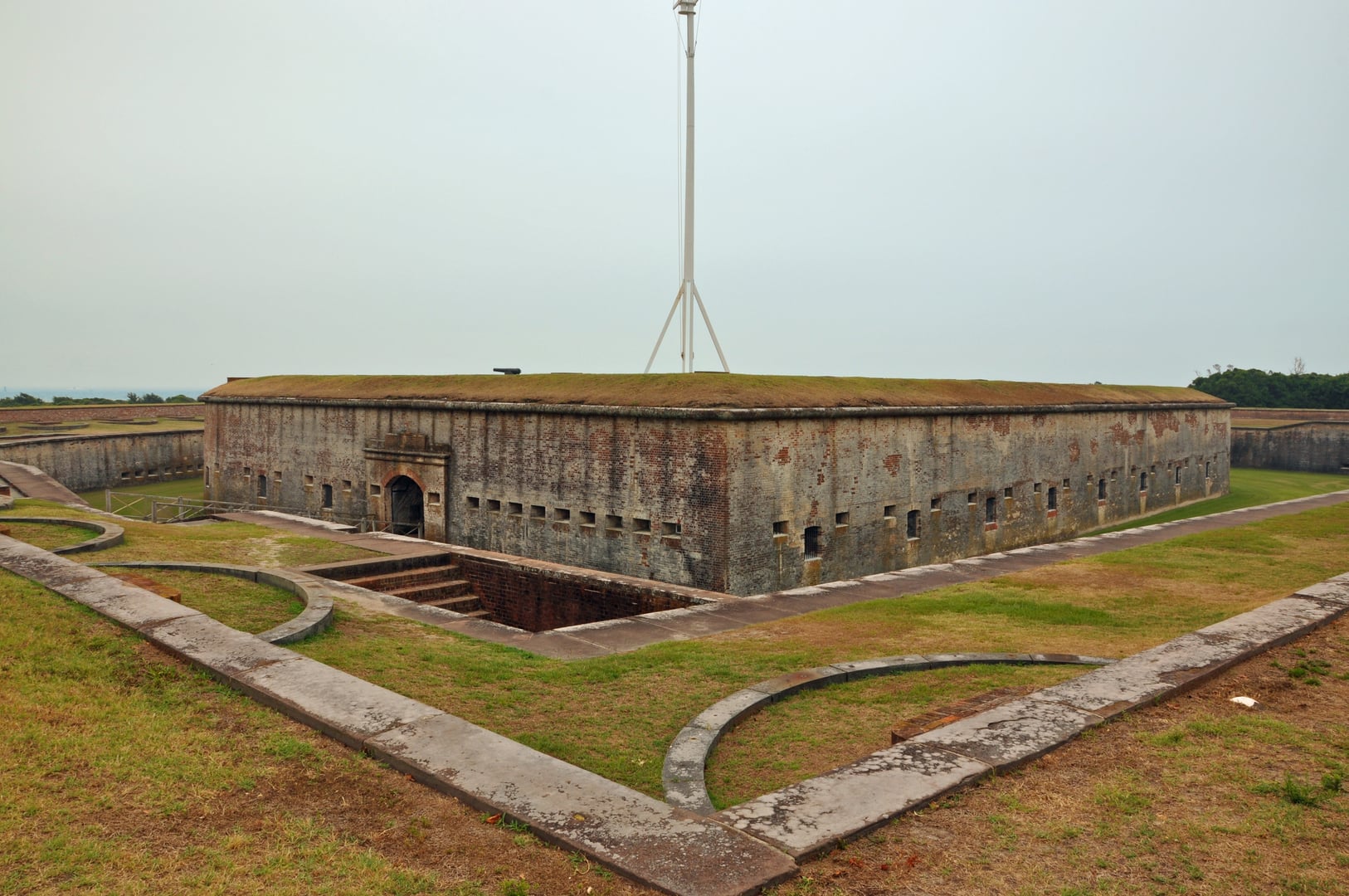
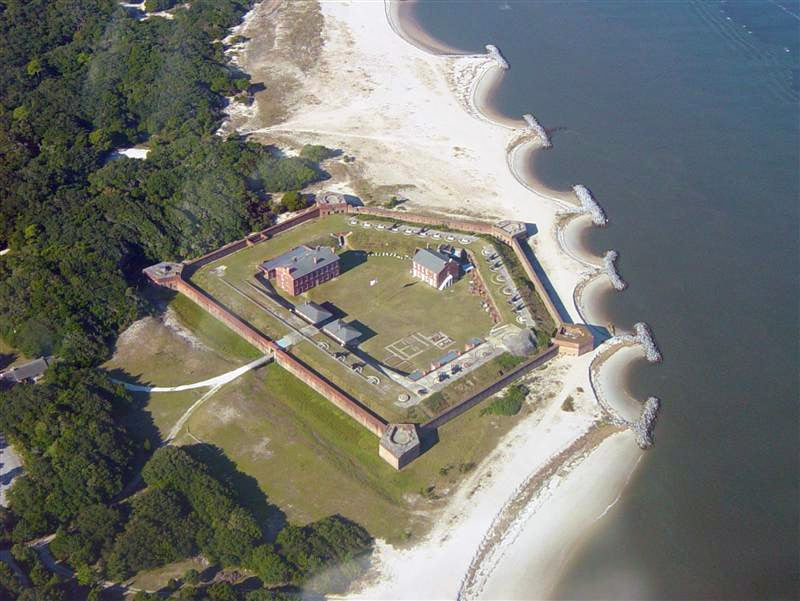
Construction of Fort Macon began in 1826 and was completed in December 1834. The brick coastal fort was named for U.S. Senator Nathaniel Macon of North Carolina, who secured the federal funding. The fort is part of the Third System of American coastal fortifications, the same construction tradition that produced Fort Sumter and Fort Pulaski.
In the 1840s, then-Lieutenant Robert E. Lee designed an erosion-control system to protect the fort from the encroaching Atlantic; portions of his work are still in place. North Carolina militia seized the fort from a single federal ordnance sergeant on April 14, 1861, two days after the war began. Confederate forces held Fort Macon for a year, mounting 54 heavy cannons in preparation for an expected Union assault.
In 1862, Union forces under Major General Ambrose Burnside swept through eastern North Carolina. Brigadier General John G. Parke commanded the land force sent to take Fort Macon. On April 25, 1862, Union land batteries and naval gunboats bombarded the fort for 11 hours, hitting it approximately 560 times. Colonel Moses White surrendered the following morning. Casualties on both sides were relatively light by Civil War standards.
The fort was sold to North Carolina for one dollar in 1924 under a Congressional Act. The Civilian Conservation Corps restored the structure in 1934-35, and Fort Macon State Park opened May 1, 1936, as North Carolina's first state park. The Friends of Fort Macon support ongoing preservation and programming.
Sources
- https://en.wikipedia.org/wiki/Fort_Macon_State_Park
- https://www.ncparks.gov/state-parks/fort-macon-state-park
- https://www.battlefields.org/visit/heritage-sites/fort-macon-state-park
Phantom footstepsPhantom voicesApparitionsCold spots
Compared to Fort Delaware, Fort Pulaski, and other heavily prisoned or heavily bombed Civil War fortifications, Fort Macon carries a relatively quiet paranormal reputation. The single-day 1862 bombardment produced relatively limited casualties, and the fort served afterward as a federal prison and coastal-defense post without major mortality events.
Reports collected during the park's October Fear at the Fort program describe phantom footsteps in the brick casemates, voices in unoccupied rooms, and the sense of being watched along the rampart walks. Some accounts reference apparitions in Civil War uniform on the parade ground at dusk. None of these reports rises to the level of named entities, and the park presents the lore as one of many interpretive frames rather than as confirmed activity.
For most visitors, the more compelling experience is the daytime combination of an intact Third System fort, the surrounding Bogue Banks beaches, and the strong North Carolina State Parks interpretive program.