Est. 1875 · National Register of Historic Places · Victorian Italianate Architecture · Northwest Indiana Agricultural History
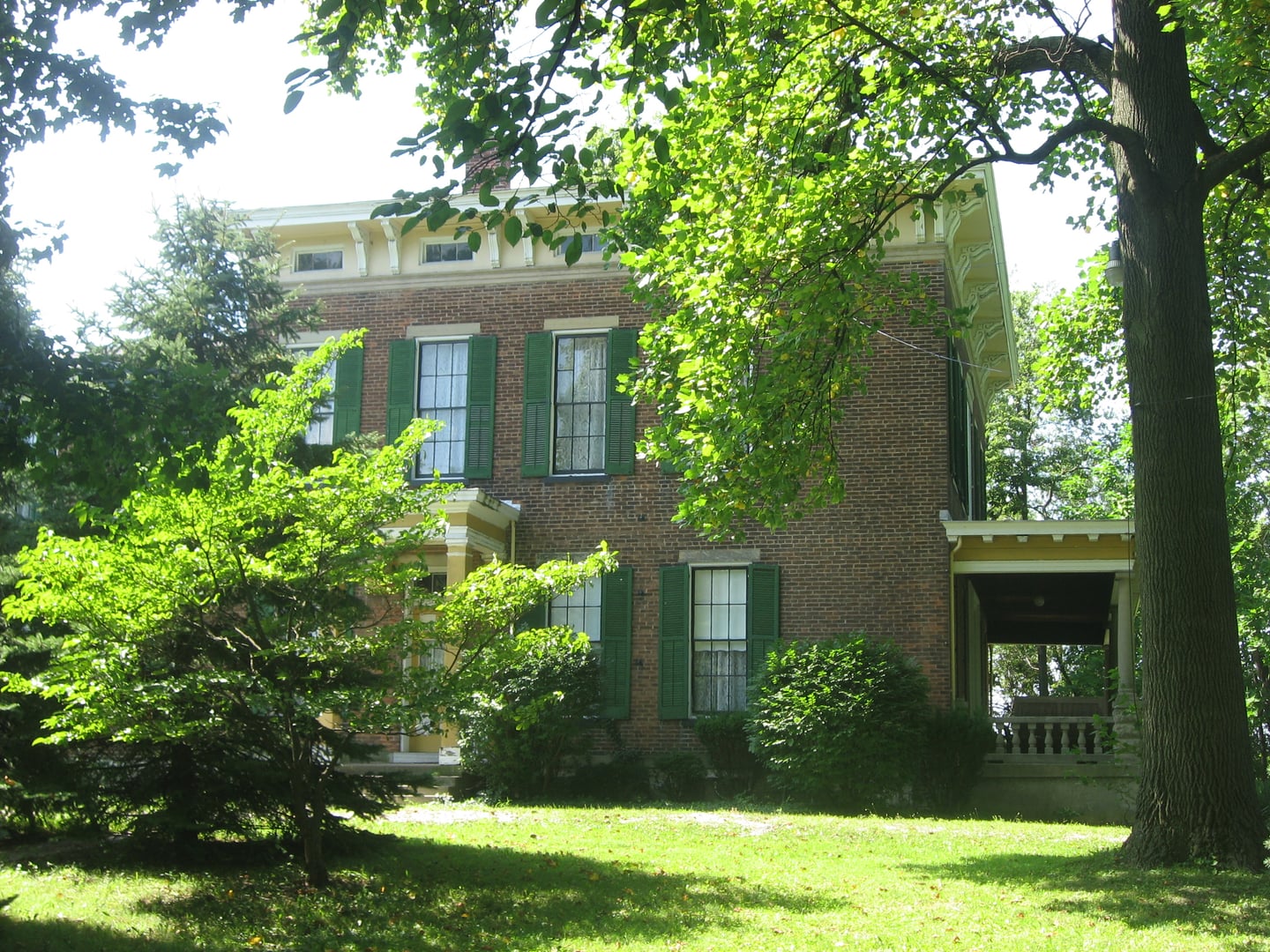
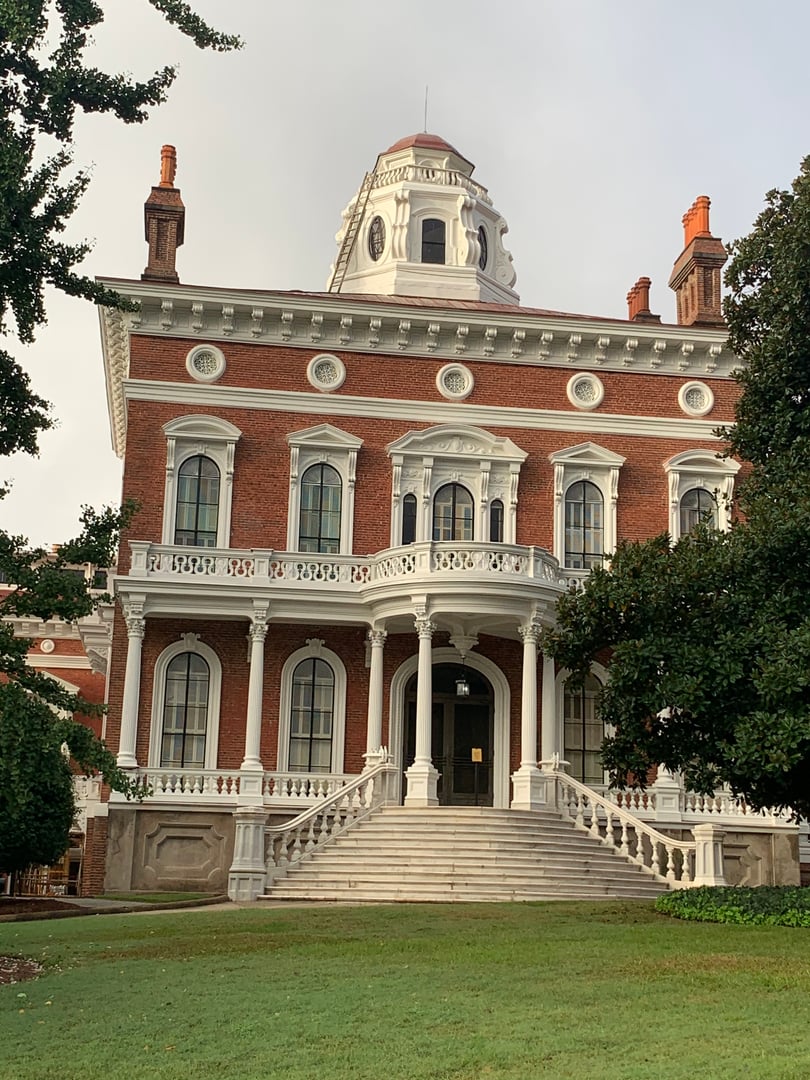
The Josephus Wolf House sits on what was once one of the largest farms in northwest Indiana. Wolf — a Porter County landowner who built a 4,500-acre operation in Portage Township after the Civil War — completed the residence in 1875 in the Victorian Italianate style then fashionable across the prosperous agricultural Midwest. The exterior is defined by tall windows, decorative trim, and a white rooftop cupola whose floor sits 45 feet above the ground. On clear days, the cupola provides sightlines across the former farm and, accounts suggest, as far as the Chicago skyline.
The interior comprises eighteen rooms across three stories and roughly 7,800 square feet, finished with pine molding and red oak floors. A stairway from the second story climbs to the attic and continues into the cupola.
The house has cycled through varied uses since the Wolf family era. It served as a Franciscan monastery associated with the Seven Dolors Shrine, then as a women's homeless shelter, an antique store, and a bridal shop, before returning to private residential ownership. The Josephus Wolf House was added to the National Register of Historic Places in 2007 (NRHP reference number 07001281).
Independent historical sources note that Indiana was a free state and that slavery had been abolished nationwide before construction began in 1875, contradicting a recurring online narrative of plantation-era violence on the property. No documented violent incident from the Wolf era has been corroborated in newspaper or county records during research.
Sources
- https://en.wikipedia.org/wiki/Josephus_Wolf_House
- https://npgallery.nps.gov/GetAsset/99ec8748-b6ff-400d-8038-af02bf13f040
- https://beyondhaunted.com/indiana/wolf-mansion
ApparitionsLights flickeringPhantom soundsTouching/pushingOrbsObject movementDoors opening/closing
The Wolf Mansion's reputation is built on relatively quiet, domestic-scale phenomena rather than dramatic sightings. The most commonly cited account involves the rooftop cupola: visitors and neighbors describe an unexplained light that sometimes appears in the cupola at night, and reports of a bell heard ringing despite the absence of any bell still installed in the structure.
A contractor account that has circulated locally describes an installation visit during which the technician, working alone in the basement, reportedly felt breath at the back of his neck and the sensation of something brushing his hair. On the climb back up the basement stairs, he described the sensation of something passing along his heels. The account is anecdotal and uncorroborated.
Visitors photographing the exterior have reported orbs and faint figures appearing in upper-floor windows when the house was unoccupied. Some local accounts attribute the figures to figures from the property's monastic period; others tie them to earlier residents. No paranormal-investigation team has published a vetted study of the property, and the private owners do not host investigation programming — only the architectural and historical tour by appointment.
The widely repeated narrative that Wolf killed enslaved people on the property after emancipation does not align with the historical record: the house was constructed a decade after slavery had been abolished nationally, and Indiana was a free state. Other elements of the legend — bell-tower lights, contractor accounts, window figures — circulate as regional folklore.