Est. 1905 · 1905 Samuel P. Colt estate assembly · Surviving Colt-era stone barn · 1968 dedication as Rhode Island State Park · 'Private Property, Public Welcome' marble piers
Samuel Pomeroy Colt (1852-1921) was a Rhode Island industrialist and the nephew of firearms manufacturer Samuel Colt. He made his fortune by assembling local banks into the Industrial Trust Company (the forerunner of Fleet Bank) between 1875 and 1915, and by consolidating rubber companies in Bristol, Providence, and Woonsocket into the United States Rubber Company, later Uniroyal.
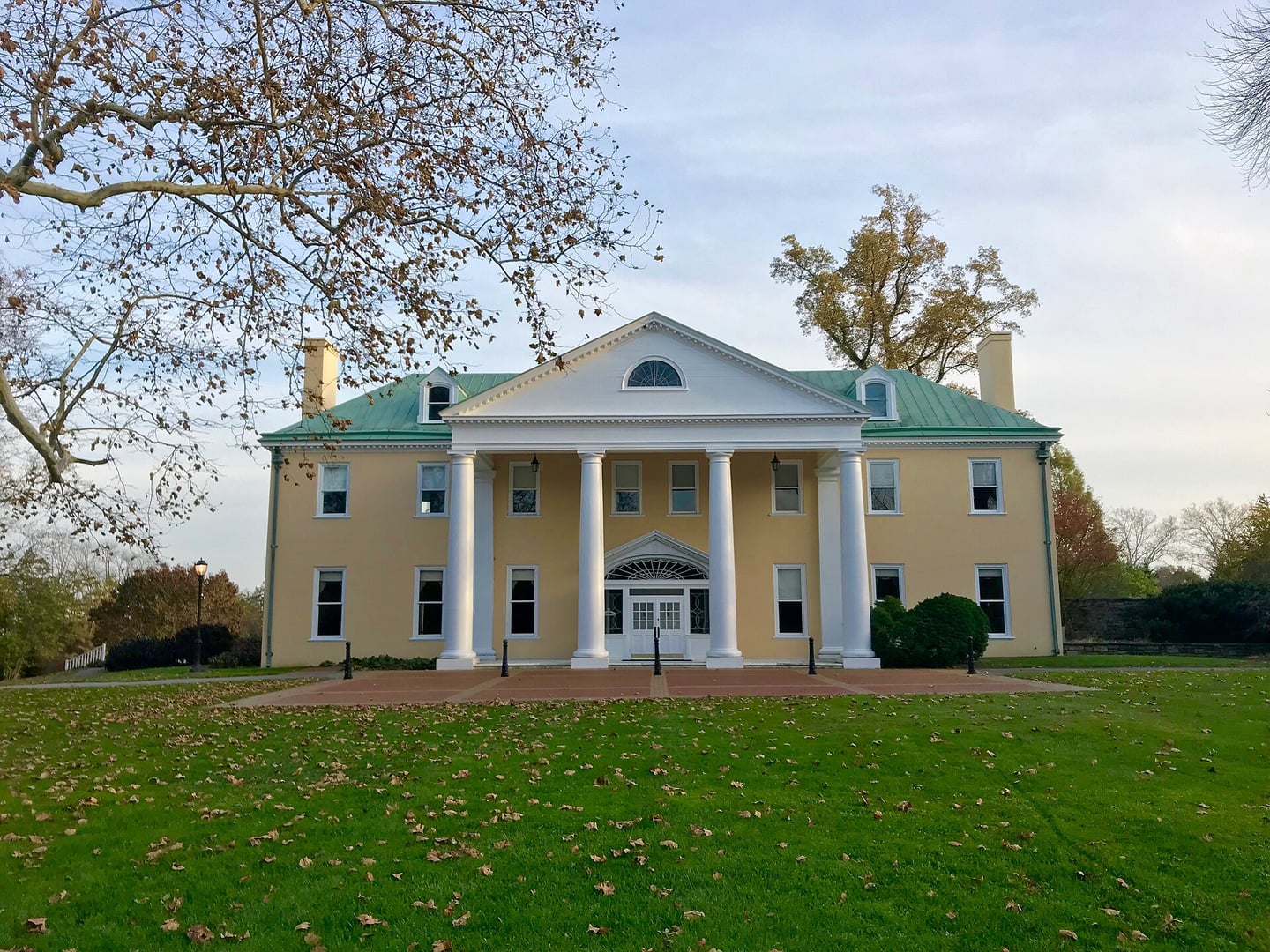
Starting in 1905, Colt purchased and consolidated the Chase, Church, and Van Wickle farms on Poppasquash Neck in Bristol, on the western shore of the Bristol Harbor inlet of Narragansett Bay. He built a summer house known as the Casino and a magnificent stone barn for a prize herd of Jersey cattle. The property became a working dairy farm and a summer estate that combined active agriculture with landscaped grounds.
Colt was committed to public access to his property. He had marble piers installed at the estate entrance carved with the inscription 'Private Property, Public Welcome,' and he allowed the public to walk the farm and shoreline freely. Colt's invitation predated the modern concept of a public state park by half a century.
Colt died in 1921. Disputes over his will delayed state acquisition of the property for decades. In 1965, Rhode Island purchased the estate, and on August 21, 1968, Governor John Chafee dedicated the lands as Colt State Park. Today the park covers 464 acres of open lawn, shoreline, bike paths, and the surviving Colt-era structures including the stone barn (now the park office).
Sources
- https://en.wikipedia.org/wiki/Colt_State_Park
- https://riparks.ri.gov/History-HistoryColt
- https://riparks.ri.gov/parks/colt-state-park
- https://rimemories.com/colt-state-park-history/
Equipment malfunction (lights, doors)Apparitions of childrenDisembodied gigglingSense of presence
Colt State Park has been a public space for over half a century, and a working farm and estate for more than a century before that. The ghost lore has accumulated through park staff and Bristol residents across both eras.
The most consistent staff report involves the stone barn that now serves as the park office. Workers describe finishing the day by turning off lights and securing doors only to return and find lights on or doors open. Local tradition attributes this to the spirit of a former stable hand said to have died in the barn during the Colt-family farm era. No newspaper account confirming the death has surfaced in current research; the tradition is preserved through staff handoff and Bristol oral history.
A separate strand of activity centers on a path near the shoreline that older Bristol residents call 'Suicide Hill.' A visitor heading from the beach to a parking area reported seeing two small girls walking up the path; as he approached, they vanished. A second account from another park worker matched the description. Local memory associates the figures with two young sisters who reportedly drowned in the waters off Colt Point in the 1970s. The site name and the tragedy together inform the most often-repeated park ghost story.
The park closes at dark and is patrolled, so visitors should plan day-use visits and not attempt overnight investigations.
Notable Entities
The Stable Hand (local tradition)The Two Sisters (local tradition)