Est. 1933 · Civilian Conservation Corps · New Deal Infrastructure · National Park Service History · Grand Canyon South Rim
Grand Canyon National Park received its first Civilian Conservation Corps companies in May 1933, when Company 819 arrived to begin work on the South Rim. The CCC's mandate at the canyon included trail construction, the trans-canyon telephone line, trail shelters, and the stone walls and safety railings that today define the character of the South Rim viewpoints.
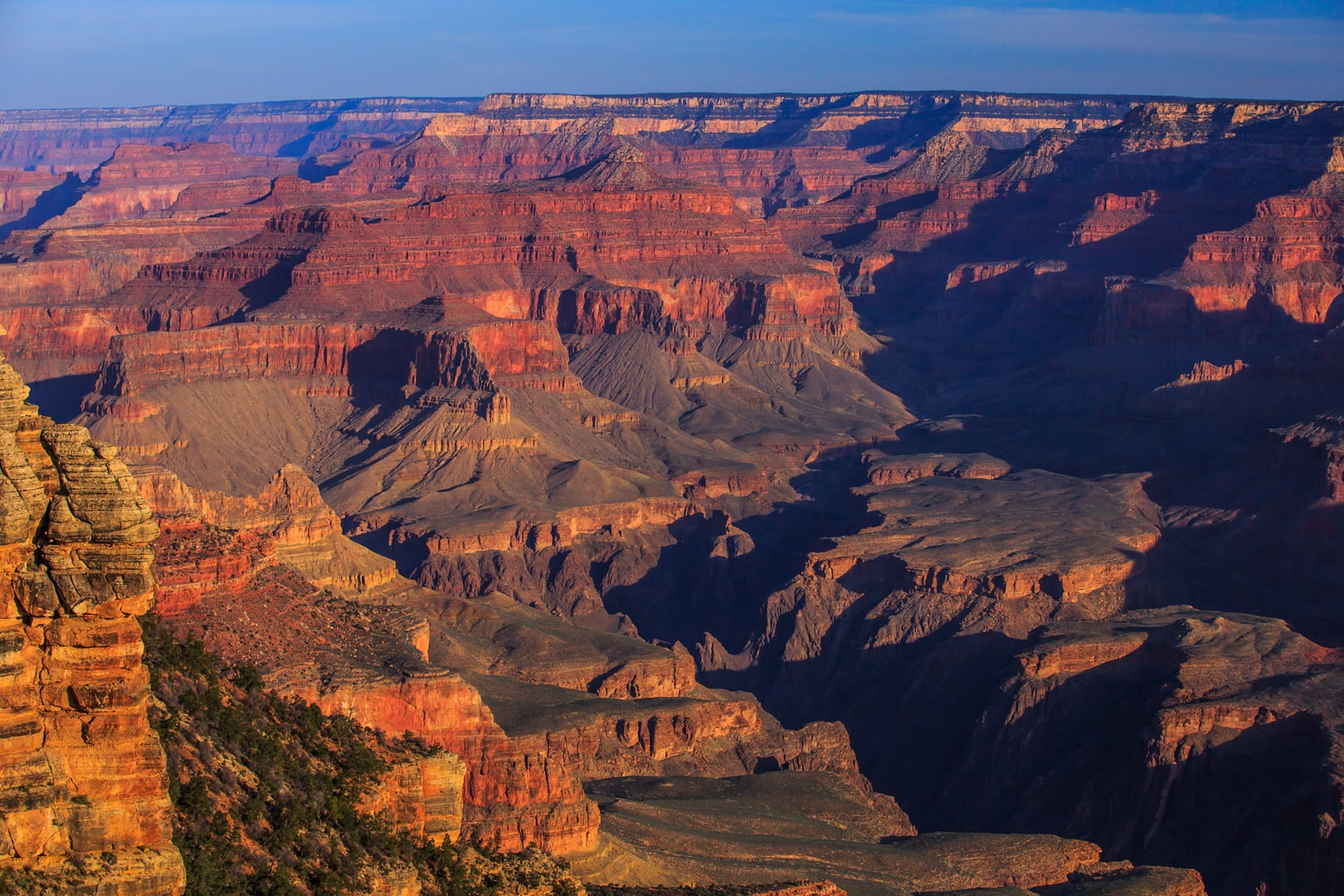
Maricopa Point sits along Hermit Road, the paved West Rim Drive that extends approximately 7 miles from Grand Canyon Village to Hermit's Rest. The road is named for Louis Boucher, a French-Canadian prospector who lived as a hermit near the canyon in the late 19th century. The viewpoint itself offers one of the South Rim's wider canyon panoramas, oriented toward a dramatic series of buttes and temples in the inner canyon.
The safety railings at Maricopa Point — low stone walls along the exposed rim — are among the CCC-era infrastructure that crews installed in the 1930s. The NPS has documented the CCC's extensive contributions to the park's built environment; several walking tours of the South Rim Village highlight CCC stonework from this period.
Grand Canyon recorded more than 6 million visitors annually in recent years, with the South Rim open year-round. Hermit Road is accessible by free park shuttle from spring through fall, and by private vehicle in winter months.
Sources
- https://www.nps.gov/grca/learn/historyculture/ccc.htm
- https://www.nps.gov/grca/planyourvisit/fees.htm
- https://www.rwcpaperjam.com/post/ghost-stories-of-the-grand-canyon
- https://grandcanyon.com/poi/maricopa-point/
Shadow figuresPhantom sounds
The legend at Maricopa Point is known locally as the Legend of the Fall.
In the 1930s, a CCC worker was helping install the safety railings along the South Rim at this viewpoint when he lost his footing and fell into the canyon. The drop from the South Rim at this section is several thousand feet. His body would not have been recoverable in any practical sense.
Since the reported death, visitors have described a black, misty figure appearing near the railing at sundown — specifically in the area where the railing installation work would have been conducted. Accounts collected by multiple paranormal-interest sources describe the figure as standing or moving near the stone wall that marks the canyon's edge.
The scraping sound — heard by accounts as something shoveling or dragging across pavement — occurs independently of the visual reports in some accounts, and together with them in others. The CCC crews used shovels and hand tools; the sound, according to the legend, is residual activity from the labor itself.
No NPS accident report or period newspaper coverage of a CCC fatality at this specific point has been located in publicly available sources. The NPS does document CCC fatalities at the canyon overall, and the physical nature of the railing work makes a fall plausible. The specific account of Maricopa Point is circulated in paranormal travel writing about the canyon but has not been traced to a contemporaneous record.