Est. 1930 · Railroad Freight Terminal · 1930s Industrial Architecture · Delaware Lackawanna Western Railroad · Jersey City Industrial Heritage
The Lackawanna warehouse emerged from the industrial ambitions of the Delaware, Lackawanna & Western Railroad Company during the late 1920s. Construction spanned 1929 to 1930, representing a significant investment in modern warehouse infrastructure. The building's design was advanced for its era—engineers published a detailed article describing the reinforced concrete freight terminal construction in The Engineering News-Record in March 1930.
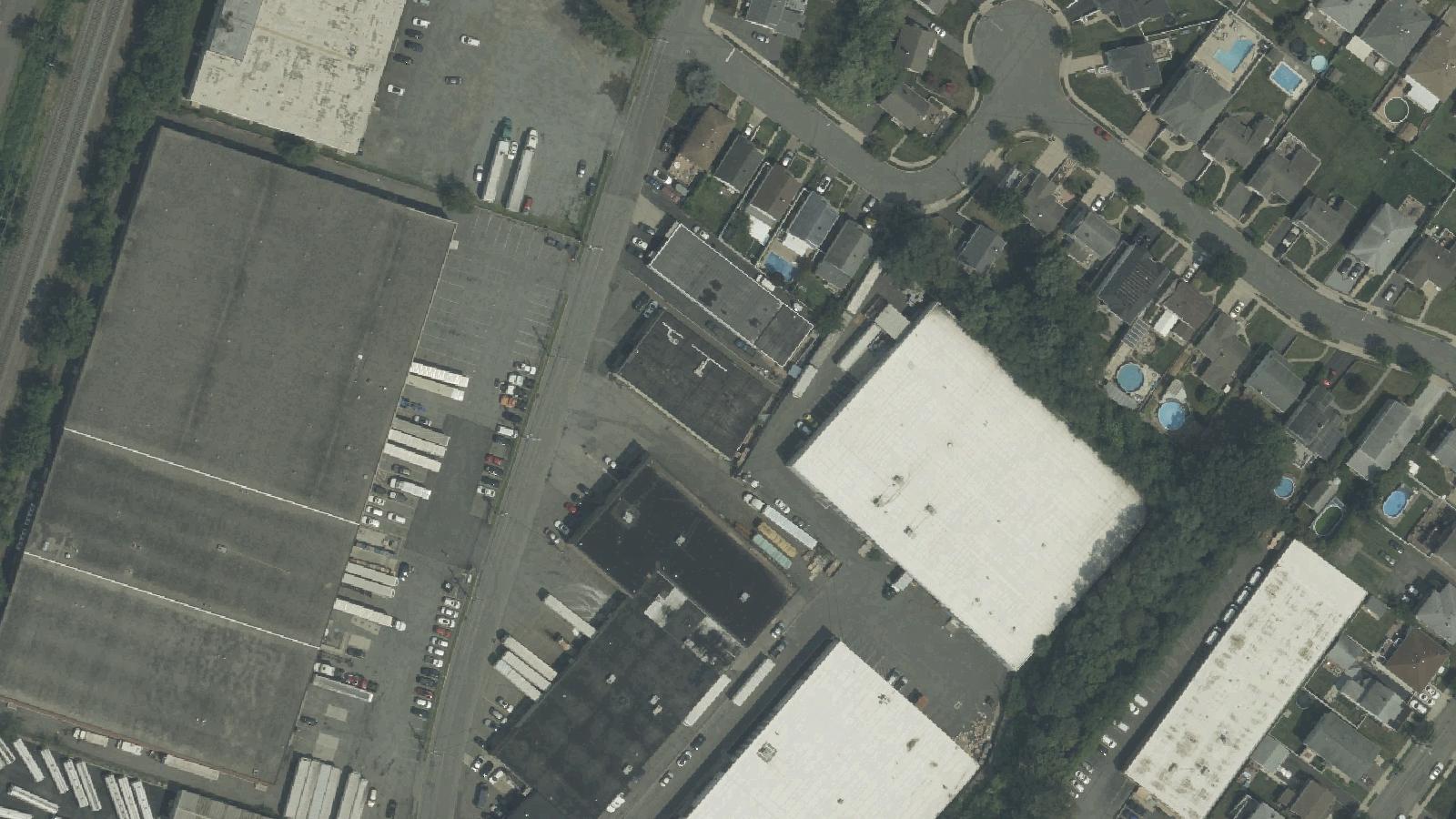
The eight-story structure remains the dominant architectural feature of its block in Jersey City. The facility was designed for intensive rail-based freight operations: 23 freight elevators with 20,000-pound capacity, three passenger elevators, high ceilings accommodating large cargo, and 22 loading docks facilitated continuous movement of goods to and from rail cars.
Elevated railroad tracks still run adjacent to the building's 16th Street facade, with loading platforms designed for direct rail-to-warehouse transfer. The facility's location provided direct access to the Holland Tunnel, NJ Turnpike, Routes 1 & 9, Route 440, and the Pulaski Skyway, making it a critical node in the regional freight network.
The building operated as a railroad warehouse through most of the 20th century. During the deindustrialization of the 1960s, the warehouse fell into decline and remained significantly underutilized for decades. Beginning in the 2010s, the structure began conversion for contemporary commercial uses, though its industrial heritage and original architectural elements remain prominent.
Sources
- https://hoboken.pastperfectonline.com/archive/15A93A25-04AF-4A7B-A847-059849938372
- https://www.lackawannacenter.com/about.php
- https://wikimapia.org/33305770/Lackawanna-Eastern-Terminus-Warehouse
ApparitionsPhantom soundsPhantom footstepsDisembodied screaming
The paranormal reputation of the 629 Grove Street warehouse centers on employee accounts of apparitional activity and auditory phenomena experienced primarily during evening and overnight shifts.
The most frequently reported phenomenon involves visual apparitions of figures dressed in period clothing—specifically attire consistent with early-to-mid 20th century railroad workers, the era when the warehouse operated at peak activity. Multiple employees have independently reported witnessing these apparitions. The figures are described as appearing solid and substantial, moving through the warehouse spaces before vanishing or fading from view.
Accompanying these visual phenomena are consistent auditory reports. Employees describe hearing the sound of running feet—heavy, purposeful footsteps moving through the warehouse, often in absence of any visible source. These footsteps are described as distinctly human in pattern but occurring when no workers are present in those areas.
Most disturbingly, employees report hearing screams—disembodied vocalizations suggesting distress or urgency. These screams occur particularly on the second and third shifts, when the building has minimal or no active workforce.
The concentration of reports on second and third shifts suggests a connection to the era when the warehouse operated at full capacity with intensive labor. No specific documented workplace disaster or mass casualty event at this facility has been identified in available records, though the early industrial era (1930s-1950s) represented a period of generally dangerous working conditions in railroad freight operations, with industrial accidents being commonplace across such facilities.
The period-dressed apparitions, combined with the auditory phenomena of running footsteps and screams, are interpreted as residual hauntings—psychic imprints of intense labor or traumatic moments embedded in the building's industrial history.
Notable Entities
The Railroad Worker Apparitions