Est. 1865 · Frontier Army Post · 7th Cavalry Garrison · Smoky Hill Trail · 1867 Cholera Epidemic · Kansas State Historic Site
Fort Hays was established by the U.S. Army in 1865 as one of a string of posts protecting the Smoky Hill Trail, the construction of the Kansas Pacific Railroad, and the route between Fort Riley to the east and Fort Wallace to the west. It was active until 1889. Among the soldiers garrisoned there were elements of George Armstrong Custer's 7th Cavalry. Wild Bill Hickok and Buffalo Bill Cody were among the era's frontier figures who passed through.
In the summer of 1867, a cholera epidemic broke out in the camp. The disease spread quickly through the post's roughly 1,000 troops and into the encampment of 1,200 railroad construction workers in the new village of Rome, just outside the fort. Among the women caring for the sick was Elizabeth Polly, identified in archival records as the wife of an Army drummer named Ephraim Polly, married around 1864. According to Kansas Historical Society materials, Elizabeth nursed cholera-stricken soldiers in their final hours, and in the evenings she walked to a high limestone bluff a mile and a half southwest of the fort — known today as Sentinel Hill — where she sought solitude.
Elizabeth contracted cholera and died in the late summer or fall of 1867. She had asked her husband to bury her on Sentinel Hill, but soldiers detailed to dig the grave struck massive limestone bedrock just inches below the sod. They were forced to bury her on a lower slope nearer the fort. Whether the lower-slope marker found at the base of the hill is in fact Polly's grave remains uncertain; some researchers have argued the inscription on it is Spanish and identifies a Mexican cattleman, not Polly.
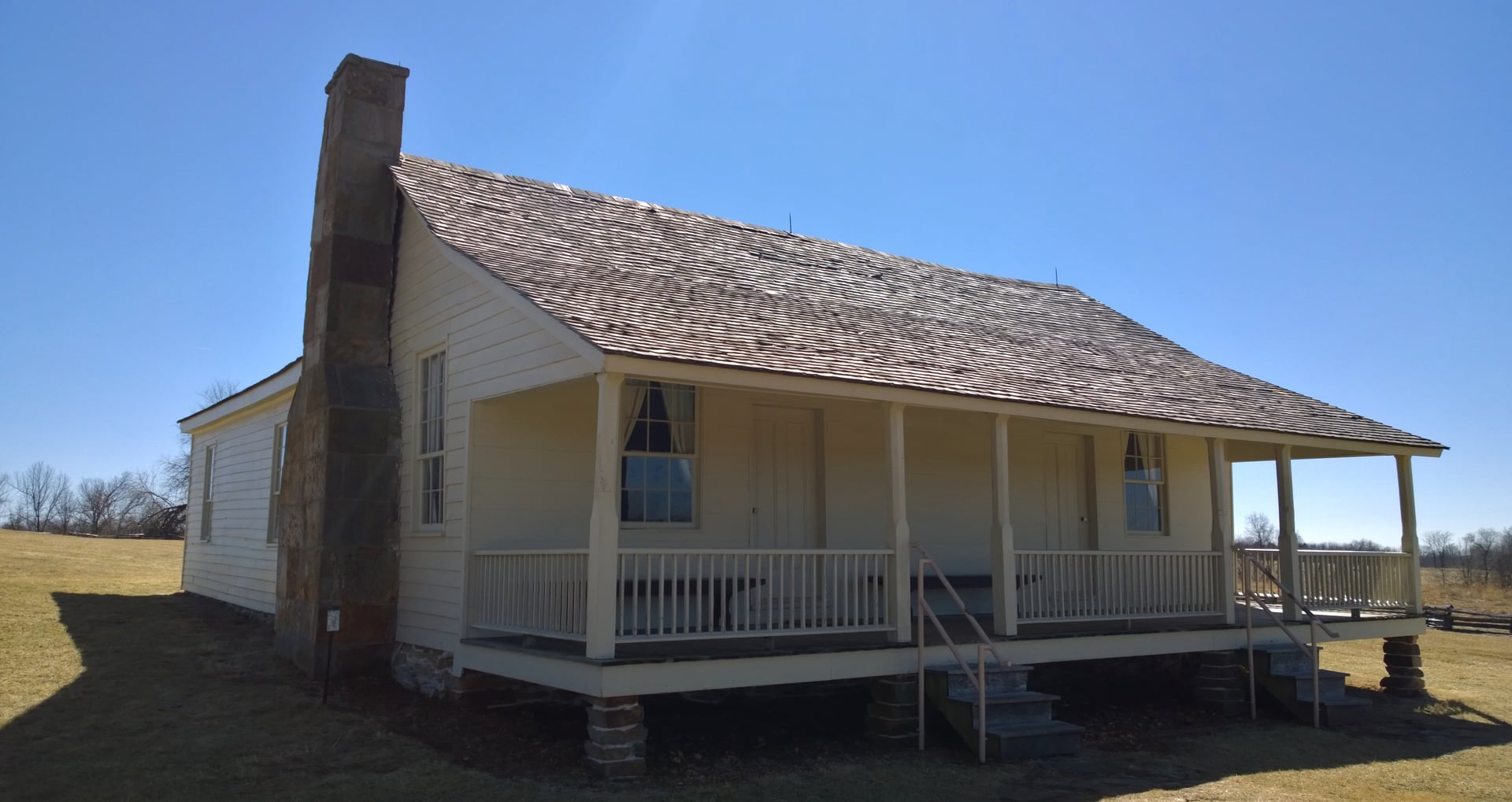
In 1967 and 1968, sculptor Peter Felten Jr. erected a pyramid monument of local stonepost limestone atop Sentinel Hill, sponsored by the Saturday Afternoon Club, the Fort Hays Nurses Club, and the local chapter of the Kansas State Nurses Association. The monument bears the inscription that has given the site its long-standing local name: The Lonely Grave. The fort itself is preserved as the Fort Hays State Historic Site, administered by the Kansas Historical Society, with several original buildings standing.
Sources
- https://www.kansashistory.gov/kansapedia/elizabeth-polly/19172
- https://en.wikipedia.org/wiki/Elizabeth_Polly
- https://www.legendsofamerica.com/ks-forthays/
- https://www.findagrave.com/memorial/102805633/elizabeth-polly
ApparitionsOrbsResidual haunting
The Blue Light Lady is the most enduring piece of paranormal folklore associated with Fort Hays. The story, documented in regional newspaper coverage and Kansas Historical Society materials, describes a luminous blue ball or glowing figure reported on and around Sentinel Hill — the limestone bluff that hospital matron Elizabeth Polly is said to have walked in the late afternoons of 1867.
Reports cluster around the area where her grave was originally dug, at the base of the hill, and around the pyramid monument that now stands at the summit. Witnesses over several decades have described a slow-moving light that hovers, drifts, and occasionally appears to move uphill. Local interpretation has long held that the light is Elizabeth Polly searching for the resting place she requested but never received.
The Lonely Grave name has been on the site since at least the 1960s, predating the monument's installation. The hilltop is exposed and rural; the road in is described in regional travel coverage as difficult to navigate by vehicle, with the final stretch covered on foot. Whether or not the lower-slope marker at the foot of the hill marks Elizabeth Polly's grave at all remains an open question in the historical record — adding a further layer of unresolved provenance to a story that has shaped local memory for over 150 years.
Notable Entities
Elizabeth PollyThe Blue Light Lady