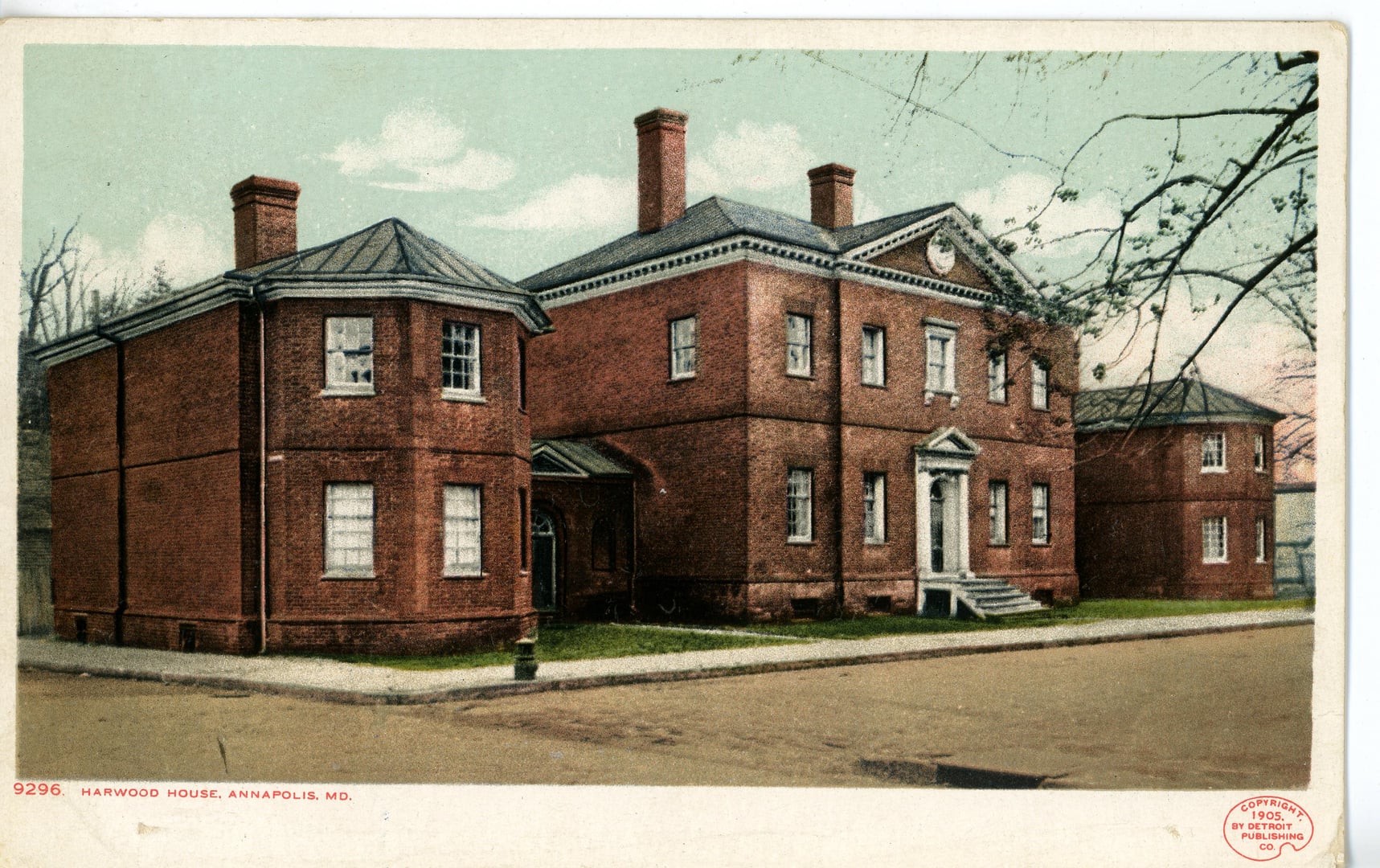
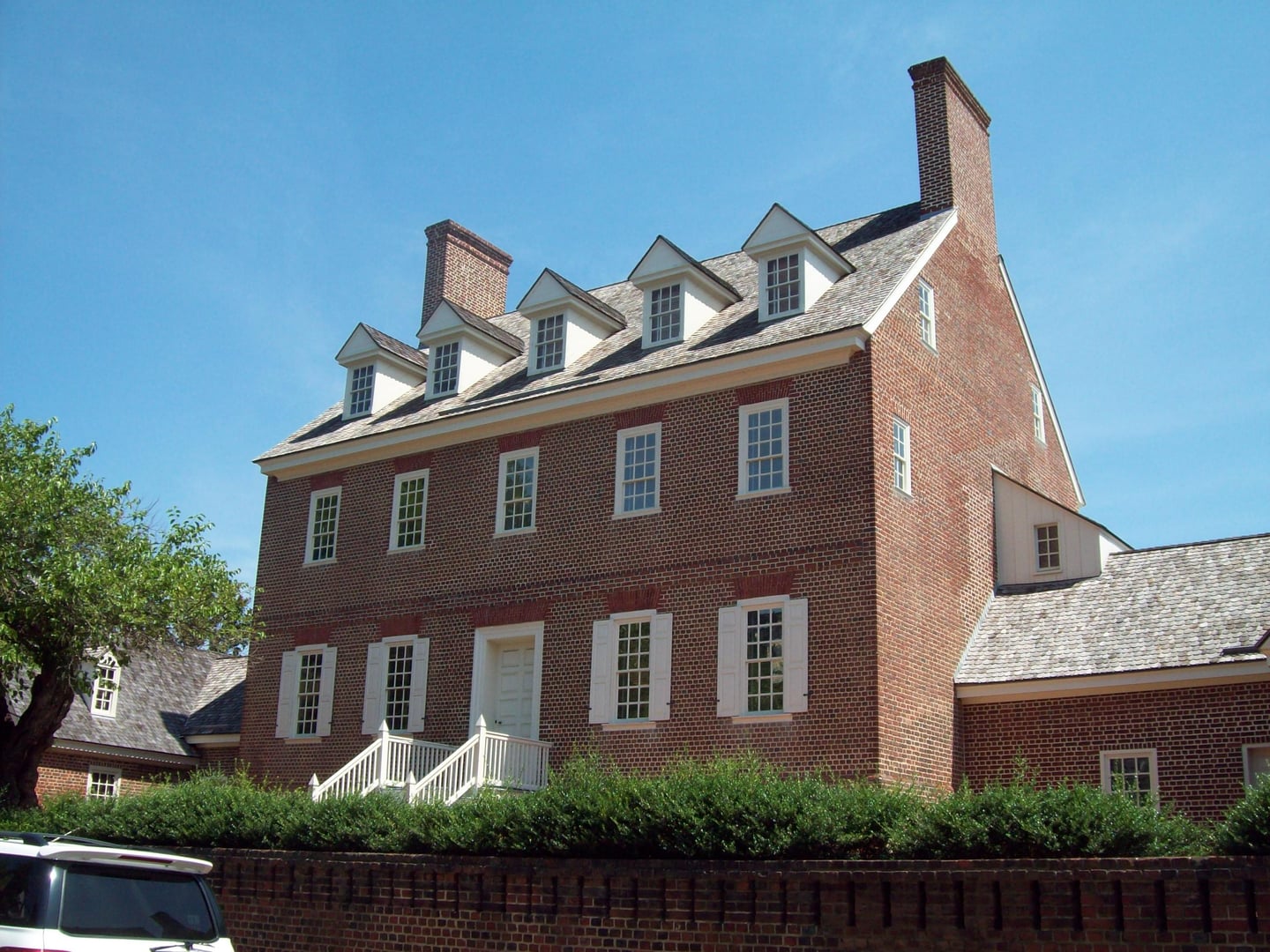
Est. 1774 · National Historic Landmark · Library of Congress HABS MD-16 · One of the largest intact colonial-era town houses in the U.S. · Site of documented Hoodoo archaeological cache (1998) · Built using enslaved labor
Construction of the James Brice House began in 1767 and was completed in 1774. The house is a five-part Georgian mansion at 42 East Street in the Colonial Annapolis Historic District. Library of Congress Historic American Buildings Survey documentation (HABS MD-16) records the building as one of the largest and most architecturally intact colonial-era town houses in the United States.
James Brice (1746-1801) served as Mayor of Annapolis from 1782 to 1783 and again from 1787 to 1788, and as acting Governor of Maryland in 1792. Brice inherited a partially completed building from his father and finished construction himself; the seven-year build relied heavily on enslaved labor. Archaeology in Annapolis, the University of Maryland field program, has documented that nearly thirty enslaved people contributed to the foundation, walls, and roof.
In 1998, the Archaeology in Annapolis project, directed by Mark P. Leone, excavated portions of the house and identified a concentration of artifacts associated with Hoodoo, an African American religious and folk-belief tradition. The cache, found in an oval pattern adjacent to interior doorways and fireplaces in both the north and south rooms, is one of the most documented Hoodoo finds in a North American historic house. Archaeology in Annapolis published the excavation under the Brice House project record.
The State of Maryland acquired the building in 2014 and entrusted it to Historic Annapolis for management, maintenance, and restoration. A multi-year preservation project began shortly after the transfer; as of 2026, the central block remains closed to the public while restoration continues. Historic Annapolis has stated that, on completion, the central block will reopen for tours, preservation research, meeting space, and educational programming, while the wings will continue to serve as Historic Annapolis headquarters.
Sources
- https://www.loc.gov/item/md0016/
- https://en.wikipedia.org/wiki/Brice_House_(Annapolis,_Maryland)
- https://www.annapolis.org/contact/james-brice-house/
- http://www.aia.umd.edu/brice.html
- https://savingplaces.org/stories/a-cup-of-rum-and-other-reasons-one-of-annapolis-greatest-historic-houses-is-worth-celebrating
- https://annapolisghosttour.com/the-james-brice-house-a-haunting-renovation/
- https://usghostadventures.com/annapolis-ghost-tour/james-brice-house/
- https://www.baltimoresun.com/2023/09/21/ghost-stories-meet-the-legendary-residents-of-these-annapolis-haunts/
- https://creators.yahoo.com/lifestyle/story/these-spooky-landmarks-showcase-annapolis-chilling-pastif-youre-brave-enough-to-walk-them-after-dark-182902927.html
Apparitions at upstairs windowsAudible crying on stairs and in ballroomPhantom footsteps in halls
According to Annapolis Ghost Tours and the US Ghost Adventures Annapolis itinerary, James Brice's widow Juliana reportedly told visitors she had seen her husband after his 1801 death — the earliest documented haunting claim associated with the residence. Brice's son Thomas, who died at the house decades later, is described by the same sources as a secondary figure in the lore.
Multiple ghost-tour sources report that during 1970s renovations of the building, a young woman's skeletal remains were discovered inside an interior wall. The provenance and date of this discovery have been retold across decades of Annapolis ghost-tour material but are not independently corroborated by the Archaeology in Annapolis academic record we consulted; Hauntbound treats the wall-burial claim as ghost-tour tradition pending primary documentation.
The 1998 Hoodoo excavation, by contrast, is academically documented (Leone, Archaeology in Annapolis). Ghost-tour material draws on this find to frame the house as a site where the documented spiritual practices of enslaved African Americans intersect with a parallel tradition of reported apparitions. The 'Crying Girl' — a young woman in white said to be heard sobbing on the stairs and in the ballroom — is reported across multiple ghost-tour sources, as is a recurring report of a young woman seen at the upstairs windows by pedestrians when the building is otherwise unoccupied.
The James Brice House is a regular stop on Annapolis Ghosts and Watermark's Special Historic Hauntings tours.
Independent corroboration: Annapolis Ghosts' Brice House profile, US Ghost Adventures' Annapolis Ghost Tour entry, a 2023 Baltimore Sun feature on Annapolis hauntings, and a Yahoo Lifestyle feature on Annapolis spooky landmarks each independently profile the same lore set: the Crying Girl in white seen and heard in the hallways, stairs, and ballroom; the walled-up bones reportedly found during 19th-century renovations; and the spirits of James Brice and his son Thomas. The Baltimore Sun feature is a mainstream regional newspaper source, lifting the citation profile beyond ghost-tour aggregators alone.
Notable Entities
James Brice (1746-1801)Thomas BriceThe Crying Girl
Media Appearances
- History Goes Bump podcast Ep. 139: Brice House (2016)
- Baltimore Sun: Ghost stories: Meet the legendary residents of these Annapolis haunts (2023)