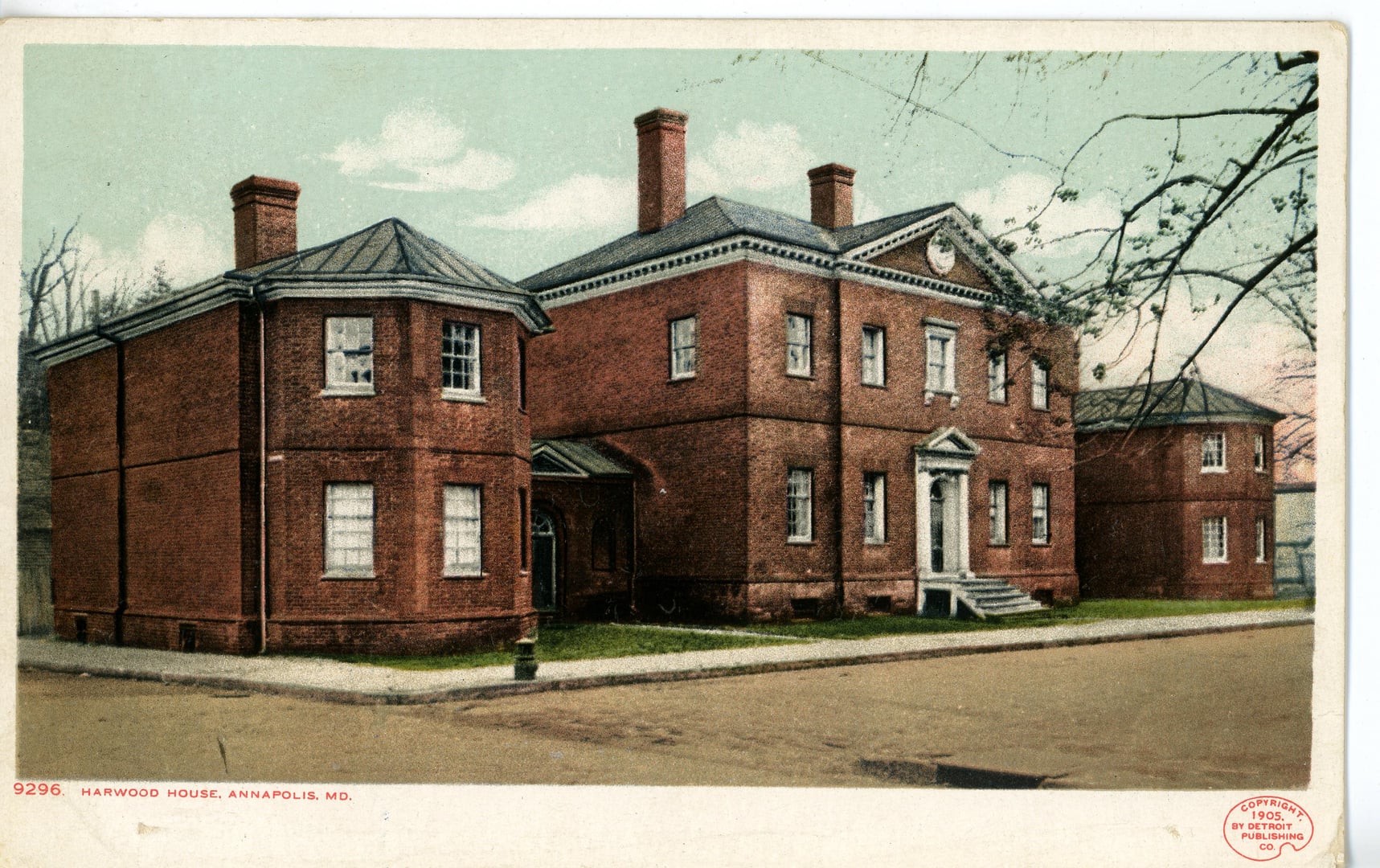
Est. 1765 · National Historic Landmark (1971) · Home of Declaration of Independence signer William Paca · Most fully reconstructed colonial garden in North America · Saved from demolition by Historic Annapolis in 1965 · Built with the inherited wealth of Mary Chew Paca and enslaved labor
William Paca began construction of his Annapolis residence in 1763 and completed it in 1765, using the inherited wealth of his wife Mary Chew of the prominent Chew family. The result was one of the most ambitious five-part Georgian houses in the colonial Chesapeake. Paca (1740-1799) served as a member of the Continental Congress, signed the Declaration of Independence in 1776, and served as Maryland's third governor from 1782 to 1785. Mary Chew Paca died on January 15, 1774, at age 37.
After Paca sold the property in 1780, the house passed through several owners and was eventually incorporated into the much-expanded Carvel Hall Hotel in the late 19th century. By the 1960s the property faced demolition; in 1965 Historic Annapolis purchased the house, and in 1968 the State of Maryland acquired the garden site to prevent its development. The hotel additions were removed and the house and two-acre formal garden were restored in the 1970s.
The garden restoration, completed under the direction of Historic Annapolis and based on archaeological excavation and an 18th-century Charles Willson Peale portrait of Paca that depicts the garden in the background, is considered the most fully reconstructed colonial garden in North America. Five terraces step down from the house to a domed summer house and fish-shaped pond, recreating the geometric pleasure garden Paca laid out in the 1770s.
The house and garden were designated a National Historic Landmark in 1971 and are operated as a museum by the Historic Annapolis Foundation. Paca's known slaveholding is addressed in current interpretive material at the site.
Sources
- https://www.annapolis.org/contact/william-paca-house/
- https://en.wikipedia.org/wiki/William_Paca_House
- https://sah-archipedia.org/buildings/MD-01-WS40
- https://www.atlasobscura.com/places/william-paca-house-and-harden
- https://www.wikitree.com/wiki/Chew-233
Apparition at upstairs windowsSensed presence in upper roomsFigure in the formal garden
The William Paca House appears on the Maryland Haunted Houses real-haunt registry and on multiple Annapolis ghost-tour itineraries, including Watermark's Special Historic Hauntings program. The principal report — recorded across Maryland Haunted Houses, Creative Travel Guide, and the Haunted Places national listing — is of a man in colonial clothing seen at the upstairs windows, most often identified by visitors and tour guides as William Paca himself.
Visitors have also described an eerie presence in the house's upper rooms and a sense of being watched in the formal garden. The garden's restored terraces and summer house are open to evening tour groups during Watermark's annual October Special Historic Hauntings program, which is the principal venue at which the property's haunted reputation reaches the public.
A secondary tradition reported in the Annapolis Ghosts material attributes some hauntings to Paca's first wife Mary Chew, who died at age 38 in 1774; her name is associated with reports in the garden. Hauntbound notes that the Mary Chew attribution is less consistently sourced than the Paca-at-the-window report, and treats it as a single-source claim. The William Paca House lore is consistent across regional listings but is largely sourced to ghost-tour operators rather than to independent investigations or news media.
Notable Entities
William Paca (1740-1799)Mary Chew Paca (d. 1774)
Media Appearances
- Watermark Annapolis Tours: Special Historic Hauntings (annual October program)