Est. 1857 · Italianate Architecture · Mississippi River History · Iowa Lead Mining Era · Architect John F. Rague
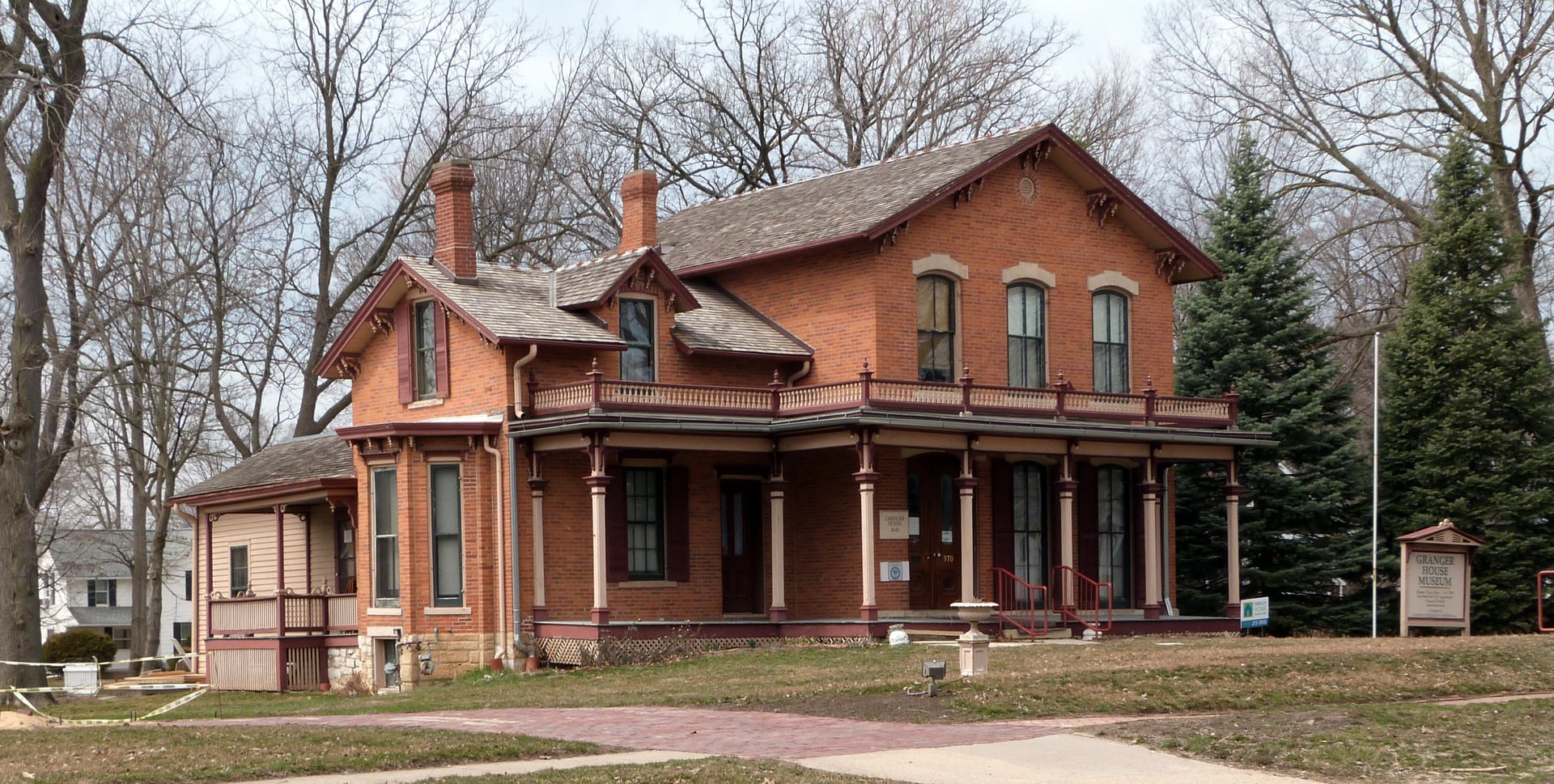
Mathias Ham arrived in Dubuque around 1833 and built a small fortune in lead mining, a business that dominated the upper Mississippi economy during the antebellum period. He later expanded into the steamboat trade, and by the 1850s was wealthy enough to commission architect John F. Rague to design a substantial Italianate mansion on a bluff above the river.
Rague was not an ordinary frontier architect. He had designed the original statehouse in Springfield, Illinois, and the original capitol in Iowa City, Iowa, giving the Ham House an architectural pedigree unusual for a private residence in the region. The house was completed in 1857 with its signature widow's walk and detailed bracketed cornice.
Ham died in 1889, and the house passed through the Ham family until the Dubuque County Historical Society acquired it and opened it as a museum in 1964. The society operates the site as the Mathias Ham Historic Site, a property of the National Mississippi River Museum and Aquarium. The house underwent an interior restoration beginning in 2025-26, with tours continuing on a reduced schedule through the work period and a full reopening on the Fourth of July 2026 anticipated.
Sources
- https://www.rivermuseum.org/ham/hamsite
- https://www.rivermuseum.org/ham/visit
- https://en.wikipedia.org/wiki/Mathias_Ham_House
- https://paranormal.lt/haunted-history-of-mathias-ham-house-in-dubuque-iowa
- https://www.dreadcentral.com/cold-spots/5080/the-mathias-ham-house/
- https://vocal.media/horror/the-spirits-of-iowa
- https://occult-world.com/ham-house/
Cold spotsObject movementPhantom footstepsPhantom soundsApparitions
The paranormal reputation of the Ham House rests on a documented historical event as much as on post-opening reports. At some point after Mathias Ham's death, his daughter Sarah encountered an intruder in the house late at night. She shot and killed him. The incident entered local history and, eventually, the building's haunted lore.
Museum employees and visitors since 1964 have reported cold spots in specific rooms that appear and disappear without correlation to ventilation or outdoor temperature. Objects have been found displaced between closings and openings. The sound of a piano or organ — the instrument in the house is reportedly inoperable — has been heard by visitors and staff on multiple occasions.
Phantom footsteps on the upper floors are a recurring report, particularly on the staircase that Sarah Ham used on the night of the intruder shooting. Some investigators have connected this to residual imprinting — the idea that high-emotion events leave a kind of perceptual trace in a structure. Others have noted the 1857 construction, the river-bluff location, and the building's history of solitary occupation after the family line thinned.
One source compiled by paranormal researchers includes a first-person account from a visitor who reported seeing a young girl run down a hallway before vanishing. A separate Travel Iowa account notes that no apparition has ever been formally documented at the site. The conflict between these accounts is itself characteristic of the Ham House's reputation — credible reports from multiple independent visitors, without a single definitive incident that anchors the lore.
Notable Entities
Sarah HamIntruder