Est. 1822 · Founded 1822; one of Mississippi's oldest active municipal cemeteries · Burial site of William Johnson, 'Barber of Natchez' diarist · Turning Angel monument commemorates the 1908 Natchez Drug Company explosion · Florence Irene Ford 'stairway grave' is a nationally noted Victorian mourning monument
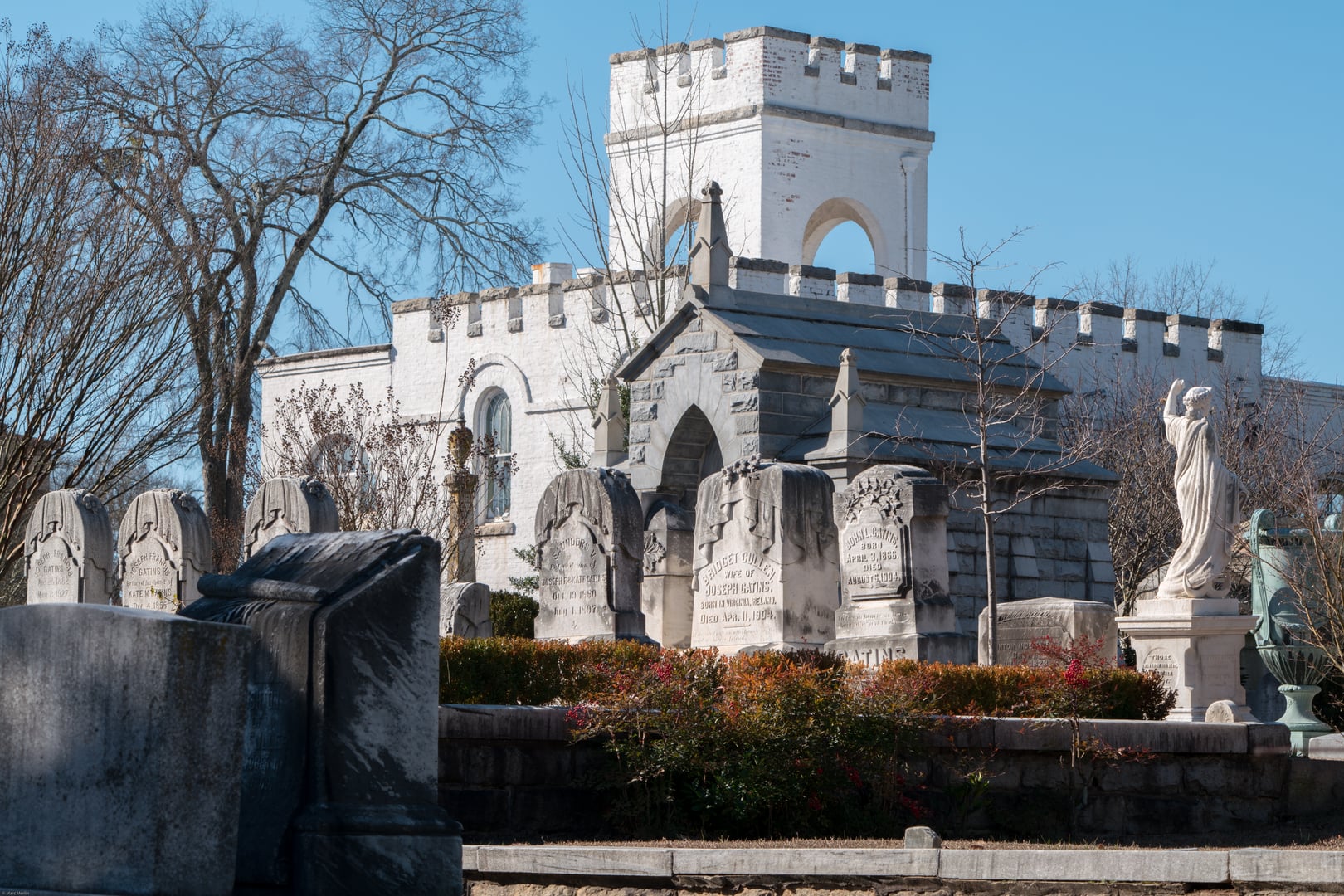
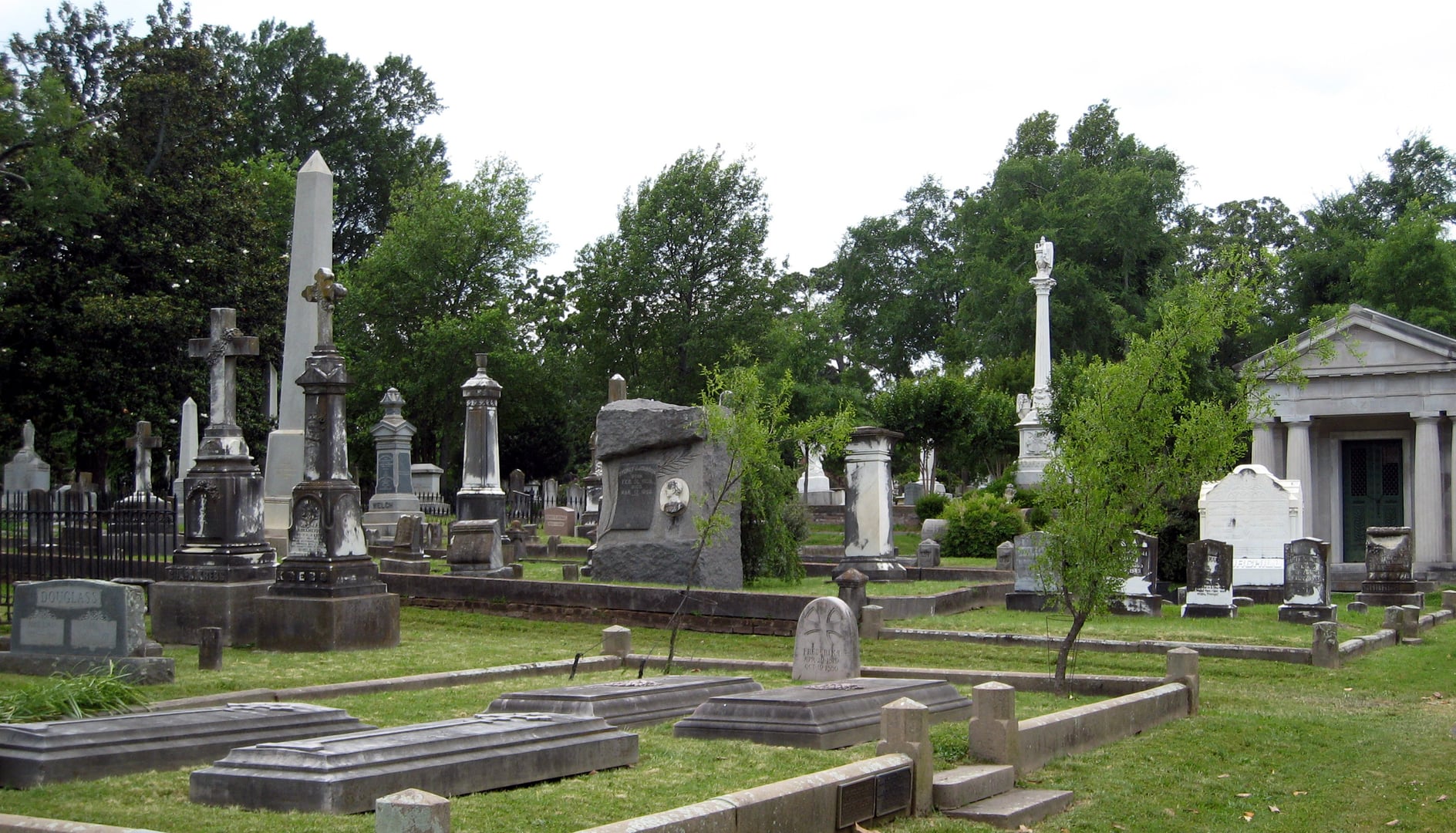
Founded in 1822, Natchez City Cemetery occupies approximately 100 acres along the bluff overlooking the Mississippi River just north of downtown Natchez. The cemetery contains burials from nearly every era of the city's history, including Spanish-period residents, antebellum planters and merchants, Civil War casualties, and victims of the 19th-century yellow-fever epidemics that struck the lower Mississippi Valley.
The cemetery's most famous monument is the Turning Angel, an angel statue commemorating five young employees — the youngest 12 years old — killed in the March 14, 1908 explosion at the Natchez Drug Company, a five-story brick building at Main and South Union streets that was destroyed in the blast. The owner of the drug company purchased a burial lot and commissioned the angel monument, which overlooks five matching headstones sharing the same death date. The monument earned its nickname because at night, passing car headlights on Cemetery Road create the visual impression that the angel turns to watch each car go by.
A short distance away is the grave of Florence Irene Ford, who was born in 1861 and died of yellow fever in 1871 at age ten. Florence had been terrified of thunderstorms in life. After her death, her mother Ellen had Florence's coffin built with a glass viewing window at the head, and the grave dug with a flight of stairs descending alongside the casket so the mother could go down during storms and remain at her daughter's level. Hinged metal trapdoors covered the stairway shelter. In the 1950s, a concrete wall was built behind the glass to prevent vandalism, though the trapdoors still open.
A third widely-cited grave is that of 'Louise the Unfortunate,' marked with a single name and no date or surname. According to local historian Don Estes, Louise was a French immigrant who arrived at Natchez Under-the-Hill expecting to marry, found her circumstances dramatically reversed, and lived out her life in the rough waterfront district before dying in her late twenties. The fact that she received a marked grave at all is unusual for someone in her social position in the 1800s.
The cemetery also includes the grave of William Johnson (1809-1851), the 'Barber of Natchez,' a free Black businessman born enslaved whose extensive diaries are now among the most-studied first-person accounts of free Black life in the antebellum South.
Sources
- https://www.natchez.ms.us/278/Turning-Angel
- https://www.natchez.ms.us/277/Florence-Irene-Ford
- https://www.natchez.ms.us/276/Louise-the-Unfortunate
- https://countryroadsmagazine.com/travel/overnight-escapes/the-towers-of-natchez/
- https://paranormaltraveler.com/1521/natchez-city-cemetery-a-haunting-journey-into-southern-history/
Turning Angel monument appearing to rotate as headlights passFlorence Irene Ford's ghost reported during thunderstorms'Louise the Unfortunate' associated with the 'Molly Hatchet' apparition in Under-the-Hill folklore
The cemetery's three signature ghost narratives are documented by the City of Natchez's own official tourism pages and reinforced by Paranormal Traveler, Country Roads Magazine, and Atlas Obscura.
The Turning Angel is the most famous: at night, as cars travel along Cemetery Road, their headlights wash across the angel statue and many viewers report that the angel appears to turn its head to follow each car. The monument commemorates five young people, including a 12-year-old, killed in the March 14, 1908 Natchez Drug Company explosion (City of Natchez, Turning Angel page). The visual effect is real and explainable by oblique lighting on the angel's profile; the legend has nonetheless become one of the most widely-cited Mississippi ghost stories.
Florence Irene Ford's stairway grave is the site of one of Natchez's most poignant ghost narratives. Local lore — recounted by Paranormal Traveler and Country Roads Magazine — holds that Florence's ghost wanders the cemetery during thunderstorms, the same weather that terrified her in life and that drove her mother to design the stairway descent.
Louise the Unfortunate's grave is documented by the City of Natchez tourism page and by Mississippi Today. Local legend connects Louise's spirit to a 19th-century apparition called 'Molly Hatchet' said to have haunted the men of the Under-the-Hill district where Louise lived and died; this connection appears in folklore aggregators but is not anchored by a single archival source and should be treated as oral-tradition lore rather than documented history.
William Johnson's grave is included on most ghost-tour itineraries but is not itself the subject of paranormal narrative; rather, his burial here is invoked as a counter-weight to the antebellum framing that dominates much Natchez tourism.
Notable Entities
Turning Angel (commemorating 1908 Natchez Drug Company explosion victims)Florence Irene FordLouise the Unfortunate
Media Appearances
- Atlas Obscura — Turning Angel and Florence Irene Ford entries
- Greg Iles novel 'Turning Angel' (popularized monument outside Mississippi)