Est. 1876 · National Register of Historic Places · Owen County Covered Bridge Heritage · Indiana Rural Architecture
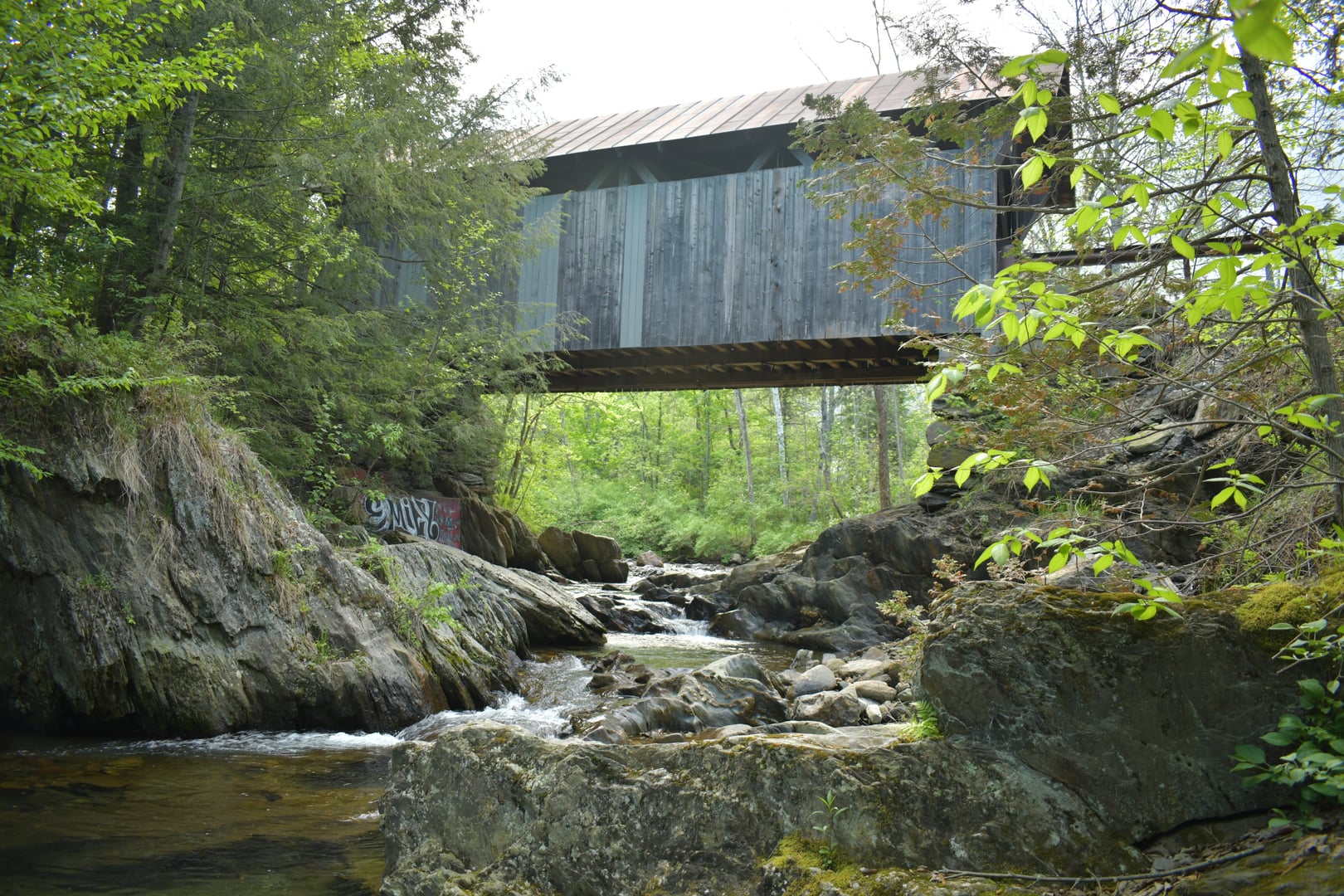
In 1875, Owen County Commissioners put out a contract for a new bridge over the Eel River in Jennings Township, following the destruction of a previous crossing by flooding. The Smith Bridge Company of Toledo, Ohio won the contract and completed construction in 1876 using the Smith's High Double Wood Truss design — a structural system that proved durable enough to survive nearly 150 years of use.
The bridge at Cataract became one of the most recognized covered bridge structures in Indiana, photographed extensively during the 20th century and developed a reputation as a regional landmark. It remains the last surviving covered bridge in Owen County.
As highway standards evolved, the bridge could no longer accommodate modern vehicular traffic. In 1988, a parallel concrete bridge was completed and the covered bridge was closed to vehicles, preserved as a pedestrian crossing. The Indiana Department of Natural Resources undertook extensive structural repairs in 2000. The bridge was listed on the National Register of Historic Places in 2005 and formally rededicated in 2006.
The small community of Cunot is adjacent to Cataract Falls State Recreation Area, which encompasses Cagles Mill Lake. The bridge spans the Eel River within the recreation area's vicinity. The paranormal legend attaches to this bridge specifically, placing a Great Depression-era farmer from nearby Poland, Indiana on its span.
Sources
- https://en.wikipedia.org/wiki/Cataract_Falls_Covered_Bridge
- https://www.in.gov/history/state-historical-markers/find-a-marker/cataract-falls-covered-bridge/
ApparitionsSensed presence
The legend places its central figure in Poland, Indiana — a small community in Putnam County several miles from the bridge — and situates his death in the late 1930s, at the tail end of the Great Depression when agricultural failures reached their peak in the rural Midwest. The account describes a farmer who lost his land to economic collapse and chose to hang himself, with the bridge over Cataract Lake — presumably the Cataract Covered Bridge — as the location of his death.
The reported phenomena are of two types. The first is a residual apparition: the figure walking on the bridge at night with the noose still around his neck, visible on lonely evenings under unspecified conditions. The second is an interactive apparition: the figure appearing suddenly in front of cars and trucks on the road, a phenomenon more common to road-based ghost legends than to bridge accounts specifically.
Covered bridges carry a weight in American ghost folklore that their open counterparts do not. The enclosure — the transitional space, the brief submersion in darkness — creates a liminal geography that ghost tradition has mapped extensively across Indiana's bridge country.
No death by hanging at the Cataract bridge has been documented in Owen County records accessible through public search. The legend represents the Depression-era Midwest's anxieties about land, failure, and desperate endings, attached to one of the region's most distinctive landmarks.